CRE AI NEWS
Meta’s $50B Hyperion Expansion: The CRE Read on a 5 GW Campus
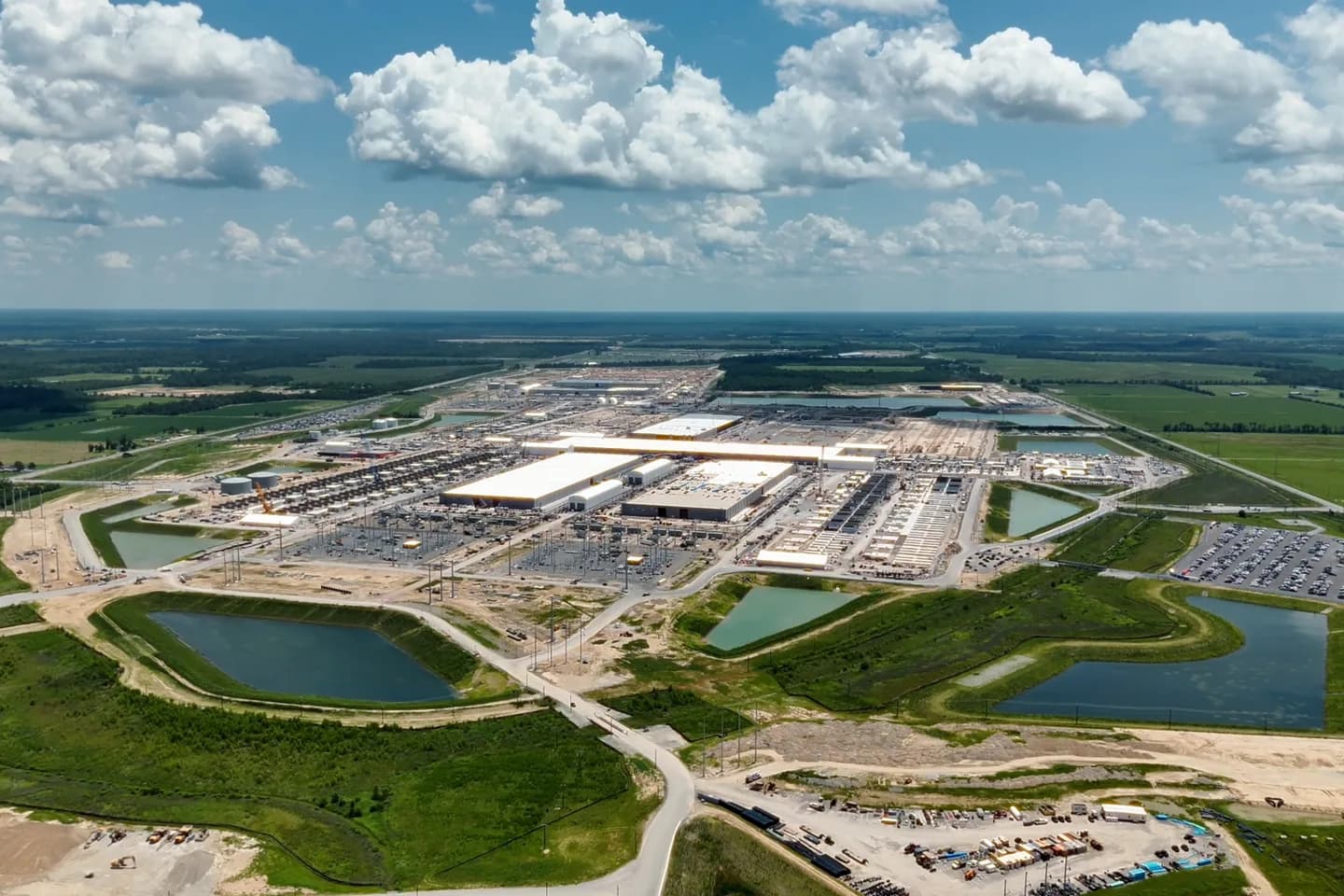
Meta says its Richland Parish campus will reach about 10 million square feet and 5 gigawatts, with more than $50 billion committed. The durable CRE signal is what a commitment this size does to land, power, housing, and industrial demand around it, and which documents actually move value.
Direct answer
Direct answer to Meta Hyperion data center commercial real estate
Meta raised its planned investment in the Hyperion data center campus in Richland Parish, Louisiana to more than $50 billion and its target capacity to 5 gigawatts. For CRE operators, the durable signal is local: land, power, housing, and logistics demand concentrate around hyperscale sites. Underwrite from utility filings and signed milestones, not from headline investment totals.
What Meta announced
On July 13, 2026, Meta said it will expand its Richland Parish, Louisiana campus, the site of its Hyperion AI training cluster, to about 10 million square feet and 5 gigawatts of compute capacity, taking its planned investment in the region above $50 billion. Louisiana Economic Development published the commitment the same day. Meta first announced the project in December 2024, and the company says construction is supporting roughly 7,500 workers at peak and about 1,000 operational roles once running.
The power package is the substance of the announcement. Meta says the expansion is supported by an energy agreement it values at $2.65 billion in savings for Entergy Louisiana customers over 20 years, a $215 million contribution to affordability and efficiency programs, support for up to 2.5 gigawatts of clean generation, new natural gas plants, and grid-scale batteries. It also says more than $1.6 billion has been contracted with Louisiana businesses. These are company and state figures, not PSV measurements.
Why the signal travels beyond Louisiana
A commitment of this size concentrates demand for land, power, water, construction labor, and housing in one rural submarket, and the surrounding real estate follows: laydown yards, logistics space, workforce housing, hotels, and retail that tracks construction payrolls. Northeast Louisiana is now a live case study in how a hyperscale campus reprices the market around it, the same pattern operators are watching near every multi-gigawatt site in the country.
The discipline is separating committed facts from announced ambitions. Investment totals move, and they include equipment that never touches the local land market. The records that change dirt values are specific: an executed utility agreement, an interconnection milestone, a generation plan approved in a rate proceeding, a construction start. Those documents are public, and they are where an underwriting position should anchor.
The workflow PSV would run on hyperscale signals
Treat each market’s data center activity as a monitored file, not a news feed. The inputs are primary records: state economic development releases, utility and public service commission filings, air and water permits, and the operator’s own announcements. An AI assistant is well suited to reading each new filing and returning a short structured update, what changed, the megawatts, the dates, the open conditions, with a reference to the source document.
The output feeds a person, not a decision. An analyst verifies the summary against the filing before it enters a land model, and the approval gate is explicit: no acquisition, pricing, or entitlement position moves on a model summary alone. The reviewer also owns the calls a document cannot settle, confirming timing with the utility and checking local moratorium and tax positions with counsel.
What should remain human-owned
The operator read
Finish with the judgment call.
The reported facts are above. Enter your email for PSV's operator conclusion and a year of access to every newsroom brief.
Free. No card. Privacy policy. Unsubscribe anytime.
 by PSVLive
Build the workflow behind this analysis. Train with the operators doing it.
Real deal files, live builds, and production-ready CRE AI workflows inside the CRE AI Institute.










Clear answers
Common questions about Meta Hyperion data center commercial real estate
What did Meta announce for the Hyperion data center?
On July 13, 2026, Meta said it will expand its Richland Parish, Louisiana campus to about 10 million square feet and 5 gigawatts of compute capacity, taking planned investment above $50 billion. Louisiana Economic Development published the commitment the same day.
How does a hyperscale data center affect nearby real estate?
A multi-gigawatt campus concentrates demand for land, power, water, construction labor, and housing in one submarket. Laydown yards, logistics space, workforce housing, and hotels typically follow construction payrolls, while long-run effects depend on executed utility agreements and delivery milestones.
What should CRE investors verify before underwriting data center demand?
Anchor on primary records: executed utility and interconnection agreements, public service commission filings, permits, and construction starts. Announced investment totals include equipment spend and can change; signed load and approved generation plans are the facts that move land value.
Primary source record
These records support the reported facts in this brief. PSV’s CRE workflow interpretation and test plan are original analysis.
Topics
Related PSV analysis
DEVELOPMENT
AI for Commercial Real Estate Developers: Feasibility, Entitlements, Cost, and Schedule
A development-focused AI workflow for site screening, feasibility, entitlement research, consultant coordination, budget review, schedule risk, and investment-committee preparation.
UNDERWRITING
AI Underwriting for Commercial Real Estate: A Source-Cited Workflow
How to use AI to normalize a rent roll and T-12, prepare a first-pass underwriting, and accelerate IC work while keeping calculations, assumptions, and approvals reviewable.
CRE AI NEWS
Guthrie AI’s $4M Seed: The CRE Implication for Bid Coordination
Guthrie AI says its new funding will expand a hybrid bid-assistant program for glazing contractors. For developers and owners, the useful signal is not autonomous pricing. It is faster, more visible preparation of the bid package before an estimator makes the call.
Related guides
Cornerstone PSV guides on the workflows in this article.
Claude for Real Estate Developers
The ground-up developer field guide: site selection through IC memo, built on a real development deal.
Read the guideIndustrial & Logistics AI Underwriting
Custom AI employees for industrial real estate underwriting. WALT analysis, tenant credit, clear-height and power modeling, and lender packages.
Read the guideWhat is CRE AI?
The definitional guide to commercial real estate AI: the core workflows, how it differs from a chatbot, and how to learn it.
Read the guideby PSVLiveYou read the operator view. Now learn to run the workflow.
The AI MBA for commercial real estate: the workflows these briefs describe, taught end to end on real deal files, with live builds and a community of CRE operators.