DEVELOPMENT
AI for Commercial Real Estate Developers: Feasibility, Entitlements, Cost, and Schedule
A development-focused AI workflow for site screening, feasibility, entitlement research, consultant coordination, budget review, schedule risk, and investment-committee preparation.
Direct answer
Direct answer to AI for commercial real estate developers
Use AI to organize evidence, compare scenarios, and manage open decisions; keep design, legal, cost, schedule, and investment conclusions with the accountable professionals.
Development begins with an assumption register
Early feasibility combines facts, professional inputs, and assumptions that change at different speeds. Parcel area, zoning text, utility availability, market rents, construction cost, interest rate, schedule, and exit conditions should never appear as one undifferentiated set of numbers.
AI can maintain an assumption register that records the value, unit, basis, source, date, owner, confidence, and the outputs affected by a change. This gives the team a controlled spine for scenarios and committee updates.
- Site facts: parcel, access, easements, environmental context, utilities, and adjacent uses.
- Program: use, area, unit or bay mix, parking, loading, amenities, and efficiency.
- Economics: land basis, hard and soft cost, contingency, financing, rent, absorption, and exit.
- Schedule: entitlement, design, procurement, construction, lease-up, and decision milestones.
| The job | Done by hand | General chatbot | Grounded AI workflow |
|---|---|---|---|
| Assumption register upkeep | Facts, professional inputs, and assumptions appear as one undifferentiated set of numbers. | Discusses the numbers ably, but a plausible answer can fill a gap with no basis, source, or date attached. | Records value, unit, basis, source, date, owner, confidence, and the outputs a change affects. |
| Entitlement research | The team reads municipal code, planning documents, and meeting records piece by piece before counsel review. | Summarizes code quickly, but codes change and overlays conflict, and output can read like a zoning conclusion. | Builds a research brief citing relevant sections, with questions routed to land-use counsel and the team. |
| Budget and schedule exceptions | Cost and schedule are reviewed in separate files even though the risks interact. | Offers a variance explanation, but the forecast is untraceable to estimate versions and cannot be recalculated. | Compares estimates to prior versions, maps procurement to milestones, and drafts consultant questions. |
| Committee memo drafting | The team assembles scheme, basis, returns, schedule, entitlement path, and risks into the memo manually. | Drafts fluent memo copy, but headline figures are not tied to the approved model or to a source per figure. | Drafts from the approved model and assumption register, every headline figure tied to its source. |
| Update loop when assumptions move | The team later reconstructs why a conclusion changed from chat history and email. | Rewrites the memo on request, but cannot say which exhibits and narrative a changed assumption affects. | Identifies the affected exhibits and narrative so the decision package updates consistently. |
Research entitlements without pretending to be counsel
AI can organize municipal code, planning documents, meeting records, and application requirements into a research brief. It can identify the relevant sections, summarize apparent requirements, and list questions for land-use counsel and the entitlement team.
It should not provide a final zoning or legal conclusion. Codes change, overlays conflict, interpretations matter, and project facts can alter the path. The system's job is to make the research faster and the professional review better prepared.
Connect budget and schedule exceptions
Cost and schedule are usually reviewed in separate files even though the risks interact. AI can compare current estimates to prior versions, identify scope categories driving the change, map procurement items to milestones, and prepare questions for the responsible consultant.
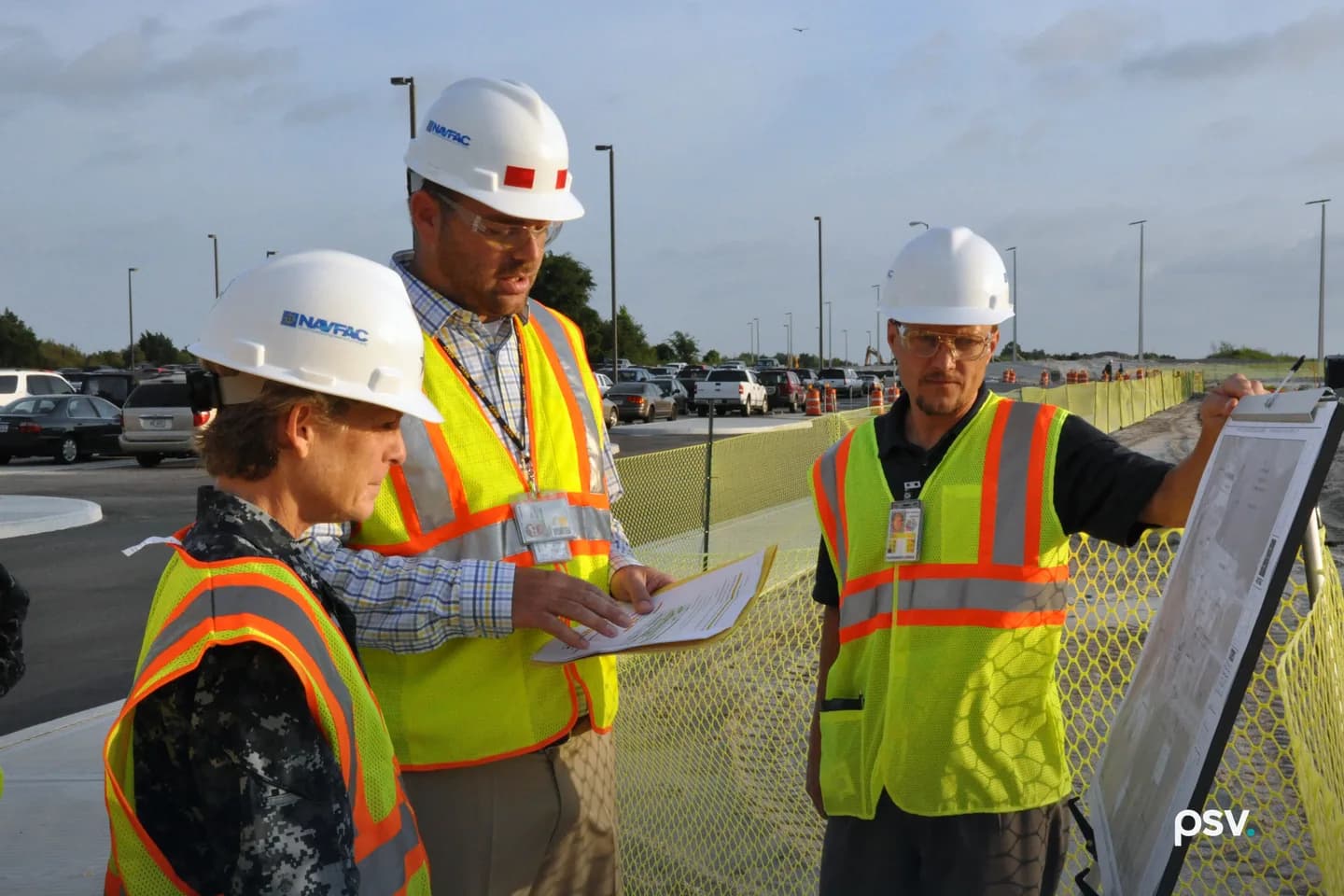
The approved budget and schedule remain deterministic records. The AI layer explains changes and maintains the issue queue; it does not overwrite the cost report or CPM schedule with an untraceable forecast.
Build a decision-ready development memo
A development committee needs the current scheme, basis, sources and uses, returns, schedule, entitlement path, major risks, mitigants, and decisions requested. AI can draft that memo from the approved model and assumption register, with every headline figure tied to its source.
The most valuable automation is the update loop. When cost, timing, program, or market assumptions move, the system can identify the affected exhibits and narrative so the team updates the decision package consistently.
The production standard applied to development work
The operator read
Finish with the judgment call.
The reported facts are above. Enter your email for PSV's operator conclusion and a year of access to every newsroom brief.
Free. No card. Privacy policy. Unsubscribe anytime.
 by PSVLive
Build the workflow behind this analysis. Train with the operators doing it.
Real deal files, live builds, and production-ready CRE AI workflows inside the CRE AI Institute.










Clear answers
Common questions about AI for commercial real estate developers
How can commercial real estate developers use AI?
Developers can use AI to organize feasibility inputs, track entitlement and diligence requirements, compare budgets and schedules, maintain decision logs, and assemble lender or investment-committee reporting. The system should expose assumptions and unresolved dependencies.
Can AI predict entitlement approval?
AI can summarize applicable records, precedent, meeting notes, and open requirements, but it cannot guarantee a discretionary government decision. Counsel, consultants, community context, and direct agency engagement remain essential.
How should AI handle development assumptions?
Label every assumption with its owner, source, date, confidence, and model location. Changes to cost, timing, rents, financing, approvals, or exit should flow through deterministic sensitivities and an explicit approval record.
Primary sources and operating references
These references support the control, research, and operating standards used in this guide. PSV’s workflow recommendations are original analysis.
- U.S. Census Building Permits Survey
- FRED economic data
- EPA All Appropriate Inquiries
- NIST AI Risk Management Framework
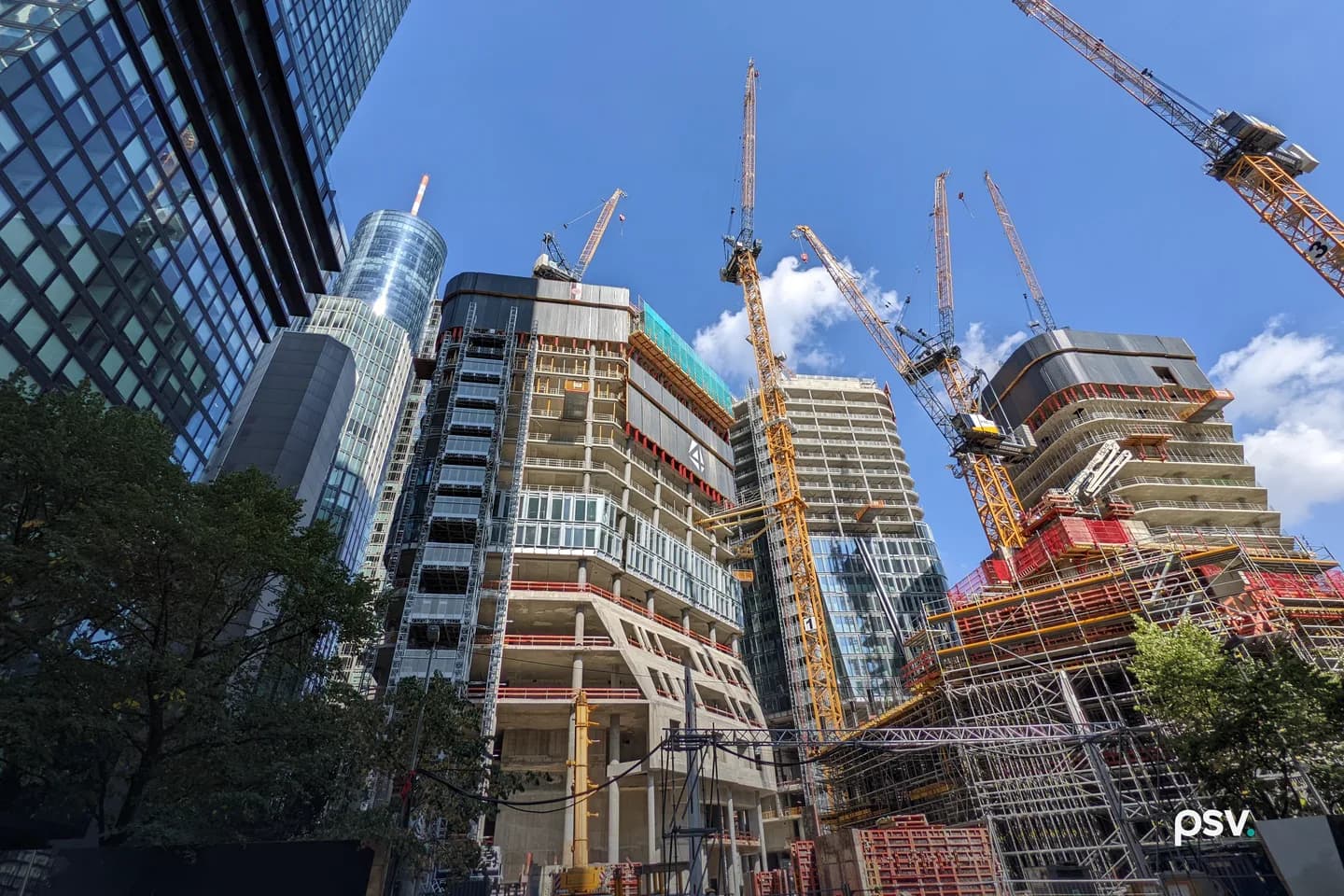
- Wikimedia Commons: Ground-up commercial development in progress: several office towers rising in Frankfurt's financial district, concrete cores and slabs exposed, climbing formwork and safety screens in place, multiple tower cranes working over the site., by Spinarak, CC0 (source of the lead photograph)
Topics
Related PSV analysis
DUE DILIGENCE
AI for Commercial Real Estate Due Diligence: Build the Exception Desk
A source-controlled approach to document inventory, lease and financial reconciliation, environmental and physical review, open-item tracking, and decision-ready diligence reporting.
UNDERWRITING
AI Underwriting for Commercial Real Estate: A Source-Cited Workflow
How to use AI to normalize a rent roll and T-12, prepare a first-pass underwriting, and accelerate IC work while keeping calculations, assumptions, and approvals reviewable.
ASSET MANAGEMENT
AI for Commercial Real Estate Asset Management: A Portfolio Operating System
A practical framework for variance review, lease-event monitoring, capital planning, property-manager follow-up, and investor reporting across a CRE portfolio.
Related guides
Cornerstone PSV guides on the workflows in this article.
Claude for Real Estate Developers
The ground-up developer field guide: site selection through IC memo, built on a real development deal.
Read the guideThe CRE AI Data & Security Audit
The five-pass audit a CRE firm runs on its own document estate before connecting an assistant: folder access, document provenance, and the approval bands.
Read the guideAI Consultant for Commercial Real Estate (CRE)
AI consulting for commercial real estate firms. PSV audits how your firm runs, sets the AI strategy and security posture with your IT team, and delivers a sequenced roadmap before anything is built.
Read the guideby PSVLiveYou read the operator view. Now learn to run the workflow.
The AI MBA for commercial real estate: the workflows these briefs describe, taught end to end on real deal files, with live builds and a community of CRE operators.