CRE POLICY NEWS
New York’s Hyperscale Data Center Moratorium: The CRE Read
Governor Kathy Hochul signed Executive Order 62 on July 14, pausing state environmental permits for new hyperscale data centers of 50 megawatts or more for up to one year while New York writes a statewide environmental study and new development standards. It is the first statewide freeze in the country, and it lands on the hottest development pipeline in commercial real estate.
Direct answer
Direct answer to New York data center moratorium
Yes, New York has paused new hyperscale data centers. Executive Order 62, signed July 14, 2026, directs the Department of Environmental Conservation to hold pending permit applications for data centers of 50 megawatts or more, for up to one year while the state completes a generic environmental impact statement. Applications already deemed complete proceed. A stricter 20 megawatt bill passed by the legislature remains unsigned. Site-level permit status is now the fact to verify.
What Governor Hochul signed
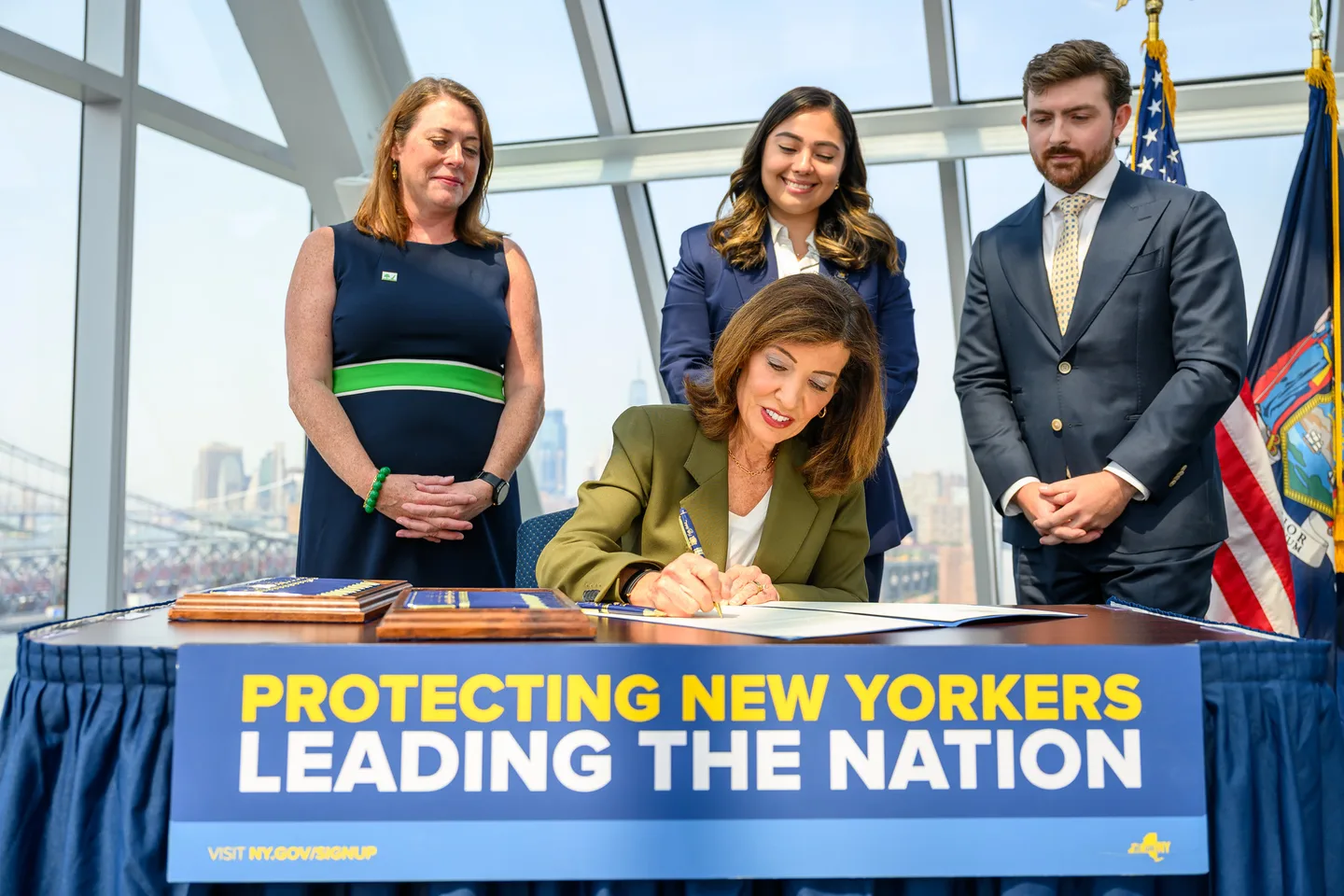
On July 14, 2026, Governor Kathy Hochul signed Executive Order 62, which her office calls the first statewide moratorium on new hyperscale data centers in the nation. The order covers a facility, or a group of facilities on the same or contiguous sites, that consumes or can consume 50 megawatts of energy or more, and it directs the Department of Environmental Conservation to hold in abeyance pending discretionary permit applications for the construction or expansion of a covered data center that the agency had not deemed complete before the order’s date. The governor’s office says the pause will last up to one year. Facilities primarily used for manufacturing, research, education, or medical care are excluded.
The order runs on a study clock, not just a calendar. The Department of Public Service must run a public process to produce a generic environmental impact statement covering energy demand, water use and quality, air quality, disproportionate impacts on disadvantaged communities, and noise, and the hold lasts until the final statement is submitted. Empire State Development must publish a community investment framework within 60 days addressing community investment funds, local infrastructure, labor standards, and transparency reporting. The governor’s release also says she will pursue legislation to repeal data center sales tax exemptions. In a follow-up release on July 16 she framed the intent directly: “Progress shouldn’t arrive with a higher utility bill, depleted water supply or noise pollution.”
Why a CRE operator should care
Data centers are the strongest development story in commercial real estate right now, and New York just showed that one signature can freeze a pipeline at the state line. Any New York project at or above 50 megawatts whose DEC application was not already deemed complete is now waiting on a statewide environmental study before state permits move. Land under option for hyperscale use, interconnection queue positions, and construction starts penciled for 2026 all inherit a policy clock they did not have two weeks ago. The near-term beneficiaries are projects already deemed complete, designs below 50 megawatts, and sites one state over.
The second signal is that the freeze may not be the final rule. The legislature passed its own measure, the Responsible Data Center Development Act, on June 4 with wide margins, and the two records do not match: the executive order pauses projects at 50 megawatts, while the bill would reach 20 megawatts and add ratepayer cost-allocation classes and renewable energy requirements. The governor has not signed the bill. Data center moratoria have so far been a town-by-town phenomenon; a statewide version gives every other state watching ratepayer backlash a template, and it makes jurisdiction risk an underwriting input rather than a footnote.
The workflow PSV would run on a permitting freeze
Treat the order as a trigger to build a site-level exposure file from primary records: the text of Executive Order 62, the DEC permit status for each affected site, the Responsible Data Center Development Act text and its status, the generic environmental impact statement docket as it opens, and the community investment framework when Empire State Development publishes it. An AI assistant reads each record and returns a cited exposure memo per site: whether the design crosses 50 megawatts, whether the application was deemed complete before July 14, which specific permits are held, and what changed in the docket since the last check, with every finding traced to the document it came from.
The reviewer is the development lead working with land-use counsel, and the approval gate is explicit: no land acquisition, option exercise, extension payment, or capital commitment moves on a model summary alone. The same review produces the questions a human sends: to DEC on where an application stands against the completeness line, to the utility on queue position while the state study runs, and to counsel on which local and non-discretionary approvals continue processing during the pause.
What should remain human-owned
The operator read
Finish with the judgment call.
The reported facts are above. Enter your email for PSV's operator conclusion and a year of access to every newsroom brief.
Free. No card. Privacy policy. Unsubscribe anytime.
 by PSVLive
Build the workflow behind this analysis. Train with the operators doing it.
Real deal files, live builds, and production-ready CRE AI workflows inside the CRE AI Institute.










Clear answers
Common questions about New York data center moratorium
What does New York's data center moratorium do?
Executive Order 62, signed by Governor Kathy Hochul on July 14, 2026, directs the Department of Environmental Conservation to hold pending discretionary permit applications for new or expanded data centers that consume or can consume 50 megawatts or more. The pause runs up to one year while the state produces a generic environmental impact statement on energy, water, air, community, and noise impacts.
Does the New York moratorium stop every data center project?
No. Applications the DEC had already deemed complete before July 14, 2026 proceed, projects below 50 megawatts are outside the order, and facilities primarily used for manufacturing, research, education, or medical care are excluded. The operative question for any site is where its permit application stood against the completeness line on the order's date.
How long will the New York data center moratorium last?
The governor's office says up to one year. The order itself ties the end of the hold to the submission of the final generic environmental impact statement, and executive orders can be extended, amended, or challenged. A stricter bill passed by the legislature, reaching projects of 20 megawatts or more, remains unsigned and could still change the rules.
Primary source record
These records support the reported facts in this brief. PSV’s CRE workflow interpretation and test plan are original analysis.
- Executive Order 62: Establishing a Temporary Moratorium on Data Centers in New York
- Governor Hochul: First statewide moratorium on new hyperscale data centers (July 14, 2026)
- Governor Hochul: moratorium support release (July 16, 2026)
- New York State Senate: S10642, Responsible Data Center Development Act
Topics
Related PSV analysis
CRE AI NEWS
Meta’s $50B Hyperion Expansion: The CRE Read on a 5 GW Campus
Meta says its Richland Parish campus will reach about 10 million square feet and 5 gigawatts, with more than $50 billion committed. The durable CRE signal is what a commitment this size does to land, power, housing, and industrial demand around it, and which documents actually move value.
DEVELOPMENT
AI for Commercial Real Estate Developers: Feasibility, Entitlements, Cost, and Schedule
A development-focused AI workflow for site screening, feasibility, entitlement research, consultant coordination, budget review, schedule risk, and investment-committee preparation.
CRE POLICY NEWS
The ROAD to Housing Act Is Law: What Changes for CRE Investors
The broadest federal housing law in years took effect on July 11 without a presidential signature. It restricts large-scale purchases of single-family homes while exempting build-to-rent development, and it ships a supply-side stack most coverage is skipping.
Related guides
Cornerstone PSV guides on the workflows in this article.
Claude for Real Estate Developers
The ground-up developer field guide: site selection through IC memo, built on a real development deal.
Read the guideWhat is CRE AI?
The definitional guide to commercial real estate AI: the core workflows, how it differs from a chatbot, and how to learn it.
Read the guideby PSVLiveYou read the operator view. Now learn to run the workflow.
The AI MBA for commercial real estate: the workflows these briefs describe, taught end to end on real deal files, with live builds and a community of CRE operators.