CRE CAPITAL NEWS
TSMC Lifts Arizona to $265 Billion: The CRE Read
TSMC used its record second quarter to commit another $100 billion to Arizona, lifting its total state investment to $265 billion across a planned ten fabs, two advanced packaging plants, and a research center. The expansion is driven by demand for AI chips, and for commercial real estate it concentrates one of the country’s largest advanced-manufacturing buildouts in a single Phoenix submarket.
Direct answer
Direct answer to TSMC Arizona expansion commercial real estate
Yes, TSMC is expanding again in Arizona. At its July 16, 2026 earnings, the company added $100 billion to its Arizona plan, bringing the total to $265 billion for up to four more 2 nanometer fabs, ten fabs in all plus two packaging facilities and an R&D center. TSMC set no fixed timeline and said the pace follows market demand, so absorption timing, not the headline number, is the CRE input to watch.
What TSMC announced
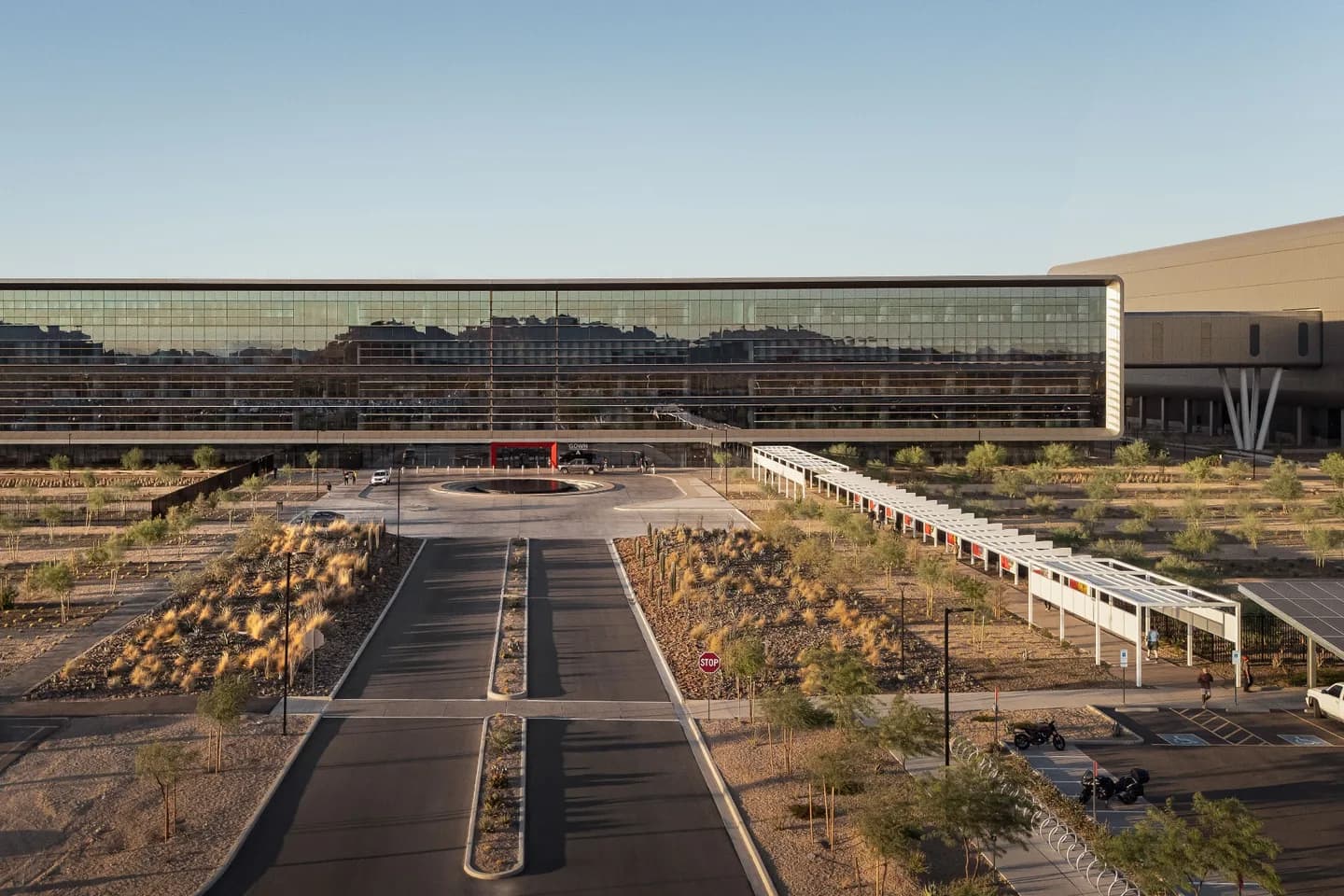
On July 16, 2026, alongside record second-quarter results, TSMC said it will invest an additional $100 billion in Arizona, bringing its total committed investment in the state to $265 billion. The company says the money funds four or more new fabs for 2 nanometer and more advanced logic, plus advanced packaging, and that its Arizona footprint now spans ten fabs, two advanced packaging facilities, and a research and development center. TSMC Arizona currently employs more than 3,500 people, the company says. Chief Executive C.C. Wei framed it as ecosystem building: “We believe this investment will help to further foster the development of the U.S. semiconductor ecosystem, strengthen the supply chain, and support an increasing number of high-tech, high-paying jobs in the United States.” The White House and the Department of Commerce confirmed the commitment the same day.
The financial backdrop is the reason. TSMC reported second-quarter revenue of NT$1,270.38 billion, about US$40.2 billion, up 36.0 percent year over year, and net income of NT$706.56 billion, up 77.4 percent, a record quarter the company attributes to high-performance computing, the category that includes AI accelerators. TSMC also raised its 2026 capital budget to a range of $60 billion to $64 billion. One qualifier matters for anyone reading the number as a construction schedule: TSMC attached no timeline to the Arizona fabs and said the pace will be set by market demand. The $265 billion is a cumulative commitment, not capital already deployed.
Why a CRE operator should care
This is AI infrastructure one layer below the data centers this desk usually covers. The chips that fill a hyperscale campus start in fabs like these, and the advanced packaging TSMC is adding in Arizona is the specific bottleneck for AI accelerators. What lands in commercial real estate is concentration. A ten-fab manufacturing cluster, its supplier and equipment campuses, its research space, and housing for tens of thousands of construction and operations workers all converge on the north Phoenix submarket around the existing TSMC site. Arizona has drawn more than 70 semiconductor expansions since 2020, the state’s figure and not a PSV finding, and this raises the anchor tenant’s commitment by another $100 billion.
The second signal is timing risk. Absorption in industrial, flex, multifamily, and hospitality near a megaproject is paced by construction payrolls and delivery milestones, not by the announcement. TSMC’s own language, that the build follows demand, means the schedule is a variable, and anyone underwriting Phoenix on this catalyst is underwriting a pipeline with no published dates. Concentration cuts both ways: a metro that rises on one anchor’s capital plan also carries that anchor’s cycle. The headline number is not the underwriting input. The executed permits, utility agreements, and construction starts are.
The workflow PSV would run on a megaproject catalyst
Treat the announcement as a trigger to build a submarket exposure file from primary records: TSMC’s SEC filings and earnings materials, the City of Phoenix and Arizona Commerce Authority releases, and, as they appear, the site plans, building permits, and utility and water agreements that convert a dollar figure into square footage and load. An AI assistant reads each record and returns a cited exposure memo for a target submarket: what has actually been permitted versus announced, which parcels and utilities are committed, the construction employment implied, and what changed since the last check, with every finding traced to the document it came from.
The reviewer is the acquisitions or development lead working with a market analyst, and the approval gate is explicit: no land acquisition, option, or underwriting assumption moves on a model summary alone. The same review produces the questions a human sends: to the city and county on permit and entitlement status, to the utility on interconnection and water for the specific site, and to brokers on standing inventory before the payrolls arrive. The output is a memo a principal can act on, not a headline a spreadsheet inherited.
What should remain human-owned
The operator read
Finish with the judgment call.
The reported facts are above. Enter your email for PSV's operator conclusion and a year of access to every newsroom brief.
Free. No card. Privacy policy. Unsubscribe anytime.
 by PSVLive
Build the workflow behind this analysis. Train with the operators doing it.
Real deal files, live builds, and production-ready CRE AI workflows inside the CRE AI Institute.










Clear answers
Common questions about TSMC Arizona expansion commercial real estate
How much is TSMC investing in Arizona?
At its July 16, 2026 earnings, TSMC committed an additional $100 billion to Arizona, bringing its total investment in the state to $265 billion. The company says that covers up to four more fabs for 2 nanometer and more advanced chips, for a planned footprint of ten fabs, two advanced packaging facilities, and a research and development center.
Why does the TSMC Arizona expansion matter for commercial real estate?
It concentrates one of the largest advanced-manufacturing buildouts in the country in the north Phoenix submarket, pulling demand for supplier campuses, industrial and flex space, research offices, and worker housing. The scale of that spillover depends on permits, utility agreements, and construction milestones, not on the announced dollar figure.
When will TSMC build the new Arizona fabs?
TSMC did not give a timeline. The company said the pace of construction will follow market demand, so the four or more new fabs have no published schedule. For anyone underwriting Phoenix on this catalyst, absorption timing is the open variable, and executed permits and construction starts are the facts to track.
Primary source record
These records support the reported facts in this brief. PSV’s CRE workflow interpretation and test plan are original analysis.
Topics
Related PSV analysis
CRE AI NEWS
Meta’s $50B Hyperion Expansion: The CRE Read on a 5 GW Campus
Meta says its Richland Parish campus will reach about 10 million square feet and 5 gigawatts, with more than $50 billion committed. The durable CRE signal is what a commitment this size does to land, power, housing, and industrial demand around it, and which documents actually move value.
DEVELOPMENT
AI for Commercial Real Estate Developers: Feasibility, Entitlements, Cost, and Schedule
A development-focused AI workflow for site screening, feasibility, entitlement research, consultant coordination, budget review, schedule risk, and investment-committee preparation.
CRE POLICY NEWS
New York’s Hyperscale Data Center Moratorium: The CRE Read
Governor Kathy Hochul signed Executive Order 62 on July 14, pausing state environmental permits for new hyperscale data centers of 50 megawatts or more for up to one year while New York writes a statewide environmental study and new development standards. It is the first statewide freeze in the country, and it lands on the hottest development pipeline in commercial real estate.
Related guides
Cornerstone PSV guides on the workflows in this article.
Claude Engineering Partner for CRE
What it means to run Claude with an engineering partner: the operating model, the controls, and who owns what.
Read the guideAI Engineering for CRE
PSV builds custom AI employees for commercial real estate. Every number cites its source document, and the citation holds from deal to IC memo.
Read the guideWhat is CRE AI?
The definitional guide to commercial real estate AI: the core workflows, how it differs from a chatbot, and how to learn it.
Read the guideby PSVLiveYou read the operator view. Now learn to run the workflow.
The AI MBA for commercial real estate: the workflows these briefs describe, taught end to end on real deal files, with live builds and a community of CRE operators.