ASSET MANAGEMENT
AI for Commercial Real Estate Asset Management: A Portfolio Operating System
A practical framework for variance review, lease-event monitoring, capital planning, property-manager follow-up, and investor reporting across a CRE portfolio.
Direct answer
Direct answer to AI for commercial real estate asset management
Centralize the facts and exceptions first; then use AI to prepare decisions and drafts around a portfolio record the asset manager can verify.
Asset management is an exception business
The monthly package is full of repeated structure, but the asset manager is paid to find the exceptions: revenue below budget, an expense category moving faster than plan, a lease event without an owner, a capital project slipping, or a covenant approaching its threshold.

AI is useful when it can assemble the package, compare actuals to budget and prior period, identify the largest drivers, and link each observation back to the report or ledger line. It should not decide that a variance is acceptable or choose the business response.
- Variance desk: rank budget-to-actual changes by NOI impact and cite the underlying line items.
- Lease-event desk: maintain expirations, options, notices, and responsible owners in one queue.
- Capital desk: compare approved scope, committed cost, spend to date, forecast, and schedule risk.
- Reporting desk: draft the narrative only after the asset manager approves the facts and drivers.
| The job | Done by hand | General chatbot | Grounded AI workflow |
|---|---|---|---|
| Budget-to-actual variance review | The asset manager combs the monthly package line by line to find revenue and expense exceptions. | Can discuss a pasted package and suggest drivers, but observations are not linked back to ledger lines. | Assembles the package, ranks variances by NOI impact, and cites line items; the manager judges them. |
| Lease-event monitoring | Expirations, options, and notices are tracked ad hoc; a lease event without an owner is easy to miss. | Can pull dates from a document in one chat, but keeps no durable queue between monthly conversations. | Maintains expirations, options, notices, and responsible owners in one queue the manager reviews. |
| Capital project tracking | The manager finds a slipping project by reading the monthly package against scope, cost, and schedule. | Summarizes an update on request but holds no record of approved scope or the prior forecast. | Compares approved scope, committed cost, spend to date, forecast, and schedule risk against the record. |
| Investor reporting narrative | The manager writes the narrative after separating facts, variances, explanations, and recommendations. | Produces a plausible narrative that can obscure a missing explanation or an unreconciled number. | Drafts only after the manager approves facts and drivers; the recommendation stays owned by a person. |
| Month-over-month property context | Without a durable record, approved facts, prior decisions, and open items must be reassembled monthly. | Isolated monthly chats start cold; last month's definitions and decisions are not carried forward. | Reads the durable property record and compares the new package to the same definitions used last month. |
Create a property memory
A portfolio cannot operate from isolated monthly chats. Each property needs a durable record of approved facts, prior decisions, open items, key leases, financing terms, capital projects, and recurring reporting definitions.
The AI layer should read from that record and append new approved information. When a new package arrives, it can compare the current month to the same definitions used last month instead of recreating context from scratch.
Separate observation from recommendation
A strong report labels four things differently: sourced fact, calculated variance, management explanation, and asset-manager recommendation. AI can help assemble the first three and draft the fourth, but the recommendation should remain visibly owned by the person accountable for the asset.
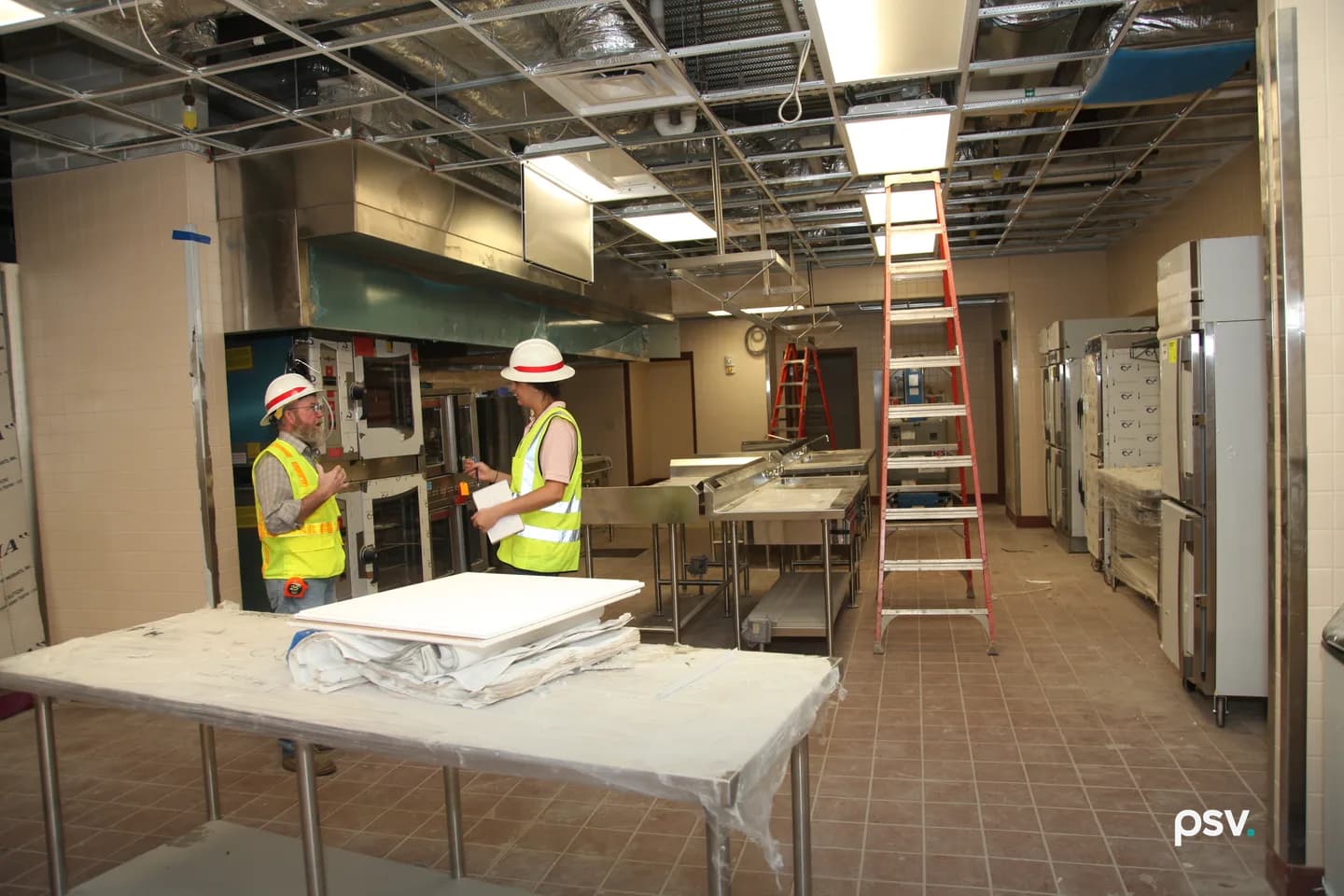
This separation improves review and investor communication. It also prevents a plausible narrative from obscuring a missing explanation or an unreconciled number.
Measure the portfolio loop
Track days from month-end close to approved variance narrative, aging of unresolved property-manager questions, lease events without an assigned action, and capital projects without a current forecast. These are operating measures, not AI vanity metrics.
The objective is a tighter loop between property data, asset-manager judgment, and ownership communication. AI earns its place when that loop becomes faster and more complete without becoming less accountable.
Running the portfolio loop to the standard
The operator read
Finish with the judgment call.
The reported facts are above. Enter your email for PSV's operator conclusion and a year of access to every newsroom brief.
Free. No card. Privacy policy. Unsubscribe anytime.
 by PSVLive
Build the workflow behind this analysis. Train with the operators doing it.
Real deal files, live builds, and production-ready CRE AI workflows inside the CRE AI Institute.










Clear answers
Common questions about AI for commercial real estate asset management
How can AI be used in commercial real estate asset management?
AI can assemble variance reviews, track lease and debt events, maintain business-plan actions, organize property-manager follow-up, and draft portfolio reporting. The asset manager should approve explanations, forecasts, capital decisions, and investor communications.
What data does an AI asset management workflow need?
Use controlled feeds for actuals, budget, rent roll, leasing, capital projects, debt, valuations, and the approved business plan. Every source needs an owner, an as-of date, and a clear rule for conflicting values.
What should remain human-owned in AI asset management?
Humans should own the interpretation of variance, changes to the business plan, tenant and lender strategy, valuation assumptions, capital allocation, and external reporting. AI should make the evidence and open decisions easier to review.
Primary sources and operating references
These references support the control, research, and operating standards used in this guide. PSV’s workflow recommendations are original analysis.
- ENERGY STAR Portfolio Manager overview
- SEC EDGAR public filing research
- NIST AI Risk Management Framework
- Wikimedia Commons: Contemporary drone photograph looking down the Elbe over Hamburg's harbour district: HafenCity and Speicherstadt warehouse blocks, the Elbphilharmonie on its brick warehouse base, modern office buildings along the canals, the dense commercial core to the right, and the container port with gantry cranes on the far bank. A whole mixed-asset district in one frame., by Markenservice Hamburg, CC BY-SA 4.0 (source of the lead photograph)
Topics
Related PSV analysis
PROPERTY OPERATIONS
AI for Commercial Property Management: Work Orders, CAM, Leases, and Tenant Service
Where AI can assist a commercial property-management team, where deterministic systems must remain authoritative, and which tenant-facing actions always require controls.
UNDERWRITING
AI Underwriting for Commercial Real Estate: A Source-Cited Workflow
How to use AI to normalize a rent roll and T-12, prepare a first-pass underwriting, and accelerate IC work while keeping calculations, assumptions, and approvals reviewable.
DUE DILIGENCE
AI for Commercial Real Estate Due Diligence: Build the Exception Desk
A source-controlled approach to document inventory, lease and financial reconciliation, environmental and physical review, open-item tracking, and decision-ready diligence reporting.
Related guides
Cornerstone PSV guides on the workflows in this article.
AI for Real Estate Investing
How commercial real estate investors use AI across the deal lifecycle: sourcing, underwriting, due diligence, and asset management, grounded in real documents.
Read the guideAI for CRE Asset Managers
Every asset watched, not sampled. AI that reads the whole portfolio on your cadence, with every figure traced to its source.
Read the guideClaude MCP for CRE
MCP explained for CRE teams: connect Claude to the files and systems you already run so answers come from your data, with citations.
Read the guideby PSVLiveYou read the operator view. Now learn to run the workflow.
The AI MBA for commercial real estate: the workflows these briefs describe, taught end to end on real deal files, with live builds and a community of CRE operators.