CRE PROPTECH NEWS
HouseCanary’s Chapter 11 and the AI Valuation Vendor Question
HouseCanary, the AI valuation and property data company whose customers include mortgage lenders, government-sponsored enterprises and single-family rental REIT operators, filed Chapter 11 in New Jersey on September 22, the day its lender had set to auction its operating assets. The court has approved $3 million of interim financing. The filings show a vendor whose model is pledged to its financiers.
Direct answer
Direct answer to HouseCanary Chapter 11
HouseCanary filed to stop a lender’s foreclosure sale, not because the product stopped working, and it says customers will see no interruption. That is a company claim backed so far by a $3 million interim loan, with a final financing hearing on October 20. For anyone underwriting residential rental assets on its valuations, the filing is a live test of vendor continuity: who holds liens on the model, and what the contract lets a customer keep.
What was filed, and what the court has approved
On September 22, 2026, HouseCanary and its affiliates filed voluntary Chapter 11 petitions in the U.S. Bankruptcy Court for the District of New Jersey, before Judge Eamonn James O’Hagan in Trenton, with joint administration requested under the lead case, House Canary New Jersey, Inc., No. 26-20766. The court docket shows the parent, HouseCanary, Inc., as case No. 26-20769, and a status conference set for November 12 at 2:00 p.m. The first-day declaration of chief executive Chris Rediger, filed September 23, describes the company in its own words: founded in 2013, headquartered in San Francisco but fully remote, 37 employees beyond its four executives, and an AI-powered valuation, analytics and data platform covering more than 136 million U.S. residential properties. Its customers, the declaration says, include financial institutions, government-sponsored enterprises, mortgage lenders, investment banks, whole loan buyers, single-family rental REIT operators and real estate agents. It also reports a 2.7% median error rate for its automated valuations on listed homes, which is a company claim, not a PSV finding. The records disagree on how many debtors there are: the declaration and the financing order each list six, including ComeHome, Inc., while the claims agent’s case site lists five.
The declaration says the filing was made to stop a sale. HouseCanary borrowed under a loan and security agreement dated around March 25, 2021, with Ocean II PLO LLC as agent, a facility of up to $30 million secured by substantially all of its tangible assets and contracts. The loan was amended six times, matured January 31, 2026, and was not repaid. On September 8, Ocean II noticed a public auction of the collateral for 1:00 p.m. on September 22 in Menlo Park, California. HouseCanary sued in San Mateo County Superior Court on September 17 to stop it, and the court denied a temporary restraining order on September 21. The company filed Chapter 11 the next day. On September 25 the court entered an interim order approving a debtor-in-possession facility of up to $15 million from Condor FundingCo 26, LLC: $3 million now, of which $1 million is funded on entry and $2 million depends on a plan term sheet acceptable to the lender in its sole discretion, and $12 million more if a final order is entered after a hearing on October 20. HouseCanary’s September 24 release says customer operations, products, data services and support continue without interruption, and that it currently expects allowed creditor claims to be paid in full. Both are company statements, subject, as the release itself says, to the Chapter 11 process and court approval.
Why a CRE operator should care about a residential valuation vendor
The operator question is not whether HouseCanary survives. It is what a valuation feed is actually worth to a customer when its maker is in court. The declaration describes an unusual split in who holds what. Ocean II’s lenders hold the operating collateral, meaning contracts, accounts and equipment, but the 2021 loan excluded HouseCanary’s intellectual property and its Texas litigation. A litigation funder, Crane 2 FundingCo 23, LLC, holds a security interest in the Texas claims, their proceeds and the intellectual property related to that litigation. The new financing adds first-priority liens on certain of the company’s intellectual property that was unencumbered. So the model that produces the valuations and the contracts that deliver them to customers sit under different creditors, and a sale or plan in this case will have to put them back together. The declaration says Ocean II’s auction would have dispersed customer contracts and workforce with no practical way to reassemble the business.
The other large asset is a lawsuit about the model itself. On March 6, 2026, a Bexar County, Texas jury found that Amrock, now Rocket Close, misappropriated HouseCanary’s trade secrets and defrauded it, and awarded about $175 million in compensatory damages, according to the declaration and HouseCanary’s trial counsel, Susman Godfrey. It was the second trial: a 2018 judgment of about $739.7 million was reversed on appeal in 2020 and sent back. The declaration says interest could lift the award above $260 million and that Amrock has said it will appeal, so the money is neither collected nor final. Set beside the financing, the gap is plain: the interim loan is $3 million and the full facility is $15 million, against a verdict of about $175 million that the company must stay alive to defend. The declaration also says Ocean II at one point demanded a $20 million amendment fee, described as about half of the existing obligation, which computes to roughly $40 million owed, above the facility’s stated $30 million ceiling; the declaration does not reconcile the two.
The workflow PSV would run on a valuation and data vendor stack
The artifact is a vendor continuity register, one row per valuation, data or AI vendor whose output feeds an underwriting model, a lender report or an investor mark. Inputs: the master agreement and order forms; any source code or data escrow agreement; the vendor’s security and audit reports; a UCC lien search on the vendor, which is public and would have shown Ocean II’s position; public court dockets; and the firm’s own list of models, reports and loans that consume the feed. Output, per vendor: whether the contract is a license of intellectual property or a service subscription; the customer’s rights to export or keep data already delivered; termination and transition assistance terms; any escrow release trigger; who holds liens on the vendor’s IP; and a named second source with a tested switch. Every row cites the clause or filing behind it.
The reviewer is the firm’s counsel with the head of underwriting or valuation, and the gate is that no model inherits a new feed, and no vendor is dropped, until both have signed. Counsel matters because bankruptcy changes contract rules: Section 365(n) of the Bankruptcy Code lets a licensee of intellectual property, a term the Code defines to include trade secrets and copyrighted software, keep using it if the debtor rejects the license, but a subscription to a hosted service may not be a license of intellectual property at all, and only the contract text answers that. An assistant does the volume work well: extracting the same terms across every vendor agreement, running the lien and docket checks on a schedule, and flagging which reports depend on which feed. It should not interpret whether a contract survives rejection or decide which vendor to trust. PSV ran no model on HouseCanary’s data, tested no product and promises no outcome.
What stays with people, and what the record does not show
The operator read
Finish with the judgment call.
The reported facts are above. Enter your email for PSV's operator conclusion and a year of access to every newsroom brief.
Free. No card. Privacy policy. Unsubscribe anytime.
 by PSVLive
Build the workflow behind this analysis. Train with the operators doing it.
Real deal files, live builds, and production-ready CRE AI workflows inside the CRE AI Institute.











Clear answers
Common questions about HouseCanary Chapter 11
Why did HouseCanary file for bankruptcy?
To stop a foreclosure sale. HouseCanary’s CEO says in a sworn first-day declaration that its lender group, with Ocean II PLO LLC as agent, noticed a public auction of substantially all of its operating assets for September 22, 2026, after a loan of up to $30 million matured on January 31, 2026 and was not repaid. A California court denied HouseCanary’s request to block the sale on September 21, and the company filed Chapter 11 in the U.S. Bankruptcy Court for the District of New Jersey the next day, which stayed the auction.
Is HouseCanary still operating during Chapter 11?
The company says yes. HouseCanary’s September 24, 2026 release says customer operations, products, data services and support continue without interruption. On September 25 the court entered an interim order approving up to $15 million of debtor-in-possession financing from Condor FundingCo 26, LLC, of which $1 million funds now, $2 million more depends on a plan term sheet the lender accepts, and $12 million waits on a final hearing set for October 20, 2026. Continued service is a company statement, subject to the Chapter 11 process.
What happens to the HouseCanary Amrock verdict in bankruptcy?
It stays with the company and its litigation funder. A Bexar County, Texas jury awarded HouseCanary about $175 million against Amrock, now Rocket Close, on March 6, 2026, after a 2018 judgment of about $739.7 million was reversed on appeal. HouseCanary’s declaration says interest could lift the award above $260 million and that Amrock has said it will appeal. The 2021 loan excluded the Texas claims, and a litigation funder, Crane 2 FundingCo 23, LLC, holds a security interest in the claims, their proceeds and related intellectual property.
Primary source record
These records support the reported facts in this brief. PSV’s CRE workflow interpretation and test plan are original analysis.
- Declaration of Chris Rediger in Support of the Debtors’ Chapter 11 Petitions and Emergency First-Day Motions, In re HouseCanary New Jersey, Inc., et al., No. 26-20766 (Bankr. D.N.J.), Doc. 16, filed September 23, 2026 (source of the company description, customers, employee count, 2.7% error rate claim, debtor list, the Ocean II loan terms, maturity and default, the Crane 2 litigation funding liens, the foreclosure notice and auction, the San Mateo action and TRO denial, the Texas litigation history, the $20 million fee demand and the proposed financing)
- Interim Order Authorizing the Debtors to Obtain Postpetition Financing, In re HouseCanary New Jersey, Inc., et al., No. 26-20766 (Bankr. D.N.J.), Doc. 34, entered September 25, 2026 (source of the $15 million facility, Condor FundingCo 26, LLC as lender, the $1 million initial draw, the $2 million conditional draw, the $12 million final amount and the October 20, 2026 final hearing)
- U.S. Bankruptcy Court, District of New Jersey, docket for HouseCanary, Inc., No. 26-20769, via CourtListener RECAP (source of the September 22 petition date, the judge assignment, the exclusivity date and the November 12, 2026 status conference)
- Omni Agent Solutions, HouseCanary case information site (source of the lead case number, the debtors listed and the critical dates)
- HouseCanary, “HouseCanary Receives Court Approval of First-Day Motions and Financing to Support a Reorganization,” PR Newswire, September 24, 2026 (source of the uninterrupted operations statement, the Rediger quote and the expectation that allowed claims will be paid in full)
- Susman Godfrey, “Susman Godfrey Secures $175 Million Jury Verdict for HouseCanary in Trade Secret Theft Against Amrock,” March 8, 2026 (source of the March 6, 2026 verdict, the Rocket Close name and the case number, HouseCanary, Inc. v. Amrock, LLC, No. 2016-CI-06300, 438th District Court, Bexar County)
- Real Estate News, Lillian Dickerson, “HouseCanary files for bankruptcy 3 months after Google deal,” September 24, 2026 (source of the reported petition estimates of assets and liabilities and the reported largest unsecured creditors)
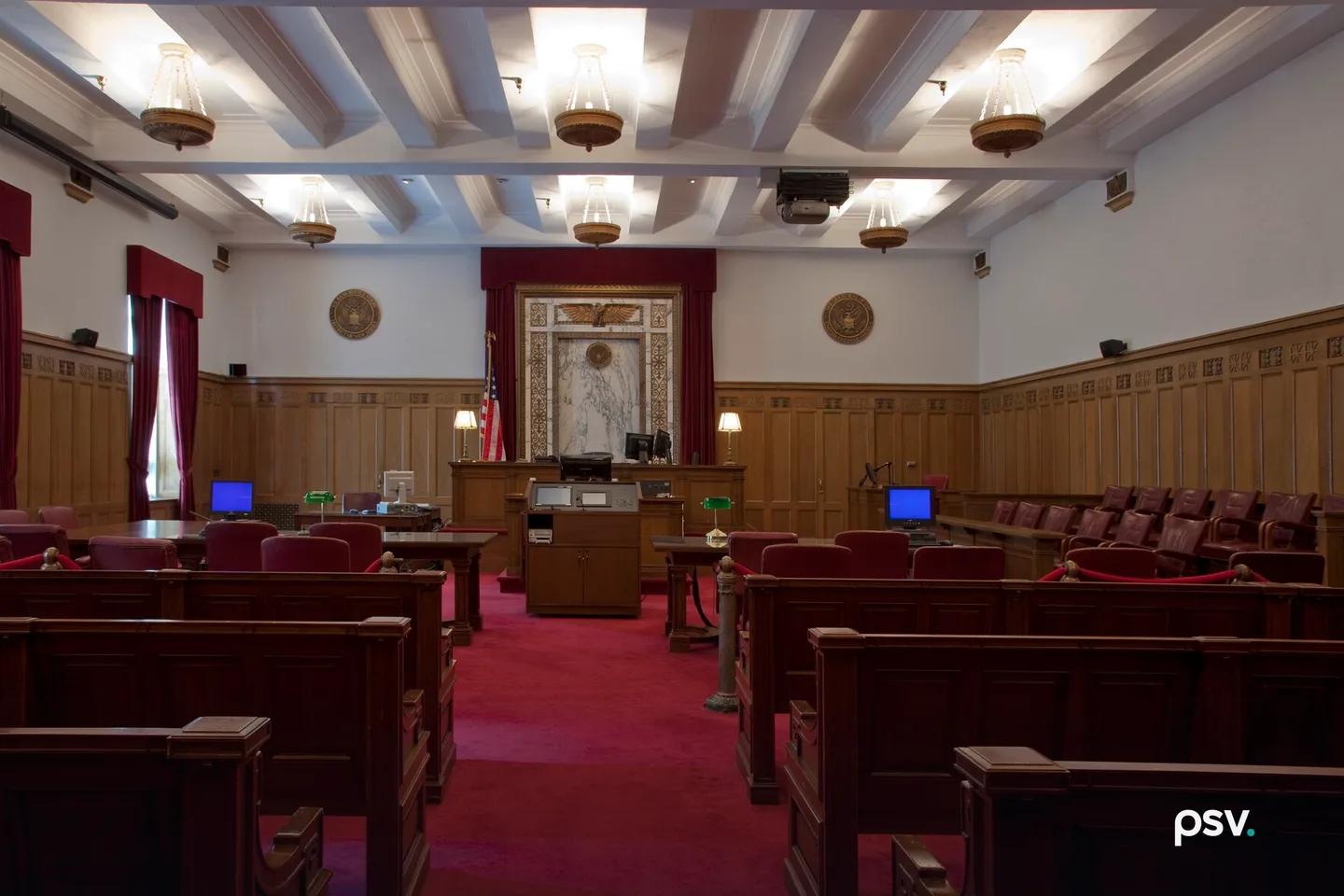
- Carol M. Highsmith, Clarkson S. Fisher Federal Building and U.S. Courthouse, Trenton, New Jersey, Library of Congress via Wikimedia Commons, public domain (lead photograph source)
Topics
Related PSV analysis
CRE PROPTECH NEWS
RealPage Acquires Cherre: The CRE Data Consolidation Read
RealPage says it has acquired Cherre, the data intelligence platform institutional owners use to resolve more than 4 billion entities across roughly $4 trillion in real assets. Terms were not disclosed. The companies promise operational independence and an open platform. For operators, the durable question is contractual: who now owns the pipes your portfolio data runs through, and on what terms.
AI AGENTS
When Your AI Vendor 10x’s the Price, This Is What Saves You
What happens if the vendor goes public and decides to 10x the usage cost? A principal asked PSV that question about an AI stack built on Claude, and it applies equally to ChatGPT, Copilot, and every workflow tool on top of them. It deserves a better answer than reassurance. Prices move, vendors get acquired, models deprecate. The firms that survive repricing without drama share one property, and it is not a clever contract. It is an architecture decision made on day one, and it costs nothing extra to make.
UNDERWRITING
AI Underwriting for Commercial Real Estate: A Source-Cited Workflow
How to use AI to normalize a rent roll and T-12, prepare a first-pass underwriting, and accelerate IC work while keeping calculations, assumptions, and approvals reviewable.
Related guides
Cornerstone PSV guides on the workflows in this article.
Enterprise AI for Institutional CRE
PSV trains your whole firm on Claude and ChatGPT, builds your agents live inside your own environment, and stays on as your embedded AI team. What we build for you is yours.
Read the guideAI for Commercial Real Estate Lenders
Screening at volume, credit memos drafted from the borrower package, every figure traced to the page it came from, and the book watched after close.
Read the guideClaude vs ChatGPT for CRE
An operator's comparison of Claude and ChatGPT for commercial real estate underwriting, and why the grounded setup matters more than the model brand.
Read the guideby PSVLiveYou read the operator view. Now learn to run the workflow.
The AI MBA for commercial real estate: the workflows these briefs describe, taught end to end on real deal files, with live builds and a community of CRE operators.