UNDERWRITING
One Claude Prompt, Full Underwriting: What Has to Be True First
Can Claude or ChatGPT run a full underwriting workflow, intake to IC draft, from a single prompt? It is the single most common question in PSV’s prospect calls and Institute office hours, usually asked by a team that has seen each step work in isolation and wants the button that runs them all. The honest answer is yes, the chaining is the easy part, and the reasons it fails have nothing to do with the prompt.
Direct answer
Direct answer to can AI run full underwriting with one prompt
A full first-pass underwriting can run as one chained workflow: intake, rent roll and T-12 normalization, assumptions memo, model population, IC draft. The chaining is solved. What decides whether the output is usable is everything upstream and around the chain: files the workflow can actually find, arithmetic done deterministically outside the language model, assumptions owned by a named person, and a review gate that treats the end-to-end draft as a draft. Teams that skip those four and buy the button get fast documents with slow errors.
The direct answer, and what one prompt really buys
Technically, yes. A workflow that runs intake, normalization, assumptions, model population, and IC drafting in sequence from a single instruction is buildable today, and PSV builds them. The pattern that works is not one giant prompt but a chain of small, named steps, each with defined inputs and outputs, composed in sequence. This matches the engineering consensus Anthropic itself publishes for agent design: simple, composable workflow patterns are more reliable than a single autonomous agent improvising across a long task. Each step does one job, hands a checkable artifact to the next, and fails loudly instead of wandering. The single prompt is just the ignition. The engine is the chain, and every link in it existed before the button did.
What one prompt buys is the removal of human glue between steps a firm has already proven individually. That is worth real hours: the analyst stops re-uploading files, re-explaining context, and re-formatting intermediate outputs five times per deal. What it does not buy is any improvement in the steps themselves. A normalization step that misreads concession structures produces the same misread inside a chain, except now the error flows silently into the assumptions memo, the model, and the IC draft, wearing the formatting of finished work. Chaining multiplies both the leverage and the blast radius. That is the whole reason the prerequisites below matter more than the chain.
The four things that have to be true first
First, the files have to be findable and consistent. A chain cannot ask a person where the current rent roll lives, so the deal folder needs one canonical location per document type and a naming convention the workflow can rely on. Second, the arithmetic has to leave the language model. Every number that matters, in-place rent, loss to lease, expense ratios, debt service, is computed in code the firm can read, with the model doing extraction, labeling, and prose. A language model that computes a DSCR inline is a liability no reviewer can audit. Third, every assumption gets an owner. Exit cap, rent growth, downtime, insurance: the chain can propose defaults from the firm’s standards file, but a named person accepts or overrides each one, and the memo records who.
Fourth, the review gate has to survive the automation. The seductive failure mode of end-to-end chains is that output arrives looking done, and organizations quietly stop reading what looks done. The NIST AI Risk Management Framework’s core insight applies directly: managing AI risk is about governance and measurement around the system, not just the system’s accuracy. In practice that means the chain ends at a draft with a diff-friendly assumptions page, a named reviewer works through it against the source documents, and nothing reaches a committee or a counterparty until that sign-off exists. The chain saves the hours between steps. The review hour it must not save is the one at the end.
| Stage | Input | Output | Human gate |
|---|---|---|---|
| Intake | Deal folder: OM, rent roll, T-12, loan quote | File inventory with gaps flagged | Analyst confirms the inventory is complete |
| Normalization | Rent roll and T-12 in whatever format arrived | One clean schema, anomalies labeled, source page cited per figure | Spot-check against source documents |
| Assumptions | Firm standards file plus normalized data | Assumptions memo with a proposed value and rationale per line | Named owner accepts or overrides each assumption |
| Model population | Normalized data plus accepted assumptions | Populated model, all arithmetic in code, not in the language model | Reviewer checks totals tie to the T-12 |
| IC draft | Everything above | Draft memo with every figure traced to its source | Deal lead signs before anything leaves the building |
The workflow PSV would run
Run the chain per deal, but adopt it per stage. The rollout that works starts with normalization alone until the team trusts its output on ten real deals, then adds the assumptions stage, then the model, then the draft. Each stage earns its place in the chain by being boring, and the one-prompt version arrives last, as a convenience wrapped around five proven steps rather than a leap of faith. The inputs, outputs, and gates are in the table above. The part worth underlining is the failure behavior: a well-built chain stops and reports when a document is missing or a number does not tie, rather than improvising past it. If a vendor demo never shows you what the chain does when the rent roll is a scanned PDF with a handwritten column, ask.
Measure the thing you actually wanted. The point was never document generation speed, it was cycle time from deal receipt to a screened yes or no, and error rate at the IC stage. A firm that tracks those two numbers before and after adoption knows what the chain is worth and where it leaks. In PSV’s experience the chain’s value concentrates early, screening more deals to a fast, documented no, and the review gate’s value concentrates late, on the deals that go to committee. Both numbers belong to the firm, not the vendor, and both should be visible to the people signing the memos.
What stays human, permanently
The operator read
Finish with the judgment call.
The reported facts are above. Enter your email for PSV's operator conclusion and a year of access to every newsroom brief.
Free. No card. Privacy policy. Unsubscribe anytime.
 by PSVLive
Build the workflow behind this analysis. Train with the operators doing it.
Real deal files, live builds, and production-ready CRE AI workflows inside the CRE AI Institute.










Clear answers
Common questions about can AI run full underwriting with one prompt
Can AI run a complete CRE underwriting from a single prompt?
Technically yes. A workflow that chains intake, rent roll and T-12 normalization, an assumptions memo, model population, and an IC draft from a single instruction is buildable today. The reliable pattern is not one giant prompt but a chain of small named steps with defined inputs and outputs, matching the engineering consensus that simple composable workflow patterns beat a single autonomous agent improvising across a long task. What the single prompt buys is the removal of human glue between steps a firm has already proven individually. What it does not buy is any improvement in the steps themselves: an extraction error flows silently through the whole chain wearing the formatting of finished work, which is why the prerequisites matter more than the chaining.
What has to be true before automating underwriting end to end?
Four things. Files must be findable: one canonical location per document type and a naming convention the workflow can rely on, because a chain cannot ask where the current rent roll lives. Arithmetic must leave the language model: every figure that matters is computed in code the firm can read, with the model doing extraction, labeling, and prose. Every assumption needs a named owner who accepts or overrides it, recorded in the memo. And the review gate must survive the automation: the chain ends at a draft, a named reviewer works it against source documents, and nothing reaches a committee or counterparty without sign-off. Teams that skip these four get fast documents with slow errors.
Should a firm adopt an end-to-end underwriting chain all at once?
No. Adopt per stage, run per deal. Start with normalization alone until the team trusts its output on ten real deals, then add the assumptions stage, then model population, then the IC draft. Each stage earns its place by being boring, and the one-prompt version arrives last as a convenience wrapped around five proven steps. Measure cycle time from deal receipt to a screened decision and error rate at the IC stage, before and after, so the chain’s value and its leaks are both visible. A well-built chain also fails loudly, stopping and reporting when a document is missing or a number does not tie, rather than improvising past the gap.
Primary sources and operating references
These references support the control, research, and operating standards used in this guide. PSV’s workflow recommendations are original analysis.
- Anthropic: Building effective agents, on composable workflow patterns versus autonomous agents
- NIST AI Risk Management Framework: Govern, Map, Measure, and Manage
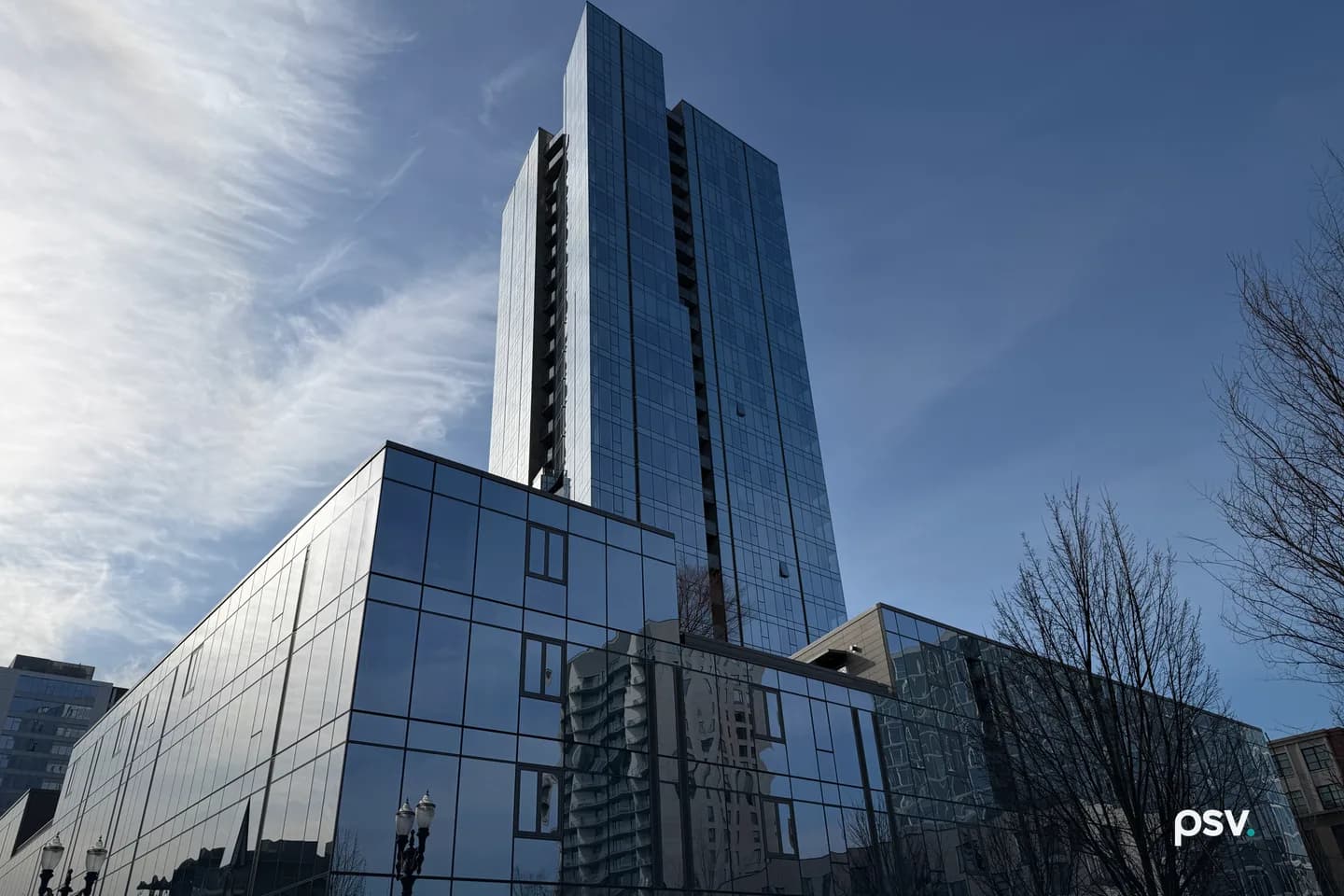
- Wikimedia Commons: Cosmopolitan on the Park residential high-rise in Portland's Pearl District, by PortlandAppraisalBlog, CC BY-SA 4.0 (source of the lead photograph)
Topics
Related PSV analysis
UNDERWRITING
AI Underwriting for Commercial Real Estate: A Source-Cited Workflow
How to use AI to normalize a rent roll and T-12, prepare a first-pass underwriting, and accelerate IC work while keeping calculations, assumptions, and approvals reviewable.
CRE AI ADOPTION
Why Claude and Copilot Pilots Flop in CRE. It’s Never the Model.
How should a CRE firm structure SharePoint or Drive so Claude, Copilot, or any AI tool can actually use it? Multiple operating teams have put the same question to PSV in almost the same words, usually after a pilot underperformed and the tool took the blame. The uncomfortable finding is that the AI was fine and the files were the problem: five versions of the rent roll, three naming conventions, and the real number in someone’s inbox.
OPERATING STANDARD
The PSV Production Standard: How AI Work Ships in Commercial Real Estate Operations
Every PSV workflow guide closes by applying the same operating standard to its own workflow: appraisal, underwriting, leasing, due diligence, and the rest. This is the canonical statement of that standard. It defines what a production AI workflow needs before a commercial real estate team should trust it with consequential work: a named job, a disciplined source boundary, separated output layers, a designed exception path, a durable approval record, and measurement based on decision quality.
Related guides
Cornerstone PSV guides on the workflows in this article.
Claude vs ChatGPT for CRE
An operator's comparison of Claude and ChatGPT for commercial real estate underwriting, and why the grounded setup matters more than the model brand.
Read the guideClaude for Real Estate Underwriting
The grounded underwriting workflow: real deal documents in, your rules applied, a source citation behind every number, a person signs off.
Read the guideCRE AI Training
Hands-on CRE AI training for practicing operators, routing into the CRE AI Institute. No coding required, built on a real practice deal.
Read the guideby PSVLiveYou read the operator view. Now learn to run the workflow.
The AI MBA for commercial real estate: the workflows these briefs describe, taught end to end on real deal files, with live builds and a community of CRE operators.