CRE POLICY NEWS
Six Federal Cases Are Testing Where a Data Center Can Sit
Five federal class actions filed since April accuse data center operators of pushing unreasonable noise onto neighboring homes, and a sixth case runs the other direction: a developer suing Nashville over a permit moratorium. PSV read all six dockets. Two of the five have already ended, neither of them on the merits, and the pattern is not the one the trade press is describing.
Direct answer
Direct answer to data center noise lawsuit
Noise has become an entitlement and litigation risk for data centers rather than a neighbor relations problem. The two cases that ended did so on pleading defects and a voluntary dismissal, not because a court rejected the claims, so reading them as a safe harbor is reading them wrong. The harder question for an operator is narrower: municipal noise ordinances measure A-weighted decibels, and the harm being alleged is low-frequency sound those meters are not designed to capture.
Six federal dockets, and what each one actually says
Since April 6, five putative class actions have been filed in federal district courts by residents living near data centers, each alleging that the facility’s cooling systems and backup generators push unreasonable noise onto their properties. PSV pulled every docket rather than relying on the trade coverage, and the roster is specific: Digi Power X in the Western District of New York, Alliance Cloud Services in the Western District of Michigan, DataOne USA in the District of New Jersey, xAI together with SpaceX and MZX Tech in the Northern District of Mississippi, and Microsoft in the Eastern District of Wisconsin. All five are pleaded as state common law claims, principally private nuisance and negligence, carried into federal court on diversity jurisdiction.
The Microsoft case is the fullest record and the most active. Garret Ostergaard, David Wade and Joy Wade filed on July 1 over the Fairwater campus at 4800 90th Street in Mount Pleasant, Wisconsin, pleading a class of residents within 1.5 miles and invoking both ordinary diversity and the Class Action Fairness Act, which requires at least 100 class members and more than $5 million in aggregate controversy. The complaint describes a 315-acre campus of three buildings totaling 1.2 million square feet drawing 337.6 megawatts, and it quotes a Microsoft representative saying the company is aware of the noise concerns at the Mount Pleasant facility and is investigating root causes. Those figures and that quotation are the plaintiffs’ characterizations of the record, not PSV findings. Microsoft was served on July 17 and the parties filed their Rule 26(f) plan on August 19, so the case is into discovery planning.
| Case and court | Filed | Claim | Where it stands |
|---|---|---|---|
| Demers v. Digi Power X Inc., W.D.N.Y., 1:26-cv-00672 | April 6, 2026 | Diversity, property damage | Open; no termination on the docket |
| Valenzuela v. Alliance Cloud Services, LLC, W.D. Mich., 1:26-cv-01694 | May 26, 2026 | Diversity, property damage | Open; partial motion to dismiss two counts decided August 13, order not in the public file |
| Montgomery v. DataOne USA LLC, D.N.J., 1:26-cv-05972 | May 26, 2026 | Diversity, torts to land | Terminated June 22 after the court questioned jurisdiction on its own motion |
| Haley v. X.AI Corp., N.D. Miss., 3:26-cv-00148 | June 8, 2026 | Diversity, property damage | Stayed August 5; plaintiffs filed a notice of voluntary dismissal August 17 |
| Ostergaard v. Microsoft Corp., E.D. Wis., 2:26-cv-01169 | July 1, 2026 | Private nuisance and negligence, CAFA class | Open and active; Rule 26(f) plan filed August 19 |
| DCB Nashville, LLC v. Metro Nashville, M.D. Tenn., 3:26-cv-01143 | August 11, 2026 | 42 U.S.C. 1983, vested rights | Open; reassigned after recusal, injunction briefing and hearings set |
The two cases that ended did not end on the merits
This is the part the secondary coverage has wrong, and it matters because an operator could reasonably conclude from a headline count that the claims are failing. They are not being tested. In the New Jersey case against DataOne, over a facility in Vineland, the court issued an order to show cause on June 12 on its own motion, and the problem it identified was not the nuisance theory. It was that the complaint had not adequately alleged the citizenship of a limited liability company defendant, which for diversity purposes follows the citizenship of every one of its members. Plaintiffs filed a notice of voluntary dismissal a week later and the case was terminated on June 22. That is a pleading defect on an LLC caption, and it is fixable in state court or in a refiled federal complaint.
The Mississippi case against xAI ran further and stopped for a different reason. xAI and MZX Tech moved to dismiss for failure to state a claim on July 27, SpaceX moved separately to dismiss for lack of jurisdiction the same day, the magistrate judge stayed the case on August 5 pending a ruling on the jurisdictional motion, and plaintiffs filed a notice of voluntary dismissal on August 17 before any of it was decided. No court has ruled on whether data center noise states a nuisance claim. The one order that might have told us something, on the partial motion to dismiss two counts in the Michigan case, was entered on August 13 and is not in the public file, so PSV cannot report what it held. The honest read for an operator is that the theory is untested rather than rejected, and that the plaintiffs’ bar is iterating: Weitz & Luxenberg appears in two of these cases and Liddle Sheets in two more, which is a coordinated campaign learning from its own procedural losses.
The workflow PSV would run on a data center pipeline
The useful artifact here is not a case summary, it is a standing exposure sheet across the sites a firm owns, has under contract, or is entitling. Inputs are the ones a development or asset management team already holds: the site plan showing where chillers, cooling towers, dry coolers and generator yards sit relative to the property line, the parcel boundary set, the residential parcels within about two miles, the applicable municipal noise ordinance with its measurement standard and its limits by time of day, any acoustical study in the file, and the permit conditions actually issued. Add two public pulls the team usually does not make: the municipality’s and the state environmental agency’s complaint and public comment records for the facility, and the local zoning agenda for any pending data center ordinance.
The output is one row per site with four columns that decide everything: distance from the nearest noise-generating equipment to the nearest residential parcel line, what the ordinance measures and whether the file contains a measurement in those units, whether a complaint record exists and how old the newest entry is, and whether a moratorium or new zoning standard is on a local agenda. An assistant can assemble that sheet and keep it current, and it can read a proposed ordinance against a project’s permit dates to flag a vested-rights question. It should cite the document and page behind every cell. The reviewer is the development lead for entitlement rows and the asset manager for operating rows, and the approval gate is that no row changes an underwriting assumption, a reserve, or a disclosure until counsel has read the underlying record. Nothing in this workflow is a legal conclusion, and none of it should be represented to a buyer or a lender as one.
What stays with a person, and what is still unknown
The operator read
Finish with the judgment call.
The reported facts are above. Enter your email for PSV's operator conclusion and a year of access to every newsroom brief.
Free. No card. Privacy policy. Unsubscribe anytime.
 by PSVLive
Build the workflow behind this analysis. Train with the operators doing it.
Real deal files, live builds, and production-ready CRE AI workflows inside the CRE AI Institute.










Clear answers
Common questions about data center noise lawsuit
Can you sue a data center for noise?
Residents are trying, and as of August 26, 2026 no federal court has ruled on the merits of the theory. Five putative class actions have been filed since April 6, 2026: Demers v. Digi Power X Inc. in the Western District of New York, Valenzuela v. Alliance Cloud Services, LLC in the Western District of Michigan, Montgomery v. DataOne USA LLC in the District of New Jersey, Haley v. X.AI Corp. in the Northern District of Mississippi, and Ostergaard v. Microsoft Corporation in the Eastern District of Wisconsin. All are state common law claims, principally private nuisance and negligence, brought in federal court on diversity jurisdiction. The Microsoft complaint, filed July 1, 2026 over the Fairwater campus in Mount Pleasant, Wisconsin, pleads a class of residents within 1.5 miles under both ordinary diversity and the Class Action Fairness Act, which requires at least 100 class members and more than $5 million in aggregate controversy. It is into discovery planning, with a Rule 26(f) plan filed August 19, 2026.
Have any of the data center noise lawsuits been dismissed?
Two have ended, and neither ended on the merits, which is the detail most coverage misses. In Montgomery v. DataOne USA LLC, over a facility in Vineland, New Jersey, the court issued an order to show cause on June 12, 2026 on its own motion, raising subject matter jurisdiction. The defect it identified was that the complaint had not adequately alleged the citizenship of a limited liability company defendant, which for diversity purposes follows the citizenship of every one of its members. Plaintiffs filed a notice of voluntary dismissal on June 19 and the case was terminated June 22. In Haley v. X.AI Corp., xAI and MZX Tech moved to dismiss for failure to state a claim and SpaceX moved to dismiss for lack of jurisdiction, both on July 27, 2026; the case was stayed August 5 pending the jurisdictional ruling, and plaintiffs filed a notice of voluntary dismissal on August 17 before anything was decided. A partial motion to dismiss two counts in the Michigan case was decided August 13, 2026, but that order is not in the public docket file, so its holding is not reportable.
Can a city stop a data center with a moratorium after permits are filed?
That is the question in DCB Nashville, LLC v. The Metropolitan Government of Nashville and Davidson County, No. 3:26-cv-01143 (M.D. Tenn.), filed August 11, 2026 under 42 U.S.C. § 1983. Metro Council passed Ordinance No. BL2026-1448, a moratorium on accepting, processing, approving and issuing zoning, building and grading permits for data center developments, on third reading as amended July 21, 2026; the Mayor approved it July 24, 2026, and it runs to December 1, 2026. Metro separately adopted data center zoning standards in Ordinance No. BL2026-1391. DC BLOX alleges its building permit applications were submitted May 29, 2026 and had vested under Tenn. Code Ann. § 13-4-310, that the prior tenant’s data center use was protected under § 13-7-208(g), and that Metro’s own zoning administrator had determined in writing that the applications vested. Those are the plaintiff’s allegations; Metro has not yet answered. The case was reassigned after Judge Trauger recused on August 12, with injunction briefing and hearings set and an initial case management conference noticed for November 16, 2026.
Primary source record
These records support the reported facts in this brief. PSV’s CRE workflow interpretation and test plan are original analysis.
- Class Action Complaint and Demand for Jury Trial, Ostergaard v. Microsoft Corporation, No. 2:26-cv-01169 (E.D. Wis.), filed July 1, 2026
- Complaint for Declaratory and Injunctive Relief and Damages under 42 U.S.C. § 1983, DCB Nashville, LLC v. The Metropolitan Government of Nashville and Davidson County, No. 3:26-cv-01143 (M.D. Tenn.), filed August 11, 2026
- Order to Show Cause, Montgomery v. DataOne USA LLC, No. 1:26-cv-05972 (D.N.J.), filed June 12, 2026
- Docket, Haley v. X.AI Corp., No. 3:26-cv-00148 (N.D. Miss.), filed June 8, 2026 (motions to dismiss July 27, stay August 5, notice of voluntary dismissal August 17)
- Docket, Valenzuela v. Alliance Cloud Services, LLC, No. 1:26-cv-01694 (W.D. Mich.), filed May 26, 2026
- Docket, Demers v. Digi Power X Inc., No. 1:26-cv-00672 (W.D.N.Y.), filed April 6, 2026
- Metropolitan Government of Nashville and Davidson County, Ordinance No. BL2026-1448, legislative history (third reading as amended July 21, 2026; approved by the Mayor July 24, 2026)
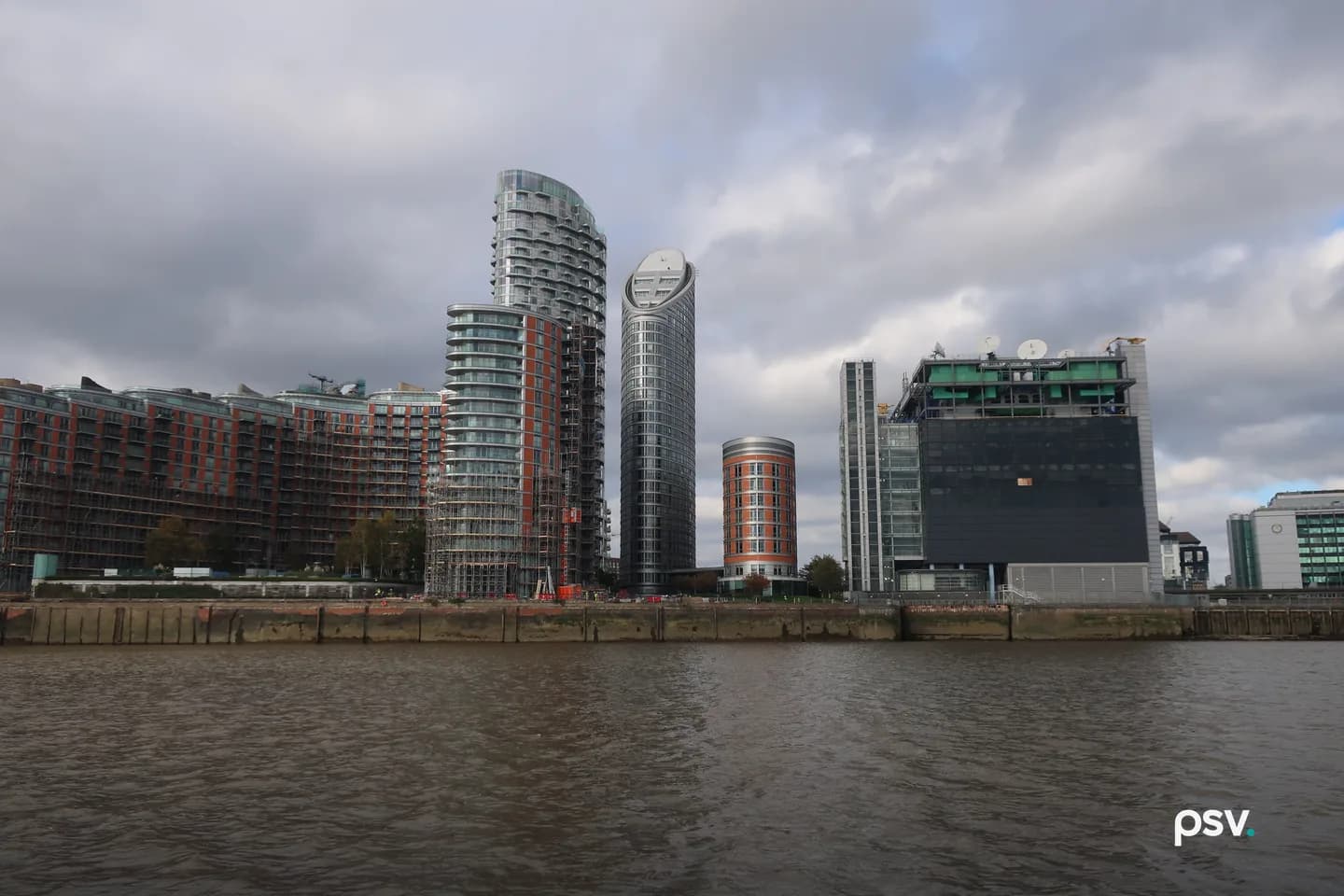
- Wikimedia Commons, “Apartment blocks and data centre by the Thames” by Hugh Venables, CC BY-SA 2.0 (source of the lead photograph)
Topics
Related PSV analysis
CRE POLICY NEWS
Pennsylvania’s Data Center Order Turns on One Number
Governor Josh Shapiro signed Executive Order 2026-05 on August 18, directing Commonwealth agencies to hold every data center proposal with peak demand over 25 megawatts to the Governor’s Responsible Infrastructure Development Requirements. Data centers come out of the Permit Fast Track Program entirely, and the Department of Environmental Protection will not issue a permit until a project has its local and municipal approvals in hand.
CRE POLICY NEWS
TVA Repriced Data Center Power. The Tariff Isn’t Public.
The TVA Board voted in Memphis on August 20 to move data centers out of the manufacturing rate class and onto a rate of their own. Officials at the meeting described an October 1 start, a roughly 10 percent increase, a three-year phase-in for existing sites, and an upfront capacity commitment charge on new load above 5 megawatts. TVA’s own release names none of those terms.
CRE POLICY NEWS
PJM Moves to Curtail Data Centers: The CRE Read on Firm Power
The PJM Board of Managers issued a decisional letter on July 27 directing two filings to FERC by the end of July. One creates a Reliability Backstop Procurement to backfill a 6,831 megawatt capacity shortfall. The other creates an Interim Resource Adequacy Service, under which new large loads that have not brought their own new capacity by June 1, 2027 are cut before anybody else is.
Related guides
Cornerstone PSV guides on the workflows in this article.
Claude for Real Estate Underwriting
The grounded underwriting workflow: real deal documents in, your rules applied, a source citation behind every number, a person signs off.
Read the guideClaude for CRE Operators
The five shifts AI-native CRE shops made: how operators run their work with AI, grounded in real deals and templates.
Read the guideClaude for Real Estate Developers
The ground-up developer field guide: site selection through IC memo, built on a real development deal.
Read the guideby PSVLiveYou read the operator view. Now learn to run the workflow.
The AI MBA for commercial real estate: the workflows these briefs describe, taught end to end on real deal files, with live builds and a community of CRE operators.