CRE POLICY NEWS
TVA Repriced Data Center Power. The Tariff Isn’t Public.
The TVA Board voted in Memphis on August 20 to move data centers out of the manufacturing rate class and onto a rate of their own. Officials at the meeting described an October 1 start, a roughly 10 percent increase, a three-year phase-in for existing sites, and an upfront capacity commitment charge on new load above 5 megawatts. TVA’s own release names none of those terms.
Direct answer
Direct answer to TVA data center rate
The number a Valley underwriter needs is not on the public record yet. TVA published the decision, the 11 to 32 gigawatt demand case behind it, and the 13 billion dollar build it funds. It has not published the megawatt threshold, the per megawatt commitment, the contract term, or the exit obligation. Until the rate schedules post, a Tennessee Valley data center pro forma carries an unpriced line, and the fix is a records watch rather than a model.
What the TVA Board approved on August 20
The Tennessee Valley Authority Board of Directors met as Meeting No. 26-03 at 1:00 p.m. Central on August 20, 2026, at the Halloran Centre for Performing Arts and Education at 225 S. Main Street in Memphis, Tennessee. That much is on the federal record: TVA filed the Sunshine Act notice on August 14 and it published in the Federal Register on August 18, listing the agenda the board would work through. Three items sat under the Report of the Finance, Rates, and Portfolio Committee, in this order: the FY27 Annual Budget, Rate Change Approval, and the Integrated Resource Plan. A fourth item, Load Greater than 100 MW, sat separately under the External Stakeholders and Regulation Committee. TVA’s own release the same day, titled “TVA Board Protects Consumers, Strengthens Reliability Amid Rising Power Demand,” says the board approved updates to TVA’s wholesale rate structure to increase transparency, be more aligned to cost, and protect residential and manufacturing customers from subsidizing expenses associated with significant growth of data center load. The release ties the action to a Ratepayer Protection Pledge TVA says it recently signed, a national commitment that major power users cover the full cost of the infrastructure built to serve them. TVA Chair Mitch Graves is quoted saying that maintaining low rates and high reliability for customers is the agency’s first priority, and that as AI and advanced industries consume more electricity, the board is making sure hardworking American families and small businesses are not left carrying the cost.
The same release carries the two numbers that explain why the rate moved. TVA’s 2026 Integrated Resource Plan, approved at the same meeting, estimates the Valley will need 11 to 32 gigawatts of additional generation capacity between now and 2040. The FY27 budget commits more than 13 billion dollars in planned investment through FY29 for reliability and capacity expansion, more than 1 billion dollars annually to maintain the existing generation fleet and transmission system, 4,120 megawatts of new TVA-owned capacity under construction, and another 3,000 megawatts under evaluation. Interim President and CEO Mike Skaggs is quoted saying the board actions position TVA to meet the Valley’s growing demand while continuing to advance American energy leadership, and Chief Financial Officer Tom Rice is quoted saying affordability and reliability remain at the center of every budget decision. What the release does not do is describe the rate. It names no threshold, no charge, no effective date, and no percentage. An operator reading TVA’s own account of its own action cannot price it.
The terms that have circulated all come from officials speaking at the Memphis meeting and from same-day accounts of it, not from a filed schedule. Those accounts describe data centers being moved off the manufacturing rate class onto a class of their own, a start date of October 1, 2026, an average billing increase of roughly 10 percent, a three-year phase-in for existing operations, and an upfront capacity commitment charge on new or expanding load above 5 megawatts, paid over three to five years to fund the grid build. The Southern Alliance for Clean Energy, an advocacy organization that follows TVA closely, published its own account the same day and reported the same shape: a new structure, a three-year phase-in, roughly 10 percent more, and an additional charge above 5 megawatts. Its point was that this was the extent of what the public learned. PSV is repeating those terms as reported and labeling them that way, because none of them appears in TVA’s release and none of them can be checked against a rate schedule that has not posted.
Why a CRE operator should care
The Tennessee Valley is seven states, and cheap power is the reason a great deal of load has gone there. A rate class is not a bill, though, and the structure between TVA and a building is worth stating plainly because it decides who an operator actually negotiates with. TVA’s Form 10-Q for the quarter ended June 30, 2026, filed August 4, describes a wholesale rate structure built on three base revenue components: time of use demand charges, time of use energy charges, and a grid access charge that captures a portion of fixed costs. TVA sells that power to local power companies, and the 10-Q records that 148 of them had signed TVA’s 20-year Partnership Agreement as of June 30, with Memphis Light, Gas and Water and Nashville Electric Service each accounting for 8 percent of TVA’s total operating revenues. A data center does not buy from TVA. It buys from a local power company whose own retail schedule sits downstream of the wholesale change the board just approved. The reported 10 percent is a wholesale average, and the number that lands on a site is whatever the local power company passes through under its own contract.
The reported 5 megawatt trigger is the detail that should move a development calendar, because it is low. PSV covered PJM’s large load rules on July 29, where the definition turns on 50 megawatts measured at a single site inside a one-mile radius, and Pennsylvania’s Executive Order 2026-05 on August 19, which reaches projects with peak demand over 25 megawatts. A trigger at 5 megawatts is a different order of magnitude. It catches enterprise halls, colocation suites, and the AI capacity that firms are adding inside existing industrial buildings, none of which reads as a data center project in the way the headlines use the term. Whether that 5 megawatts is measured as contracted load, connected load, or peak demand, whether it applies per site or per customer, and how a phased build is measured against it are all unanswered, and each answer moves projects in and out of the regime. Separately, the board’s agenda carried Load Greater than 100 MW as its own item under a different committee, which suggests the largest loads are being handled on a track of their own.
There is a second read here for owners of everything else on that grid. TVA’s stated purpose is to stop residential and manufacturing customers from subsidizing data center load. For an industrial landlord in Alabama or Mississippi whose tenants are on manufacturing rates, that is a defensive fact and a good one. For a data center sponsor it is a cost transfer, and the risk an investment committee will ask about is the one the Southern Alliance for Clean Energy put in a single sentence: if TVA builds fifty-year infrastructure to serve a load and the data center operates five years before closing, the remaining customers pay for the rest. Whether the approved rate contains minimum contract commitments and early-termination obligations that address that is not public. That is not a criticism of the design. It is a statement about what an operator can currently verify, which is very little.
The workflow PSV would run
The first workflow is a rate-record watch, and it exists because the governing document does not exist yet in public form. The inputs are all primary and all countable: the Federal Register notice for Meeting No. 26-03, TVA’s August 20 release, TVA’s Form 10-Q filed August 4, the 2026 Integrated Resource Plan once TVA posts it, TVA’s data center rate schedules when they publish, any Form 8-K TVA files on the board action, and, per site, the retail schedule and contract of the local power company that actually serves it. An assistant checks each of those sources on a fixed cadence and returns a one-page memo per site with three columns: confirmed against a filed record, reported but unpublished, and unknown. Every cell cites the document it came from, and anything in the second or third column is marked as such in the memo rather than smoothed into prose. The reviewer is the development lead working with energy counsel. The approval gate is that no figure from the second column enters a lender package, an investment committee memo, or an LP update until a human has read it in the filed schedule.
The second workflow is a power cost sensitivity rather than a power cost assumption, and the distinction is the whole point. The inputs are the site’s designed load curve and energization schedule, the current local power company contract, the reported roughly 10 percent wholesale increase, the reported three-year phase-in for existing operations, and the reported capacity commitment charge carried as a range rather than a point because no filed number exists. The output is a band on the power line of the pro forma with the capacity commitment charge modeled as a capital item paid over three to five years ahead of revenue, not as an operating expense, since an upfront commitment paid before a building earns anything changes the funding stack rather than the stabilized margin. The reviewer is the underwriter. The gate is that the band ships with its assumptions labeled reported, not filed, and with the date the record was last checked printed on the page, so that a stale sensitivity is visible as stale instead of passing as fact.
What stays human, and what TVA has not answered
The operator read
Finish with the judgment call.
The reported facts are above. Enter your email for PSV's operator conclusion and a year of access to every newsroom brief.
Free. No card. Privacy policy. Unsubscribe anytime.
 by PSVLive
Build the workflow behind this analysis. Train with the operators doing it.
Real deal files, live builds, and production-ready CRE AI workflows inside the CRE AI Institute.











Clear answers
Common questions about TVA data center rate
What did the TVA board approve for data centers on August 20, 2026?
The Tennessee Valley Authority Board of Directors met as Meeting No. 26-03 in Memphis on August 20, 2026 and worked an agenda that the Federal Register notice published August 18 lists as the FY27 Annual Budget, Rate Change Approval, and the Integrated Resource Plan, with a separate item on Load Greater than 100 MW. TVA’s own release that day says the board approved updates to its wholesale rate structure to increase transparency, be more aligned to cost, and protect residential and manufacturing customers from subsidizing expenses associated with significant growth of data center load, and ties the action to a Ratepayer Protection Pledge under which major power users cover the full cost of infrastructure built to serve them. The same release records the 2026 Integrated Resource Plan estimate that the Valley needs 11 to 32 gigawatts of additional generation capacity between now and 2040, and an FY27 budget carrying more than 13 billion dollars of planned investment through FY29, more than 1 billion dollars annually on the existing fleet and transmission, 4,120 megawatts of new TVA-owned capacity under construction, and 3,000 megawatts under evaluation. TVA’s release does not state a rate threshold, a charge, an effective date, or a percentage.
How much more will data centers pay for power in the Tennessee Valley?
Roughly 10 percent on average, according to officials at the August 20 board meeting and same-day accounts of it, phased in over three years for existing operations and beginning October 1, 2026. Those accounts also describe data centers being moved off the manufacturing rate class onto a class of their own and an upfront capacity commitment charge applied to new or expanding load above 5 megawatts, paid over three to five years to fund grid construction. None of those terms appears in TVA’s own published release, and TVA has not posted the rate schedules that would contain them, so every one of these figures should be treated as reported rather than filed. Two further points matter for an actual bill. The roughly 10 percent is a wholesale average, and an average is not a bill: a site’s change depends on its load shape against TVA’s time of use demand and energy charges and its grid access charge. And a data center does not buy from TVA. It buys from a local power company whose retail schedule sits downstream of the wholesale change, so the pass-through is set by that contract.
Does the TVA data center rate apply to a 10 megawatt project?
On the reported terms, yes, and that is the detail most likely to surprise a developer. The trigger described at the August 20 meeting is new or expanding load above 5 megawatts, which is far below the thresholds that define large loads elsewhere. PJM’s large load rules turn on 50 megawatts measured at a single site inside a one-mile radius, and Pennsylvania’s Executive Order 2026-05, signed August 18, 2026, reaches data center projects with peak demand over 25 megawatts. A 5 megawatt trigger catches enterprise halls, colocation suites, and AI capacity added inside existing industrial buildings, none of which reads as a data center project in the way the hyperscale headlines use the term. What is not answerable from the public record is how the test is measured: whether it counts contracted, connected, or peak load, whether it applies per site or per customer, and how a phased build is treated as it grows into the threshold. The board separately carried Load Greater than 100 MW as its own agenda item under a different committee, which indicates the largest loads run on a distinct track.
Primary source record
These records support the reported facts in this brief. PSV’s CRE workflow interpretation and test plan are original analysis.
- Federal Register, Tennessee Valley Authority, “Sunshine Act Meetings,” Meeting No. 26-03 agenda, 91 FR 53476, published August 18, 2026
- Tennessee Valley Authority, “TVA Board Protects Consumers, Strengthens Reliability Amid Rising Power Demand,” August 20, 2026
- Tennessee Valley Authority, Form 10-Q for the quarterly period ended June 30, 2026, filed with the SEC on August 4, 2026 (rate structure components, local power company Partnership Agreements)
- Southern Alliance for Clean Energy, “TVA’s Data Center Rate: Talk is Cheap, Until it isn’t,” August 20, 2026 (an advocacy organization’s same-day account, cited for the reported terms and the open questions it raises)
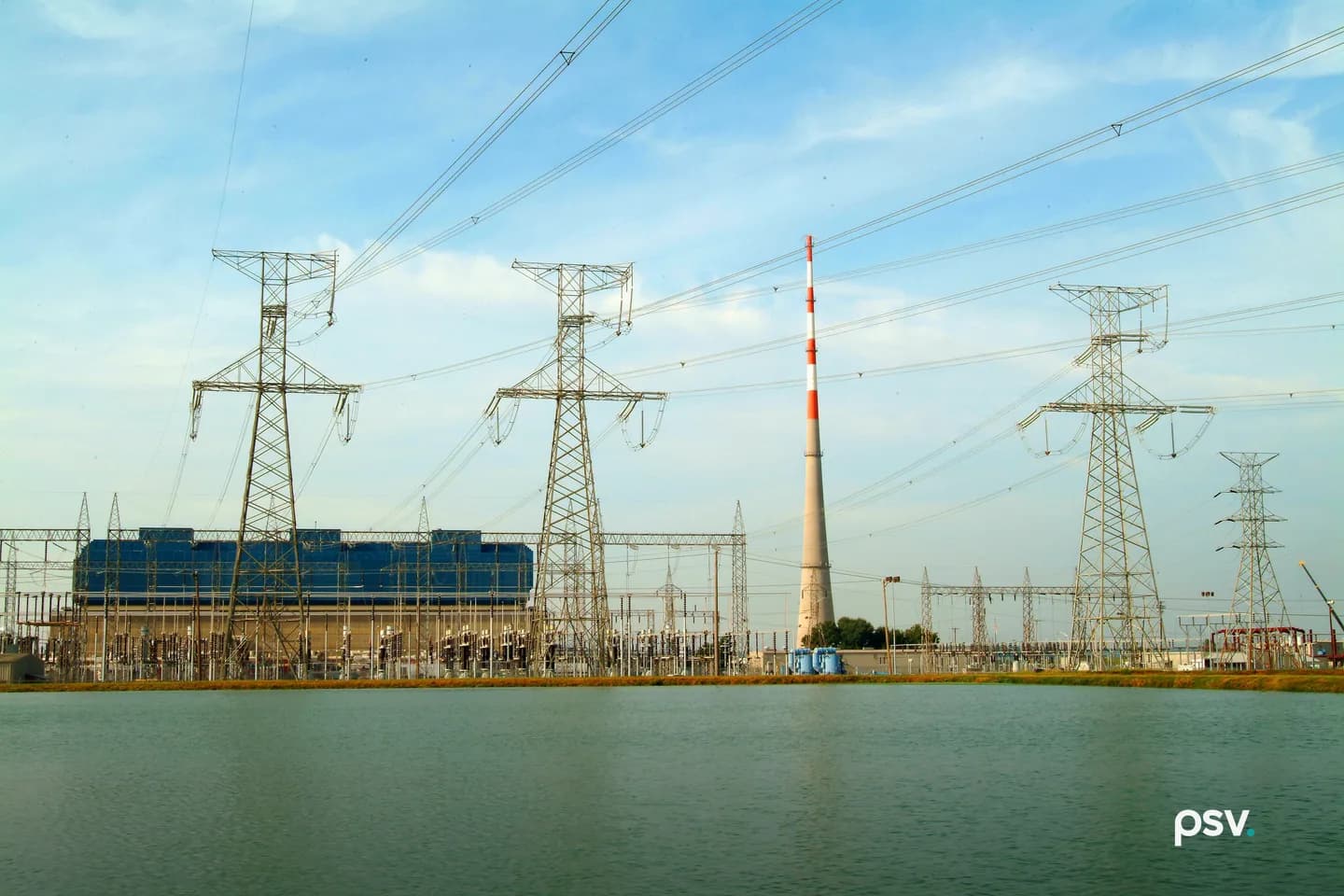
- Wikimedia Commons, “Browns Ferry Nuclear Power Plant” by Tennessee Valley Authority, public domain (source of the lead photograph)
Topics
Related PSV analysis
CRE POLICY NEWS
Pennsylvania’s Data Center Order Turns on One Number
Governor Josh Shapiro signed Executive Order 2026-05 on August 18, directing Commonwealth agencies to hold every data center proposal with peak demand over 25 megawatts to the Governor’s Responsible Infrastructure Development Requirements. Data centers come out of the Permit Fast Track Program entirely, and the Department of Environmental Protection will not issue a permit until a project has its local and municipal approvals in hand.
CRE POLICY NEWS
PJM Moves to Curtail Data Centers: The CRE Read on Firm Power
The PJM Board of Managers issued a decisional letter on July 27 directing two filings to FERC by the end of July. One creates a Reliability Backstop Procurement to backfill a 6,831 megawatt capacity shortfall. The other creates an Interim Resource Adequacy Service, under which new large loads that have not brought their own new capacity by June 1, 2027 are cut before anybody else is.
CRE CAPITAL NEWS
DOE Leases Paducah for a $100B AI Campus: The CRE Read
The Department of Energy said on July 29 that it selected Brookfield to lease land and develop a data center campus at its Paducah Site in western Kentucky, and selected NextEra Energy to build and own the power behind it. The partners put the privately funded investment above $100 billion, with up to 1.8 gigawatts of utility capacity and more than 1.2 gigawatts of compute. No tenant has been named.
Related guides
Cornerstone PSV guides on the workflows in this article.
by PSVLiveYou read the operator view. Now learn to run the workflow.
The AI MBA for commercial real estate: the workflows these briefs describe, taught end to end on real deal files, with live builds and a community of CRE operators.