CRE CAPITAL NEWS
Microsoft Says Its Data Centers Last 25 Years: The CRE Read
On its July 29 earnings call, Microsoft told investors it is extending the estimated useful lives of its datacenters and office buildings from 15 years to 25 years, effective with fiscal 2027, and that more of its future datacenter leases will therefore shift from finance leases to operating leases. The reported capital expenditure number falls to about $175 billion. The commitment behind it does not.
Direct answer
Direct answer to Microsoft datacenter useful life commercial real estate
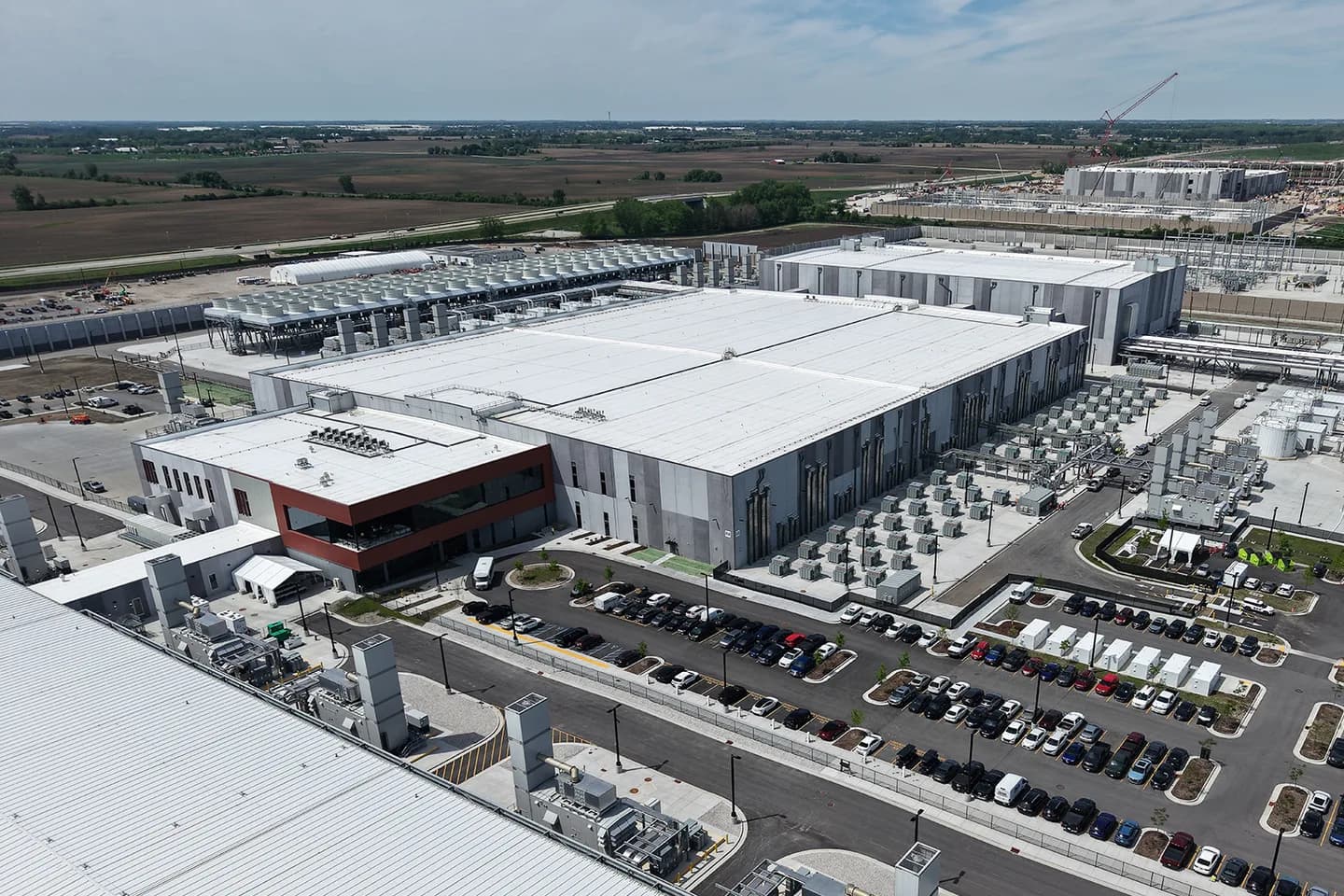
Microsoft published two real estate assumptions inside an accounting change. The first: the largest single builder of AI data centers now depreciates the buildings over 25 years while holding servers at two to six years in the same filing. The second, from the 10-K filed the same day: $329.1 billion of leases, primarily datacenters, are signed but not yet commenced, running from fiscal 2027 to fiscal 2033. That is a tenant’s pipeline, not a builder’s.
What Microsoft actually told investors
Microsoft reported fiscal fourth quarter results on July 29, 2026, and the number that matters most to real estate was not in the press release. It was in the prepared remarks. Chief financial officer Amy Hood told investors that effective at the start of fiscal 2027, the company is extending the estimated useful lives of its datacenters and office buildings from 15 years to 25 years, which she attributed to Microsoft’s operating history and expected use of those assets. She said the change affects only the timing of future depreciation and is expected to have a minimal benefit to fiscal 2027 operating income. The larger effect, she said, lands on capital expenditure, because more of Microsoft’s future datacenter leases will shift from finance leases to operating leases as a result of the update. Finance leases are included in capital expenditures. Operating leases are not. Her framing of the outcome was explicit: outside the useful life impact, calendar year 2026 capital expenditure expectations remain unchanged, and the shift from finance to operating leases adjusts that expectation to approximately $175 billion. Read those two statements together and they say the reported number moves while the spending behind it does not.
The Form 10-K Microsoft filed the same day carries the balance sheet behind the remark. Property and equipment at cost reached $431.767 billion, of which buildings and improvements were $182.749 billion, up from $137.921 billion a year earlier. Depreciation expense was $34.3 billion in fiscal 2026, against $22.0 billion in 2025 and $15.2 billion in 2024. The lease footnote is where the real estate sits. Finance lease property and equipment was $82.712 billion at cost against $66.594 billion of finance lease liabilities, compared with $21.925 billion of operating lease liabilities, and the weighted average remaining term is 13 years on finance leases against 6 years on operating leases. Of the right-of-use assets Microsoft obtained during the year, $24.608 billion came in as finance leases and $4.555 billion as operating leases, which computes to 84 percent of new lease value landing inside the capital expenditure line under the treatment now being changed. Then the disclosure that should stop any owner of a powered shell: as of June 30, 2026, Microsoft held additional leases, primarily for datacenters, that had not yet commenced, totaling $329.1 billion, commencing between fiscal year 2027 and fiscal year 2033 with lease terms of 1 year to 20 years. Against $88.5 billion of lease liabilities recognized on the balance sheet today, that pipeline computes to roughly 3.7 times the entire existing lease book. The fiscal 2026 policy note still lists buildings and improvements at five to 15 years and servers and network equipment at two to six years, so the 25-year life is prospective.
Why a CRE operator should care
The headline written almost everywhere on July 30 was that Microsoft trimmed its capital expenditure plan. That is the wrong read from a real estate desk, and the right one is far more useful. Microsoft published two assumptions this week and both of them are the landlord’s business. The first is a stated economic life. The largest single builder of AI data centers in the world now says the building lasts 25 years while the servers inside it stay on a two to six year schedule in the same filing. That is the exact argument every data center underwriter has been having since 2023: the racks turn over three or four times inside one hold period, so what is the shell worth at the end of it. Microsoft answered that question in the one place a public company cannot be casual, its depreciation policy, and the answer favors whoever owns the box. Nobody assigns a 25-year life to an asset they expect to strand. A tenant’s useful-life estimate is not an appraisal and it is not evidence about anyone else’s building, but it is the largest prospective tenant in the asset class telling the market how long it intends to be in one.
The second assumption has a check attached to it. A finance lease is functionally an owned asset carried with debt. An operating lease is rent. Microsoft moving future datacenter leases from the first treatment to the second is a hyperscaler behaving more like a tenant and less like an owner, and the reported capital expenditure figure falls precisely because the obligation is heading toward a landlord rather than toward a general contractor. Put that next to $329.1 billion of signed leases that have not started yet, with terms running out to 20 years and commencement dates spread across fiscal 2027 through fiscal 2033, and the shape of the next seven years becomes legible. This is the same migration big-box retail and corporate offices went through a generation ago, when occupiers decided the balance sheet was better spent on the business than on the real estate, and ownership of the buildings moved to net lease funds and REITs happy to hold long credit paper. The credit tenant lease became a financial product out of that shift. The AI version is being signed right now, and the counterparty on the other side of it reported $331.8 billion of fiscal 2026 revenue and a commercial remaining performance obligation of $678 billion. Who wins is whoever controls a powered shell that a 25-year-life tenant will sign 20 years on. Who is exposed is whoever underwrote a data center hold assuming hyperscalers build their own and lease nothing, or who carried a 10-year residual on a building its most likely tenant now says has 25 years in it.
The workflow PSV would run on useful-life and lease assumptions
Treat this as an assumption audit rather than a news item. The inputs already exist in most shops and are almost never read against each other: the useful-life and residual assumptions inside your own underwriting models, the depreciation schedules in the fixed asset register, the lease abstracts for every asset with a corporate or investment-grade tenant, the most recent appraisals, and, for any tenant that files publicly, that tenant’s own property and equipment policy and lease footnote. An AI assistant reads each filing against a fixed question set and returns a cited row per asset: what useful life the tenant assigns to this asset class, what lease classification the tenant applies, the weighted average remaining lease term the tenant discloses, whether the tenant discloses leases signed but not yet commenced, and exactly where your model’s assumption differs from the tenant’s published one.
The output is one table with the filing and the note cited for every cell, an explicit unverified marker anywhere the tenant is silent rather than a smoothed-over guess, and a short list of assets where your residual assumption and your tenant’s stated economic life disagree by more than three years. The reviewer is the head of asset management working alongside the controller, because half of these numbers live in accounting and half live in acquisitions and the two sets rarely meet in the same room. The approval gate is absolute: no depreciation schedule, residual value, or underwriting assumption changes until a person has confirmed it against the filed document, because an economic life that moves from 15 years to 25 years moves every terminal value sitting behind it. The value here is not knowing what Microsoft said, which will be common knowledge by Monday. It is knowing which of your own models still carry an assumption your largest tenants have quietly stopped using.
What should remain human-owned
The operator read
Finish with the judgment call.
The reported facts are above. Enter your email for PSV's operator conclusion and a year of access to every newsroom brief.
Free. No card. Privacy policy. Unsubscribe anytime.
 by PSVLive
Build the workflow behind this analysis. Train with the operators doing it.
Real deal files, live builds, and production-ready CRE AI workflows inside the CRE AI Institute.











Clear answers
Common questions about Microsoft datacenter useful life commercial real estate
Why is Microsoft extending the useful life of its data centers to 25 years?
On its fiscal fourth quarter earnings call on July 29, 2026, Microsoft chief financial officer Amy Hood said that effective at the start of fiscal 2027 the company is extending the estimated useful lives of its datacenters and office buildings from 15 years to 25 years, attributing the change to Microsoft’s operating history and its expected use of those assets. She said the change affects only the timing of future depreciation and is expected to have a minimal benefit to fiscal 2027 operating income. Microsoft’s fiscal 2026 Form 10-K, filed the same day, still lists buildings and improvements at five to 15 years and servers and network equipment at two to six years, so the longer life applies prospectively.
Why did Microsoft’s capital expenditure guidance fall to about $175 billion?
Because of lease classification, not reduced spending. Hood told investors that the useful-life update causes more of Microsoft’s future datacenter leases to shift from finance leases to operating leases, and that finance leases are included in capital expenditures while operating leases are not. She said that outside of the useful-life impact, calendar year 2026 capital expenditure expectations remain unchanged, and that the shift from finance to operating leases adjusts the expectation to approximately $175 billion. The reported figure moves because of where the obligation is recorded, not because Microsoft committed less to infrastructure.
What does Microsoft’s $329.1 billion of leases not yet commenced mean for commercial real estate?
Microsoft’s fiscal 2026 Form 10-K discloses that as of June 30, 2026 it held additional leases, primarily for datacenters, that had not yet commenced totaling $329.1 billion, commencing between fiscal 2027 and fiscal 2033 with terms of 1 year to 20 years, with some arrangements subject to contractual conditions being met. Against the $66.594 billion of finance lease liabilities and $21.925 billion of operating lease liabilities already on the balance sheet, that computes to roughly 3.7 times the recognized lease book. For an owner, it describes a pipeline of long-dated leases with a hyperscaler tenant rather than a pipeline of self-developed sites, which is a landlord-facing signal. It is a disclosure of signed commitments, not revenue anyone has collected.
Primary source record
These records support the reported facts in this brief. PSV’s CRE workflow interpretation and test plan are original analysis.
- Microsoft FY26 Fourth Quarter Earnings Conference Call transcript, remarks of CFO Amy Hood (July 29, 2026)
- Microsoft Corporation Form 10-K for the fiscal year ended June 30, 2026, Notes 6 and 13 (filed July 29, 2026)
- Microsoft Corporation Form 8-K Exhibit 99.1: Microsoft Cloud and AI Strength Fuels Fourth Quarter Results (July 29, 2026)
- Amazon.com, Inc. Form 8-K Exhibit 99.1: Q2 2026 results, cash flow statements (July 30, 2026)
- Microsoft Source: Microsoft completes construction on first datacenter facility in Mount Pleasant, Wisconsin (lead image source)
Topics
Related PSV analysis
CRE CAPITAL NEWS
Alphabet Raises AI Spend to $205B: The CRE Read on the Capex Floor
Alphabet reported second-quarter results on July 22 and told investors it now expects to spend $195 billion to $205 billion on capital expenditures this year, up from $180 billion to $190 billion. Filed quarterly capex hit a record $44.9 billion, roughly double a year earlier, and free cash flow turned negative. Management says about 40 percent of the spend goes to data centers and networking. For real estate, that number is the demand floor under the entire data center thesis.
CRE CAPITAL NEWS
CBRE’s Infrastructure Line Outgrew Leasing: The CRE Read
CBRE reported second quarter revenue of $11.2 billion on July 29, up 15.5 percent, and raised its 2026 core EPS outlook to $7.80 to $7.90. Buried in the segment detail is the number that matters to operators: revenue from critical infrastructure services reached $676 million, up from $403 million a year earlier, and that one line added more new revenue in the quarter than global leasing did.
CRE CAPITAL NEWS
Hut 8’s $9.8B Beacon Point Lease: The CRE Read on a Fully Leased AI Campus
Hut 8 said on July 20 it signed a second 15-year lease at its Beacon Point campus in Nueces County, Texas, a 352 megawatt deal with a base-term contract value of $9.8 billion. The lease fully commercializes the one-gigawatt campus, doubling the tenant’s contracted capacity to 704 megawatts. For real estate, the detail that matters is the structure: a triple-net, take-or-pay lease to a single investment-grade tenant, energizing in 2027.
Related guides
Cornerstone PSV guides on the workflows in this article.
AI for Real Estate Investing
How commercial real estate investors use AI across the deal lifecycle: sourcing, underwriting, due diligence, and asset management, grounded in real documents.
Read the guideClaude MCP for CRE
MCP explained for CRE teams: connect Claude to the files and systems you already run so answers come from your data, with citations.
Read the guideOffice Real Estate AI Underwriting & Acquisitions
Custom AI employees for office real estate underwriting. Distress sourcing, TI/LC modeling, conversion feasibility, and tenant rollover analysis.
Read the guideby PSVLiveYou read the operator view. Now learn to run the workflow.
The AI MBA for commercial real estate: the workflows these briefs describe, taught end to end on real deal files, with live builds and a community of CRE operators.