CRE CAPITAL NEWS
Alphabet Raises AI Spend to $205B: The CRE Read on the Capex Floor
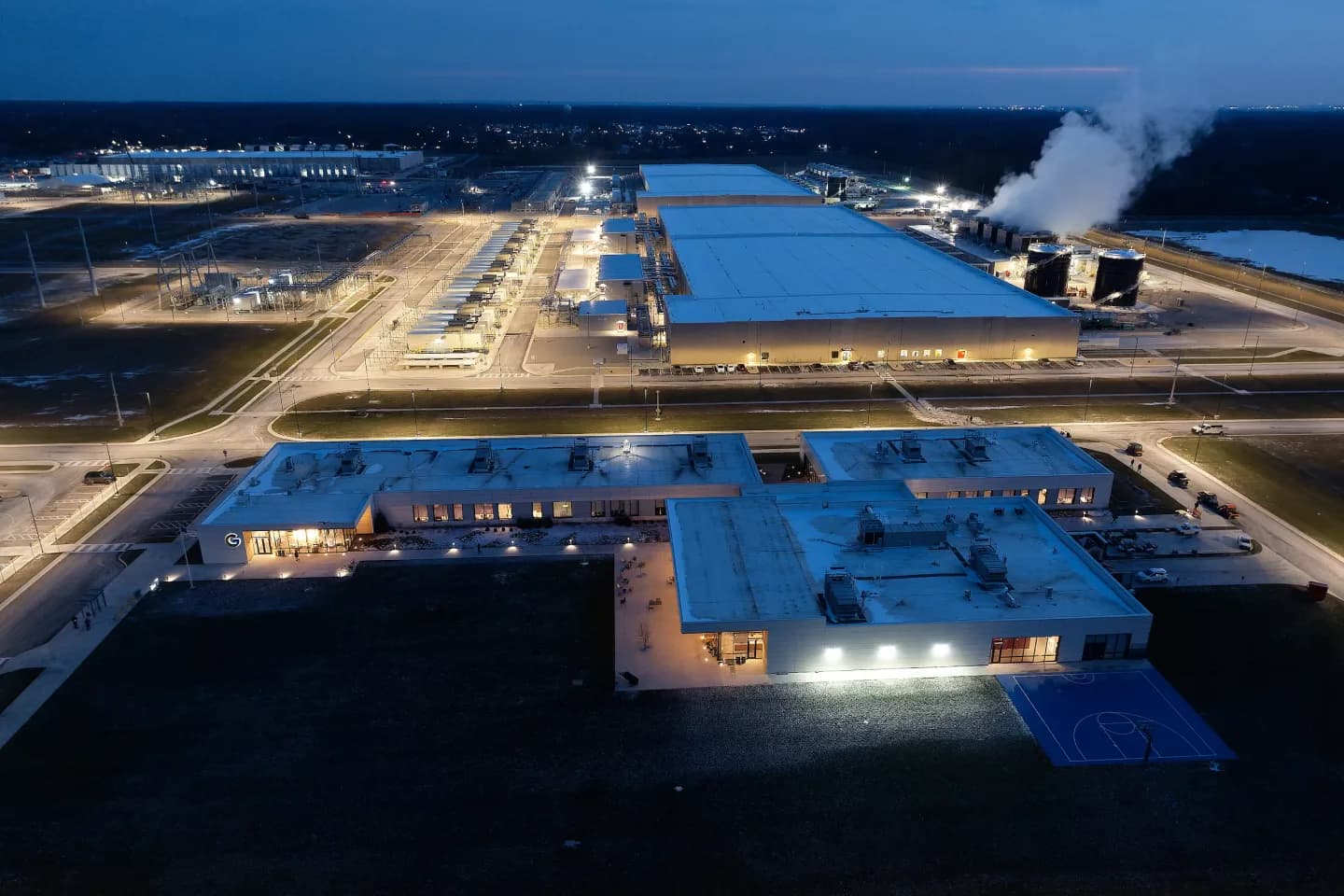
Alphabet reported second-quarter results on July 22 and told investors it now expects to spend $195 billion to $205 billion on capital expenditures this year, up from $180 billion to $190 billion. Filed quarterly capex hit a record $44.9 billion, roughly double a year earlier, and free cash flow turned negative. Management says about 40 percent of the spend goes to data centers and networking. For real estate, that number is the demand floor under the entire data center thesis.
Direct answer
Direct answer to Alphabet AI capex data center commercial real estate
Yes, Alphabet raised its full-year 2026 capital expenditure guidance to $195 billion to $205 billion on its July 22 earnings call, and its filed quarterly capex was a record $44.9 billion, up from $22.4 billion a year earlier, which pushed free cash flow to negative $5.9 billion. Most of that spend builds AI compute, and roughly 40 percent, management says, goes to data centers and networking. For commercial real estate, hyperscaler capex is the demand signal underwriting data center rents, power-adjacent land, and industrial absorption. Alphabet just raised it while the market sold the stock.
What Alphabet reported
On July 22, 2026, Alphabet reported results for the quarter ended June 30. In the earnings release filed with the SEC as an exhibit to its Form 8-K, the company reported revenue of $119.8 billion, up 24 percent year over year, operating income of $40.8 billion at a 34 percent operating margin, and Google Cloud revenue of $24.8 billion, up 82 percent. Reported diluted earnings per share of $9.11 was lifted by a large non-operating gain of roughly $98 billion in other income, so operating income is the cleaner read on the core business. Those are figures Alphabet filed, not PSV estimates. The number that moved the story sits in the cash flow statement: purchases of property and equipment, the capital expenditure line, were $44.9 billion for the quarter, up from $22.4 billion a year earlier, which computes to roughly double. Free cash flow for the quarter was negative $5.9 billion.
On the earnings call, management raised full-year 2026 capital expenditure guidance to a range of $195 billion to $205 billion, up from the prior $180 billion to $190 billion, and said roughly 60 percent of the spend goes to servers and 40 percent to data centers and networking, with 2027 capex expected to increase significantly. That guidance and split are management commentary, not filed line items. The filing also shows how the buildout is being funded: Alphabet raised about $49.6 billion in net proceeds from a stock and mandatory convertible preferred offering, which the company says is for general corporate purposes including capital expenditures to scale AI infrastructure and global compute, and entered an agreement to sell up to $40 billion of additional stock. Secondary reporting noted the shares fell after the print on the capex hike; that market reaction is reported, not a PSV finding.
Why a CRE operator should care
Every data center lease, every power interconnection queue, every industrial land bank near a substation is a bet that hyperscaler capex keeps climbing. Alphabet just told the market it will spend as much as $205 billion this year, is issuing equity to help fund it, and is willing to run negative free cash flow to secure compute capacity. Strip away the AI headline and the signal for real estate is specific: the most disciplined capital allocator on earth is torching free cash flow and diluting shareholders to lock in physical infrastructure. That is the demand floor under data center rents, under the powered-land premium, and under the industrial and utility corridors that feed these campuses. It is also not Alphabet alone. Reported aggregates put the four largest hyperscalers near $725 billion of combined 2026 capex, up sharply from the prior year, which is the reported context, not a filed figure.
The counter-signal is the one lazy coverage skips: the market sold the stock, and free cash flow went negative. That is investors starting to price the risk that capex outruns monetization. Here is the distinction that should drive an underwriting decision. A twenty-year, triple-net data center lease to an investment-grade hyperscaler is credit risk: it pays as long as the tenant honors the contract, whatever happens to the AI cycle. A speculative powered-land play, a merchant data center built on the expectation that demand keeps absorbing capacity, or an industrial corridor priced to today’s absorption pace is cycle risk: it pays only as long as the capex supercycle continues. Those are different exposures that look identical on a pro forma when demand is rising. The re-rating that made early data center owners look brilliant runs in reverse just as fast if a hyperscaler ever blinks. Know which risk you actually own.
The workflow PSV would run on a capex signal like this
Treat hyperscaler earnings season as a standing market-intelligence input, not a headline to skim. The inputs are primary records and your own footprint: the quarterly 8-K earnings releases and 10-Q cash flow statements of the major hyperscalers, the capex and guidance commentary from each earnings call, and your own map of data center, powered-land, and industrial exposure by market. The job for an AI assistant is a cited capex tracker: pull the filed capital expenditure line and the stated forward guidance each quarter, flag the direction of change and any commentary on capacity constraints, power, or third-party leasing, and tie it to which of your markets and assets sit in the path of that spend, with every number traced to the filing or transcript it came from.
The reviewer is the head of research or the CIO, and the approval gate is explicit: no underwriting assumption, discount rate, or exit-cap change moves on a capex read alone, and nothing goes to the investment committee without a human signing off on what the filing actually supports versus what the call implied. The same run surfaces the questions worth working: which of your data center or power-corridor deals are underwritten to tenant credit versus to the cycle continuing, and which counterparties in your rent roll are exposed if hyperscaler spend decelerates. The tool assembles the record and the map every quarter. The allocation call stays yours.
What should remain human-owned
The operator read
Finish with the judgment call.
The reported facts are above. Enter your email for PSV's operator conclusion and a year of access to every newsroom brief.
Free. No card. Privacy policy. Unsubscribe anytime.
 by PSVLive
Build the workflow behind this analysis. Train with the operators doing it.
Real deal files, live builds, and production-ready CRE AI workflows inside the CRE AI Institute.










Clear answers
Common questions about Alphabet AI capex data center commercial real estate
How much is Alphabet spending on capex in 2026?
On its July 22, 2026 earnings call, Alphabet raised its full-year 2026 capital expenditure guidance to a range of $195 billion to $205 billion, up from the prior $180 billion to $190 billion. Its filed quarterly capex, the purchases of property and equipment line, was a record $44.9 billion for the quarter ended June 30, 2026, roughly double the $22.4 billion a year earlier. Management said about 60 percent of the spend goes to servers and 40 percent to data centers and networking, and that 2027 capex is expected to increase significantly.
Why does Alphabet’s AI capex matter for commercial real estate?
Hyperscaler capital expenditure is the demand signal underwriting the data center thesis: rents, powered-land premiums, and the industrial and utility corridors that feed AI campuses. Alphabet raising guidance to as much as $205 billion, funded partly by an equity raise and run at negative free cash flow, is a demand floor. The counter-signal is that the market sold the stock and free cash flow turned negative, which prices the risk that capex outruns monetization. The operator distinction that matters is whether a deal is underwritten to a tenant’s credit or to the capex cycle continuing.
Did Alphabet’s free cash flow go negative in Q2 2026?
Yes. Alphabet’s filed cash flow statement for the quarter ended June 30, 2026 shows free cash flow of negative $5.9 billion, driven by record quarterly capital expenditures of $44.9 billion. The company also raised about $49.6 billion in net proceeds from a stock and mandatory convertible preferred offering, which it says is for general corporate purposes including capital expenditures to scale AI infrastructure. Negative free cash flow funded by equity issuance is the open question a CRE operator should track: whether it is a durable posture or a sign even Alphabet is stretching to keep pace.
Primary source record
These records support the reported facts in this brief. PSV’s CRE workflow interpretation and test plan are original analysis.
- Alphabet Inc. Form 8-K, Exhibit 99.1 earnings release (SEC EDGAR, filed July 22, 2026)
- Alphabet Inc. Form 10-Q for the quarter ended June 30, 2026 (SEC EDGAR, filed July 23, 2026)
- CNBC: Alphabet earnings, GOOGL stock sinks on 2026 capex hike (July 22, 2026)
- Google data center photo gallery (New Albany, Ohio campus), Google
Topics
Related PSV analysis
CRE CAPITAL NEWS
Hut 8’s $9.8B Beacon Point Lease: The CRE Read on a Fully Leased AI Campus
Hut 8 said on July 20 it signed a second 15-year lease at its Beacon Point campus in Nueces County, Texas, a 352 megawatt deal with a base-term contract value of $9.8 billion. The lease fully commercializes the one-gigawatt campus, doubling the tenant’s contracted capacity to 704 megawatts. For real estate, the detail that matters is the structure: a triple-net, take-or-pay lease to a single investment-grade tenant, energizing in 2027.
CRE CAPITAL NEWS
IREN Signed $2.8B in AI Contracts. The CRE Read on a New Data Center Capital Stack
IREN Limited said on July 20 it signed $2.8 billion in new multi-year cloud contracts with leading AI developers, raising its 2026 AI Cloud run-rate revenue target above $4 billion. The detail that matters for real estate is how it is funded: customer prepayments covering roughly 45 percent of the associated GPU capital, on top of equipment-backed financing. The AI data center is being underwritten on contracted cash flow, not speculation.
CRE AI NEWS
Meta’s $50B Hyperion Expansion: The CRE Read on a 5 GW Campus
Meta says its Richland Parish campus will reach about 10 million square feet and 5 gigawatts, with more than $50 billion committed. The durable CRE signal is what a commitment this size does to land, power, housing, and industrial demand around it, and which documents actually move value.
Related guides
Cornerstone PSV guides on the workflows in this article.
AI for Real Estate Investing
How commercial real estate investors use AI across the deal lifecycle: sourcing, underwriting, due diligence, and asset management, grounded in real documents.
Read the guideClaude MCP for CRE
MCP explained for CRE teams: connect Claude to the files and systems you already run so answers come from your data, with citations.
Read the guideWhat is CRE AI?
The definitional guide to commercial real estate AI: the core workflows, how it differs from a chatbot, and how to learn it.
Read the guideby PSVLiveYou read the operator view. Now learn to run the workflow.
The AI MBA for commercial real estate: the workflows these briefs describe, taught end to end on real deal files, with live builds and a community of CRE operators.