CRE CAPITAL NEWS
DOE Leases Paducah for a $100B AI Campus: The CRE Read
The Department of Energy said on July 29 that it selected Brookfield to lease land and develop a data center campus at its Paducah Site in western Kentucky, and selected NextEra Energy to build and own the power behind it. The partners put the privately funded investment above $100 billion, with up to 1.8 gigawatts of utility capacity and more than 1.2 gigawatts of compute. No tenant has been named.
Direct answer
Direct answer to Paducah DOE data center campus commercial real estate
DOE selected Brookfield to lease the land and operate the campus, and NextEra to build up to 2 gigawatts of new natural gas generation plus up to 2.6 gigawatts of battery storage. The CRE read: the federal government is now a competing landlord for AI development, offering a site that already carries transmission, water, fiber and roads, and awarding it through a Request for Offers rather than a rezoning.
What DOE and the partners announced
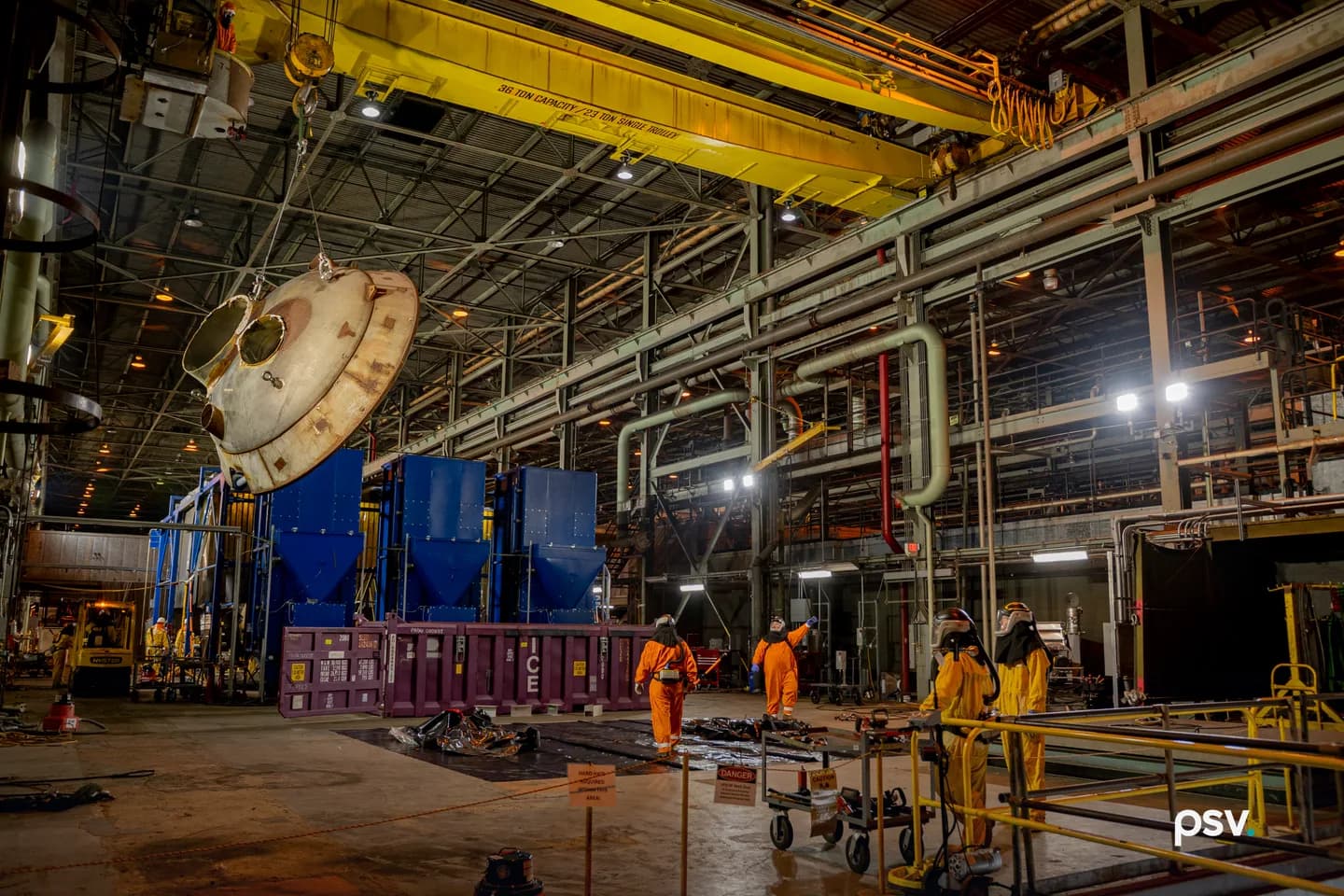
The U.S. Department of Energy announced on July 29, 2026 a partnership with Brookfield, NextEra Energy, Big Rivers Electric Power Corporation, Jackson Purchase Energy Cooperative and Paducah Power System to redevelop portions of its Paducah Site in western Kentucky into a data center campus with new energy infrastructure alongside it. The coalition issued its own joint release the same morning from a Paducah dateline. Following a Request for Offers DOE issued in November 2025, the department selected Brookfield to lease the land and to develop and operate the campus, and selected NextEra Energy to build and own the dedicated generation that will power it. Big Rivers will provide wholesale electric service, Jackson Purchase Energy Cooperative will provide retail service, and Paducah Power System is described as a community partner. DOE puts the privately funded investment at more than $100 billion and expects approximately 8,000 construction jobs and 600 permanent jobs. Two conditions sit on all of it and neither is small: the partners state that the project is subject to negotiation and execution of definitive documentation, and the power service agreement requires approval from the Kentucky Public Service Commission. No data center tenant is named anywhere in either release.
The power stack is where the detail matters. NextEra plans up to 2 gigawatts of new grid-connected natural gas-fired generation, up to 2.6 gigawatts of battery energy storage, and upgrades to existing transmission, which the releases total as up to 4.6 gigawatts of dedicated generation resources paid for and built specifically for the project. Read that total carefully, because only 2 gigawatts of it generates electricity. Storage moves energy in time, it does not make it, so the 2.6 gigawatt figure is a shaping and firming resource that has to be charged from somewhere, and the releases do not say from what. Against a campus described as supporting up to 1.8 gigawatts of utility capacity, 2 gigawatts of new generation computes to roughly 0.2 gigawatts, or about 11 percent, of headroom above the campus’s own utility capacity, and that margin is what sits behind the statement that excess electricity flows to the regional grid. The campus figures carry their own gap: 1.8 gigawatts of utility capacity against more than 1.2 gigawatts of compute capacity computes to a ratio of roughly 1.5 to 1, and neither release explains what the remaining 0.6 gigawatts covers. The two records also disagree on timing. DOE’s release says construction is expected to be completed in 2031. The partners’ joint release says the campus will be fully constructed in 2032. The $100 billion is framed two ways as well: DOE presents it as the value of the project at Paducah, while Brookfield chief executive Bruce Flatt describes the site in the joint release as “the seed of our plan to invest $100 billion in AI infrastructure,” which is a materially different statement about where the money lands.
Why a CRE operator should care
The competition for AI sites has been framed for three years as a contest between developers over private land near transmission. This announcement adds a landlord almost nobody in commercial real estate has underwritten against: the federal government, disposing of a site through a Request for Offers rather than through a broker and a rezoning. Look at what Paducah brought to the table, because the list reads like a development checklist that is already complete. Existing transmission capacity. Water infrastructure. Fiber connectivity. Roads. Land at a scale that supports a multi-gigawatt campus. DOE says that existing infrastructure significantly accelerates timelines, and it does, but the acceleration that matters is not construction, it is entitlement. A private developer assembling a comparable position in Loudoun County or greater Phoenix spends years on rezoning, community meetings, utility studies and queue position, and PSV has covered both ends of what happens when that process binds: New York pausing hyperscale data centers, and the gap between announcement and filed entitlement at OpenAI’s Project Camellia in Effingham County. The federal counterparty at Paducah ran a solicitation, picked a winner, and leased the ground. Speed to power is the scarce good in this cycle, and DOE has just demonstrated that it holds inventory.
There is a close historical rhyme, and operators who lived through it will recognize the trade. In the base closure rounds of the 1990s, decommissioned military installations came to market carrying contamination, cleanup obligations and political baggage, and they traded at a discount to clean dirt because the market priced the liability and ignored the infrastructure. The buyers who did best understood they were acquiring runways, substations, rail spurs and water rights that nobody would ever permit again. Paducah is that trade repriced for the AI cycle, with one difference that changes the math entirely: the binding constraint has moved from clean land to deliverable electricity, so the industrial legacy that used to be the discount is now the premium. A former uranium enrichment complex is attractive precisely because the grid was built to feed something that consumed enormous power for decades. Who wins from here is anyone holding a legacy heavy-industrial site with retained interconnection, water rights and fiber: retired coal plants, shuttered refineries, idle steel and aluminum works, and the federal inventory DOE is now packaging under its American Energy Hubs initiative, of which Paducah is the second announced after Portsmouth. Who is exposed is the developer whose land basis was set on the assumption that greenfield assemblage near transmission was the only route to a campus, and who now competes for the same tenants against sites where the hard infrastructure is already sunk and the landlord wants the deal done. Note the structure too, because it is the one this industry knows best and it cuts both ways: Brookfield leases the land, it does not buy it. That is a ground lease at national scale, carrying every reversion, term and residual question a ground lease carries, and neither release discloses the term.
The workflow PSV would run on federal and legacy-industrial sites
Treat this as a sourcing problem rather than a news item, because the useful question is not what Brookfield got, it is what else sits in the same inventory and whether any of it touches your pipeline. The inputs are public and badly scattered, which is exactly the shape of work an assistant handles well: DOE’s American Energy Hubs announcements and the Request for Offers documents behind them, federal solicitation postings, state and municipal surplus land notices, retired and retiring generation lists from the regional transmission organizations, the environmental records that carry each site’s cleanup status and its restrictions on reuse, the interconnection queue for the territory, and the public service commission dockets where power service agreements get filed. On your own side, the land bank with coordinates and every pipeline site whose underwriting assumes an energization date. The assistant’s job is assembly and citation, not judgment: for each candidate site, one cited row stating retained transmission capacity, water source and permitted volume, fiber presence, current environmental status and who holds the cleanup obligation, ownership and the disposition mechanism, and any filed docket touching power service, with the source record behind every field and an explicit unverified marker wherever the public record is silent.
The output is a ranked site inventory with a one-page dossier per candidate, plus the comparison column almost nobody builds: what a government counterparty is offering against what your own site offers, on the same six fields. That column is what tells an acquisitions team whether it is bidding into a market where the marginal competitor has pre-built infrastructure and a motivated public seller. The reviewer is the head of development or acquisitions, with environmental counsel reading anything where a cleanup obligation appears, because the difference between a site still under remediation and a site that has been released is the difference between a deal and a liability. The approval gate is firm and it is the same one PSV applies to every assembled record: no bid, no letter of intent and no change to land basis on the strength of a dossier until a person has opened the underlying docket or environmental record and confirmed the field. Run it quarterly rather than once, because federal and state solicitations open and close on government timelines that never announce themselves on the wire.
What should remain human-owned
The operator read
Finish with the judgment call.
The reported facts are above. Enter your email for PSV's operator conclusion and a year of access to every newsroom brief.
Free. No card. Privacy policy. Unsubscribe anytime.
 by PSVLive
Build the workflow behind this analysis. Train with the operators doing it.
Real deal files, live builds, and production-ready CRE AI workflows inside the CRE AI Institute.










Clear answers
Common questions about Paducah DOE data center campus commercial real estate
What did the Department of Energy announce at its Paducah Site?
On July 29, 2026 DOE announced a partnership with Brookfield, NextEra Energy, Big Rivers Electric Power Corporation, Jackson Purchase Energy Cooperative and Paducah Power System to redevelop portions of its Paducah Site in western Kentucky into a data center campus with new energy infrastructure. Following a Request for Offers issued in November 2025, DOE selected Brookfield to lease the land and to develop and operate the campus, and selected NextEra Energy to build and own the dedicated generation. DOE puts the privately funded investment at more than $100 billion, with approximately 8,000 construction jobs and 600 permanent jobs. The campus is described as supporting up to 1.8 gigawatts of utility capacity and more than 1.2 gigawatts of compute capacity. The project is subject to negotiation and execution of definitive documentation, and the power service agreement requires Kentucky Public Service Commission approval. No data center tenant has been named.
How much new power is actually being built at the Paducah campus?
Less than the headline figure suggests, because the total combines two different things. NextEra plans up to 2 gigawatts of new grid-connected natural gas-fired generation and up to 2.6 gigawatts of battery energy storage, plus transmission upgrades, which the releases total as up to 4.6 gigawatts of dedicated generation resources. Only the 2 gigawatts of gas generates electricity; battery storage shifts energy in time and must be charged from another source, which the releases do not identify. Against a campus supporting up to 1.8 gigawatts of utility capacity, 2 gigawatts of new generation computes to roughly 0.2 gigawatts, or about 11 percent, of headroom, which is the margin behind the statement that excess power flows to the regional grid.
Why does a federal site being leased for a data center matter to commercial real estate?
Because it introduces a competing landlord and a competing site class. The Paducah Site already carries transmission capacity, water infrastructure, fiber connectivity, roads and land at multi-gigawatt scale, and DOE disposed of it through a Request for Offers rather than through a rezoning process. That compresses entitlement, which is the real constraint on AI campus development, not construction. The closest precedent is the 1990s base closure rounds, where decommissioned federal installations traded at a discount because the market priced contamination and ignored the infrastructure. The difference this cycle is that deliverable electricity is the binding constraint, so the industrial legacy is now the premium rather than the discount. Note the structure: Brookfield leases the land rather than buying it, so this is a ground lease, and neither release discloses the term.
Primary source record
These records support the reported facts in this brief. PSV’s CRE workflow interpretation and test plan are original analysis.
- U.S. Department of Energy: Energy Department Announces Partnership to Expand Reliable, Affordable Energy Access and Power America’s AI Future in Western Kentucky (July 29, 2026)
- NextEra Energy newsroom: DOE Site in Western Kentucky Revitalized with Data Center Campus and Dedicated Energy Project (joint coalition release, July 29, 2026)
- U.S. Department of Energy, Portsmouth/Paducah Project Office: Paducah Site (lead image source)
Topics
Related PSV analysis
CRE CAPITAL NEWS
Brookfield Buys Aypa for $7B: The CRE Read on AI Power
Brookfield said on July 22 that it agreed to acquire Aypa Power, the largest standalone battery storage developer in North America, from Blackstone Energy Transition Partners for roughly $7 billion enterprise value and $3 billion of equity. Aypa brings about 6.5 GW operating and contracted, 95 percent of it under contracts averaging 17 years, plus a pipeline above 20 GW. For real estate, the binding constraint on AI has moved from land to electrons.
CRE POLICY NEWS
PJM Moves to Curtail Data Centers: The CRE Read on Firm Power
The PJM Board of Managers issued a decisional letter on July 27 directing two filings to FERC by the end of July. One creates a Reliability Backstop Procurement to backfill a 6,831 megawatt capacity shortfall. The other creates an Interim Resource Adequacy Service, under which new large loads that have not brought their own new capacity by June 1, 2027 are cut before anybody else is.
CRE POLICY NEWS
OpenAI’s $20B Project Camellia: The CRE Read on an Unfiled Entitlement
Effingham County, Georgia announced on July 22 that OpenAI will build a $20 billion, 3.2 gigawatt campus inside the Savannah Gateway Industrial Hub. Five days later the county published a second statement: the only document it has received is a Development of Regional Impact cover page, no completed application has been submitted, and the site plan circulating online is a blank state template someone filled in.
Related guides
Cornerstone PSV guides on the workflows in this article.
Claude Engineering Partner for CRE
What it means to run Claude with an engineering partner: the operating model, the controls, and who owns what.
Read the guideClaude for Real Estate Developers
The ground-up developer field guide: site selection through IC memo, built on a real development deal.
Read the guideIndustrial & Logistics AI Underwriting
Custom AI employees for industrial real estate underwriting. WALT analysis, tenant credit, clear-height and power modeling, and lender packages.
Read the guideby PSVLiveYou read the operator view. Now learn to run the workflow.
The AI MBA for commercial real estate: the workflows these briefs describe, taught end to end on real deal files, with live builds and a community of CRE operators.