CRE CAPITAL NEWS
IREN Signed $2.8B in AI Contracts. The CRE Read on a New Data Center Capital Stack
IREN Limited said on July 20 it signed $2.8 billion in new multi-year cloud contracts with leading AI developers, raising its 2026 AI Cloud run-rate revenue target above $4 billion. The detail that matters for real estate is how it is funded: customer prepayments covering roughly 45 percent of the associated GPU capital, on top of equipment-backed financing. The AI data center is being underwritten on contracted cash flow, not speculation.
Direct answer
Direct answer to IREN AI cloud contracts data center commercial real estate
Yes, IREN just booked $2.8 billion in AI cloud contracts. The company said on July 20, 2026 that new agreements with customers including Microsoft, NVIDIA, and Perplexity lifted contracted revenue to about 85 percent of a raised, above-$4 billion target, on a weighted average term near four years. For commercial real estate, the signal is the capital stack: prepayments and equipment financing now fund the majority of a data center buildout before the shell is full.
What IREN reported
On July 20, 2026, IREN Limited (NASDAQ: IREN) said it signed new multi-year cloud services contracts with leading AI developers representing $2.8 billion in total contract value, and raised its year-end AI Cloud annualized run-rate revenue target from $3.7 billion to more than $4 billion. About 85 percent of that revised target is now under contract, the company says. Its named customer base spans Microsoft, NVIDIA, Perplexity, Figure AI, Together AI, Fluidstack, Fireworks AI, Fal AI, Hume AI, and one further unnamed leading AI developer, and the portfolio carries a weighted average contract term of approximately four years. Those figures are IREN’s, filed with the Securities and Exchange Commission as an exhibit to a Form 8-K, not PSV findings.
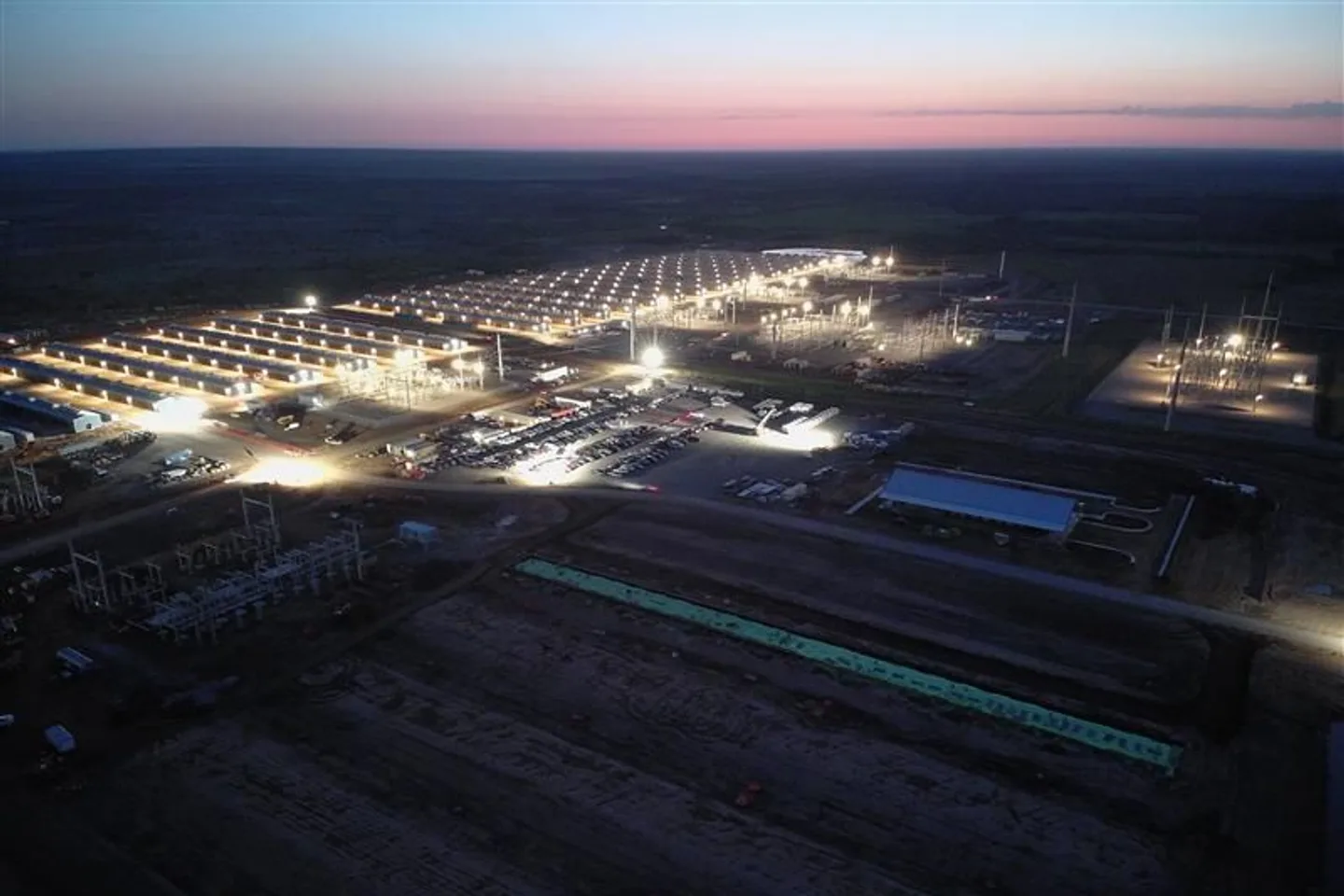
Two operating details sit under the headline. IREN says recent contracts include customer prepayments representing about 45 percent of the associated GPU capital expenditure, which reduces the company’s net funding requirement for those deployments, and that it held roughly $7.6 billion in cash as of June 30, 2026, including $1.7 billion of restricted cash tied to GPU financing for the Microsoft contract at its Horizon data centers. On capacity, Co-Founder and Co-CEO Daniel Roberts said the platform expanded from about 3 megawatts of self-built AI Cloud capacity a year ago to 480 megawatts being delivered this year, with 1.2 gigawatts targeted for 2027. The Horizon 1 through 4 facilities named in the filing sit at IREN’s 750 megawatt Childress, Texas campus, per the company’s site.
Why a CRE operator should care
This is a data center real estate story wearing a cloud-revenue headline. IREN owns and builds the physical plant: the land, the on-site substations, the power interconnect, and the liquid-cooled halls that house the GPUs. What changed on July 20 is not that AI demand exists, it is how the buildout gets paid for. When a developer can point to four-year contracts covering 85 percent of a raised revenue target, and to customer prepayments funding close to half of the associated equipment cost before a hall fills, the asset starts to underwrite like a credit-tenant, take-or-pay development rather than a speculative one. Contracted cash flow, not a demand thesis, is doing the work.
For an operator, that reframes the counterparty and the capital question at once. The scarce inputs in this asset class are powered land and speed to energization, not construction know-how, and the players winning contracts are the ones who already control an interconnect and can deliver megawatts on a customer’s schedule. It also concentrates risk in a way worth naming: contracted revenue is only as good as the counterparties behind it, prepayments shift some financing risk onto the customer but tie the developer to that customer’s roadmap, and equipment-backed debt against fast-depreciating GPUs is a different animal than a mortgage on a building. Contracted does not mean riskless.
The workflow PSV would run on a data center capital event
Treat a disclosure like this as a trigger to build a capital-stack and contract-coverage file from primary records: the Form 8-K and its exhibit, the company’s prior filings on the Microsoft agreement and its financings, the campus’s local permits and utility and interconnection records as they appear, and the grid operator’s queue for the relevant load. An AI assistant reads each record and returns a cited memo: how much revenue is actually contracted versus targeted, the weighted term and counterparty mix, what share of capex is covered by prepayments and equipment financing versus corporate capital, which megawatts are energized versus announced, and what changed since the last check, every figure traced to the document it came from.
The reviewer is the capital markets or acquisitions lead working with an analyst, and the approval gate is explicit: no land bid near a campus, no supply position, and no underwriting assumption moves on a model summary alone. The same review produces the questions a human sends: to the utility on interconnection and load for the specific site, to the county on permit and entitlement status, and to counsel on how prepayment and take-or-pay terms actually allocate risk if a customer’s roadmap slips. The tool assembles the record. It does not decide whether the contracted cash flow is worth the exposure.
What should remain human-owned
The operator read
Finish with the judgment call.
The reported facts are above. Enter your email for PSV's operator conclusion and a year of access to every newsroom brief.
Free. No card. Privacy policy. Unsubscribe anytime.
 by PSVLive
Build the workflow behind this analysis. Train with the operators doing it.
Real deal files, live builds, and production-ready CRE AI workflows inside the CRE AI Institute.










Clear answers
Common questions about IREN AI cloud contracts data center commercial real estate
How much did IREN sign in new AI contracts?
IREN Limited said on July 20, 2026 that it signed new multi-year cloud services contracts with leading AI developers representing $2.8 billion in total contract value, and raised its year-end AI Cloud annualized run-rate revenue target from $3.7 billion to more than $4 billion. About 85 percent of that revised target is now under contract, on a weighted average term of roughly four years, the company says.
Why does IREN’s AI contract news matter for commercial real estate?
IREN is a data center developer that owns the land, power interconnect, and buildings behind the GPUs, so the story is a real estate capital story. Long-term contracts covering most of a raised revenue target, plus customer prepayments funding close to half of the associated equipment cost, let an AI data center underwrite more like a credit-tenant, take-or-pay development than a speculative build. The scarce inputs are powered land and speed to energization.
How is IREN funding its AI data center buildout?
The company says recent contracts include customer prepayments representing about 45 percent of the associated GPU capital expenditure, reducing its net funding requirement, and that it held roughly $7.6 billion in cash as of June 30, 2026, including $1.7 billion of restricted cash tied to GPU financing for the Microsoft contract at its Horizon data centers. Equipment-backed debt against fast-depreciating GPUs is a different risk than a mortgage on a building, so the terms matter.
Primary source record
These records support the reported facts in this brief. PSV’s CRE workflow interpretation and test plan are original analysis.
- IREN Form 8-K, Exhibit 99.1: $2.8bn in new customer contracts, 2026 ARR target raised (SEC EDGAR, July 20, 2026)
- IREN press release: IREN Signs $2.8bn in New Customer Contracts with Leading AI Developers (GlobeNewswire, July 20, 2026)
- IREN: Childress data center (campus location and lead image source)
Topics
Related PSV analysis
CRE CAPITAL NEWS
BlackRock and ACS Launch Coravel: The CRE Read on a 1.7 GW Data Center Bet
ACS Group and BlackRock’s Global Infrastructure Partners launched Coravel on July 15, a 50-50 joint venture that turns their data center development platform into an operating brand with an initial 1.7 gigawatt portfolio and a signed long-term hyperscale lease at a Dallas-Fort Worth campus. For commercial real estate, it is another sign that the largest infrastructure capital pools are building the AI buildout as a real estate business.
CRE CAPITAL NEWS
Csquare Raised $1.05B. The Data Center Market Is Asking for Proof.
Brookfield-backed Csquare priced its initial public offering at $21 a share, below its marketed $23 to $27 range, raising $1.05 billion rather than the $1.35 billion implied at the top end. The result does not erase demand for digital infrastructure. It does put a sharper public-market price on leverage, delivery, and the difference between a data center story and a data center cash flow.
CRE CAPITAL NEWS
TSMC Lifts Arizona to $265 Billion: The CRE Read
TSMC used its record second quarter to commit another $100 billion to Arizona, lifting its total state investment to $265 billion across a planned ten fabs, two advanced packaging plants, and a research center. The expansion is driven by demand for AI chips, and for commercial real estate it concentrates one of the country’s largest advanced-manufacturing buildouts in a single Phoenix submarket.
Related guides
Cornerstone PSV guides on the workflows in this article.
What is CRE AI?
The definitional guide to commercial real estate AI: the core workflows, how it differs from a chatbot, and how to learn it.
Read the guideAI for Real Estate Investing
How commercial real estate investors use AI across the deal lifecycle: sourcing, underwriting, due diligence, and asset management, grounded in real documents.
Read the guideEnterprise AI for Institutional CRE
PSV trains your whole firm on Claude and ChatGPT, builds your agents live inside your own environment, and stays on as your embedded AI team. What we build for you is yours.
Read the guideby PSVLiveYou read the operator view. Now learn to run the workflow.
The AI MBA for commercial real estate: the workflows these briefs describe, taught end to end on real deal files, with live builds and a community of CRE operators.