CRE AI NEWS
Ken Griffin’s $3 Billion Gift Puts a Carnegie Mellon AI-Era Campus in Miami’s Wynwood
Carnegie Mellon University announced a $3 billion gift from Citadel founder Ken Griffin on September 30, including $2 billion to launch CMU Miami on a campus of more than 35 acres in Wynwood. CMU says construction is slated to begin in 2027, pending regulatory approvals, for a campus built around AI-era research, industry labs and venture studios.
Direct answer
Direct answer to Carnegie Mellon Miami campus Wynwood
A $2 billion university campus is coming to Wynwood. CMU says its new campus will support more than 3,500 students, nearly 300 faculty and more than 600 staff, with industry research labs and venture studios on site. For nearby owners and developers, it is an anchor-institution story with a long timeline: construction from 2027, graduate students in 2028 and the first undergraduates in 2032, all pending approvals.
What Carnegie Mellon announced, and what its own records say
On September 30, 2026, Carnegie Mellon University and Citadel founder and CEO Ken Griffin announced a $3 billion gift, which CMU calls the largest gift by an individual in the history of higher education. CMU’s release splits it in two. One billion dollars goes to the Pittsburgh campus, half as flexible support and half, $500 million, to the School of Computer Science, which is being renamed the Kenneth C. Griffin School of Computer Science. The other $2 billion launches Carnegie Mellon University Miami, a new campus in Miami’s Wynwood neighborhood. Griffin is joining CMU’s Board of Trustees, and President Farnam Jahanian’s letter to the campus says the board voted unanimously to support the gift.
CMU’s release describes the campus as more than 35 acres in Wynwood, and its headline and a companion story call it a 35-acre site. CMU says the finished campus will support more than 3,500 undergraduate, master’s and Ph.D. students, nearly 300 faculty and more than 600 staff, and that plans include space for industry research labs and venture studios. Construction is slated to begin in 2027. The two records differ on the opening: the release says the first students enroll in 2028, while Jahanian’s letter says graduate students enroll in 2028 and the inaugural undergraduate cohort arrives in 2032. Both say the plan is pending regulatory approvals, and the rendering CMU published is labeled conceptual. Neither record identifies the parcels, the seller or the purchase price.
Why a CRE operator should care: an anchor institution, with dates attached
CMU frames the campus around AI. Jahanian’s statement in the release says that “artificial intelligence represents one of the defining intellectual developments of our time,” and CMU says CMU Miami will organize research around four grand challenge areas: human health and biological discovery, national security, energy and climate resilience, and advanced manufacturing. For real estate, the more concrete line is the program: thousands of students, roughly 900 faculty and staff by CMU’s figures, and on-campus space for industry labs and venture studios. In PSV’s read, a research campus with on-site industry space is the kind of anchor that can pull companies, housing demand and services toward it, and CMU’s own companion story points to Spotify’s South Florida operation and Amazon’s office plans in Wynwood as the neighborhood’s existing technology tenants. That is CMU’s description of the setting, not a PSV forecast of rents or values.
The timeline is what an operator should model, not the headline. A gift announced in 2026, construction from 2027, graduate students in 2028 and undergraduates in 2032 means the campus’s full population arrives across several lease cycles for nearby office, retail and apartment assets. Land that sells on the announcement prices in a campus that still needs city approvals, and CMU has not said how much student or staff housing it will build on its own site, which is the single biggest swing factor for nearby multifamily. Wynwood is a small, dense district, as CMU itself notes, so a campus of more than 35 acres there is also a large change to its land supply and street grid.
The workflow PSV would run for an owner near the campus
The artifact is a campus milestone tracker tied to the owner’s own assets. Inputs: CMU’s September 30 release and the president’s letter, every City of Miami and Miami-Dade County filing for the campus as it is published (site plans, rezoning or special district applications, permits and hearing agendas), county property records for the parcels once they are identified, and the owner’s rent rolls and lease expirations within the submarket. Output: a dated table of each public milestone, from approvals to construction start to the 2028 and 2032 enrollment dates, with the source document for each, set against the owner’s lease rollover, refinancing and disposition dates. Any assumption about campus-driven demand cites the milestone it depends on.
The reviewer is the asset manager for the Miami portfolio with the acquisitions lead, and the approval gate is that no underwriting model or investment memo uses a CMU-driven rent, absorption or occupancy assumption until a dated public record supports the milestone behind it. An assistant does the monitoring well: checking agendas and permit portals for the project, extracting dates and conditions from filings, flagging when a stated date moves, and drafting the tracker update. It should not set rent growth assumptions or decide whether to buy, hold or sell. PSV promises no return from any of this.
What stays with people, and what the records leave open
The operator read
Finish with the judgment call.
The reported facts are above. Enter your email for PSV's operator conclusion and a year of access to every newsroom brief.
Free. No card. Privacy policy. Unsubscribe anytime.
 by PSVLive
Build the workflow behind this analysis. Train with the operators doing it.
Real deal files, live builds, and production-ready CRE AI workflows inside the CRE AI Institute.










Clear answers
Common questions about Carnegie Mellon Miami campus Wynwood
Where will the Carnegie Mellon Miami campus be?
In Miami’s Wynwood neighborhood, just north of downtown. CMU’s September 30, 2026 release describes a campus of more than 35 acres there, and a companion CMU story calls it a 35-acre site, subject to regulatory approvals. CMU has not published the parcels, the seller or the purchase price, and the rendering it released is labeled conceptual.
When will CMU Miami open?
CMU says construction is slated to begin in 2027. Its release says the first students enroll in 2028, pending regulatory approvals. President Farnam Jahanian’s letter is more specific: graduate students in 2028 and the inaugural undergraduate cohort in 2032. Once complete, CMU says the campus will support more than 3,500 students, nearly 300 faculty and more than 600 staff.
How is Ken Griffin’s $3 billion gift to Carnegie Mellon split?
According to CMU, $2 billion launches CMU Miami and $1 billion supports the Pittsburgh campus, split evenly between flexible support for the university’s highest priorities and $500 million for the School of Computer Science, which is being renamed the Kenneth C. Griffin School of Computer Science. CMU calls it the largest gift by an individual in the history of higher education, and Griffin is joining CMU’s Board of Trustees.
Primary source record
These records support the reported facts in this brief. PSV’s CRE workflow interpretation and test plan are original analysis.
- Carnegie Mellon University, “Carnegie Mellon University Announces Historic $3 Billion Gift from Ken Griffin, Pioneering a New Model for Higher Education,” September 30, 2026 (source of the gift amounts and split, the school renaming, the campus size, population, labs and venture studios, construction start, 2028 enrollment, regulatory approvals and Jahanian’s statement)
- Farnam Jahanian, “Announcing a Historic Investment in Carnegie Mellon,” letter to the CMU community, September 30, 2026 (second record of the gift; source of the board vote and the 2028 graduate and 2032 undergraduate enrollment dates)
- Carnegie Mellon University, “Two Cities. One CMU.,” September 30, 2026 (source of the 35-acre Wynwood site description and CMU’s account of Wynwood’s history and technology tenants)
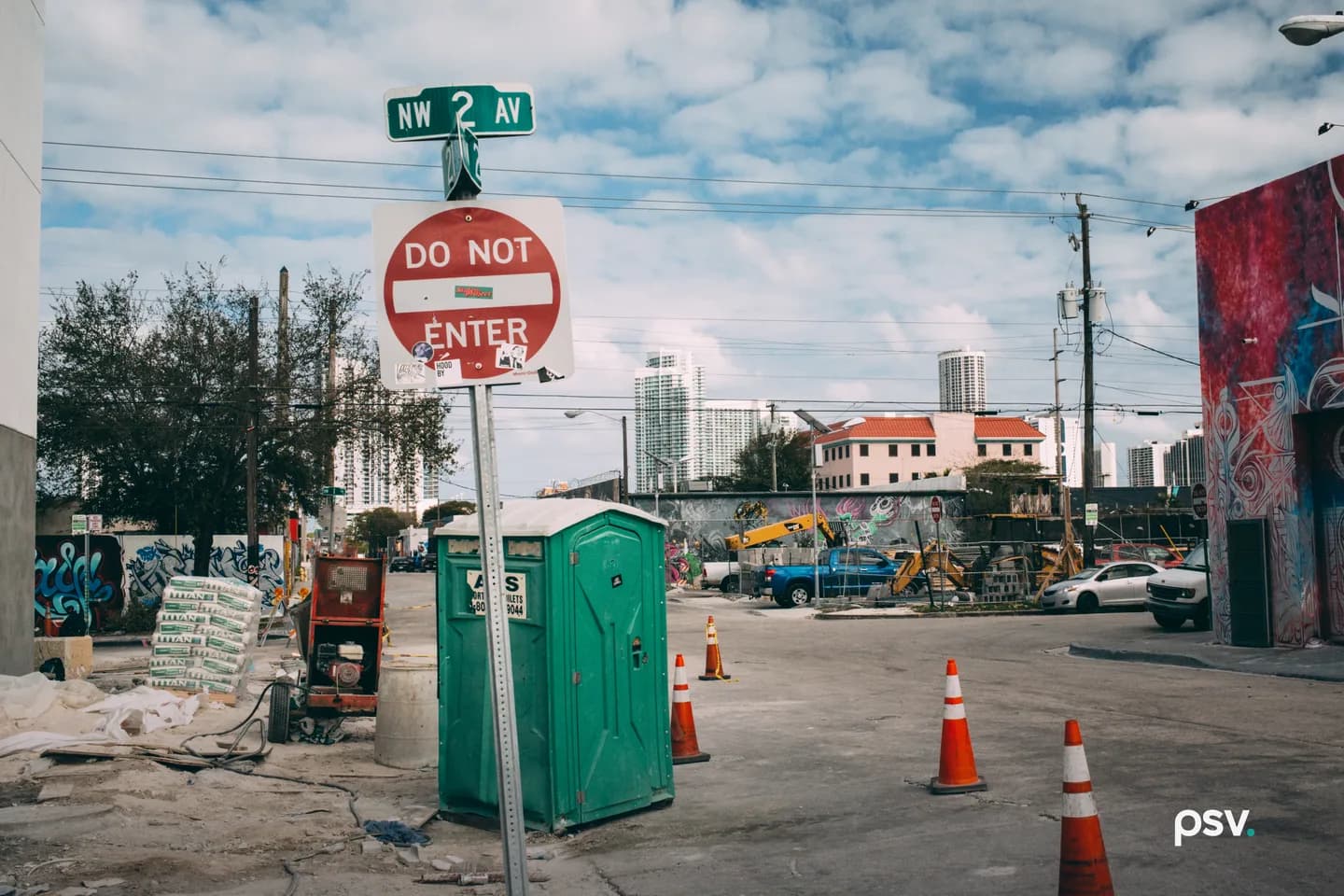
- Erik Zünder, Urban cityscape shot, Wynwood, Miami, Wikimedia Commons, CC0 (lead photograph source)
Topics
Related PSV analysis
CRE AI NEWS
AI Is Leasing Offices and Cutting the Jobs That Fill Them
CBRE published its Scoring Tech Talent 2026 report on August 18. AI-skilled tech talent across the U.S. and Canada grew 45 percent year over year to 751,000, and AI roles now account for 31 percent of open U.S. tech talent jobs, 57 percent in the San Francisco Bay Area. The same report records 101,743 job cuts this year that employers attributed directly to AI.
CRE CAPITAL NEWS
DOE Leases Paducah for a $100B AI Campus: The CRE Read
The Department of Energy said on July 29 that it selected Brookfield to lease land and develop a data center campus at its Paducah Site in western Kentucky, and selected NextEra Energy to build and own the power behind it. The partners put the privately funded investment above $100 billion, with up to 1.8 gigawatts of utility capacity and more than 1.2 gigawatts of compute. No tenant has been named.
CRE AI NEWS
Manhattan’s Office Squeeze Is Measured. Its AI Story Is Not.
Colliers reported on September 1 that Manhattan office availability fell to 65.40 million square feet in August, the lowest since September 2020, with the availability rate at 12.5 percent and sublet supply at its lowest since 2019. Year to date leasing of 29.91 million square feet puts 2026 on pace for the strongest year since 2000. Colliers does not attribute any of it to AI.
Related guides
Cornerstone PSV guides on the workflows in this article.
What is CRE AI?
The definitional guide to commercial real estate AI: the core workflows, how it differs from a chatbot, and how to learn it.
Read the guideClaude for Real Estate Developers
The ground-up developer field guide: site selection through IC memo, built on a real development deal.
Read the guideby PSVLiveYou read the operator view. Now learn to run the workflow.
The AI MBA for commercial real estate: the workflows these briefs describe, taught end to end on real deal files, with live builds and a community of CRE operators.