CRE AI NEWS
Digital Realty Q3 2026: Bookings Triple to a Record $627M
Digital Realty reported third-quarter 2026 results on October 29: revenue of $1.9 billion, up 21 percent, and record bookings of $627 million at its share, about three times the second quarter. It bought $742 million of land and raised guidance. The filings give no AI revenue figure, and the revenue raise far outran the EBITDA raise.
Direct answer
Direct answer to Digital Realty third quarter 2026 results
Digital Realty’s record quarter is real, but read it by parts. Most of the rent came from large leases averaging 17.9 years, 55 percent of it in Asia Pacific, and it starts paying about 17 months out on average. The filings do not say how much is AI. By PSV arithmetic, the revenue guidance midpoint rose $187.5 million while adjusted EBITDA rose $25 million, and power reimbursements were a large part of revenue growth.
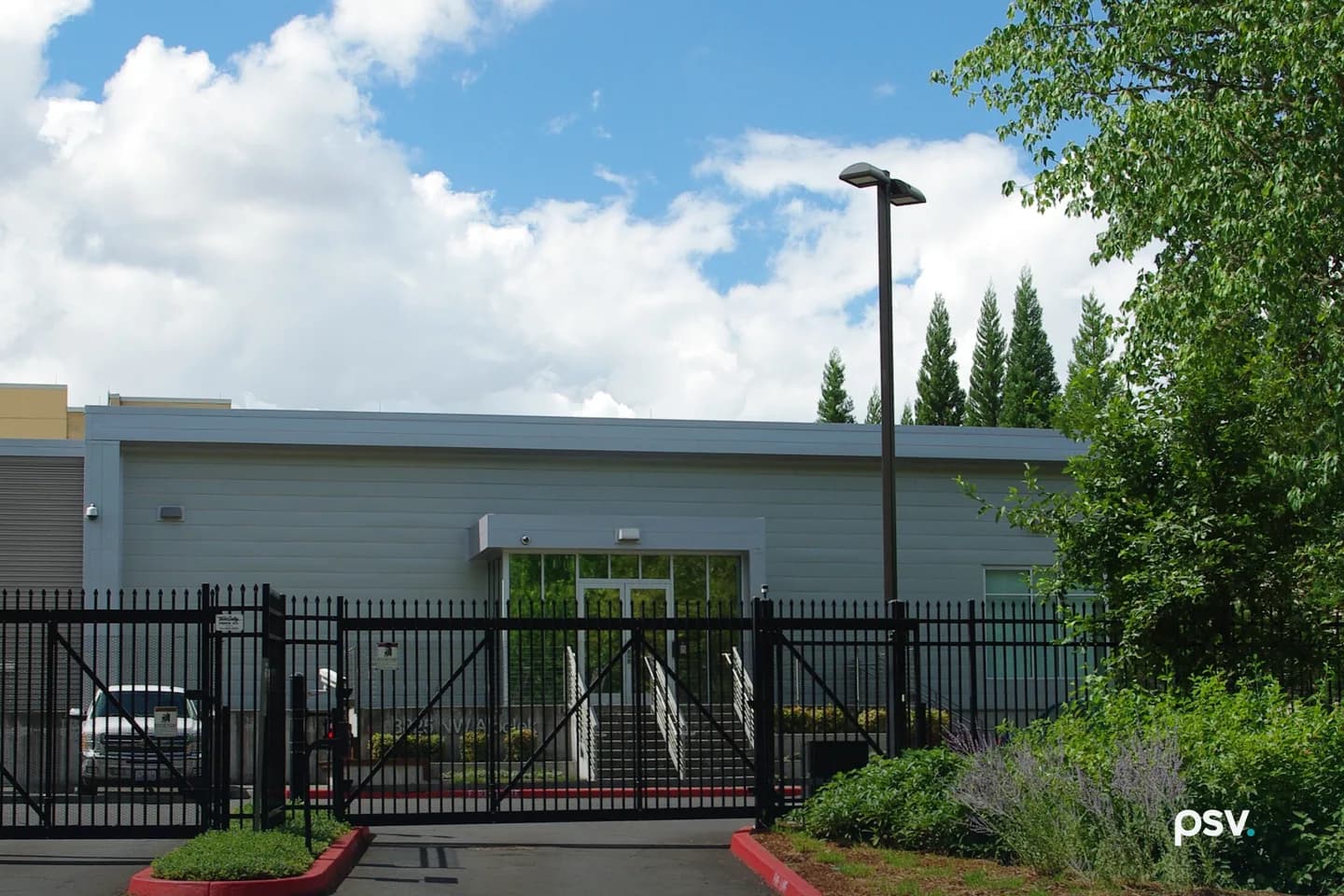
What Digital Realty reported
On October 29, 2026, Digital Realty Trust, Inc. furnished its third-quarter results on a Form 8-K, and it filed its Form 10-Q the next day. Revenue was $1.902 billion, 21 percent above the year-ago quarter. Adjusted EBITDA was $978 million, up 13 percent, and Core FFO excluding net promote was $2.10 per share, compared with $1.89. The company reported record bookings of $855 million of annualized GAAP base rent at 100 percent share and $627 million at its own share, which computes to about three times the $208 million at its share reported for the second quarter. Backlog of signed leases that have not commenced reached a record $2.5 billion at 100 percent share and $1.8 billion at its share. These are company figures, and bookings and backlog are company-defined measures.
The company raised its 2026 Core FFO per share outlook, excluding net promote, to $8.30 to $8.35, from $8.15 to $8.20 in July. Total revenue guidance excluding promote income moved to $7.050 billion to $7.125 billion and adjusted EBITDA guidance to $3.800 billion to $3.850 billion. During the quarter it acquired $742 million of land, including sites near Indianapolis to support over one gigawatt of IT capacity, two Chicago-area parcels totaling 360 megawatts, and Charlotte-area land for up to 600 megawatts. After quarter end it closed $1.4 billion of initial cornerstone equity commitments for a new perpetual capital strategy focused on stabilized North American hyperscale data centers, and it raised its Teraco stake from 61 percent to about 77 percent for about $688 million, mostly in stock.
Why a CRE operator should care
The bookings record is concentrated in long, large leases, and the filings do not tie it to AI by number. Leases above one megawatt were $474 million of the total at Digital Realty’s share, with a weighted average term of 17.9 years, against 5.5 years for deployments of up to one megawatt. Asia Pacific carried $261 million of that large-deployment rent, which computes to 55 percent, ahead of the Americas at $203 million. The earnings deck says the company develops large capacity blocks for “cloud and AI providers,” and the customer table lists a “Leading AI Chip Maker” at $82 million of annualized recurring revenue, or 1.6 percent. Neither document gives an AI share of bookings or backlog. Oracle is the second-largest customer at $518 million, or 9.9 percent, with 10.6 years of remaining term. The two largest customers account for about 11 percent and 10 percent of total revenue, according to the 10-Q.
The guidance table separates growth in revenue from growth in cash earnings. By PSV arithmetic, the midpoint of revenue guidance rose $187.5 million since July while the midpoint of adjusted EBITDA guidance rose $25 million, and the company does not attribute the gap in the table. One visible contributor is power: utility reimbursements from tenants rose $91.2 million from a year earlier to $423.9 million, which computes to 28 percent of the quarter’s $325.2 million revenue increase. Utilities expense rose 27.1 percent to $477.5 million, and the 10-Q cites higher power pricing, mainly in EMEA and Asia Pacific, and more consumption at newly completed sites. PSV’s read is that revenue overstates the economic gain when a growing part of it passes through a power bill. That is PSV analysis, not a company statement.
The workflow PSV would run
An owner or lender benchmarking against this report should build a one-page comparison from the filed supplement, not the headline. Inputs: the leasing summary, the lease expiration schedule, the development lifecycle table, the occupancy table and the outlook table, each saved with its filing date. Output: rent per kilowatt, term and renewal spread split by deployment size and region, with every figure linked to its table. The split changes the answer. Cash renewal spreads were 26.3 percent on deployments above one megawatt, from $125 to $158 per kilowatt per month, and 4.7 percent on smaller ones, so the blended 11.8 percent describes neither. An analyst reviews the extraction, and an asset manager approves any use of those figures in a rent assumption.
A second run belongs on the development table. Digital Realty lists 1,464 megawatts under construction at 63 percent leased, with $22.0 billion of total expected investment at 100 percent share and an 11.6 percent average expected stabilized yield, which is a company estimate. The market lines differ widely: Northern Virginia is 390 megawatts at 85 percent leased, Charlotte 212 at 94 percent, Atlanta 192 with none leased and first-quarter 2029 completion, and EMEA 211 at 12 percent. A developer’s team should compare its own pre-leasing and delivery dates to the matching market line, then flag each entitlement separately. Charlotte is the test case: PSV reported on October 27 that the city paused new data center applications through October 18, 2027. The filing says “Charlotte metro area” and does not name a jurisdiction, so counsel must confirm which approvals apply before anyone reads across.
What should remain human-owned
The operator read
Finish with the judgment call.
The reported facts are above. Enter your email for PSV's operator conclusion and a year of access to every newsroom brief.
Free. No card. Privacy policy. Unsubscribe anytime.
 by PSVLive
Build the workflow behind this analysis. Train with the operators doing it.
Real deal files, live builds, and production-ready CRE AI workflows inside the CRE AI Institute.











Clear answers
Common questions about Digital Realty third quarter 2026 results
What did Digital Realty report for the third quarter of 2026?
Revenue of $1.902 billion, up 21 percent from a year earlier, adjusted EBITDA of $978 million and Core FFO excluding net promote of $2.10 per share, according to its Form 8-K exhibit filed October 29, 2026. Bookings were a record $855 million at 100 percent share and $627 million at its share. These are company figures.
Did Digital Realty say AI drove its record bookings?
Not with a number. Its presentation says it develops large capacity blocks for cloud and AI providers, and its customer table lists a leading AI chip maker at 1.6 percent of annualized recurring revenue. The filings give no AI share of bookings or backlog, so the AI portion cannot be read from them.
Where is Digital Realty adding data center land?
It acquired $742 million of land in the quarter, including sites near Indianapolis for over one gigawatt of IT capacity, two Chicago-area parcels totaling 360 megawatts, Charlotte-area land for up to 600 megawatts, and land next to its Fort Gillem campus in Atlanta. The filing does not state the entitlement status of these sites.
Primary source record
These records support the reported facts in this brief. PSV’s CRE workflow interpretation and test plan are original analysis.
- Digital Realty Trust, Inc., Form 8-K (Items 2.02, 7.01, 9.01) filed October 29, 2026 (earnings announcement)
- Digital Realty, Form 8-K Exhibit 99.1, Third Quarter 2026 earnings release and financial supplement (source of results, bookings, backlog, outlook table, land, customers, leasing and development tables)
- Digital Realty, Form 8-K Exhibit 99.2, 3Q26 Financial Results presentation, October 29, 2026 (source of the cloud and AI provider language)
- Digital Realty, Form 10-Q for the quarter ended September 30, 2026, filed October 30, 2026 (source of customer concentration and utilities expense drivers)
- Digital Realty, Form 8-K Exhibit 99.1, Second Quarter 2026 financial supplement, July 23, 2026 (source of second-quarter bookings and the July outlook)
- Wikimedia Commons, “Digital Realty data center - Hillsboro, Oregon,” M.O. Stevens, CC BY-SA 4.0 (lead photograph)
Topics
Related PSV analysis
CRE AI NEWS
Equinix Q3 2026: Record $533M Bookings, Guidance Raised Again
Equinix reported third-quarter 2026 results on October 28: revenue of $2.571 billion, up 11 percent, record annualized gross bookings of $533 million, up 35 percent, and a third straight raise to full-year guidance, with total capital expenditures of $5 billion to $6 billion. The release credits both traditional and AI workloads but gives no AI revenue figure, and the 10-Q says power, not space, limits many of its older data centers.
CRE CAPITAL NEWS
Digital Realty Borrows €1 Billion at 5.125% and CHF 510 Million at Under 2.5%
Digital Realty closed €1 billion of 5.125 percent guaranteed notes due 2036 on October 9, 2026, according to a Form 8-K filed the same day. Three days earlier it closed CHF 510 million of Swiss franc notes in three series at coupons of 1.6803 to 2.4150 percent. Its unsecured notes averaged 2.60 percent at June 30.
CRE POLICY NEWS
Charlotte Extends Its Data Center Pause to October 2027
On October 26, 2026, the Charlotte City Council voted unanimously, according to three local outlets, to extend its moratorium on new data center applications until October 18, 2027. The original 150-day pause, adopted June 8, was due to expire November 5. Projects approved before June 8 and existing facilities are not covered.
Related guides
Cornerstone PSV guides on the workflows in this article.
AI for Real Estate Investing
How commercial real estate investors use AI across the deal lifecycle: sourcing, underwriting, due diligence, and asset management, grounded in real documents.
Read the guideClaude MCP for CRE
MCP explained for CRE teams: connect Claude to the files and systems you already run so answers come from your data, with citations.
Read the guideClaude for Real Estate Developers
The ground-up developer field guide: site selection through IC memo, built on a real development deal.
Read the guideby PSVLiveYou read the operator view. Now learn to run the workflow.
The AI MBA for commercial real estate: the workflows these briefs describe, taught end to end on real deal files, with live builds and a community of CRE operators.