CRE CAPITAL NEWS
Fermi’s 2.6 GW Plant Is Now a Ground Sublease
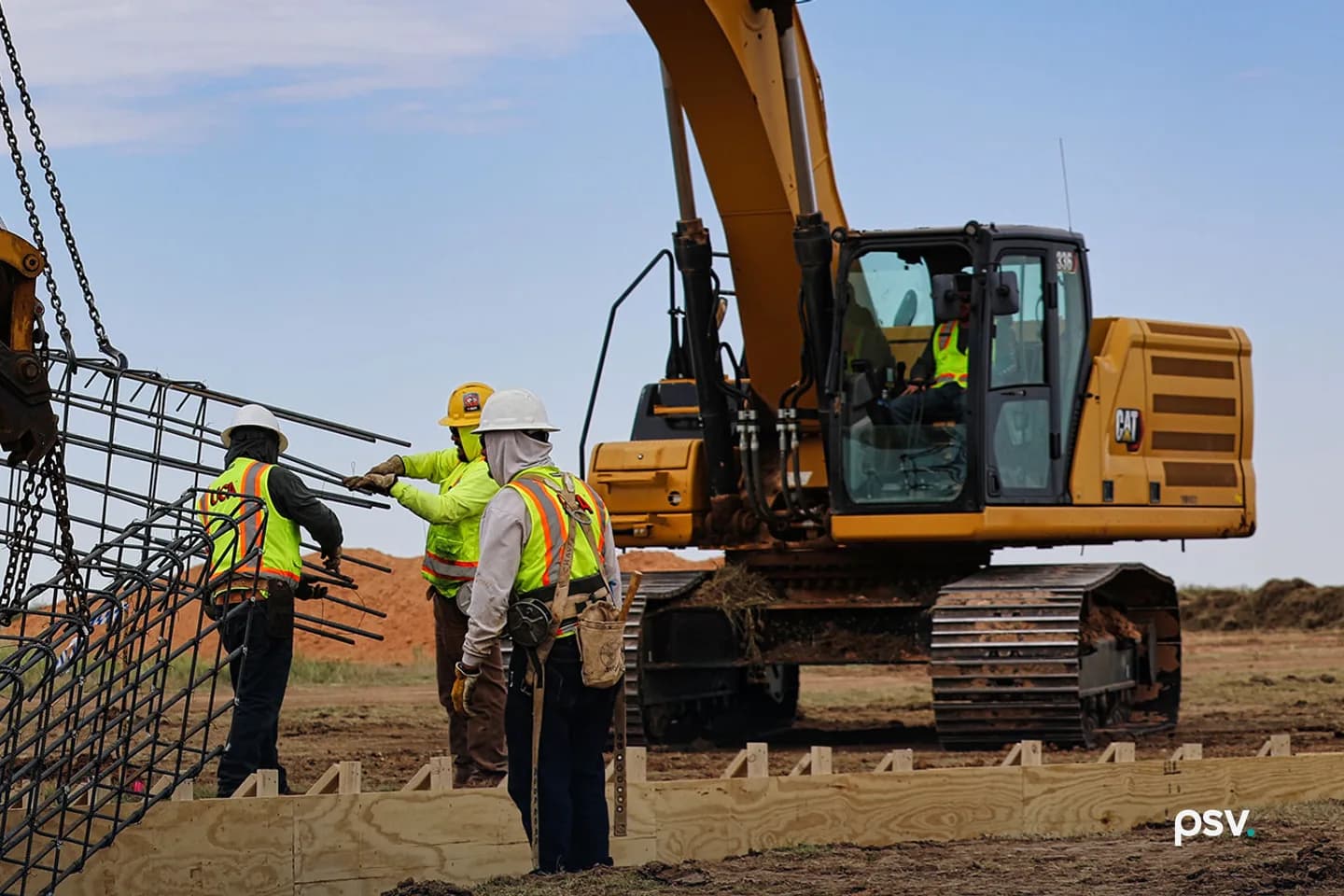
Fermi filed its second quarter Form 8-K on August 13 and furnished two exhibits describing the same move. A third party will finance, construct, own and operate roughly 2.6 GW of generation at Project Matador under a long-term ground sublease, and Fermi commits no capital and issues no debt for the plant. The power plant became a real estate instrument.
Direct answer
Direct answer to Fermi Hillcore build own operate transfer Project Matador
Fermi is not buying its way to 4.8 GW, it is leasing the dirt under it. Hillcore Energy Capital finances, constructs, owns and operates the plant on a long-term ground sublease at the campus Fermi controls. Fermi is anchor offtaker on a 20-year power purchase agreement, each generation block is triggered only by contracted end-user demand with PPA terms matched to the corresponding customer lease, and Fermi holds an option, not an obligation, to buy at fair market value after year 10. No ground rent, PPA price or option strike is in the public record.
What Fermi furnished on August 13
Fermi Inc. (Nasdaq/LSE: FRMI), operating as Fermi America, filed a Current Report on Form 8-K on August 13, 2026 under Item 2.02, Results of Operations and Financial Condition, attaching its second quarter earnings release as Exhibit 99.1 and an investor presentation as Exhibit 99.2. The report says the information in Item 2.02, including both exhibits, “shall be deemed ‘furnished’ and shall not be deemed ‘filed’ for purposes of Section 18 of the Securities Exchange Act of 1934.” The structural news sits inside those two furnished documents. Fermi says that on August 11 it announced a build-own-operate-transfer strategic alliance with Hillcore Energy Capital Corporation for approximately 2.6 GW of incremental power generation at Project Matador, and that the framework agreement would double planned on-site generation to 4.8 GW within approximately 30 months when combined with Fermi’s own power generation program. The terms are in the company’s own words: “Hillcore and its partners will finance, construct, own, and operate their facility under a long-term ground sublease at the Project Matador site, with Fermi committing no capital and issuing no debt for the plant.” First power of approximately 350 MW is targeted within 24 months of notice to proceed. Subsequent blocks are “triggered only by contracted end-user demand,” with each power purchase agreement term matched to the corresponding customer lease, which the release describes as linking generation buildout to signed commercial demand rather than forecasts. Fermi serves as anchor offtaker under a 20-year power purchase agreement and holds an option to acquire the facility at fair market value after year 10.
The investor presentation compresses the same deal onto one slide with four figures: 2.6 GW of combined-cycle capacity owned by Hillcore, 4.8 GW of total planned on-site generation within roughly 30 months, 350 MW of first power targeted within 24 months of notice to proceed, and $0 of Fermi capital or debt for the plant. The slide adds two terms the prose does not carry, that the 20-year PPA is renewable in 10-year increments and that the purchase right is “an option, not an obligation.” The rest of the quarter is a development-stage quarter. Fermi reported a $25.8 million net loss, or $0.04 per basic and diluted share, on $26.8 million of general and administrative expense and no revenue. It held $91.7 million of total cash and restricted cash at June 30, invested $185.0 million of capital in property, plant and equipment during the quarter to bring the gross balance to approximately $1.55 billion, and carried $520.1 million of outstanding debt after a $98.8 million net increase in equipment financing borrowings. Subsequent to quarter end it issued more than $431 million of 5.00% convertible senior notes due 2031, for $416.8 million of net proceeds before approximately $34.5 million of capped call cost. Those figures compute to roughly $474.0 million of pro forma cash before any third quarter spending, and to roughly $951 million of pro forma gross debt against $1,031.7 million of June 30 stockholders’ equity, both PSV arithmetic on Fermi’s published lines rather than company disclosures. The capped call triangle is internally consistent: a $14.64 effective strike at a 100 percent premium implies the $7.32 reference close the presentation names, and the $9.52 base conversion price computes to roughly a 30 percent premium to that same $7.32.
Four things are absent from the record, and each is checkable rather than rhetorical. First, the word “guarantee” does not appear anywhere in the filed earnings release. PSV searched the full text of Exhibit 99.1 and found zero occurrences, and neither the TensorWave slide nor the scorecard slide in Exhibit 99.2 names a guarantor. The August 10 announcement of that lease originally said Fermi and TensorWave expected certain obligations to be guaranteed by one of the global leaders in AI, and the corrected version withdrew the sentence; three days and one 8-K later, the claim has not returned and no guarantor has been named. Second, EDGAR full-text search returns exactly two documents mentioning TensorWave, and both are these furnished exhibits. Third, as of this writing Fermi had filed no Form 8-K reporting either the TensorWave lease or the Hillcore framework agreement under Item 1.01, Entry into a Material Definitive Agreement, and no Form 10-Q for the quarter, which the release says “will be filed.” Fourth, the two exhibits do not describe the same $6.5 billion the same way. The prose release calls it “total revenue of approximately $6.5 billion over the life of the contract,” while both slides that carry the number label it phase one contracted revenue, matching the narrower August 10 framing of the initial 15-year term excluding renewals. One of those readings is materially larger than the other, and they were furnished in the same filing on the same day.
Why a CRE operator should care
Strip the megawatts out and the instrument is one every real estate operator already knows. A landowner controls a large, well-served site. A capital partner takes a long-term ground sublease on part of it, finances and builds an improvement, owns and operates that improvement for the term, and the landowner holds a purchase right at the back end. The only unusual feature is that the improvement is a 2.6 GW combined-cycle power complex rather than a building, and that the rent runs in two directions: ground rent flows to Fermi under the sublease, and power payments flow from Fermi to Hillcore under the 20-year PPA. That is a sandwich position, and it is the reason the company can say it commits no capital and issues no debt for the plant while still calling the capacity part of its 4.8 GW plan. What it gives up is the plant. Against the 4.8 GW of total planned on-site generation the presentation names, 2.6 GW computes to roughly 54 percent of planned capacity owned by someone other than Fermi, which is PSV arithmetic on the company’s two published figures. A firm whose entire pitch is owning the power has just arranged for the majority of its stated future generation to be owned by a counterparty.
The second feature is the one worth copying, and it is pure lease discipline. Each generation block is triggered only by contracted end-user demand, and each PPA term is matched to the corresponding customer lease. Anyone who has ever held a sandwich lease knows why that sentence exists: the fastest way to destroy a middle position is to go long on the obligation you owe and short on the income you collect. Matching term to term removes the mismatch by construction. It also removes the schedule. Read carefully, 4.8 GW within approximately 30 months is not a delivery timetable, it is a ceiling conditioned on signing tenants, and the release says as much when it separates the 350 MW first block, which begins on execution of definitive agreements, from every block after it. The same conditionality shows up in Fermi’s own path-to-power language, which targets approximately 200 MW of initial commercial power over the next six months and approximately 1.5 GW over the next 18 to 24 months, “excluding the Hillcore alliance and subject to binding customer agreements and approvals.” An operator reading a capacity headline off this deal without reading the trigger is reading an option as a plan.
The third feature is the residual, and it is unpriced. Fermi holds an option to acquire the Hillcore Power Center at fair market value after year 10. A fair-market-value option is not a bargain purchase option and it is not a fixed strike; it is a right to pay whatever a decade-old gas complex is worth in 2037, in a power market nobody can underwrite today, with no cap, no floor, no formula and no appraisal mechanic anywhere in the public record. That cuts both ways honestly. If merchant power prices in the Panhandle are strong and the plant is fully contracted, the option is expensive exactly when Fermi most wants to exercise it. If they are weak, the option is cheap and close to worthless. Compare that to how the same problem gets solved in ground-leased real estate, where purchase options usually carry a formula, a notice window and an appraisal procedure precisely because “fair market value” is where deals go to litigate. None of those mechanics are disclosed here. Neither is the ground rent, the PPA price, the escalators, the term length of the sublease, or what happens to the improvement at reversion if the option is never exercised.
The workflow PSV would run
The first workflow is a ground-lease-and-offtake abstract, and it belongs to anyone who owns land a capital partner wants to build on. The inputs are documents rather than headlines: the ground lease or sublease and every amendment, the offtake or PPA and its pricing and term-matching provisions, the purchase option with its strike mechanic, notice window and appraisal procedure, the conditions precedent list with a named owner and deadline for each, the counterparty’s financials and its financing commitments for the improvement, and the reversion and removal provisions that decide who owns what at the end. The output is one page per structure stating who owns the improvement during the term, what rent runs each way, how long each obligation runs and against what income, exactly how the option is priced and when it must be exercised, which conditions remain open, and the source document and pull date behind every field. The reviewer is the capital markets or asset management lead. The approval gate is blunt and it is the whole point: no business plan carries a block of capacity, revenue or capital relief until the definitive agreement for that block exists and a person has read it. A framework agreement is a letter of intent with better tailoring.
The second workflow grades the record itself, and this filing is the argument for it. Public claims arrive at four very different evidentiary levels, and coverage flattens all four into “the company said.” A press release is the weakest. An exhibit furnished under Item 2.02 carries the company’s name but is expressly excluded from Section 18 liability, which the 8-K states in terms. An exhibit filed under Item 1.01 or Item 2.03 is stronger. The executed agreement itself, filed as a material contract, is strongest. PSV would keep a register with one row per material claim, recording the claim, the document that carries it, the Item number, whether that document was filed or furnished, the date pulled, and a re-check interval, then re-pull on that interval so a promotion or a quiet disappearance surfaces on its own. The output is a table, not a narrative. The reviewer is whoever relies on the claim in a model. There is no approval gate because nothing is being decided; it is a monitoring layer. Applied here, the $6.5 billion and the 2.6 GW both enter the register as furnished Item 2.02 exhibits with no underlying agreement filed, and they stay at that grade until an Item 1.01 report or a material contract exhibit moves them.
What stays human, and what is still unknown
The operator read
Finish with the judgment call.
The reported facts are above. Enter your email for PSV's operator conclusion and a year of access to every newsroom brief.
Free. No card. Privacy policy. Unsubscribe anytime.
 by PSVLive
Build the workflow behind this analysis. Train with the operators doing it.
Real deal files, live builds, and production-ready CRE AI workflows inside the CRE AI Institute.










Clear answers
Common questions about Fermi Hillcore build own operate transfer Project Matador
What is the Fermi Hillcore build-own-operate-transfer alliance?
In the second quarter earnings release furnished with its August 13, 2026 Form 8-K, Fermi Inc. (Nasdaq/LSE: FRMI) says it announced on August 11 a build-own-operate-transfer strategic alliance with Hillcore Energy Capital Corporation covering approximately 2.6 GW of incremental power generation at Project Matador, and that the framework agreement would double planned on-site generation to 4.8 GW within approximately 30 months when combined with Fermi’s own power generation program. In Fermi’s words, Hillcore and its partners will finance, construct, own and operate their facility under a long-term ground sublease at the Project Matador site, with Fermi committing no capital and issuing no debt for the plant. First power of approximately 350 MW is targeted within 24 months of notice to proceed, subsequent blocks are triggered only by contracted end-user demand, each power purchase agreement term is matched to the corresponding customer lease, Fermi serves as anchor offtaker under a 20-year power purchase agreement that the investor presentation describes as renewable in 10-year increments, and Fermi holds an option, not an obligation, to acquire the facility at fair market value after year 10. Definitive agreements had not been executed as of the filing; the release says construction of the first block begins on their execution.
Why does a power plant on a ground sublease matter to commercial real estate?
Because the instrument is a structure real estate already runs, applied to generation. A landowner controls a site, a capital partner takes a long-term ground sublease, finances and builds the improvement, owns and operates it for the term, and the landowner holds a purchase right at the back end. Here the improvement is a 2.6 GW combined-cycle complex and the rent runs both ways: ground rent to Fermi under the sublease, power payments from Fermi to Hillcore under the 20-year PPA, which is a sandwich position. Two consequences follow. Against the 4.8 GW of total planned on-site generation the presentation names, 2.6 GW computes to roughly 54 percent of planned capacity owned by a counterparty rather than by Fermi, which is PSV arithmetic on the company’s own figures. And the discipline that protects the middle position is term matching: each block is triggered only by contracted end-user demand and each PPA term is matched to the corresponding customer lease, which removes the mismatch by construction but also means 4.8 GW within roughly 30 months is a conditional ceiling rather than a delivery schedule.
Was the Fermi TensorWave lease guarantor named in the Q2 filing?
No. PSV searched the full text of Exhibit 99.1, the second quarter earnings release furnished with the August 13, 2026 Form 8-K, and found zero occurrences of the word guarantee, and neither the TensorWave slide nor the leadership scorecard slide in Exhibit 99.2 names a guarantor. The original August 10 announcement of that lease said Fermi and TensorWave expected certain obligations to be guaranteed by one of the global leaders in AI, and the corrected version distributed the same day withdrew both the headline bullet and the Guarantee line; the claim has not reappeared in the filed record. EDGAR full-text search returns exactly two documents mentioning TensorWave, and both are these furnished exhibits. Two further gaps matter for anyone grading the evidence. As of this writing Fermi had filed no Form 8-K reporting either the TensorWave lease or the Hillcore framework agreement under Item 1.01, Entry into a Material Definitive Agreement, and no Form 10-Q for the quarter. And the two exhibits describe the same $6.5 billion differently: the prose release calls it total revenue over the life of the contract, while both slides carrying the figure label it phase one contracted revenue.
Primary source record
These records support the reported facts in this brief. PSV’s CRE workflow interpretation and test plan are original analysis.
- Fermi Inc., Form 8-K reporting second quarter 2026 results (Item 2.02), filed August 13, 2026
- Fermi Inc., Exhibit 99.1, “Fermi Announces Second Quarter 2026 Results and Delivers on All Five 90-day Objectives,” August 13, 2026
- Fermi Inc., Exhibit 99.2, Second Quarter 2026 investor presentation, August 13, 2026
- Fermi Inc., EDGAR filing history (CIK 0002071778)
- Fermi America, Project Matador (source of the lead photograph)
Topics
Related PSV analysis
CRE CAPITAL NEWS
Fermi’s $6.5B Lease: The Guarantee Line Vanished
Fermi Inc. said on August 10 that it executed its first binding customer lease at Project Matador in Carson County, Texas: 222 MW of total facility power to TensorWave, at approximately $6.5 billion of contracted revenue over an initial 15-year term. The wire then carried a corrected version of the same release. The sentence about a guarantee from one of the global leaders in AI is not in it.
CRE CAPITAL NEWS
NVIDIA’s $500B: Compute Joins the Real Asset Stack
NVIDIA said on August 10 that it signed memorandums of understanding with Apollo, BlackRock, Blackstone, Brookfield, Goldman Sachs and KKR to establish independent compute financing platforms and mobilize over $500 billion of third-party capital. Read the About sections of that same release and the CRE fact is already on the page: three of the six describe real estate as a core business, and one of them calls itself the world’s largest alternative asset manager.
CRE CAPITAL NEWS
Hut 8’s $9.8B Beacon Point Lease: The CRE Read on a Fully Leased AI Campus
Hut 8 said on July 20 it signed a second 15-year lease at its Beacon Point campus in Nueces County, Texas, a 352 megawatt deal with a base-term contract value of $9.8 billion. The lease fully commercializes the one-gigawatt campus, doubling the tenant’s contracted capacity to 704 megawatts. For real estate, the detail that matters is the structure: a triple-net, take-or-pay lease to a single investment-grade tenant, energizing in 2027.
Related guides
Cornerstone PSV guides on the workflows in this article.
Claude MCP for CRE
MCP explained for CRE teams: connect Claude to the files and systems you already run so answers come from your data, with citations.
Read the guideClaude Engineering Partner for CRE
What it means to run Claude with an engineering partner: the operating model, the controls, and who owns what.
Read the guideAI for Real Estate Investing
How commercial real estate investors use AI across the deal lifecycle: sourcing, underwriting, due diligence, and asset management, grounded in real documents.
Read the guideby PSVLiveYou read the operator view. Now learn to run the workflow.
The AI MBA for commercial real estate: the workflows these briefs describe, taught end to end on real deal files, with live builds and a community of CRE operators.