CRE CAPITAL NEWS
NVIDIA’s $500B: Compute Joins the Real Asset Stack
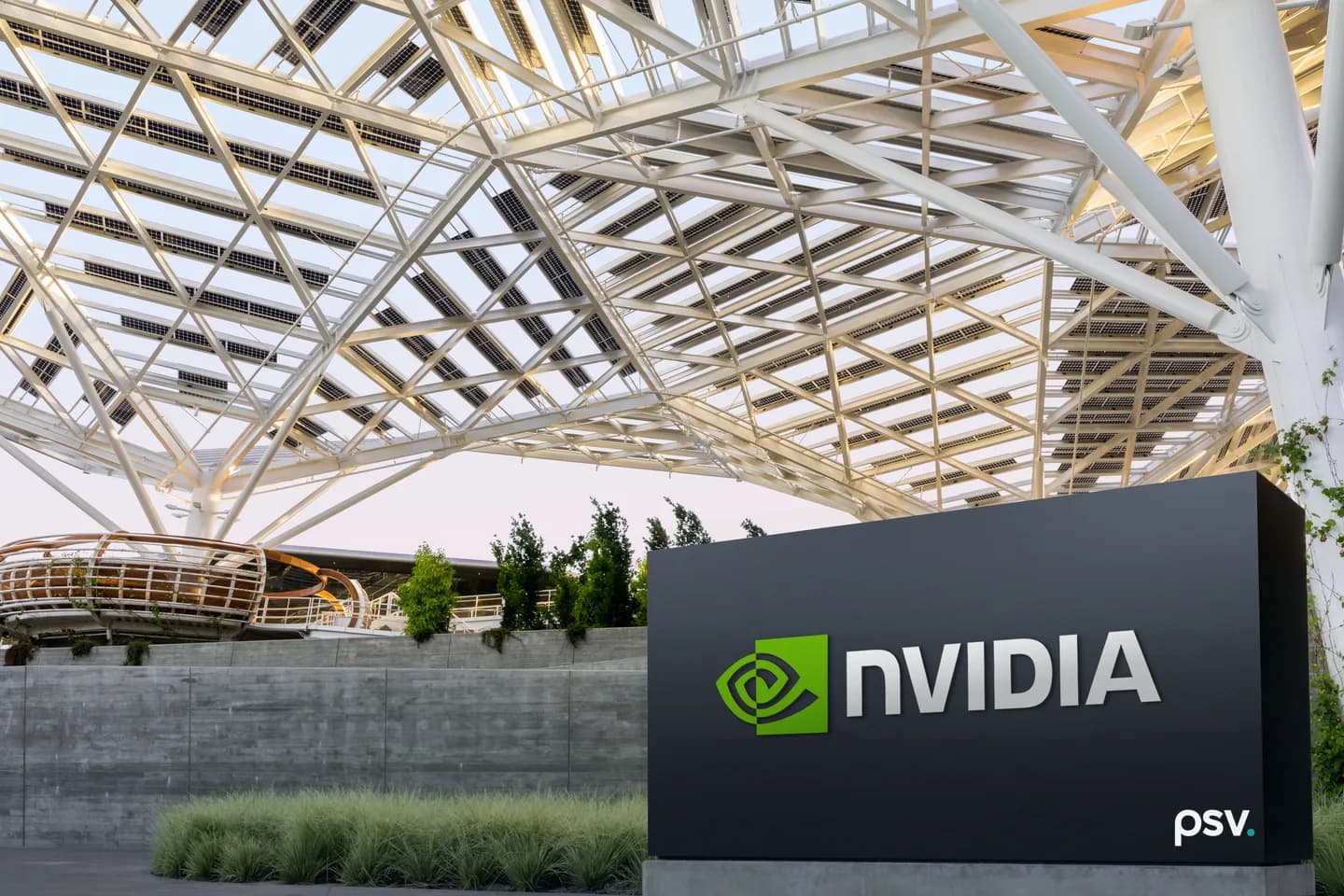
NVIDIA said on August 10 that it signed memorandums of understanding with Apollo, BlackRock, Blackstone, Brookfield, Goldman Sachs and KKR to establish independent compute financing platforms and mobilize over $500 billion of third-party capital. Read the About sections of that same release and the CRE fact is already on the page: three of the six describe real estate as a core business, and one of them calls itself the world’s largest alternative asset manager.
Direct answer
Direct answer to NVIDIA $500 billion compute financing platforms
This is announced capacity, not committed capital. The release says the partnerships “remain subject to execution of the final agreements,” names no platform entity, allocates none of the $500 billion by firm, and gives no timeline beyond “over time.” What it does disclose is the shape of the product, and the shape is not a net lease: the subhead sells “long-duration usage-linked revenue,” which means the capital takes utilization risk that a triple-net data center lease does not.
What NVIDIA and the six firms announced
On August 10, 2026, NVIDIA Corporation (Nasdaq: NVDA) announced strategic partnerships to establish independent compute financing platforms with Apollo, BlackRock, Blackstone, Brookfield, Goldman Sachs and KKR, to mobilize over $500 billion of third-party capital for the buildout of AI infrastructure over time. The instruments are memorandums of understanding, and the release describes their aim in its own words: to establish the first compute financing platforms of their kind at global scale across NVIDIA’s ecosystem, including leading frontier AI labs, enterprises and AI clouds, and to create dedicated pools of capital at significant scale at attractive rates for NVIDIA customers. The subheadline states the thesis more plainly than the body does. It says the platforms turn NVIDIA compute and full-stack AI infrastructure into an investable asset class for global capital, broadening access to AI factories, enabling long-duration usage-linked revenue while supporting NVIDIA’s ecosystem growth across hardware sales and software adoption. The last line before the About sections is the one to hold onto: “These partnerships remain subject to execution of the final agreements.”
The quotes carry more underwriting content than the structural description does, and two of them are load-bearing. Jensen Huang, founder and CEO of NVIDIA, says that in AI, compute is revenue, and that NVIDIA compute is “broadly adopted, flexible across models and workloads, fungible and transferable across customers and operators, and continuously improved through CUDA software, extending its useful life and improving its economics over time.” That is a claim about residual value and transferability, made by the manufacturer of the asset, and it is the exact assumption a lender against that asset would have to accept. David Solomon, Chairman and CEO of Goldman Sachs, says the firm is excited “for the new opportunity to create a market for credit backed by NVIDIA compute,” which is a securitization signal rather than a balance-sheet-lending one. Jim Zelter, President of Apollo, calls modern compute “a scarce, mission-critical asset class with compelling investment characteristics.” Jon Gray, President and COO of Blackstone, confirms the firm continues to be an enormous investor across the NVIDIA ecosystem. Bruce Flatt, CEO of Brookfield, says compute is “fast becoming the essential layer of infrastructure and a core pillar of the Brookfield AI infrastructure strategy.” Larry Fink of BlackRock frames it as deepening an existing relationship including through the AI Infrastructure Partnership. Joe Bae and Scott Nuttall, Co-CEOs of KKR, note NVIDIA is a founding investor in Helix Digital Infrastructure and add the sentence any developer will recognize: “delivery, not ambition, is the hard part.” Beyond those quotes the release supplies no platform names, no per-firm allocations, no target closes, no fee terms, no leverage assumptions and no first-loss structure.
Why a CRE operator should care
The most consequential CRE disclosure in this release is in the boilerplate, which is why almost nobody will read it. Blackstone’s About section describes it as the world’s largest alternative asset manager with over $1.3 trillion in assets under management including “global investment strategies focused on real estate, private equity, credit, infrastructure, life sciences, growth equity, secondaries and hedge funds,” with real estate listed first. Brookfield’s says it has more than $1 trillion in assets under management and invests “across infrastructure, energy, private equity, real estate, and credit.” Apollo’s puts approximately $1.05 trillion of assets under management as of June 30, 2026 and describes Athene, its retirement services business, which is one of the larger institutional lenders against US commercial property. KKR’s names private equity, credit and real assets, plus insurance subsidiaries under Global Atlantic. Those three disclosed figures sum to more than $3.35 trillion, and $500 billion against that computes to under 15 percent of just those three balance sheets, before BlackRock, Goldman Sachs and KKR, none of which give an AUM figure in this release. Read one way that is reassuring, since a compute allocation of this size does not require anyone to leave real estate. Read the other way it is the point: the same six committees that price your development JV, your preferred equity and your loan have now signed MOUs to stand up dedicated pools for a competing real asset, and they said so on the same page where they describe their real estate businesses.
Then read the product, because the product is not the one CRE is built around. A data center triple-net lease pays whether the tenant fills the hall or not; that is what makes it financeable at long duration against a building. This release sells something else. The subhead says the platforms enable “long-duration usage-linked revenue,” and Huang’s formulation is that in AI, compute is revenue. Usage-linked means the capital takes utilization risk. A landlord holding a 15-year net lease and a platform holding usage-linked compute revenue on the same campus are holding two different instruments with two different failure modes, and only one of them is insulated from a demand air pocket. For an owner or a lender the practical question is which one is actually in the deal in front of them, because a single AI campus can now carry a shell financed like real estate, equipment financed like an asset-backed pool, and revenue that behaves like a merchant contract, all under one roof and often with capital from the same six firms sitting in different layers.
The residual-value question is the one that should keep a credit officer awake, and it is genuinely open. Commercial real estate has a century of convention for residual value: a building has a land component, a replacement cost, a comparable set and a resale market that clears. Compute has none of that yet, which is precisely why Huang’s sentence about fungibility, transferability and CUDA extending useful life appears in a financing announcement rather than a product one. That is a company claim, not a PSV finding, and it is unproven at the scale being financed here. It also runs directly into a disclosure PSV has covered from the other side of the ledger, where hyperscaler useful-life assumptions for data center equipment are an accounting estimate that moves earnings when it changes. If the platforms underwrite GPU residual and that residual proves shorter or less transferable than assumed, the loss does not stay inside the compute pool. It transmits through the same balance sheets that hold real estate equity and real estate credit.
The workflow PSV would run
The first workflow is a capital-partner exposure map, and it is overdue at most firms regardless of this announcement. Any owner, developer or sponsor with an institutional capital relationship among these six should be able to answer, from records rather than from memory, which vehicle their money sits in, what that vehicle’s stated mandate is, which committee approves follow-on capital, and what else that committee is now being asked to fund. The inputs are documents: the joint venture agreement or limited partnership agreement and every side letter, the partner’s public fund disclosures and adviser filings, its quarterly and annual reports, its own press releases including this one, and the internal record of who said what on the last capital call. The output is one card per capital relationship stating the vehicle, the strategy bucket, the stated mandate, the responsible officer, the last confirmed appetite and the date each field was sourced, with a link to the document behind it. The reviewer is the capital markets lead. The approval gate is that no business plan carries an assumed follow-on allocation until a person has a written confirmation from the partner dated after the last public change in that partner’s strategy, which as of August 10 includes this release.
The second workflow is a ledger, and it is the cheapest discipline in this brief. Capital headlines arrive in five very different states, and coverage flattens all five into one word. Announced is not the same as MOU, MOU is not the same as committed, committed is not the same as funded, and funded is not the same as drawn. PSV would keep a register with exactly one status field per headline, the document that supports that status, the date it was pulled, and a re-check interval, then diff the primary record on that interval so a downgrade or a quiet reissue surfaces on its own. The output is a status table, not a narrative. The reviewer is whoever relies on the number in a model. There is no approval gate because nothing is being decided, which is the point: it is a monitoring layer. Applied here, this $500 billion enters the ledger as MOU, with the supporting sentence quoted verbatim, and it stays there until final agreements are executed and disclosed.
What stays human, and what is still unknown
The operator read
Finish with the judgment call.
The reported facts are above. Enter your email for PSV's operator conclusion and a year of access to every newsroom brief.
Free. No card. Privacy policy. Unsubscribe anytime.
 by PSVLive
Build the workflow behind this analysis. Train with the operators doing it.
Real deal files, live builds, and production-ready CRE AI workflows inside the CRE AI Institute.











Clear answers
Common questions about NVIDIA $500 billion compute financing platforms
What did NVIDIA announce with Apollo, BlackRock, Blackstone, Brookfield, Goldman Sachs and KKR?
On August 10, 2026, NVIDIA Corporation (Nasdaq: NVDA) announced strategic partnerships to establish independent compute financing platforms with Apollo, BlackRock, Blackstone, Brookfield, Goldman Sachs and KKR, to mobilize over $500 billion of third-party capital for the buildout of AI infrastructure over time. The instruments are memorandums of understanding rather than executed agreements, and the release says the platforms aim to create dedicated pools of capital at significant scale at attractive rates for NVIDIA customers, across an ecosystem that includes frontier AI labs, enterprises and AI clouds. The subheadline describes the goal as turning NVIDIA compute and full-stack AI infrastructure into an investable asset class for global capital while enabling long-duration usage-linked revenue. The release names no platform entity, allocates none of the $500 billion to any individual firm, gives no target closes, fee terms, leverage assumptions or first-loss structure, and provides no timeline beyond the phrase over time. Its final line before the About sections states that the partnerships remain subject to execution of the final agreements.
Why does an NVIDIA financing announcement matter to commercial real estate?
Because of who signed it. In the About sections of the same release, Blackstone describes itself as the world’s largest alternative asset manager with over $1.3 trillion in assets under management and lists real estate first among its strategies, Brookfield reports more than $1 trillion and names real estate among the areas it invests across, and Apollo reports approximately $1.05 trillion as of June 30, 2026 alongside Athene, its retirement services business. Those three disclosed figures sum to more than $3.35 trillion, and $500 billion against that computes to under 15 percent of just those three balance sheets, which is PSV arithmetic on the release’s own numbers. The practical consequence is that the same institutions that supply real estate equity, preferred equity and property credit have signed MOUs to stand up dedicated pools for a competing real asset. A second consequence sits in the product itself: the release sells long-duration usage-linked revenue, which means the capital takes utilization risk, while a triple-net data center lease pays whether the tenant fills the hall or not. Those are two different instruments with two different failure modes, and an AI campus can now carry both.
Is the $500 billion committed capital?
No. The agreements are memorandums of understanding and the release states that the partnerships remain subject to execution of the final agreements, so $500 billion is announced capacity rather than committed, funded or drawn capital. NVIDIA’s own forward-looking-statements section reinforces the point, listing the execution of final agreements and the terms and timing of the contemplated partnerships among the matters whose actual results could differ materially from expectations. Several other things are also absent from the public record. No platform entity is named, so there is no vehicle to diligence. No amount is allocated by firm, and splitting $500 billion evenly across six platforms would compute to roughly $83.3 billion each, an illustration rather than a disclosure. The release does not say whether NVIDIA takes equity, a first-loss position, a residual guarantee or an offtake backstop in any platform, which leaves the word independent undefined even though NVIDIA manufactures the asset being financed and, by the subhead’s own wording, benefits from the hardware sales and software adoption the financing enables.
Primary source record
These records support the reported facts in this brief. PSV’s CRE workflow interpretation and test plan are original analysis.
- NVIDIA, “NVIDIA Partners With Apollo, BlackRock, Blackstone, Brookfield, Goldman Sachs and KKR to Establish AI Compute Infrastructure Financing Platforms to Mobilize Over $500 Billion of Third-Party Capital”, NVIDIA Newsroom, August 10, 2026
- Apollo Global Management, Inc. (NYSE: APO), the same announcement issued through Apollo investor relations, August 10, 2026
- NVIDIA Corporation, investor relations press release record
- NVIDIA Corporation, EDGAR filing history (CIK 0001045810)
Topics
Related PSV analysis
CRE CAPITAL NEWS
Brookfield’s Record $77B Quarter: Real Estate Took 5.6 Percent
Brookfield Asset Management furnished its second quarter results to the SEC on August 6, reporting a record $77 billion raised in the quarter and more than $1 trillion of assets under management. Read the segment lines and the story changes. Real estate strategies took $4.3 billion of that, roughly 5.6 percent, while credit took $51 billion and AI infrastructure got a fund of its own.
CRE CAPITAL NEWS
Microsoft Says Its Data Centers Last 25 Years: The CRE Read
On its July 29 earnings call, Microsoft told investors it is extending the estimated useful lives of its datacenters and office buildings from 15 years to 25 years, effective with fiscal 2027, and that more of its future datacenter leases will therefore shift from finance leases to operating leases. The reported capital expenditure number falls to about $175 billion. The commitment behind it does not.
CRE CAPITAL NEWS
Fermi’s $6.5B Lease: The Guarantee Line Vanished
Fermi Inc. said on August 10 that it executed its first binding customer lease at Project Matador in Carson County, Texas: 222 MW of total facility power to TensorWave, at approximately $6.5 billion of contracted revenue over an initial 15-year term. The wire then carried a corrected version of the same release. The sentence about a guarantee from one of the global leaders in AI is not in it.
Related guides
Cornerstone PSV guides on the workflows in this article.
Best AI Tools for Commercial Real Estate
The pillar guide to choosing CRE AI tools by workflow fit and control, not vendor hype.
Read the guideClaude for Real Estate Underwriting
The grounded underwriting workflow: real deal documents in, your rules applied, a source citation behind every number, a person signs off.
Read the guideClaude MCP for CRE
MCP explained for CRE teams: connect Claude to the files and systems you already run so answers come from your data, with citations.
Read the guideby PSVLiveYou read the operator view. Now learn to run the workflow.
The AI MBA for commercial real estate: the workflows these briefs describe, taught end to end on real deal files, with live builds and a community of CRE operators.