CRE POLICY NEWS
Ratepayer Protection Act Stalls in Senate
The House passed H.R. 9340, the Ratepayer Protection Act, by 417 to 3 on September 16, 2026. It would add a federal standard to the Public Utility Regulatory Policies Act making data center campuses of 100 megawatts or more pay the full incremental cost of the grid upgrades built for them. On September 17 Senator Martin Heinrich blocked fast passage in the Senate.
Direct answer
Direct answer to Ratepayer Protection Act
Nothing changed on the grid this week, but the direction of the cost is now bipartisan. The House bill would require states to consider, and decide within two years, whether 100 megawatt data centers pay the full cost of their upgrades and post security before construction. The Senate objection was that considering is not requiring. For owners and developers, the practical question is who signs the utility agreement, because that party carries the cost.
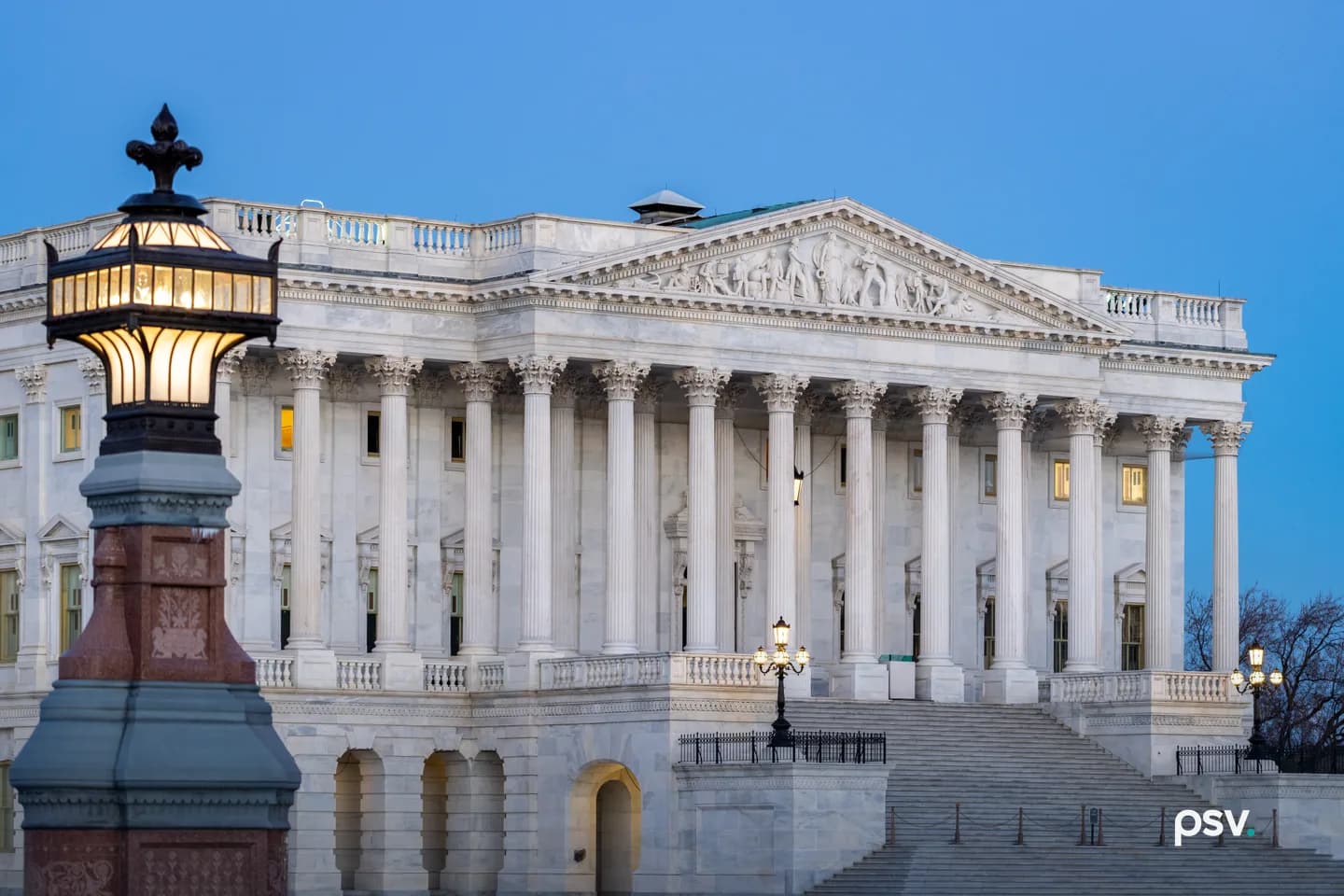
What the House passed and what the Senate did with it
On September 16, 2026 the House of Representatives passed H.R. 9340, the Ratepayer Protection Act, on a motion to suspend the rules and pass as amended. The Clerk’s roll call 312, taken at 6:53 p.m., records 417 yeas, 3 nays and 12 members not voting: Republicans 210 to 0, Democrats 206 to 3 and one independent in favor. The three nays were Representatives Summer Lee of Pennsylvania, Delia Ramirez and Rashida Tlaib. The House Energy and Commerce Committee’s release credits Representative Gabe Evans of Colorado as the bill’s lead; Senator Jon Husted of Ohio introduced the Senate version in July, with Representatives Evans and Kathy Castor of Florida on the House companion, according to Husted’s office.
The engrossed text is short. It adds a new paragraph (22) to section 111(d) of the Public Utility Regulatory Policies Act of 1978. A rate for a large-load customer “shall be designed to recover” the full, incremental cost of any generation, transmission or distribution upgrade needed to serve that customer, including if the customer terminates its contract or stops buying power, and the utility must require financial assurances or contributions before it builds. A large-load customer is a non-residential consumer that requests or enters a power contract on or after enactment for facilities that mainly run information technology infrastructure for data storage and computation and that together draw a peak of 100 megawatts or more at a single site or campus. States would have one year to begin considering the standard and two years to decide, and a state that already implemented, formally considered, or voted on a comparable standard is excused from that process. On September 17 Husted asked the Senate to pass the bill by unanimous consent. Heinrich, the ranking member of the Senate Energy and Natural Resources Committee, objected and asked consent instead for his own bill, S. 5199, the GRID Savings Act of 2026; Senator Bernie Moreno of Ohio objected to that, according to Heinrich’s office. Neither bill passed.
Why the fight is about who pays, and why that is a real estate question
Read the two bills side by side and the disagreement is narrow. Both put the upgrade bill on the data center. H.R. 9340 does it through PURPA, which obliges a state commission to consider and determine whether to adopt a standard, not to adopt it; the Energy and Commerce release calls this a light touch approach and says it draws on what 24 states are already doing, a committee figure PSV did not verify state by state. Heinrich’s floor remarks attack exactly that point: “it’s not enough for us to tell states to consider making data centers pay.” His S. 5199 would instead give the Federal Energy Regulatory Commission jurisdiction over connecting any load of 150 megawatts or more to interstate transmission, require a final rule within a year, assign 100 percent of interconnection and direct assignment facility costs to the customer, require financial security against a load that fails to proceed, measure peak demand without netting out co-located generation or storage, and exclude transmission wholly within ERCOT.
For a CRE operator the useful word in the House text is customer. The obligation lands on the non-residential consumer that contracts for the power. On a self-built hyperscale campus that is the tech company. On a powered shell or a wholesale colocation deal it can be the landlord, a development joint venture or the tenant, depending on who signs the utility agreement, which is PSV’s reading of the definition rather than anything the bill or its sponsors address. The termination language matters for the same reason: a tenant can walk under its lease while the upgrade cost recovery survives under the utility contract. The single site or campus aggregation also means a phased campus cannot stay under 100 megawatts by contracting building by building. None of this is law yet, but the same direction runs through the Wisconsin, Tennessee Valley Authority and PJM large-load actions this desk has covered.
The workflow PSV would run: a large-load cost exposure register
The artifact is one row per data center site a firm owns, is developing, finances or is underwriting. Inputs: the executed or draft electric service agreement and its signature date; the utility’s large-load tariff sheets and any state commission order on large-load rates; the site’s contracted and forecast peak demand, aggregated across the campus; the lease’s utility, pass-through and termination clauses; and the construction loan’s treatment of utility deposits and letters of credit. Output: for each site, who the utility customer of record is, whether the contract predates any enactment, whether the state already has a comparable standard, what security has been posted or will be required, and what happens to unrecovered upgrade cost if the tenant leaves.
The reviewer is the asset manager or development lead with energy counsel on the tariff and contract terms. The approval gate: no letter of intent, lease or loan commitment on a site at or near 100 megawatts goes forward until its register row names who carries upgrade cost after a termination and the lease allocates it. An assistant is well suited to the extraction, pulling definitions, thresholds, dates and termination terms from long tariffs and agreements and flagging where a lease is silent. It should not decide whether a pass-through is enforceable or whether a utility will accept a given form of security.
What stays with a person, and what the record leaves open
The operator read
Finish with the judgment call.
The reported facts are above. Enter your email for PSV's operator conclusion and a year of access to every newsroom brief.
Free. No card. Privacy policy. Unsubscribe anytime.
 by PSVLive
Build the workflow behind this analysis. Train with the operators doing it.
Real deal files, live builds, and production-ready CRE AI workflows inside the CRE AI Institute.











Clear answers
Common questions about Ratepayer Protection Act
What does the Ratepayer Protection Act do?
H.R. 9340 adds a federal standard to section 111(d) of the Public Utility Regulatory Policies Act. A utility rate for a large-load customer would be designed to recover the full, incremental cost of any generation, transmission or distribution upgrade needed to serve it, including after the customer terminates or stops buying power, and the utility would require financial assurances or contributions before building. It covers non-residential customers contracting on or after enactment for facilities that mainly run data storage and computing infrastructure with an aggregate peak of 100 megawatts or more at a single site or campus. States must begin considering the standard within one year and decide within two, but are not required to adopt it.
Did the Ratepayer Protection Act pass the Senate?
No. The House passed it 417 to 3 on September 16, 2026 (roll call 312). On September 17 Senator Jon Husted asked the Senate to pass it by unanimous consent, and Senator Martin Heinrich, ranking member of the Energy and Natural Resources Committee, objected, arguing that asking states to consider a standard is not enough. Heinrich then sought consent for his own GRID Savings Act, S. 5199, and Senator Bernie Moreno objected. Either bill can still move through the regular Senate process.
How is the GRID Savings Act different from the Ratepayer Protection Act?
The Ratepayer Protection Act works through the states: commissions must consider a 100 megawatt large-load cost standard but may decline it, and states that already acted on a comparable standard are exempt. Heinrich’s GRID Savings Act, S. 5199, works through FERC: it gives the Commission jurisdiction over connecting loads of 150 megawatts or more to interstate transmission, requires a final rule within a year, assigns 100 percent of interconnection and direct assignment facility costs to the customer, requires financial security, counts peak demand without netting co-located generation, and excludes transmission wholly within ERCOT.
Primary source record
These records support the reported facts in this brief. PSV’s CRE workflow interpretation and test plan are original analysis.
- U.S. Government Publishing Office, H.R. 9340, Ratepayer Protection Act, Engrossed in House, passed September 16, 2026 (source of the PURPA section 111(d)(22) standard, the 100 megawatt single site or campus definition, the termination language, the financial assurance requirement, the one and two year state deadlines and the prior state action exemption)
- Office of the Clerk, U.S. House of Representatives, Roll Call 312, H.R. 9340, September 16, 2026 (source of the 417 to 3 tally, the party breakdown, the 12 not voting and the three nays)
- Office of Senator Martin Heinrich, “Heinrich Offers His GRID Savings Act to Force AI Data Centers to Pay for Grid Upgrades, Highlights How Husted-Backed Bill Falls Short,” September 17, 2026, with remarks as delivered (source of the objection, the S. 5199 consent request, Senator Moreno’s objection and the quoted figures)
- U.S. Government Publishing Office, S. 5199, GRID Savings Act of 2026, introduced July 30, 2026 (source of the 150 megawatt covered large load definition, FERC jurisdiction, the one year rulemaking, the 100 percent cost assignment, the financial security requirement and the ERCOT exclusion)
- House Committee on Energy and Commerce, “Ratepayer Protection Act Passes House with Strong Bipartisan Support,” September 16, 2026 (source of the sponsor attribution and the 24 state figure)
- Office of Senator Jon Husted, “Husted leads bill to protect Americans from footing the bill for new data centers,” July 20, 2026 (source of the Senate introduction, the House companion sponsors and the Ratepayer Protection Pledge characterization)
- Office of the Senate Republican Leader, “Democrats Block Sen. Husted’s Bill to Protect American Families From Higher Energy Costs,” September 17, 2026
- Architect of the Capitol, “Senate Wing of the U.S. Capitol,” Wikimedia Commons, public domain (lead photograph source)
Topics
Related PSV analysis
CRE POLICY NEWS
Wisconsin Made Its 100 Megawatt Customers Sign for the Power
WEC Energy Group filed a Form 8-K on September 4 attaching the investor deck that finally puts numbers on Wisconsin’s Very Large Customer tariff. The Public Service Commission approved it in docket 6630-TE-113 and made it mandatory for any customer with 100 megawatts or more of annual demand. WEC now forecasts 3.9 gigawatts of new electric demand through 2030, and two data center campuses are all of it.
CRE POLICY NEWS
TVA Repriced Data Center Power. The Tariff Isn’t Public.
The TVA Board voted in Memphis on August 20 to move data centers out of the manufacturing rate class and onto a rate of their own. Officials at the meeting described an October 1 start, a roughly 10 percent increase, a three-year phase-in for existing sites, and an upfront capacity commitment charge on new load above 5 megawatts. TVA’s own release names none of those terms.
CRE POLICY NEWS
PJM Moves to Curtail Data Centers: The CRE Read on Firm Power
The PJM Board of Managers issued a decisional letter on July 27 directing two filings to FERC by the end of July. One creates a Reliability Backstop Procurement to backfill a 6,831 megawatt capacity shortfall. The other creates an Interim Resource Adequacy Service, under which new large loads that have not brought their own new capacity by June 1, 2027 are cut before anybody else is.
Related guides
Cornerstone PSV guides on the workflows in this article.
by PSVLiveYou read the operator view. Now learn to run the workflow.
The AI MBA for commercial real estate: the workflows these briefs describe, taught end to end on real deal files, with live builds and a community of CRE operators.