CRE AI NEWS
TeraWulf Doubles Contracted Power at Its Kentucky Campus to 1 GW, and Flags the Collateral
TeraWulf’s Form 8-K filed October 5 says a subsidiary signed amended agreements with Kentucky Power on October 1 that raise contracted power at its Muskie Data Campus in eastern Kentucky from 500 megawatts to 1 gigawatt and move the second phase from 2030 to 2029, subject to state utility regulators. The same filing says the company is seeking more debt to back letters of credit for its utility agreements.
Direct answer
Direct answer to TeraWulf Muskie Data Campus Kentucky Power
At a data center site, the power contract is the asset, and it comes with collateral. TeraWulf added 500 megawatts of contracted capacity at Muskie on paper, with the earlier date still subject to Kentucky Public Service Commission approval, and told investors in the same filing that it needs more borrowing capacity for utility letters of credit. Anyone pricing powered land should read the service agreement before the survey.
What TeraWulf filed on October 5
On October 5, 2026, TeraWulf Inc. (Nasdaq: WULF) filed a Form 8-K with a press release attached. The filing says its wholly owned subsidiary, DB Long Hunts Data LLC, entered into amended and restated transmission infrastructure and energy service agreements with Kentucky Power Company, an American Electric Power company, and that the agreements were executed on October 1. According to the filing, they increase contracted power capacity at the Muskie Data Campus in eastern Kentucky from 500 megawatts to 1 gigawatt, and they move the planned delivery of the second 500 megawatt phase from 2030 to 2029, “subject to Kentucky Public Service Commission approval and Kentucky Power’s construction schedule.” The first 500 megawatt phase “remains targeted to begin ramping in 2028.” One small difference between the two records: the press release describes a single amended and restated electric service agreement, while the 8-K describes agreements, plural, covering both transmission infrastructure and energy service. The 8-K is the more specific record.
The site’s history is in TeraWulf’s May filing. That 8-K says the company bought Muskie from Industrial Equity Partners in a deal that closed effective May 22, 2026, that the site is about 285 acres of owned and controlled land, and that Kentucky Power is building a 345 kV substation connected to the existing 765 kV transmission network. The May press release places the site inside the 1,000-acre EastPark Industrial Park. In May the schedule was the second half of 2028 for the first phase and the second half of 2030 for the second; the October records say 2028 and 2029 without naming a half. The October release also quotes CEO Paul Prager saying customer interest in Muskie “has been tremendous,” and says the company continues to evaluate up to 2 gigawatts over time, subject to more utility planning, infrastructure and agreements. Those are company statements. No tenant has been named for Muskie. A second item in the same 8-K, headed “Financing Strategy Update,” says TeraWulf intends to increase its existing senior secured revolving credit facility and is seeking additional senior secured debt “to further support letter of credit needs in connection with the Company’s long-term power development partnerships with utilities,” and that there can be no assurance it will obtain the financing.
Why a CRE operator should care: the power contract is the asset, and it carries collateral
Nothing in the October records says the site got bigger. What changed on October 1 was a contract. In PSV’s read, that is the clearest recent illustration of how a data center site is valued: by contracted megawatts and the date they arrive, not by acres. A landowner, lender or buyer who underwrites the dirt and treats power as a utility hookup is looking at the wrong document. The same filing also shows the other side of that contract. A utility that builds a substation and reserves capacity for one customer wants protection if the customer does not show up, and TeraWulf told investors, two paragraphs after announcing the added capacity, that it needs more borrowing capacity to post letters of credit to utilities.
The public record shows what those protections can look like, at TeraWulf’s other Kentucky campus. In Case No. 2026-00115, the Kentucky Public Service Commission entered an order on August 21, 2026 approving the retail electric service agreement among Big Rivers Electric Corporation, Kenergy Corp. and TeraWulf’s subsidiary Justified DataPower LLC for the former Century Aluminum site in Hawesville. The order describes a maximum contract demand of 482 megawatts, an initial term of fifteen years with automatic five-year renewals, a minimum 482 megawatt take-or-pay obligation during the first six years, credit support equal to two times the estimated highest monthly bill, and a separate duty to prepay or fully collateralize each year’s capacity cost, with a standby letter of credit or surety bond as acceptable collateral. Those are the terms of a different agreement with a different utility, and the Muskie agreements were not public in the records PSV reviewed. But the policy behind them applies statewide. Governor Andy Beshear’s Executive Order 2026-494, effective August 6, requires data center developers to submit an energy plan to the Energy and Environment Cabinet and says the Public Service Commission “shall not allow a utility to increase rates paid by other ratepayers to recover costs caused by the development and operation of a data center.” TeraWulf’s release says Muskie will proceed consistent with that order. If other customers cannot carry the cost, the developer does.
The workflow PSV would run: a power obligations schedule for one site
The artifact is a one-page schedule of what the power contract gives and what it costs, by phase. Inputs: the executed service agreements and every amendment; the tariff they are written under; the utility commission docket for the site, including orders and the utility’s answers to staff questions; any energy plan filed under a state order; the credit agreement, with its letter of credit capacity; the construction schedule; and any lease or letter of intent that quotes a delivery date. Output: one row per phase showing megawatts, the delivery date, whose schedule and which approval that date depends on, when any minimum demand or take-or-pay obligation starts and how long it runs, the credit support formula and the form of collateral allowed, where that collateral comes from, and the date tenant rent is expected to begin. The last column is the one that matters: the months in which the site owes the utility money or collateral and has no rent.
The reviewers are the head of development and whoever runs treasury, with energy regulatory counsel, and the approval gate is that no delivery date is quoted to a tenant and no land closing is funded until that schedule is signed. An assistant is useful for the reading: pulling each obligation out of a long agreement and a longer docket, lining up what the press release says against what the filing and the commission order say, and flagging where they differ, as the May and October delivery dates do here. It should not estimate a utility bill, decide whether a condition has been met, or judge whether a commission will approve. PSV promises no entitlement, financing or leasing outcome from this.
What stays with people, and what the records leave open
The operator read
Finish with the judgment call.
The reported facts are above. Enter your email for PSV's operator conclusion and a year of access to every newsroom brief.
Free. No card. Privacy policy. Unsubscribe anytime.
 by PSVLive
Build the workflow behind this analysis. Train with the operators doing it.
Real deal files, live builds, and production-ready CRE AI workflows inside the CRE AI Institute.











Clear answers
Common questions about TeraWulf Muskie Data Campus Kentucky Power
How much power does TeraWulf have contracted at the Muskie Data Campus?
TeraWulf’s Form 8-K filed October 5, 2026 says amended and restated agreements with Kentucky Power, executed October 1, increase contracted power capacity at Muskie from 500 megawatts to 1 gigawatt. The first 500 megawatt phase remains targeted to begin ramping in 2028. The second phase moved from 2030 to 2029, subject to Kentucky Public Service Commission approval and Kentucky Power’s construction schedule.
Where is TeraWulf’s Muskie Data Campus?
TeraWulf’s filings describe it as about 285 acres of owned and controlled land in eastern Kentucky, inside the 1,000-acre EastPark Industrial Park, served by Kentucky Power, an American Electric Power company. TeraWulf bought the site from Industrial Equity Partners in a deal that closed effective May 22, 2026. No tenant has been named for the campus.
Why do data center developers post letters of credit to utilities?
A utility that builds infrastructure and reserves capacity for one large customer wants protection if that customer does not pay or does not arrive. At TeraWulf’s Hawesville campus, the Kentucky Public Service Commission order of August 21, 2026 describes credit support equal to two times the estimated highest monthly bill plus prepayment or full collateral for annual capacity costs. TeraWulf’s October 5 filing says it is seeking more debt to support such letters of credit.
Primary source record
These records support the reported facts in this brief. PSV’s CRE workflow interpretation and test plan are original analysis.
- TeraWulf Inc., Form 8-K filed October 5, 2026, Item 8.01 (the amended and restated Kentucky Power agreements, executed October 1, and the financing strategy update)
- TeraWulf Inc., Exhibit 99.1 to the Form 8-K, press release of October 5, 2026, “TeraWulf Expands Contracted Power Capacity at its Muskie Data Campus to 1 GW”
- TeraWulf Inc., Form 8-K filed May 26, 2026 (the Muskie acquisition from Industrial Equity Partners, closed effective May 22, and the original schedule)
- Kentucky Public Service Commission, Order in Case No. 2026-00115, entered August 21, 2026 (approval of the retail electric service agreement among Big Rivers Electric Corporation, Kenergy Corp. and Justified DataPower LLC)
- Commonwealth of Kentucky, Governor Andy Beshear, Executive Order 2026-494, August 6, 2026 (data center commitments on ratepayers, the environment, taxes and community engagement)
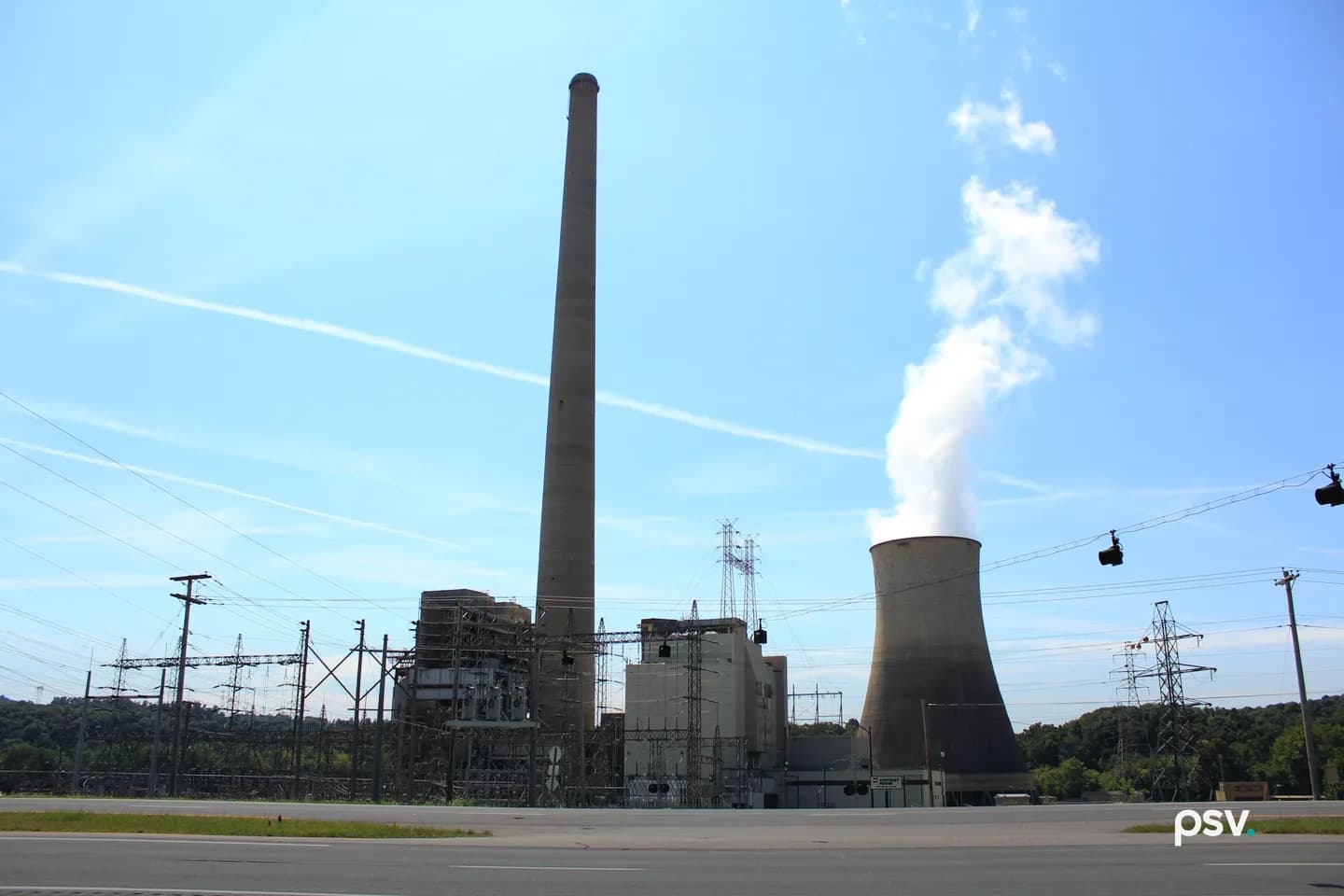
- FunksBrother, “Big Sandy Power Plant After Conversion,” Wikimedia Commons, CC BY-SA 4.0 (the lead photograph)
Topics
Related PSV analysis
CRE POLICY NEWS
Wisconsin Made Its 100 Megawatt Customers Sign for the Power
WEC Energy Group filed a Form 8-K on September 4 attaching the investor deck that finally puts numbers on Wisconsin’s Very Large Customer tariff. The Public Service Commission approved it in docket 6630-TE-113 and made it mandatory for any customer with 100 megawatts or more of annual demand. WEC now forecasts 3.9 gigawatts of new electric demand through 2030, and two data center campuses are all of it.
CRE AI NEWS
Cipher, Fluidstack and Anthropic Pledge $10 Million for a Data Center Town’s Water
Cipher Digital, Fluidstack and Anthropic committed a combined $10 million on September 14 to repair and expand the water system of Colorado City, Texas, home of Cipher’s 300 MW Barber Lake data center, which the company says draws no city water. PSV read the release against Cipher’s filings, whose risk factors name water and local benefit as the reasons towns stop data centers.
CRE POLICY NEWS
Maryland Puts Every 25 MW Data Center Through State Review
Governor Wes Moore signed Executive Order 01.01.2026.16 on September 23, putting any Maryland data center of 25 megawatts or more through one state review the moment it asks the state for a permit, incentive or letter of support. A new task force grades each project Aligned, Conditionally Aligned or Not Aligned on a public dashboard, and the governor will ask lawmakers to repeal the 2020 sales tax exemption.
Related guides
Cornerstone PSV guides on the workflows in this article.
by PSVLiveYou read the operator view. Now learn to run the workflow.
The AI MBA for commercial real estate: the workflows these briefs describe, taught end to end on real deal files, with live builds and a community of CRE operators.