CRE AI NEWS
Cipher, Fluidstack and Anthropic Pledge $10 Million for a Data Center Town’s Water
Cipher Digital, Fluidstack and Anthropic committed a combined $10 million on September 14 to repair and expand the water system of Colorado City, Texas, home of Cipher’s 300 MW Barber Lake data center, which the company says draws no city water. PSV read the release against Cipher’s filings, whose risk factors name water and local benefit as the reasons towns stop data centers.
Direct answer
Direct answer to Cipher Fluidstack Anthropic Colorado City water
Spending on a host town’s infrastructure is becoming part of what it costs to finish and expand an AI data center campus, and owners and lenders should diligence it next to power and zoning. The record is thin where it matters: the release does not split the $10 million among the three companies, set a schedule, say whether the pledge is binding, or disclose how much water Barber Lake uses or where it comes from.
What the three companies committed in Colorado City
Cipher Digital Inc. (NASDAQ: CIFR), the AI infrastructure builder Fluidstack Ltd. and Anthropic announced on September 14, 2026 that they had committed a combined $10 million to repair and upgrade the water system of Colorado City, Texas. The release, issued by Cipher that afternoon under a Colorado City dateline, says the money will fund projects city leaders identified after this summer’s shortages: in July, storm damage at the city’s well pump station left residents without reliable water for days. The projects it names are additional water storage capacity, replacement of aging valves and other water infrastructure needs. The funds will be managed through the Colorado City Water Infrastructure Foundation, a newly formed nonprofit that the release says is funded exclusively by the three companies and will work with the City Council under Mayor Ruben Hurt, City Manager Donna Madrid and the city’s contracted engineers. Texas House Speaker Dustin Burrows, the mayor and an executive from each company are quoted. Anthropic’s head of economic development, Ryan Wilson, put the premise in one line: “Communities that host AI infrastructure should be better off for it.”
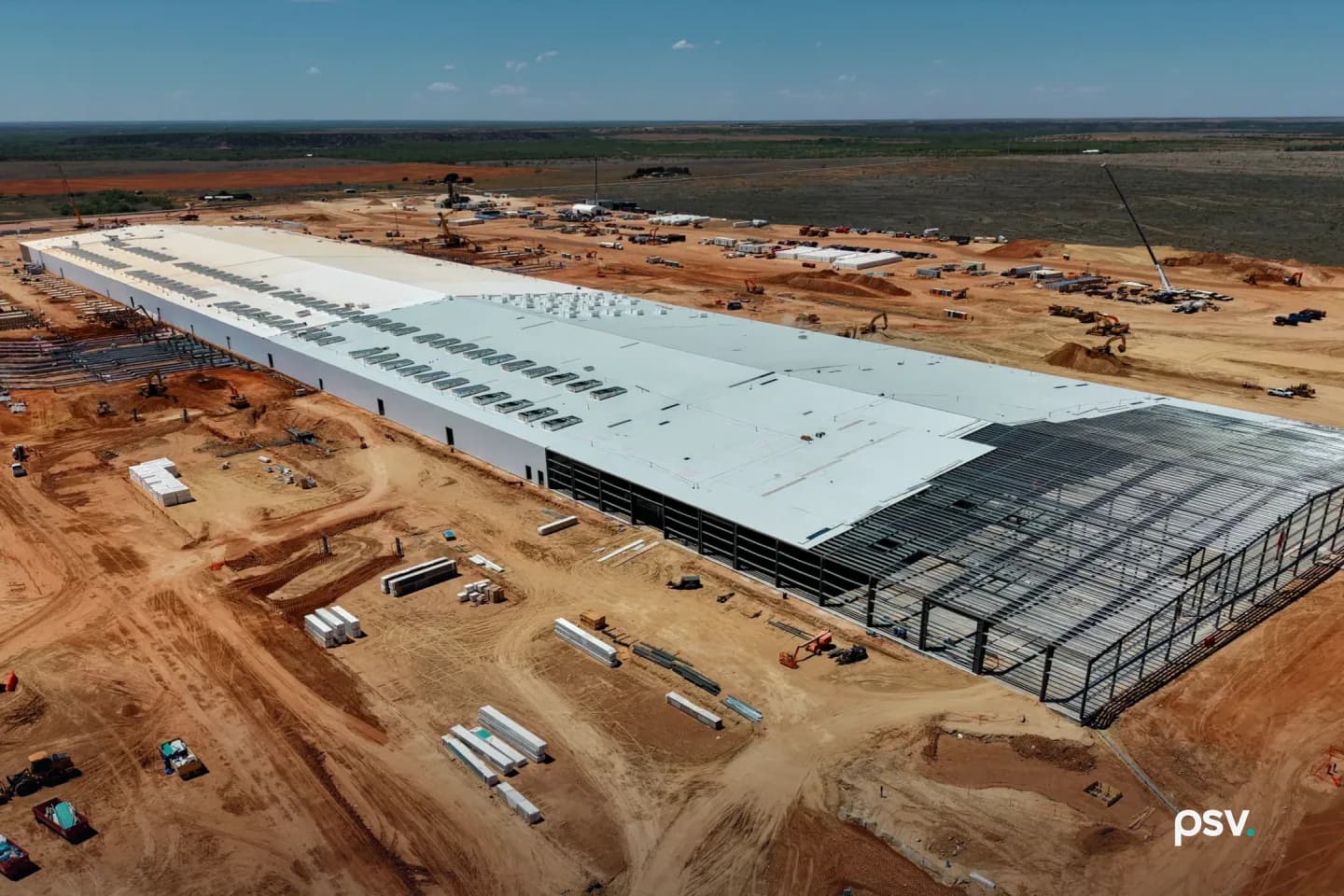
The release makes two claims about the campus, and both are the company’s, not PSV findings. It says the Barber Lake data center runs on its own on-site water supply and draws nothing from Colorado City’s system, so every gallon of added capacity goes to the city, and that the facility’s water use will have no impact on local drinking water sources or residential utility bills. It also says Cipher built Barber Lake to meet the data center standards in Governor Greg Abbott’s directives to the Public Utility Commission of Texas and ERCOT. Cipher’s filings describe the asset. Its quarterly report for the period ended June 30, 2026, filed August 4, says the company signed the Barber Lake lease in September 2025 through its subsidiary Cipher Barber Lake LLC, is building the facility for Fluidstack USA II Inc. with an expected commencement date of September 2026, and collects rent for a 10-year term with two five-year extension options. Google agreed to make Fluidstack’s lease payments if Fluidstack does not, and in exchange Cipher issued Google warrants for 24,178,576 shares at $0.01 per share, with a make-whole if those shares are worth less than $430.0 million when the exercise period opens; Cipher carries that backstop as a $544.5 million asset. The investor presentation furnished with its Form 8-K the same day reports that the tenant has begun beneficial use of the building, including partial occupancy, and that rent is expected to begin in October 2026. Cipher’s website lists Barber Lake at 300 MW and energized, with a further 500 MW Barber Lake Expansion shown for 2030 or later. The filings name Fluidstack as the tenant and Google as the backstop. They do not name Anthropic, and the release does not describe Anthropic’s role at the site, so PSV does not characterize one.
Why a water pledge is an underwriting fact
Cipher’s own risk factors explain why a developer would pay for a system its campus says it does not use. The same quarterly report warns that a growing number of state legislatures, county boards, city councils and other local bodies have enacted or are considering moratoria, restrictive zoning amendments and heightened permitting for data centers, driven by concerns that include strain on local electrical grids and water supplies and the perceived limited local economic benefit of these facilities after construction is complete. If that happens where it builds, Cipher says, it may be forced to abandon a project, relocate to a less desirable or more costly site, or absorb unrecoverable costs, and community opposition could affect tenants’ ability to pay rent and the company’s ability to renew or re-lease a data center. The company names water and local benefit as the arguments towns use against data centers, and this pledge answers both in a town where one of its leased AI campuses is weeks from paying rent.
For a real estate reader, the consequence is that host-community spending is becoming a line item in the cost of entitlement and expansion rather than a public relations extra. Massachusetts made the point formally on September 8, when Executive Order No. 658 conditioned state permits for data centers above 25 MW of peak demand on a community benefits agreement. Texas has no such rule and the Colorado City commitment is voluntary, but it lands on the same thing a lender or buyer underwrites. Google’s backstop protects rent on the Barber Lake lease that exists. Nothing in the record protects the 500 MW expansion Cipher shows for 2030 or later, which its investor presentation says is subject to ERCOT’s batch process, and which will be argued in a town that will remember whether this summer’s pledge was kept. For owners of land and industrial property near a campus, the pledge is a signal about the local relationship that governs the next rezoning. Anthropic’s February 11, 2026 commitment points the same way: it said it would pay for the grid upgrades needed to interconnect its data centers, work to cover demand-driven electricity price effects, deploy water-efficient cooling and partner with local leaders, and that it makes those commitments directly where it works with partners to develop data centers for its own workloads. PSV arithmetic, not a company figure: $10 million against Barber Lake’s stated 300 MW computes to about $33,000 per megawatt, though the release ties the money to the city’s needs, not to any capacity figure, and does not say how the three companies divide it.
The workflow PSV would run: a host-community commitment register
The useful artifact is a register kept for every data center campus a firm owns, lends against or sits next to, built only from public records and the firm’s own site files. Inputs: the developer’s releases and investor presentations; the lease, backstop and risk factor disclosures in its SEC filings; the host city’s council agendas and minutes and its public water system records; the state directives the developer says it meets; and any moratorium or zoning change on record in the county. Output: one row per commitment, with columns that decide something. The amount, and each company’s share, left blank when undisclosed. The vehicle that holds the money and who controls it, which here is a nonprofit funded by the companies rather than a city account. Whether the commitment is an executed, enforceable agreement or an announcement. The project list, each with the budget, schedule and completion status as the city reports them. The campus’s water source and annual volume, left blank where the developer has not disclosed them. And the expansion capacity whose approval the commitment will be judged against, with its regulatory dependency. Every populated cell cites a document.
An assistant handles the volume well: reading a year of council agendas, matching announced projects to contracts and line items as they appear, flagging a promised project with nothing on record months later, and comparing what a release claims with what the filings say. The reviewer is the development lead or the lender’s diligence counsel, and the approval gate is that no commitment is credited as reducing entitlement or re-leasing risk until it ties to an executed document with an amount and a schedule. The assistant should not decide whether a pledge is adequate, estimate a campus’s water use from its megawatts, or record “no impact on local drinking water sources” as an established fact. PSV ran no model on this record and tested no product.
What stays with a person, and what the record does not settle
The operator read
Finish with the judgment call.
The reported facts are above. Enter your email for PSV's operator conclusion and a year of access to every newsroom brief.
Free. No card. Privacy policy. Unsubscribe anytime.
 by PSVLive
Build the workflow behind this analysis. Train with the operators doing it.
Real deal files, live builds, and production-ready CRE AI workflows inside the CRE AI Institute.










Clear answers
Common questions about Cipher Fluidstack Anthropic Colorado City water
What did Cipher, Fluidstack and Anthropic commit to Colorado City, Texas?
A combined $10 million, announced September 14, 2026, for repairs and upgrades to Colorado City’s water system. Cipher Digital’s release says the money funds projects city leaders identified after this summer’s shortages, when July storm damage at the city’s well pump station left residents without reliable water for days, including additional water storage capacity and replacement of aging valves. The funds will be managed through the Colorado City Water Infrastructure Foundation, a new nonprofit the release says is funded exclusively by the three companies and will work with the City Council under Mayor Ruben Hurt, City Manager Donna Madrid and the city’s contracted engineers. The release does not say how the $10 million is divided among the companies, when it will be spent, or whether the commitment is legally binding.
Does the Barber Lake data center use Colorado City’s water?
Not according to the company. Cipher Digital’s September 14, 2026 release says the Barber Lake data center runs on its own on-site water supply and draws nothing from Colorado City’s system, and that its water use will have no impact on local drinking water sources or residential utility bills. Those are company claims, not independent findings. The release does not identify the on-site source or disclose how much water the campus uses. Separately, Cipher said on August 10, 2026 that it uses only treated brackish, non-potable water to cool its data centers and supports annual third-party audits of water consumption, which is the kind of record that would verify the claim for Barber Lake.
Who is the tenant at Cipher’s Barber Lake data center?
Fluidstack. Cipher Digital’s Form 10-Q for the quarter ended June 30, 2026 says it is building the Barber Lake Facility for Fluidstack USA II Inc. under a lease signed in September 2025 through Cipher Barber Lake LLC, with an expected commencement date of September 2026, a 10-year term and two five-year extension options. Google agreed to make Fluidstack’s lease payments if Fluidstack does not, and received warrants for 24,178,576 Cipher shares in exchange. Cipher’s August 4, 2026 investor presentation says the tenant has begun beneficial use including partial occupancy and rent is expected to begin in October 2026, and its website lists the site at 300 MW with a 500 MW expansion shown for 2030 or later. The filings do not name Anthropic, which joined the water commitment.
Primary source record
These records support the reported facts in this brief. PSV’s CRE workflow interpretation and test plan are original analysis.
- Cipher Digital Inc., “Cipher Digital, Fluidstack, and Anthropic Commit $10 Million to Repair and Expand Colorado City’s Water System,” GlobeNewswire, September 14, 2026 (source of the $10 million commitment, the Colorado City Water Infrastructure Foundation, the city’s project list, the July well pump station outage, the on-site water supply and drinking water claims, the statement on Governor Abbott’s directives, the forward-looking statement cautions, and the quotes)
- Cipher Digital Inc., Quarterly Report on Form 10-Q for the period ended June 30, 2026, filed with the SEC August 4, 2026 (source of the Barber Lake lease with Fluidstack USA II Inc., its term and extension options, the September 2026 expected commencement, the Google backstop, warrants and $544.5 million asset, and the risk factors on moratoria and community opposition)
- Cipher Digital Inc., Form 8-K filed August 4, 2026, Exhibit 99.2, Q2 2026 business update presentation (source of the tenant’s beneficial use and partial occupancy, September 2026 expected initial delivery, rent expected to commence October 2026, and the adjacent 500 MW of grid capacity subject to the ERCOT batch process)
- Cipher Digital Inc., “Cipher Digital Supports Governor Abbott’s Push for Transparency and Accountability in Texas Data Center Growth,” August 10, 2026 (source of the brackish, non-potable cooling water statement and support for annual third-party water audits)
- Anthropic, “Covering electricity price increases from our data centers,” February 11, 2026 (source of Anthropic’s grid upgrade, price effect, water-efficient cooling and local partnership commitments)
- Cipher Digital, Infrastructure page (source of Barber Lake’s listed 300 MW capacity and energized status, the 500 MW Barber Lake Expansion shown for 2030 or later, and the lead photograph)
Topics
Related PSV analysis
CRE POLICY NEWS
Massachusetts’ Data Center Order Puts a Contract Before the Permit
Governor Maura Healey signed Executive Order No. 658 on September 8, barring MassDEP, the Energy Facilities Siting Board, the MEPA Office and other permitting agencies from issuing any permit to a data center above 25 megawatts of peak demand until it conforms with her June 25 framework and files a community benefits agreement reviewed by the state’s environmental justice office. It also orders a clean energy mandate with a payment alternative.
CRE POLICY NEWS
Texas Paused the Data Center Grid Queue, and the Gate Is Paperwork
Governor Greg Abbott directed a verification and audit of every data center advancing through ERCOT’s interconnection process on August 3. The Public Utility Commission of Texas made it operative on August 20, granting ERCOT good cause exceptions that suspend Batch Zero classification deadlines. ERCOT then told the market it intends to issue conditional classifications by August 31. PSV read the letter, the order and ERCOT’s filed presentation.
CRE POLICY NEWS
Six Federal Cases Are Testing Where a Data Center Can Sit
Five federal class actions filed since April accuse data center operators of pushing unreasonable noise onto neighboring homes, and a sixth case runs the other direction: a developer suing Nashville over a permit moratorium. PSV read all six dockets. Two of the five have already ended, neither of them on the merits, and the pattern is not the one the trade press is describing.
Related guides
Cornerstone PSV guides on the workflows in this article.
Claude vs ChatGPT for CRE
An operator's comparison of Claude and ChatGPT for commercial real estate underwriting, and why the grounded setup matters more than the model brand.
Read the guideThe CRE AI Data & Security Audit
The five-pass audit a CRE firm runs on its own document estate before connecting an assistant: folder access, document provenance, and the approval bands.
Read the guideWhat is CRE AI?
The definitional guide to commercial real estate AI: the core workflows, how it differs from a chatbot, and how to learn it.
Read the guideby PSVLiveYou read the operator view. Now learn to run the workflow.
The AI MBA for commercial real estate: the workflows these briefs describe, taught end to end on real deal files, with live builds and a community of CRE operators.