CRE AI NEWS
Amazon’s Built Together: $1 Billion for Data Center Towns and No More Government NDAs
Amazon Web Services CEO Matt Garman announced on October 2 a written Amazon Data Center Commitment and Built Together, a program that adds more than $1 billion over five years for U.S. communities that host its data centers. The tenets include no nondisclosure agreements with government agencies, Tier 4 backup generators at new sites and annual energy and water reporting.
Direct answer
Direct answer to Amazon Built Together data center commitment
Amazon has put its data center terms in writing. It says it will cover the grid costs its projects cause, stop using nondisclosure agreements with government agencies, publish energy and water figures each year and add more than $1 billion over five years in host communities. The pledge is voluntary and self-reported, but for developers and landowners it is the standard the next applicant will be compared against.
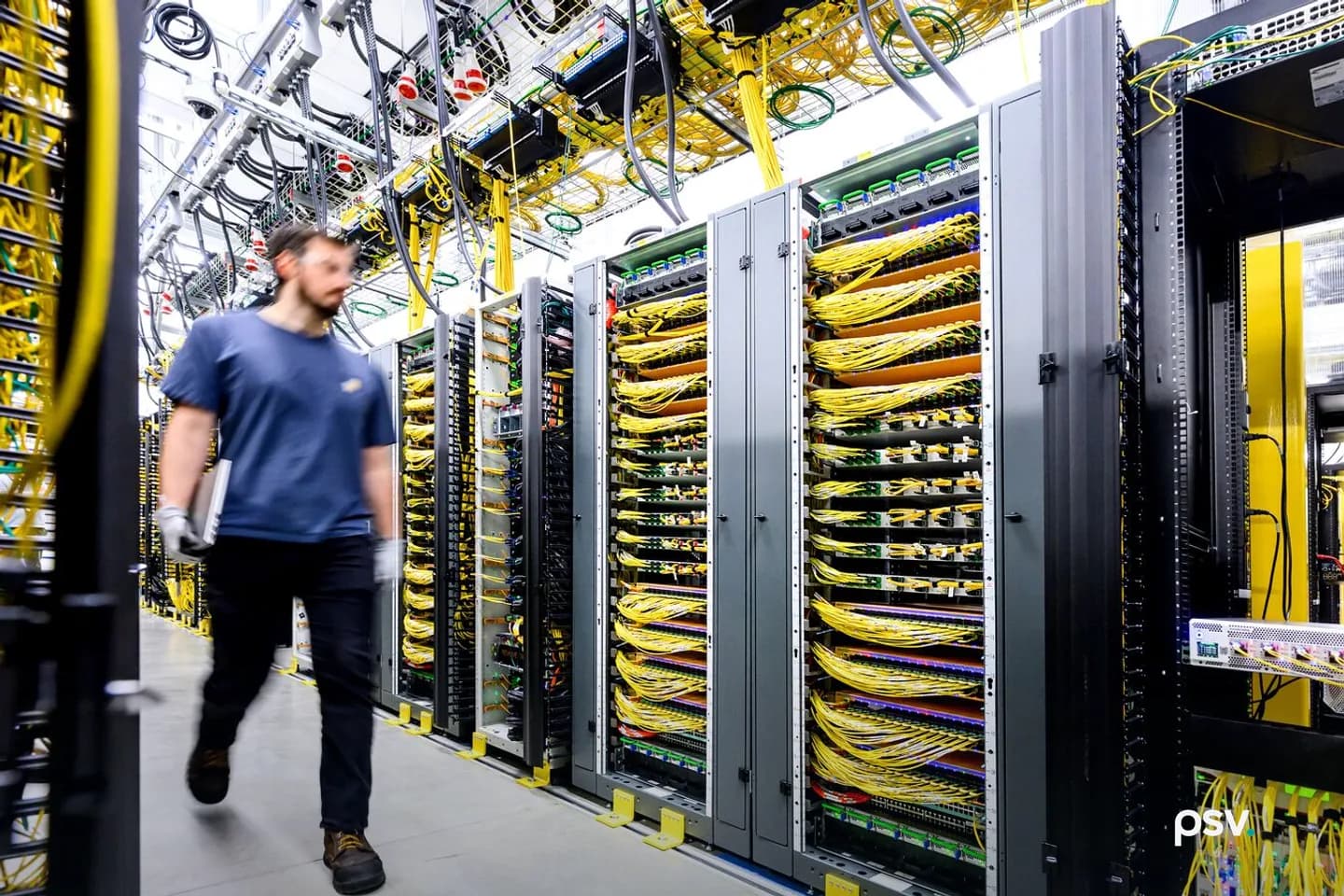
What Amazon announced, in its own words
On October 2, 2026, Amazon published a post by Matt Garman, CEO of Amazon Web Services, with two parts. The first is a written list of tenets it calls the Amazon Data Center Commitment, also posted as a standalone page. Among them: Amazon says it works with utilities, regulators and grid operators so that the energy prices it pays are sufficient to cover both the energy and the infrastructure improvements its data centers may require; it says “we no longer use nondisclosure agreements with the government agencies we work with on our projects”; it says it will use backup generators at new sites that meet the EPA’s Tier 4 emissions standards or the equivalent elsewhere; it says it designs operations to at least meet local sound requirements at the site perimeter; and it says it will publish its energy use, energy efficiency, water use, water efficiency and percentage of carbon-free energy every year. It also restates a goal of being water positive across its data centers by 2030 and says it was 75 percent of the way there as of 2025.
The second part is Built Together, a community investment program starting in the United States. Amazon says it will add more than $1 billion over the next five years to what it already does, after contributing more than $1 billion over the past three years to U.S. communities where it has a meaningful data center presence. The money is organized in three pillars. Education and workforce: free community college for residents of data center communities, which Amazon estimates will reach more than 300,000 students over five years, and a network of modular training centers. The post says three centers operate today, six are under development and 16 more are planned, which computes to the 25 the program page cites, with a plan to train up to 100,000 people a year by the end of 2028. Energy and water: grants for efficiency upgrades targeting more than 300 schools and community buildings and more than 30,000 homes. Local priorities: what Amazon describes as millions of dollars per year in each community, directed through local nonprofits and community foundations.
Why a CRE operator should care: a published standard for the next hearing
Garman’s post is an argument as much as an announcement. It says more than 100 data center moratoriums are being considered across the country, and it spends most of its length disputing claims about water, electricity rates and generator emissions. Those are Amazon’s figures and Amazon’s framing, not PSV findings, and PSV has not verified them. What matters for a developer or landowner is narrower and does not depend on who is right in that argument: one of the country’s largest data center builders has now written down the terms it says it follows, on its own website, where any county attorney, planning commissioner or neighborhood group can read them.
In PSV’s read, that changes the baseline for everyone else in the room. A commitment not to use nondisclosure agreements with government agencies speaks directly to one of the most common complaints in data center site selection, where projects have been negotiated under code names before residents learned who the user was. A Tier 4 generator commitment, a cost-coverage position on electricity and annual public reporting are all things a planning board can now ask any applicant to match and write into conditions of approval. The pledge binds only Amazon, and only to the extent Amazon holds itself to it. But a developer building for a different tenant, or a landowner selling a site, should expect to be asked why their project offers less. The $1 billion also computes to an average of about $200 million a year across all eligible communities, and Amazon has not said how many communities that is.
The workflow PSV would run for a data center developer or landowner
The artifact is a commitments matrix for a specific project. Inputs: Amazon’s published tenets and the Built Together program page as the comparison set; the project’s own application, development agreement and any incentive agreement; the air permit application and generator specifications; the utility’s large-load tariff or service agreement; the local noise ordinance and the project’s sound study; any confidentiality agreement the project has signed with a public body; and the minutes of prior hearings. Output: one row per tenet, showing what the project has actually committed to, the document and section where that commitment lives, whether it is enforceable as a condition of approval or only a statement, and the gap against the published Amazon standard.
The reviewer is the head of development with land use counsel, and the approval gate is that nothing goes into a hearing presentation, a community flyer or a letter to the county unless it traces to a signed document or a condition the applicant is prepared to accept in writing. An assistant does the reading well: pulling commitments out of long applications and agreements, lining them up against the tenets, and flagging where a public statement has no document behind it. It should not decide what the project offers a community or what the team says under oath. PSV promises no entitlement outcome from any of this.
What stays with people, and what Amazon has not said
The operator read
Finish with the judgment call.
The reported facts are above. Enter your email for PSV's operator conclusion and a year of access to every newsroom brief.
Free. No card. Privacy policy. Unsubscribe anytime.
 by PSVLive
Build the workflow behind this analysis. Train with the operators doing it.
Real deal files, live builds, and production-ready CRE AI workflows inside the CRE AI Institute.










Clear answers
Common questions about Amazon Built Together data center commitment
What is Amazon’s Built Together program?
Built Together is the community investment program Amazon announced on October 2, 2026 for U.S. communities where it operates data centers. Amazon says it adds more than $1 billion over five years, on top of more than $1 billion contributed over the past three years, across three pillars: free community college and workforce training, energy efficiency and water projects, and flexible funding directed through local nonprofits and community foundations. Amazon has not published a list of eligible communities.
Did Amazon stop using NDAs for data center projects?
Amazon’s published Data Center Commitment says: “We no longer use nondisclosure agreements with the government agencies we work with on our projects.” The statement appears in AWS CEO Matt Garman’s October 2, 2026 post and on Amazon’s standalone tenets page. It is a voluntary company commitment covering agreements with government agencies. Amazon’s records do not say when the practice ended or whether it covers landowners, utilities or other private parties.
What does Amazon’s Data Center Commitment mean for other data center developers?
It binds only Amazon, but it gives planning boards and residents a published list to compare any applicant against: electricity prices that cover grid upgrade costs, no government nondisclosure agreements, Tier 4 backup generators at new sites, meeting local sound limits at the site perimeter and annual public reporting of energy and water use. In PSV’s read, developers should map each tenet to their own project documents before the next hearing.
Primary source record
These records support the reported facts in this brief. PSV’s CRE workflow interpretation and test plan are original analysis.
- Matt Garman, Amazon Web Services, “The race our nation can’t afford to lose, plus a new commitment from us and a fresh set of community investments,” About Amazon, October 2, 2026 (source of the tenets, the Built Together pillars, the $1 billion figures, the moratorium count, and the lead photograph)
- Amazon, “Amazon’s approach to data centers: core tenets and principles,” About Amazon, October 2, 2026 (the standalone Amazon Data Center Commitment page; second record of the nondisclosure, Tier 4 generator and annual reporting tenets)
- Amazon, “Built Together,” Amazon Sustainability program page, accessed October 3, 2026 (source of the 25 training centers, the eligibility FAQ and the caveat on energy savings)
Topics
Related PSV analysis
CRE POLICY NEWS
Data Center Watch Q2 2026: $68B of Projects Disrupted
Data Center Watch, a research project of 10a Labs that tracks local opposition to data center development, says at least 45 U.S. projects worth nearly $68 billion were blocked or delayed by local opposition from April through June 2026. That is below its Q1 count of 75 projects and about $130 billion, but the first half of 2026 now exceeds its full-year 2025 total.
CRE POLICY NEWS
SpaceX’s Terafab Suit Tests What a Texas Incentive File Keeps Secret
SpaceX has sued Texas Attorney General Ken Paxton and Grimes County to stop the county releasing records behind the incentives for Terafab, its planned chip plant, including its tax abatement application. Much of the deal is already public: eight state JETI filings with an estimated $1.66 billion in school tax benefit, and county agreements that set its county tax payments at $20 million a year for a decade, then cap them there through 2061.
CRE POLICY NEWS
Loudoun Votes to Pause New Data Center Applications
Loudoun County’s Board of Supervisors voted 7-1-1 on September 15 to direct staff to draft a resolution pausing new data center applications for up to 12 months while it rewrites its data center zoning rules, over a staff recommendation to take no action. A final vote is reported for October. The Planning Commission is not expected to take up the new rules until February 2027.
Related guides
Cornerstone PSV guides on the workflows in this article.
by PSVLiveYou read the operator view. Now learn to run the workflow.
The AI MBA for commercial real estate: the workflows these briefs describe, taught end to end on real deal files, with live builds and a community of CRE operators.