CRE POLICY NEWS
Data Center Watch Q2 2026: $68B of Projects Disrupted
Data Center Watch, a research project of 10a Labs that tracks local opposition to data center development, says at least 45 U.S. projects worth nearly $68 billion were blocked or delayed by local opposition from April through June 2026. That is below its Q1 count of 75 projects and about $130 billion, but the first half of 2026 now exceeds its full-year 2025 total.
Direct answer
Direct answer to Data Center Watch Q2 2026
Local opposition blocked or delayed at least 45 data center projects worth nearly $68 billion in Q2 2026, according to Data Center Watch. The quarter was lighter than Q1 by the firm’s own numbers, yet the half-year total of about $198 billion already exceeds the $156 billion it counted for 2025. The report says moratoriums are now arriving before developers file. For CRE, entitlement risk has moved to the site selection stage.
What Data Center Watch published
Data Center Watch describes itself as a research project from 10a Labs that tracks grassroots opposition to data center development across the United States. Its Q2 2026 update, covering April through June 2026 and drawing national coverage on September 21, says at least 45 projects worth $68 billion were disrupted by local opposition in the quarter, which the firm describes as sustaining the elevated level of disruption it recorded in Q1. The update makes three further claims. Communities imposed moratoriums on data center development, often preemptively, before developers expressed interest or filed permit applications. Thirty statehouses introduced, and many adopted, legislation, resolutions or executive actions on data center siting, electricity and water constraints, and infrastructure cost sharing. And opposition became more local and project specific, increasingly targeting permitting, infrastructure and individual policy decisions, as regulatory scrutiny expanded across 49 states.
The firm’s earlier pages supply the comparison. Its Q1 2026 update says at least 75 projects worth approximately $130 billion were blocked or delayed from January through March, which it called the largest single-quarter concentration on record and roughly the scale of all of 2025. It also says more than 300 state data center bills were filed in the first six weeks of 2026, statewide moratorium proposals were introduced in 14 states, and the number of active opposition groups more than doubled from the end of Q4 2025. Its Q3 and Q4 2025 update puts projects with publicly disclosed values totaling at least $156 billion blocked or delayed across 2025, and its Q2 2025 update estimated $98 billion in that quarter alone. These are the firm’s counts and characterizations, not PSV findings. The project-level dataset behind them is sold separately, and PSV has not reviewed it.
Why a CRE operator should care, and how to read the numbers
Read on the firm’s own figures, Q2 was a lighter quarter than Q1, not a heavier one. The project count computes to 40 percent lower and the disrupted value to about 48 percent lower, and $68 billion is also below the $98 billion the firm estimated for Q2 2025. The cumulative picture points the other way. Q1 and Q2 together compute to at least 120 projects and about $198 billion, already above the $156 billion counted for all of 2025. That is PSV arithmetic on the firm’s published totals, and the periods may not be strictly comparable, because the tracker says its database is continuously updated and some figures are estimates that may change. The honest summary is a plateau at a high level, not an acceleration, and the firm’s word for it, sustained, fits.
The number matters less than where the risk now sits. A delay that arrives at rezoning costs carry. A moratorium that arrives before anyone files, which is what the Q2 update describes, costs the site itself, and it lands on land bought or optioned on the assumption of data center use. State action is compounding the local kind. PSV has covered the named examples as they happened: New York’s Executive Order 62, signed July 14, 2026, just after this report’s window closed, pauses state environmental permits for new data centers of 50 megawatts or more for up to one year, and Loudoun County’s board voted on September 15 to draft a pause of up to 12 months on new data center applications. For owners of operating, energized campuses the same dynamic works in their favor, since every blocked project is capacity that does not compete with them.
The workflow PSV would run: a site entitlement risk register
The artifact is one row per candidate or owned data center site. Inputs: the county or municipal zoning code and any pending text amendment; council, board and planning commission agendas and minutes for the last 24 months; any adopted or proposed moratorium, with its scope, megawatt threshold and sunset date; state bills and executive orders on siting, water and large-load cost sharing that reach the jurisdiction; the utility’s large-load tariff and interconnection queue position; and public comment records, petitions and recall or election filings tied to data center votes. Output, per site: entitlement status in plain terms (by right, special exception pending, approved, grandfathered), every live pause or moratorium that could reach it with its threshold and expiry, the next scheduled public vote, and a column separating adopted instruments from proposals.
The reviewer is the development lead with land use counsel, and the approval gate is simple: no land deposit goes hard, and no option is exercised, until the site’s row names every pending local and state action that could reach it and counsel has confirmed whether the site is inside or outside each one. An assistant is well suited to the monitoring and extraction, watching agendas, pulling moratorium thresholds and sunset dates out of ordinances and executive orders, and flagging when a new pause is proposed in a jurisdiction on the list. It should not score how likely a council is to approve an application or predict how a community will vote.
What stays with a person, and what the record leaves open
The operator read
Finish with the judgment call.
The reported facts are above. Enter your email for PSV's operator conclusion and a year of access to every newsroom brief.
Free. No card. Privacy policy. Unsubscribe anytime.
 by PSVLive
Build the workflow behind this analysis. Train with the operators doing it.
Real deal files, live builds, and production-ready CRE AI workflows inside the CRE AI Institute.









Clear answers
Common questions about Data Center Watch Q2 2026
How many data center projects were blocked or delayed in Q2 2026?
Data Center Watch, a research project of 10a Labs, says at least 45 U.S. data center projects worth nearly $68 billion were blocked or delayed by local opposition from April through June 2026. It describes that as sustaining the elevated disruption of Q1, when it counted at least 75 projects worth approximately $130 billion. The figures are the firm’s own counts from public sources; its project-level dataset is sold separately and PSV has not reviewed it.
Is data center opposition getting worse in 2026?
On Data Center Watch’s own numbers, Q2 2026 was lighter than Q1: the project count computes to 40 percent lower and the disrupted value about 48 percent lower, and $68 billion is below the $98 billion it estimated for Q2 2025. But the first half of 2026 totals at least 120 projects and about $198 billion, already above the $156 billion it counted for all of 2025. That is PSV arithmetic on the firm’s totals, and its database is continuously revised, so the periods may not be strictly comparable.
What does data center opposition mean for commercial real estate?
It moves entitlement risk earlier. Data Center Watch says communities in Q2 2026 imposed moratoriums before developers expressed interest or filed permit applications, and that thirty statehouses introduced or adopted data center measures. That puts land bought or optioned for data center use at risk before any filing, and it makes already-entitled, energized campuses scarcer. The firm itself cautions that opposition is not the only cause of delays, since power, infrastructure and market conditions also play a role.
Primary source record
These records support the reported facts in this brief. PSV’s CRE workflow interpretation and test plan are original analysis.
- Data Center Watch, “Q2 2026: Data Center Watch Report” (source of the 45 projects and $68 billion figures, the April to June 2026 research window, the preemptive moratorium finding, the thirty statehouses finding, and the 49 states characterization)
- Data Center Watch, “Q1 2026: Data Center Watch Report” (source of the 75 projects and approximately $130 billion figures, the more than 300 state bills, the 14 statewide moratorium proposals, and the doubling of active opposition groups)
- Data Center Watch, Q3 and Q4 2025 report (source of the at least $156 billion blocked or delayed across 2025)
- Data Center Watch, Q2 2025 report (source of the estimated $98 billion blocked or delayed in Q2 2025)
- Data Center Watch, original report and methodology note (source of the statement that attributing delays exclusively to opposition oversimplifies, and of the continuously updated database and estimate caveats)
- Executive Order 62: Establishing a Temporary Moratorium on Data Centers in New York
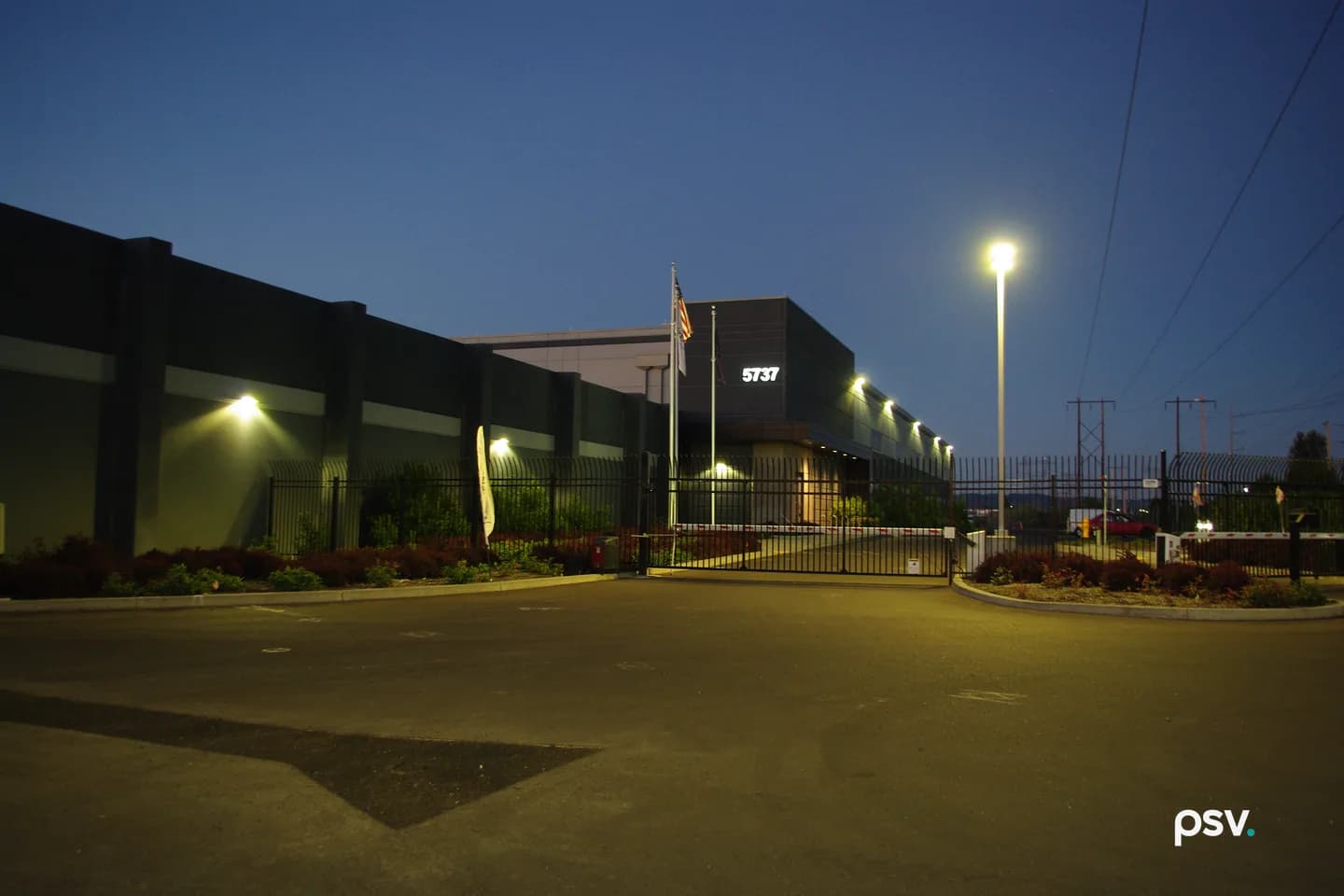
- M.O. Stevens, “Flexential Brookwood Data Center - Hillsboro, Oregon,” Wikimedia Commons, CC BY-SA 4.0 (lead photograph source)
Topics
Related PSV analysis
CRE POLICY NEWS
Loudoun Votes to Pause New Data Center Applications
Loudoun County’s Board of Supervisors voted 7-1-1 on September 15 to direct staff to draft a resolution pausing new data center applications for up to 12 months while it rewrites its data center zoning rules, over a staff recommendation to take no action. A final vote is reported for October. The Planning Commission is not expected to take up the new rules until February 2027.
CRE POLICY NEWS
New York’s Hyperscale Data Center Moratorium: The CRE Read
Governor Kathy Hochul signed Executive Order 62 on July 14, pausing state environmental permits for new hyperscale data centers of 50 megawatts or more for up to one year while New York writes a statewide environmental study and new development standards. It is the first statewide freeze in the country, and it lands on the hottest development pipeline in commercial real estate.
CRE POLICY NEWS
A 22 Million SF Data Center Rezoning Died Over an Ad
The Court of Appeals of Virginia held on March 31, 2026 that Prince William County’s three Digital Gateway rezoning ordinances are void from the beginning, because the county advertised the December 2023 hearing defectively. The county chose not to appeal on April 14, 2026. Compass Datacenters withdrew on April 29, and QTS told the Supreme Court of Virginia on July 2 that it was terminating the project.
Related guides
Cornerstone PSV guides on the workflows in this article.
Claude for Real Estate Developers
The ground-up developer field guide: site selection through IC memo, built on a real development deal.
Read the guideThe CRE AI Data & Security Audit
The five-pass audit a CRE firm runs on its own document estate before connecting an assistant: folder access, document provenance, and the approval bands.
Read the guideWhat is CRE AI?
The definitional guide to commercial real estate AI: the core workflows, how it differs from a chatbot, and how to learn it.
Read the guideby PSVLiveYou read the operator view. Now learn to run the workflow.
The AI MBA for commercial real estate: the workflows these briefs describe, taught end to end on real deal files, with live builds and a community of CRE operators.