CRE AI NEWS
Applied Digital Signs a 1,200 MW Gas Power Deal With a Company Its CEO Runs
Applied Digital’s Form 10-Q, filed October 7, discloses a 15-year power purchase agreement signed October 4 for capacity and energy from a roughly 1,200 megawatt gas-fired plant that Base Electron plans to build in Center, North Dakota, for the Polaris Forge 3 data center campus. The filing says Base Electron is owned and managed by Applied Digital officers and directors, and that Applied Digital’s chief executive is also Base Electron’s.
Direct answer
Direct answer to Applied Digital Base Electron power purchase agreement
A data center landlord has contracted its future power from a developer that its own leadership owns and manages, that it lends to, and that its filing says lacks enough equity to fund itself. The earnings release issued the same day calls that developer independent. Neither record gives a price, the credit support terms or an in-service date. Anyone underwriting a campus whose power comes from an affiliate should read the related party note before counting the megawatts.
What Applied Digital filed on October 7
Applied Digital, the Dallas company that develops, owns and leases large data centers, reported results for its fiscal first quarter, the three months ended August 31, 2026, in a Form 8-K with a press release on October 7, and filed its Form 10-Q the same day. The release reports revenue of $341.9 million, up 322 percent from a year earlier, and a net loss from continuing operations attributable to common stockholders of $221.0 million. The company also reports a figure real estate readers will recognize, net operating income, at $58.8 million on $65.8 million of base rent, an 89 percent margin by its own non-GAAP definition. Its data center leasing segment booked $262.6 million of revenue, of which $183.5 million was tenant fit-out services, which computes to about 70 percent. The company says it holds leases for approximately 1.41 gigawatts of critical IT load across five campuses in North Dakota, Louisiana and Alabama, representing about $36 billion of contracted revenue over the base terms. That is a company figure. On October 1, it says, the second 75 megawatt phase of the second building at Polaris Forge 1 in Ellendale, North Dakota was delivered, bringing live capacity there to 250 megawatts. It ended August with $3.7 billion of cash and restricted cash and $6.4 billion of debt.
The item this brief is about sits near the back of the 10-Q, in Item 5. On October 4, 2026, Applied Digital entered into a power purchase agreement and a related credit support agreement with Base Electron for capacity and energy from an approximately 1,200 megawatt natural gas-fired plant that Base Electron is to develop in Center, North Dakota. The filing says the plant is intended to provide dedicated generation for the Polaris Forge 3 campus. The agreement has a 15-year delivery term, provides for fixed monthly payments based on target contract capacity, and may be terminated by Base Electron if financial close for the plant has not occurred by March 31, 2027. The filing then says who Base Electron is. Applied Digital owned approximately 10 percent of it as of October 4. It is “owned and managed by certain officers and directors of the Company, including Messrs. Cummins and Zhang and Dr. Nottenburg, acting in their individual capacities, as well as numerous third parties,” and Mr. Cummins and Mr. Zhang serve as its chief executive officer and its president and secretary. Wes Cummins is Applied Digital’s chairman and chief executive, Jason Zhang is its president, and Richard Nottenburg is a director. The filing says the board approved both agreements after review and recommendation by its Base Electron Related Party Transaction Committee.
Why a landlord buying power from its own affiliate matters
Start with size. The 10-Q describes Polaris Forge 3 as two buildings under construction with 300 megawatts of capacity in total, with initial delivery expected in the second half of 2027 and full capacity in the second half of 2028. The plant is about 1,200 megawatts, which computes to four times the campus as leased. The financial statement note describes the power as for the “Polaris Forge 3 campus expansion,” and the release says Base Electron’s generation “could add multiple gigawatts of new power in the Dakotas over time.” So the power is sized for load that is not yet under lease. The payment term matters for the same reason. Fixed monthly payments based on target contract capacity read like an obligation tied to the size of the plant, not to how much power the tenant draws. That is PSV’s reading of one sentence. The agreement itself is not among the exhibits to this 10-Q, and the filing gives no price, no start date for deliveries and no description of what the credit support agreement commits Applied Digital to.
Then read the related party notes. Applied Digital carries its 10 percent stake at $2.0 million. It also lends to Base Electron under a demand note with a limit of $100.0 million, with $58.5 million of principal outstanding at August 31. The company’s proxy statement, filed September 25, says that limit was raised to $100.0 million on May 29, 2026. The 10-Q classifies Base Electron as a variable interest entity “because it does not have sufficient equity at risk to finance its activities without additional subordinated financial support,” and says Applied Digital does not consolidate it because it does not direct the activities that most affect its performance. Put plainly, the company that is to build a 1,200 megawatt plant is thinly capitalized, borrows from its customer, and is run by its customer’s chief executive. For scale, Applied Digital’s own financing is not cheap: it closed $1.59 billion of 7.000 percent senior secured notes due 2031 in June to fund a third building at Polaris Forge 1, which computes to about $111 million of interest a year before amortization. It recorded $77.4 million of interest expense in the quarter and capitalized another $35.7 million, against the $58.8 million of net operating income. Three customers made up 56, 21 and 11 percent of revenue, which computes to 88 percent.
The workflow PSV would run: an affiliate power file for one campus
The work is one file per campus whose power comes from a generator the landlord or developer is tied to. The inputs are public or in the deal room: the landlord’s 10-Q and proxy statement, the power purchase agreement and any credit support agreement if they are filed or provided, the power delivery and remedy clauses of the lease, and the state siting, air permit and gas supply records for the plant. The output is one page that answers six questions with a page citation for each. Who owns the generator, and who manages it. Who lends to it, and how much. What the buyer owes each month, and whether that payment depends on load. What has to happen before the plant is financed, and by what date. What the lease says if the dedicated power is late, including whether grid service covers the gap. And which body approved the related party terms.
The reviewer is the development lead or asset manager, with energy counsel on the contract columns. The approval gate is simple to state: no underwriting, loan sizing or lease proposal counts affiliate generation as delivered capacity until financial close on the plant is documented and counsel has read the power agreement and the credit support agreement. An assistant is useful for the volume. This 10-Q runs past 50 pages, the Base Electron facts sit in four separate places, and they do not quite match each other. Finding every mention, lining up the figures and flagging the differences is work to hand off. Deciding what a difference means is not. PSV ran no model on these filings, tested no product, and promises no cost, schedule or financing outcome.
What stays with a person, and where the records differ
The operator read
Finish with the judgment call.
The reported facts are above. Enter your email for PSV's operator conclusion and a year of access to every newsroom brief.
Free. No card. Privacy policy. Unsubscribe anytime.
 by PSVLive
Build the workflow behind this analysis. Train with the operators doing it.
Real deal files, live builds, and production-ready CRE AI workflows inside the CRE AI Institute.











Clear answers
Common questions about Applied Digital Base Electron power purchase agreement
What is Base Electron and who owns it?
Applied Digital’s Form 10-Q filed October 7, 2026 describes Base Electron as an independent power producer formed to develop and operate dedicated generation for AI data center campuses. Applied Digital owned approximately 10 percent of it as of October 4. The filing says it is owned and managed by certain Applied Digital officers and directors, including Wes Cummins, Jason Zhang and Richard Nottenburg, in their individual capacities, along with numerous third parties. Mr. Cummins is chief executive of both companies.
What are the terms of Applied Digital’s power agreement with Base Electron?
The 10-Q says the agreement, signed October 4, 2026, covers capacity and energy from an approximately 1,200 megawatt natural gas-fired plant to be developed in Center, North Dakota, for the Polaris Forge 3 campus. It has a 15-year delivery term and fixed monthly payments based on target contract capacity, and Base Electron may terminate it if financial close has not occurred by March 31, 2027. A related credit support agreement was signed with it. The filing gives no price, no delivery start date and no credit support terms, and the agreement is not among the exhibits.
How much data center capacity does Applied Digital have leased and operating?
The company’s October 7, 2026 release says it has leases for approximately 1.41 gigawatts of critical IT load across five campuses, representing about $36 billion of contracted revenue over the base terms, and 250 megawatts live at Polaris Forge 1 in Ellendale, North Dakota as of October 1. That computes to about 18 percent of the leased total. The building capacities listed in the 10-Q compute to 1,510 megawatts, and neither record explains the difference.
Primary source record
These records support the reported facts in this brief. PSV’s CRE workflow interpretation and test plan are original analysis.
- Applied Digital Corporation, Form 10-Q for the quarter ended August 31, 2026, filed October 7, 2026 (source of Item 5 on the Base Electron power purchase agreement and credit support agreement, Note 7 on related party transactions, the variable interest entity note, the subsequent events note, the customer concentration table, capitalized interest, the campus capacities and delivery dates, and the 7.000% senior secured notes)
- Applied Digital Corporation, Form 8-K Exhibit 99.1, “Applied Digital Reports Fiscal First Quarter 2027 Results,” October 7, 2026 (source of the revenue, net loss, net operating income and segment figures, the 1.41 gigawatt and $36 billion lease figures, the October 1 delivery at Polaris Forge 1, the Finland agreement, and the description of Base Electron as independent)
- Applied Digital Corporation, Definitive Proxy Statement on Schedule 14A, filed September 25, 2026 (source of Wes Cummins’s role as chief executive and chairman of Base Electron since December 2025, Jason Zhang’s and Richard Nottenburg’s roles at Applied Digital, the May 29, 2026 increase of the Base Electron note to $100.0 million and the $59.2 million balance as of September 1, 2026)
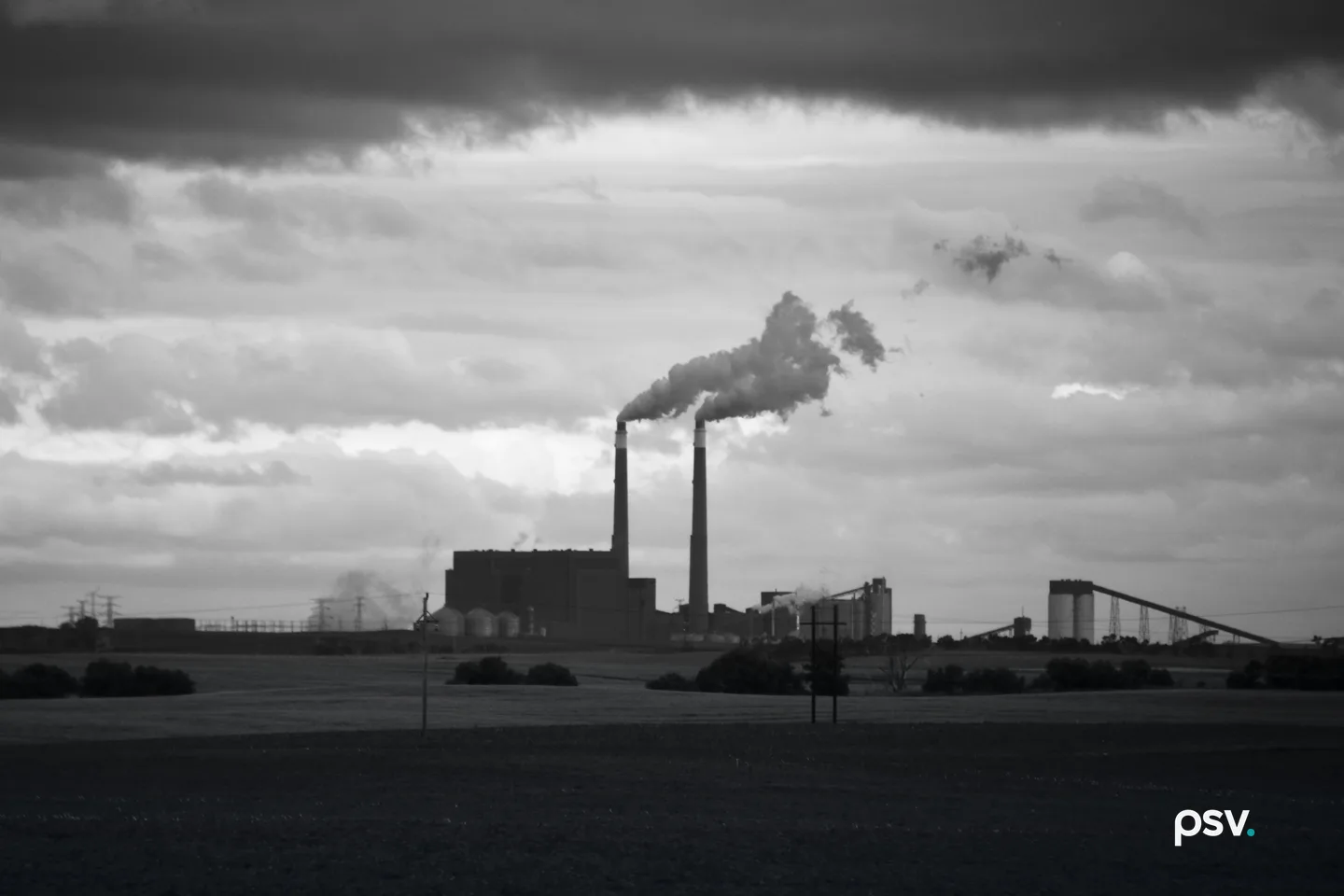
- Schwerdf, “Coal Creek Station, McLean County, ND 2022-07-19,” Wikimedia Commons, CC BY 4.0 (lead photograph source)
Topics
Related PSV analysis
CRE AI NEWS
TeraWulf Doubles Contracted Power at Its Kentucky Campus to 1 GW, and Flags the Collateral
TeraWulf’s Form 8-K filed October 5 says a subsidiary signed amended agreements with Kentucky Power on October 1 that raise contracted power at its Muskie Data Campus in eastern Kentucky from 500 megawatts to 1 gigawatt and move the second phase from 2030 to 2029, subject to state utility regulators. The same filing says the company is seeking more debt to back letters of credit for its utility agreements.
CRE CAPITAL NEWS
LS Power Closes a $6 Billion Fund and Points $1.7 Billion at Gas Plants in PJM and Texas
LS Power said on October 6 that its sixth flagship fund closed with about $6 billion of commitments against a $4 billion target. About $1.7 billion is already committed to buying gas-fired plants from Constellation in Delaware, Pennsylvania and Texas. Constellation’s filings price those sales at $5.86 billion in total. The fund release never mentions data centers. An earlier LS Power release does.
CRE AI NEWS
Glendale Advances Project Eagle, a Data Center With Its Own Gas Plant
Glendale’s Planning Commission heard ZON26-05 on September 24: a rezoning of about 160 acres next to Luke Air Force Base for three data centers and eighteen 72-foot natural gas turbines that would power the campus until APS builds a substation, anticipated in 2030. Local press reported a 4-2 vote to recommend it. The City Council votes on October 27.
Related guides
Cornerstone PSV guides on the workflows in this article.
Claude Engineering Partner for CRE
What it means to run Claude with an engineering partner: the operating model, the controls, and who owns what.
Read the guideAI for Real Estate Investing
How commercial real estate investors use AI across the deal lifecycle: sourcing, underwriting, due diligence, and asset management, grounded in real documents.
Read the guideAI Engineering for CRE
PSV builds custom AI employees for commercial real estate. Every number cites its source document, and the citation holds from deal to IC memo.
Read the guideby PSVLiveYou read the operator view. Now learn to run the workflow.
The AI MBA for commercial real estate: the workflows these briefs describe, taught end to end on real deal files, with live builds and a community of CRE operators.