CRE CAPITAL NEWS
LS Power Closes a $6 Billion Fund and Points $1.7 Billion at Gas Plants in PJM and Texas
LS Power said on October 6 that its sixth flagship fund closed with about $6 billion of commitments against a $4 billion target. About $1.7 billion is already committed to buying gas-fired plants from Constellation in Delaware, Pennsylvania and Texas. Constellation’s filings price those sales at $5.86 billion in total. The fund release never mentions data centers. An earlier LS Power release does.
Direct answer
Direct answer to LS Power Fund VI
Existing power plants near large load are being bought by private funds, and public filings now show the price: about $1,180 per kilowatt across this group, by PSV’s arithmetic. For anyone siting a data center or a power-heavy industrial building in PJM or ERCOT, the owner of the nearest plant is a counterparty worth naming. None of the Constellation sales has closed, and no contract with any data center is disclosed.
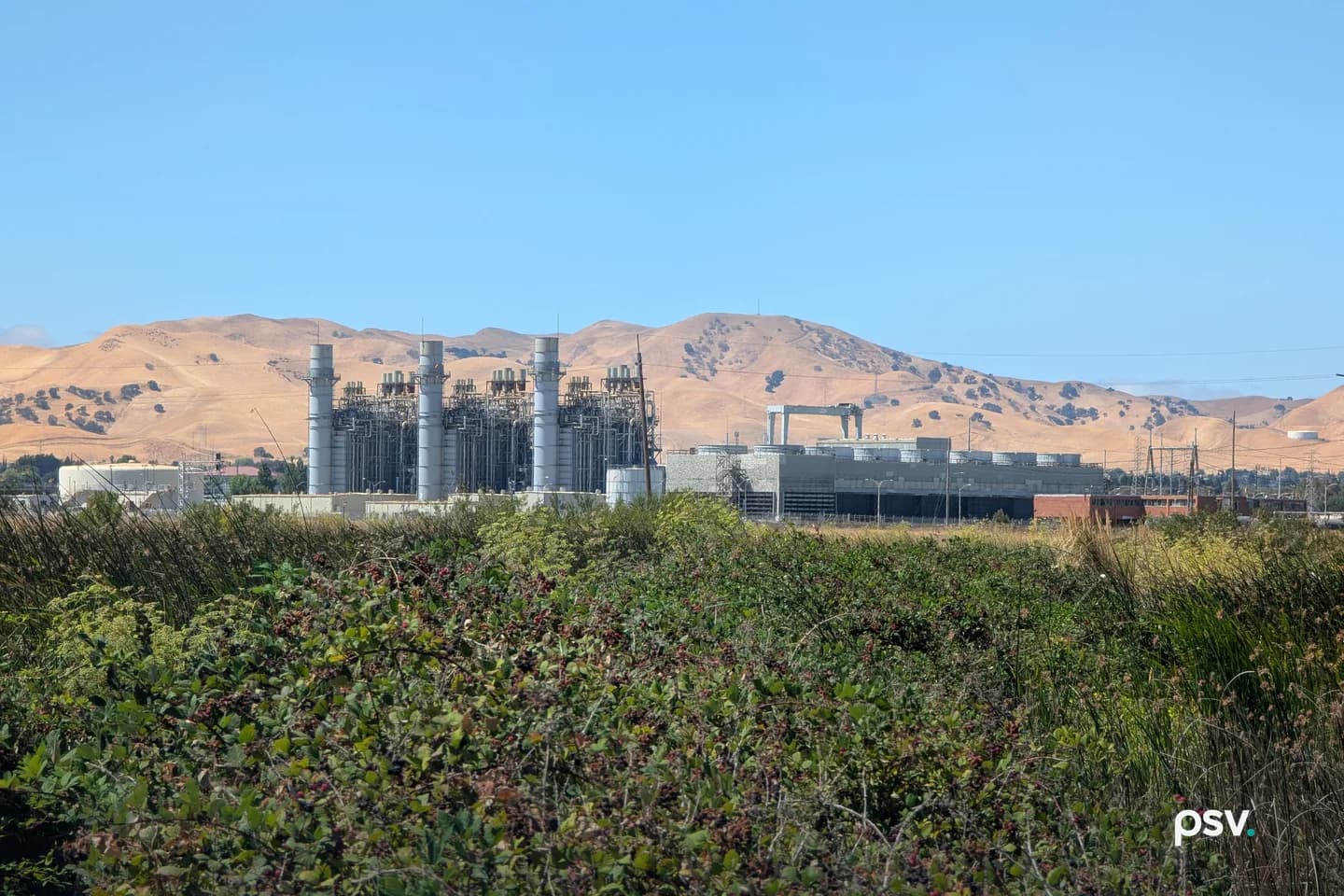
What LS Power announced on October 6
LS Power, a New York developer, investor and operator of power infrastructure, issued a release on October 6, 2026 saying it had closed LS Power Equity Partners VI with total commitments of approximately $6 billion. The company says the fund launched in January 2026 with an initial target of $4 billion and was fully allocated against its hard cap by July. That computes to one and a half times the target. The release says Fund VI will invest in renewables, conventional generation, energy storage, distributed energy resources and other energy infrastructure. It says the prior fund, Fund V, raised $2.7 billion in 2024 and is fully deployed, and that LS Power’s partnerships have raised approximately $19.8 billion of equity since inception. The investors are described by category only: pension funds, insurers, sovereign wealth funds, asset managers, foundations, endowments, family offices and private wealth. None is named.
The part with a location is the first deployment. The release says approximately $1.7 billion of the fund is committed to LS Power’s pending acquisitions of what it calls a 5-gigawatt platform of gas-fired plants from Constellation Energy in the Mid-Atlantic and Texas. Constellation’s Form 10-Q for the quarter ended June 30, filed August 6, gives the terms. In March 2026 Constellation agreed to sell LS Power five generation assets in PJM, about 4.4 gigawatts of predominantly gas-fired capacity in Delaware and Pennsylvania, for $5.0 billion before closing adjustments. In August it agreed to sell the Brazos Valley Energy Center, a 606 megawatt gas-fired plant in ERCOT, for $860 million before closing adjustments. The 10-Q says these sales satisfy regulatory commitments tied to Constellation’s acquisition of Calpine, which closed January 7, 2026. The two prices add to $5.86 billion, so the $1.7 billion from Fund VI computes to about 29 percent of the total. Neither company says where the rest comes from.
Why a fund close matters to a site team
The filed prices let a real estate team do arithmetic it usually cannot. LS Power’s August 6 release puts the PJM portfolio at 4,353 megawatts. At $5.0 billion that computes to about $1,150 per kilowatt. Brazos Valley at $860 million for 606 megawatts computes to about $1,420 per kilowatt. Together, $5.86 billion for 4,959 megawatts is about $1,180 per kilowatt. These are prices for operating plants with existing grid connections, before closing adjustments, and they are PSV arithmetic from the two companies’ numbers, not figures either company published. In the August release, LS Power’s chief executive Paul Segal says new generation can take years to develop and that buying proven assets is one of the fastest ways to meet demand. That is a company statement. The real estate point is narrower: when a land seller or a utility tells you a site is close to existing generation, that plant has an owner, and in Delaware, Pennsylvania and the Houston area the owner of six such plants is about to change.
A caution on framing. Trade coverage described this fund as a bet on data center power demand. The Fund VI release does not use the words data center or AI at all. The connection comes from LS Power’s own August 6 release on Brazos Valley, which says the plant helps meet power demand “driven by AI, data centers and electrification.” Neither release discloses a contract with a data center, a co-location arrangement or a named large customer at any of the six plants. Constellation’s Form 8-K of July 14 reports that its PJM plants cleared the 2028 to 2029 capacity auction at a price of $325, which PJM quotes per megawatt-day, and states that volumes for assets held for sale are excluded. So the public record does not show what the plants being sold will earn. PSV has no information on LS Power’s plans for them.
The workflow PSV would run: a generation ownership sheet
The work is one sheet that sits beside a site file. The inputs are a list of candidate or owned sites with their utility and grid region; the federal Energy Information Administration’s public plant inventory, which lists each generator’s location, fuel, capacity and owner; the releases and filings that report pending plant sales, like the ones cited here; and whatever the broker, land seller or utility has said in writing about nearby power. The output is one row per site: the generating plants within a distance the team sets, each plant’s capacity and fuel, the current owner, whether a sale is pending and what approvals it still needs, the expected closing date, whether any public record shows a supply or co-location arrangement at that plant, and a link to the source for every cell.
The reviewer is the head of development or whoever leads power procurement. Counsel reads anything that looks like a term sheet or a supply contract. The approval gate is plain: no site is described to an investment committee, a lender or a tenant as having power nearby until a named person has signed off on its row. An assistant can do the volume work, which is pulling the plant list, matching plant names across releases and filings that spell them differently (Brazos Valley was formerly the Jack A. Fusco Energy Center), and flagging rows where the owner on file predates a reported sale. It should not treat a plant’s nameplate capacity as power available to a new customer, should not infer a deal from proximity, and should not turn a per-kilowatt purchase price into a forecast of what power will cost. PSV ran no model and tested no product for this brief.
What stays with a person, and what the record leaves open
The operator read
Finish with the judgment call.
The reported facts are above. Enter your email for PSV's operator conclusion and a year of access to every newsroom brief.
Free. No card. Privacy policy. Unsubscribe anytime.
 by PSVLive
Build the workflow behind this analysis. Train with the operators doing it.
Real deal files, live builds, and production-ready CRE AI workflows inside the CRE AI Institute.











Clear answers
Common questions about LS Power Fund VI
How big is LS Power’s Fund VI?
LS Power’s release of October 6, 2026 says LS Power Equity Partners VI closed with total commitments of approximately $6 billion. The company says the fund launched in January 2026 with an initial target of $4 billion and was fully allocated against its hard cap by July. The prior fund, Fund V, raised $2.7 billion in 2024. The release describes the investors by category and names none of them.
Which power plants is LS Power buying from Constellation?
Constellation’s Form 10-Q filed August 6, 2026 says it agreed in March to sell LS Power five generation assets in PJM, about 4.4 gigawatts of predominantly gas-fired capacity in Delaware and Pennsylvania, for $5.0 billion before closing adjustments, and agreed in August to sell the 606 megawatt Brazos Valley Energy Center in ERCOT for $860 million. Both sales satisfy regulatory commitments tied to Constellation’s Calpine acquisition and are expected to close by the end of 2026. LS Power says about $1.7 billion of Fund VI is committed to them.
Does LS Power’s fund have contracts with data centers?
None is disclosed. The Fund VI release does not mention data centers or AI. LS Power’s August 6, 2026 release on the Brazos Valley plant says the purchase helps meet power demand driven by AI, data centers and electrification, but neither release reports a supply contract, a co-location arrangement or a named large customer at any of the six plants. A site near one of them should be treated as near a plant, not as having contracted power.
Primary source record
These records support the reported facts in this brief. PSV’s CRE workflow interpretation and test plan are original analysis.
- LS Power, “LS Power Closes $6 Billion Fund VI,” PR Newswire, October 6, 2026 (source of the approximately $6 billion in commitments, the $4 billion target, the January launch and July hard cap, the approximately $1.7 billion commitment to the Constellation acquisitions, the 5-gigawatt description, Fund V and the $19.8 billion total)
- Constellation Energy Corporation, Form 10-Q for the quarter ended June 30, 2026, filed August 6, 2026 (Note 2; source of the five PJM assets of about 4.4 gigawatts in Delaware and Pennsylvania for $5.0 billion, Brazos Valley at 606 megawatts for $860 million, the regulatory commitment, the expected closing and the Brazos Valley financing)
- LS Power, “LS Power to Acquire Natural Gas Power Plant in ERCOT from Constellation,” PR Newswire, August 6, 2026 (source of the 4,353 megawatt PJM figure, the reference to AI and data center demand, Paul Segal’s statement, the fourth quarter 2026 closing and the 14,100 megawatt fleet)
- Constellation Energy Corporation, Form 8-K, filed July 14, 2026 (Item 8.01; source of the 2028 to 2029 PJM capacity auction price and the statement that volumes for assets held for sale are excluded)
- Mliu92, “Delta Energy Center (Calpine), with hills,” Wikimedia Commons, CC BY-SA 4.0 (lead photograph source)
Topics
Related PSV analysis
CRE POLICY NEWS
PJM’s Firm Power Exemption Is a 10 Year Commitment
PJM told this desk’s readers in July what its Board had directed. The filings themselves are now at the Federal Energy Regulatory Commission, in dockets ER26-3380-000 and ER26-3515-000, and the comment window closed on September 3. They contain terms the Board letter never stated, and the most consequential one is what a site has to promise to keep firm power.
CRE AI NEWS
TeraWulf Doubles Contracted Power at Its Kentucky Campus to 1 GW, and Flags the Collateral
TeraWulf’s Form 8-K filed October 5 says a subsidiary signed amended agreements with Kentucky Power on October 1 that raise contracted power at its Muskie Data Campus in eastern Kentucky from 500 megawatts to 1 gigawatt and move the second phase from 2030 to 2029, subject to state utility regulators. The same filing says the company is seeking more debt to back letters of credit for its utility agreements.
CRE AI NEWS
Glendale Advances Project Eagle, a Data Center With Its Own Gas Plant
Glendale’s Planning Commission heard ZON26-05 on September 24: a rezoning of about 160 acres next to Luke Air Force Base for three data centers and eighteen 72-foot natural gas turbines that would power the campus until APS builds a substation, anticipated in 2030. Local press reported a 4-2 vote to recommend it. The City Council votes on October 27.
Related guides
Cornerstone PSV guides on the workflows in this article.
AI for Real Estate Investing
How commercial real estate investors use AI across the deal lifecycle: sourcing, underwriting, due diligence, and asset management, grounded in real documents.
Read the guideEnterprise AI for Institutional CRE
PSV trains your whole firm on Claude and ChatGPT, builds your agents live inside your own environment, and stays on as your embedded AI team. What we build for you is yours.
Read the guideWhat is CRE AI?
The definitional guide to commercial real estate AI: the core workflows, how it differs from a chatbot, and how to learn it.
Read the guideby PSVLiveYou read the operator view. Now learn to run the workflow.
The AI MBA for commercial real estate: the workflows these briefs describe, taught end to end on real deal files, with live builds and a community of CRE operators.