CRE AI NEWS
Glendale Advances Project Eagle, a Data Center With Its Own Gas Plant
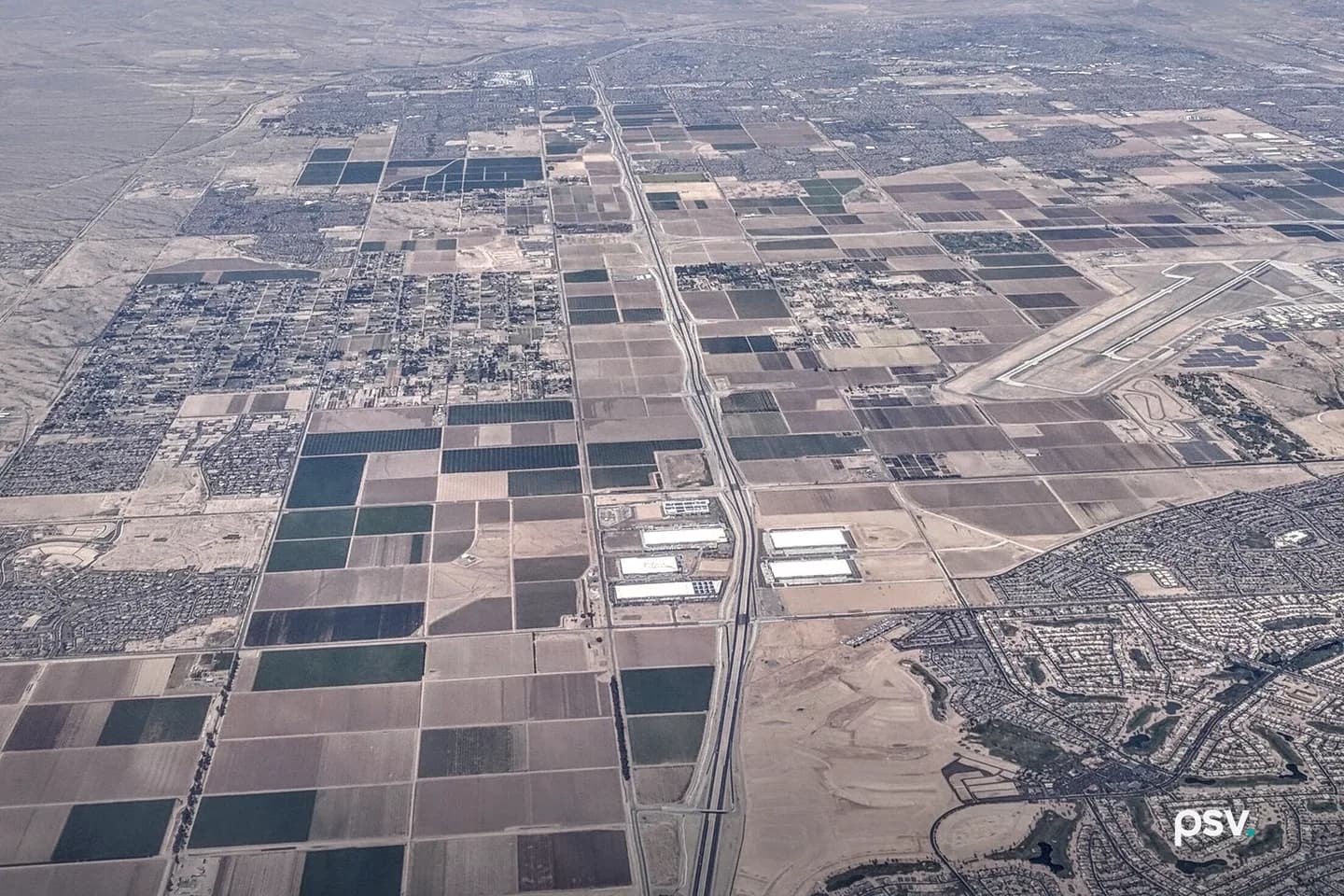
Glendale’s Planning Commission heard ZON26-05 on September 24: a rezoning of about 160 acres next to Luke Air Force Base for three data centers and eighteen 72-foot natural gas turbines that would power the campus until APS builds a substation, anticipated in 2030. Local press reported a 4-2 vote to recommend it. The City Council votes on October 27.
Direct answer
Direct answer to Project Eagle Glendale data center
A Phoenix-area data center campus is seeking city approval to bring its own power plant. Project Eagle pairs three one-story data centers, about 1.1 million square feet in the staff report, with eighteen gas turbines that the applicant says will run partly continuously until APS finishes an on-site substation, anticipated in 2030. It sits inside Luke AFB’s highest noise contours. The annexation and rezoning are on the City Council’s October 27 agenda.
What Glendale heard, and what the city’s record shows
On September 24, 2026, the City of Glendale Planning Commission held a public hearing on ZON26-05, Project Eagle: a request by Brian Greathouse of Burch & Cracchiolo, representing Baccara Eagle Land, LLC, to rezone about 160 acres from Heavy Industrial (M-2) to Planned Area Development (PAD) for a co-located data center campus and natural gas power generation facility. The site is west of the northwest corner of Litchfield Road and Olive Avenue, in the Yucca District. The staff report describes three phases: the data center campus, the gas power facility and an Arizona Public Service substation. The data center campus is three one-story buildings totaling 1.1 million square feet, and the turbine yard is eighteen 72-foot-tall gas turbines in the southeast corner, brought online as each data center is built. The APS substation, the last phase, is anticipated to be complete in 2030. Staff recommended approval subject to stipulations. The Daily Independent and Bisnow reported that the commission voted 4-2 to recommend the rezoning; the city had not posted minutes when PSV checked, so the vote count is theirs, not a PSV reading of the record.
The parcel is still in unincorporated Maricopa County. A concurrent annexation, AN-273, would bring it into Glendale, and the staff report says the county’s Board of Supervisors approved a Military Compatibility Permit for the same uses in May 2026, and the Glendale City Council approved a Pre-Annexation Development Agreement in April 2026. The annexation’s blank petition went to the City Council’s public hearing on September 22. The city’s published list of upcoming council items, dated September 25, schedules both the AN-273 signed petition and ZON26-05 as voting items on October 27, 2026. Bisnow reported that the developer is Michigan-based Takanock LLC; the city’s records name the applicant’s client and owner as Baccara Eagle Land, LLC. No city record PSV read states the campus’s megawatt capacity, a tenant, or a project cost.
Why a CRE operator should care: this site brings its own power
The applicant’s PAD narrative, date stamped July 17, 2026, is explicit about how the power works. The gas plant “will run a portion of its generation continuously to supply the data center power until the time at which APS has completed construction of its substation and connection to the transmission system.” After that, it says, the turbines run intermittently for backup power, to send excess power to the grid, or both. That is a developer claim about its operating plan, not a utility commitment, and it is the part of the story that matters most. PSV reported on September 4 that in the APS rate case record, Microsoft’s closing brief put APS’s freeze on new large load commitments at over thirty months. A campus that can energize on its own turbines, years before a substation arrives, is a different product from powered land waiting on a utility, and it is priced, financed and leased differently.
It also changes what the asset is. A data center campus with an on-site gas plant is part real estate and part power generation business: the turbine yard needs an air permit from the Maricopa County Air Quality District, a gas supply by underground pipe, backup fuel in propane and diesel stored underground, and FAA approval for its stacks. Staff’s stipulations say the natural gas “shall be supplied directly by underground piping solely for on-demand power generation,” while the narrative describes continuous generation until 2030. PSV reads “on-demand” as likely meaning the fuel serves only the site’s own generation, but the record does not define it, and a buyer or lender should ask. The site also sits inside Luke Air Force Base’s 80 and 75 LDN noise contours. The staff report says Luke AFB reviewed the proposal and finds the uses consistent if its conditions, in a June 30, 2026 letter, are met; the narrative lists shielding against radar interference and a ban on any steam, dust or plume that could impair pilot visibility.
The workflow PSV would run on a co-located power site
The artifact is an entitlement and power dependency register for the site, built from the public record before anyone underwrites rent. Inputs: the staff report and its stipulations, the PAD narrative, the Luke AFB letter, the county Military Compatibility Permit and its conditions, the Pre-Annexation Development Agreement, the annexation petition, the county air permit application, and the council agendas. Output: every approval the campus still needs, who grants it and its current status; every stipulation and base condition that binds operations, such as continuous emissions monitoring, turbine setbacks of at least 150 feet, underground fuel storage and the secondary fire access required before the first certificate of occupancy; the date the grid connection is expected and what the site runs on until then; and every dollar obligation still open, including the traffic signal cost share and the impact fee discussion staff flagged because much of the site is equipment rather than buildings. Every line cites its page.
The reviewer is land use counsel with the development or acquisitions lead, and nothing is relied on until counsel confirms the stipulation text against the ordinance the council actually adopts on October 27, because stipulations can change at the dais. An assistant does the volume work well: reading a 47-page PAD narrative and its county appendices, pulling every condition into one list, tracking the council and air permit dates, and comparing the applicant’s narrative against staff’s stipulations for tensions like the continuous versus on-demand wording above. It should not decide whether a turbine yard’s air permit is likely to issue, what the power will cost a tenant, or whether a lease should treat the 2030 substation date as a delivery condition. PSV has not analyzed this project’s economics and promises no outcome.
What stays with people, and what the record leaves open
The operator read
Finish with the judgment call.
The reported facts are above. Enter your email for PSV's operator conclusion and a year of access to every newsroom brief.
Free. No card. Privacy policy. Unsubscribe anytime.
 by PSVLive
Build the workflow behind this analysis. Train with the operators doing it.
Real deal files, live builds, and production-ready CRE AI workflows inside the CRE AI Institute.










Clear answers
Common questions about Project Eagle Glendale data center
What is Project Eagle in Glendale, Arizona?
Project Eagle is a proposed data center campus with its own natural gas power plant on about 160 acres west of the northwest corner of Litchfield Road and Olive Avenue, next to Luke Air Force Base. Glendale’s staff report for rezoning case ZON26-05 describes three one-story data centers totaling 1.1 million square feet, eighteen 72-foot gas turbines and an Arizona Public Service substation anticipated in 2030. The applicant is represented by Burch & Cracchiolo on behalf of the owner, Baccara Eagle Land, LLC. The project has been called Project Baccara in local coverage.
When does the Glendale City Council vote on Project Eagle?
October 27, 2026. The city’s list of upcoming council items, published September 25, 2026, schedules the AN-273 annexation signed petition and the ZON26-05 rezoning as voting items that night. The Planning Commission heard the rezoning on September 24, and local press reported a 4-2 vote to recommend approval; the city had not posted minutes when PSV checked.
Will the Project Eagle data center run on its own gas turbines?
Partly, according to the applicant. Its PAD narrative says the gas plant will run a portion of its generation continuously to power the data centers until APS completes an on-site substation and transmission connection, anticipated in 2030, and after that will run intermittently for backup, to send excess power to the grid, or both. City staff’s proposed stipulations require continuous emissions monitoring under the Maricopa County air permit and say natural gas is supplied by underground pipe solely for on-demand power generation. No city record PSV read states the plant’s megawatt output.
Primary source record
These records support the reported facts in this brief. PSV’s CRE workflow interpretation and test plan are original analysis.
- City of Glendale, Planning Commission Report, Case ZON26-05 Project Eagle, meeting date September 24, 2026 (source of the request, the applicant and owner, the three phases, the 1.1 million square feet, the eighteen 72-foot turbines, the 2030 APS substation, the Luke AFB LDN contours and review, the Military Compatibility Permit, the Pre-Annexation Development Agreement, AN-273, the citizen participation record, the impact fee discussion and the proposed stipulations)
- City of Glendale, Planning Commission agenda, September 24, 2026 (source of the ZON26-05 agenda item)
- Project Eagle PAD Narrative, date stamped received July 17, 2026, attachment to the ZON26-05 staff report (source of the continuous generation until the APS substation, the permitted uses, phasing, Luke AFB compatibility conditions and water service)
- City of Glendale, ZON26-05 Planning Commission presentation, September 24, 2026 (source of the staff recommendation and stipulations as presented)
- City of Glendale, City Council Upcoming Agenda Items, September 25, 2026 (source of the October 27, 2026 voting items for the AN-273 signed petition and ZON26-05)
- City of Glendale, City Council regular meeting agenda, September 22, 2026 (source of the AN-273 Project Eagle annexation public hearing)
- Arizona Attorney General, “Attorney General Mayes Calls for Statewide Pause on Data Centers, Announces Town Hall on Ahwatukee Data Center Project,” August 31, 2026 (source of the pause call and its stated reasons)
- Daily Independent, “Split Glendale Planning Commission recommends rezoning for data centers, power plant” (source of the reported 4-2 vote)
- Bisnow, “Maricopa County Data Center Project Moves Toward Approval Despite Pushback,” September 28, 2026 (source of the reported 4-2 vote, the three 330,000-square-foot buildings and the reported developer, Takanock LLC)
- KJZZ, “Gov. Hobbs won’t pause Arizona data center development despite calls to do so,” September 3, 2026 (source of the governor’s reported opposition to a statewide moratorium)
- Dicklyon, Arizona State Route 303 interchange with Interstate 10 in Goodyear, Arizona, Wikimedia Commons, CC BY-SA 4.0 (lead photograph source)
Topics
Related PSV analysis
CRE POLICY NEWS
APS Has Not Committed to Serve a New Large Load Since 2024
Closing briefs in the Arizona Public Service rate case were docketed on August 27, and they carry a fact no site selection memo in metro Phoenix can ignore. Microsoft, an intervenor, told the Arizona Corporation Commission that APS has been unable to commit to serve any new large load customer since January 1, 2024. APS’s own brief describes a large queue of uncommitted customers. PSV read the briefs.
CRE CAPITAL NEWS
Oracle’s Force Majeure Notice on Project Jupiter
Oracle has sent a force majeure notice to Stack Infrastructure, the developer of Project Jupiter in Doña Ana County, New Mexico, that reportedly lets it defer some rent for up to three years if the campus’s power is late. Oracle’s own July release already conditioned its commitments on a pipeline and air permit that remain unresolved.
CRE POLICY NEWS
Texas Halts Data Center Permits Until ERCOT’s Audit Is Done
Governor Greg Abbott directed the Texas Commission on Environmental Quality on September 21 to pause the issuance of all permits related to data center projects until ERCOT completes its review, and said no state agency should move forward with data center approvals until the audit information is in. ERCOT’s responses are due October 12 and its report by December 10. No end date is set.
Related guides
Cornerstone PSV guides on the workflows in this article.
Claude Engineering Partner for CRE
What it means to run Claude with an engineering partner: the operating model, the controls, and who owns what.
Read the guideAI Engineering for CRE
PSV builds custom AI employees for commercial real estate. Every number cites its source document, and the citation holds from deal to IC memo.
Read the guideWhat is CRE AI?
The definitional guide to commercial real estate AI: the core workflows, how it differs from a chatbot, and how to learn it.
Read the guideby PSVLiveYou read the operator view. Now learn to run the workflow.
The AI MBA for commercial real estate: the workflows these briefs describe, taught end to end on real deal files, with live builds and a community of CRE operators.