CRE CAPITAL NEWS
BREIT Books $497M of Impairments as Data Centers Hit 30%
Blackstone Real Estate Income Trust’s third-quarter 10-Q shows $496.7 million of impairment charges, mostly on 13 rental housing properties, against $366.1 million of gains on sales. In the same quarter it put $3.4 billion into pre-leased QTS data center developments, and data centers rose to 30 percent of the portfolio.
Direct answer
Direct answer to BREIT impairments data centers
The largest nontraded REIT is funding the AI build by selling and marking down housing. BREIT’s Q3 filing shows impairments up from $27.4 million a year earlier to $496.7 million, about $2.0 billion of property sold, and $3.4 billion deployed into QTS data centers that it says are fully pre-leased. Data centers are now 30 percent of BREIT by fair value, behind rental housing at 39 percent.
What BREIT filed
Blackstone Real Estate Income Trust, Inc. filed its quarterly report on Form 10-Q for the period ended September 30, 2026 with the SEC on November 6. It reports $496.7 million of impairment charges for the quarter, up from $27.4 million in the third quarter of 2025. The filing splits the charge in two: $453.7 million on held and used real estate, consisting of 13 rental housing properties, one office property and various single family rental homes, after updates to undiscounted cash flow assumptions; and $43.0 million on assets held for sale whose carrying amount exceeded fair value less closing costs. It does not name the properties. Some press accounts counted 14 commercial properties; that is the 13 rental housing properties plus the office building, with the single family homes on top. For the first nine months, impairments total $731.1 million against $368.8 million a year earlier.
In the same quarter BREIT sold 65 rental housing properties, nine industrial properties and one office property for $2.0 billion of net proceeds and a $366.1 million net realized gain, including its last 40 manufactured housing properties for $921.0 million. The 10-Q says it deployed $3.4 billion, at BREIT’s share, into data center development through QTS, and that these developments are 100 percent pre-leased, in substantially all cases to investment grade tenants. BREIT’s Q3 update, furnished on a Form 8-K on November 5, puts year-to-date data center deployment above $9 billion and says roughly $7 billion of non-core assets have been sold this year. Those are the company’s statements, as is its reported Class I return of 2.0 percent for the quarter and 7.3 percent year to date.
Why a CRE operator should care
BREIT now reports its 4,493 properties as 39 percent rental housing, 30 percent data centers and 20 percent industrial by fair value. One outlet reported the data center share as 29 percent; the 10-Q says 30, and PSV uses the filing. The QTS stake is held through a joint venture with other Blackstone vehicles at a 35.7 percent interest, and the filing shows it grew from 119 properties at the end of 2025 to 141 at September 30, with book value, carried at historical cost, rising from $1.03 billion to $1.50 billion. The Q3 update adds that QTS’s $30 billion development pipeline is pre-leased, in substantially all cases to investment grade technology companies on leases of 15 years or more with annual escalators, and that QTS leasing roughly doubled year over year. Those are Blackstone’s claims, not PSV findings.
The operator read is about where the capital is going and what it is leaving. A vehicle sold to individual investors is rotating out of housing, where it just cut its cash flow assumptions on 13 properties, and into long-lease AI infrastructure, where the credit is a handful of hyperscale tenants. Net flows turned positive: BREIT raised $1.1 billion and repurchased $0.8 billion in the quarter, plus $0.2 billion through its DST program. For housing owners, BREIT is a steady seller. For data center developers, it is a large buyer that only funds pre-leased product. For anyone holding the shares, the portfolio is now a bigger bet on a few tenants than it was a year ago.
| Measure | Q3 2026 | Comparison |
|---|---|---|
| Impairment of investments in real estate | $496.7 million | $27.4 million in Q3 2025 |
| Net gain on dispositions of real estate | $366.1 million on $2.0 billion of net proceeds | Impairments exceed it by $130.6 million |
| Data center development deployed through QTS (BREIT share) | $3.4 billion | Over $9 billion year to date, per the Q3 update |
| Data centers as share of portfolio fair value | 30% | Rental housing 39%, industrial 20% |
| QTS joint venture properties (35.7% interest) | 141 | 119 at December 31, 2025 |
| Capital raised vs. shares repurchased | $1.1 billion raised, $0.8 billion repurchased | Plus $0.2 billion through the DST program |
The workflow PSV would run
The artifact is a quarterly capital-rotation tracker for the large private REITs and funds a firm buys from, sells to or competes with. Inputs: each 10-Q and the furnished quarterly update, read for impairments by segment and their stated cause, dispositions with proceeds and realized gains, development deployment and pre-lease status, the sector mix by fair value, joint venture interests, and subscriptions against repurchases. Output: a one-page sheet per vehicle with quarter-over-quarter changes, every number tied to the page it came from, and a short list of what changed in the seller’s behavior. An assistant can extract the figures and draft the deltas; a person checks each against the filing before anyone uses it.
The reviewer is the head of acquisitions or capital markets, and the gate is the use: a flagged impairment or a run of sales in one sector is a reason to call the seller or adjust a pricing assumption, and that call is made by a person who has read the filing, not by the tracker. Before the first run, decide which vehicles matter to the firm’s deal flow and which disclosures they actually make, because nontraded REITs do not name impaired properties and the tracker should never guess at them.
What stays human, and what the record does not settle
The operator read
Finish with the judgment call.
The reported facts are above. Enter your email for PSV's operator conclusion and a year of access to every newsroom brief.
Free. No card. Privacy policy. Unsubscribe anytime.
 by PSVLive
Build the workflow behind this analysis. Train with the operators doing it.
Real deal files, live builds, and production-ready CRE AI workflows inside the CRE AI Institute.











Clear answers
Common questions about BREIT impairments data centers
Why did BREIT take $497 million of impairments in Q3 2026?
BREIT’s Form 10-Q for the quarter ended September 30, 2026 says it recognized $496.7 million of impairment charges: $453.7 million on held and used real estate, consisting of 13 rental housing properties, one office property and various single family rental homes, after updating undiscounted cash flow assumptions, and $43.0 million on held-for-sale assets whose carrying amount exceeded fair value less closing costs. It does not name the properties.
How much of BREIT is in data centers?
BREIT’s 10-Q says that as of September 30, 2026 its properties were 39 percent rental housing, 30 percent data centers and 20 percent industrial, based on fair value. It holds data centers mainly through a 35.7 percent interest in a QTS joint venture with other Blackstone vehicles, which owned 141 properties at quarter end. BREIT deployed $3.4 billion into QTS developments in the quarter.
Are BREIT’s QTS data centers pre-leased?
BREIT says so. Its 10-Q states that the data center developments it funded in the third quarter are 100 percent pre-leased, in substantially all cases to investment grade tenants. Its Q3 update adds that QTS’s $30 billion development pipeline is pre-leased to investment grade technology companies on leases of 15 years or more. The filings do not name the tenants; these are company statements, not PSV findings.
Primary source record
These records support the reported facts in this brief. PSV’s CRE workflow interpretation and test plan are original analysis.
- Blackstone Real Estate Income Trust, Inc., Form 10-Q for the quarter ended September 30, 2026, filed with the SEC November 6, 2026
- Blackstone Real Estate Income Trust, Inc., Form 8-K, Item 7.01 (BREIT Q3 2026 Update), furnished to the SEC November 5, 2026
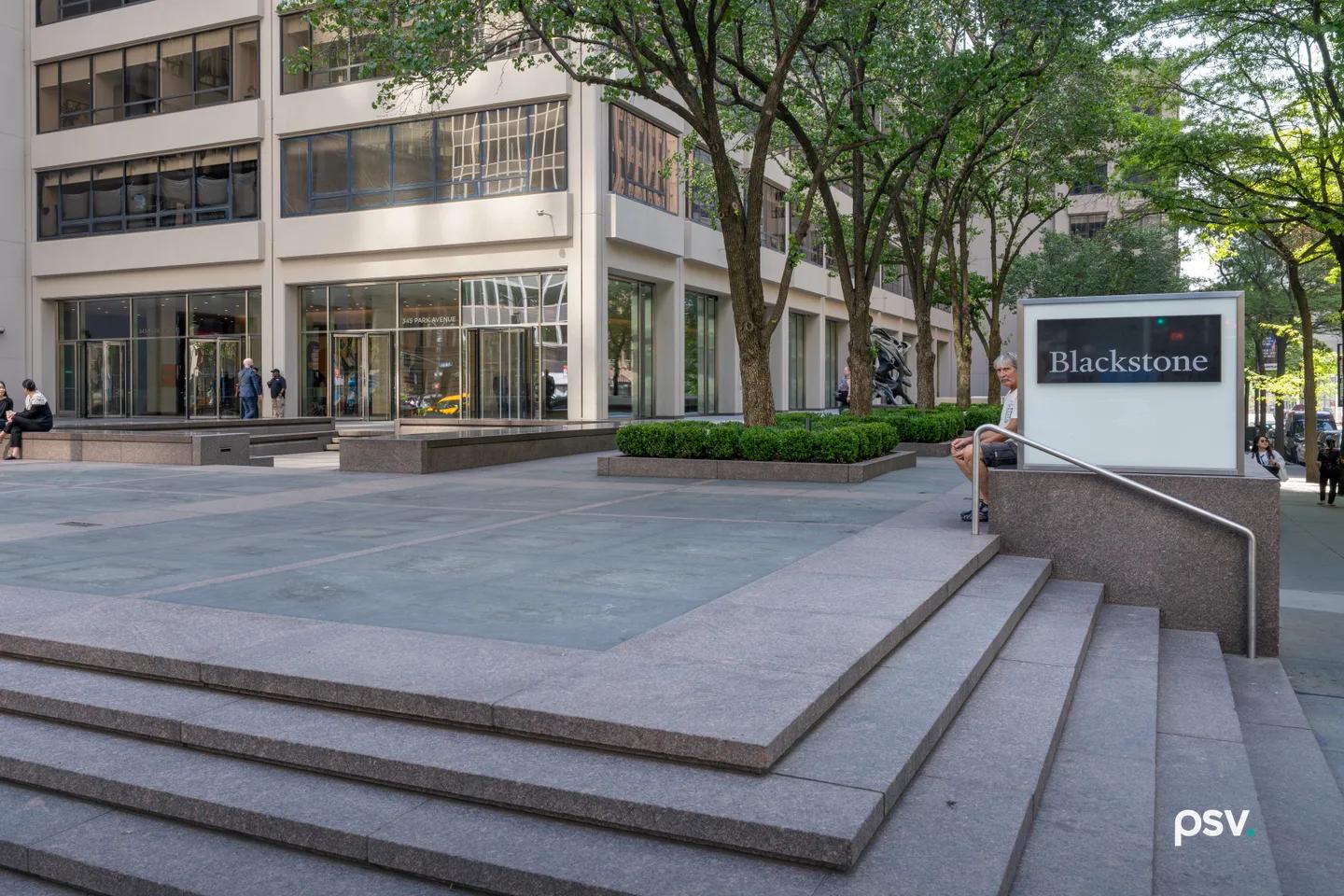
- Lead image: Ajay Suresh, “Blackstone,” Wikimedia Commons, CC BY 4.0
Topics
Track every data center moratorium and large-load rule we have reported, with sources: US data center moratorium tracker.
Related PSV analysis
CRE AI NEWS
Brookfield’s Q3: Real Estate Raised $900 Million, Then Bought Into Data Centers
Brookfield Asset Management furnished its third quarter results to the SEC on November 6: $25 billion raised in the quarter and $123 billion year to date. Its real estate strategies raised $900 million of that, about 3.6 percent, and the one new real estate commitment it highlighted was a stake in a U.S. hyperscale data center developer.
CRE CAPITAL NEWS
NVIDIA’s $500B: Compute Joins the Real Asset Stack
NVIDIA said on August 10 that it signed memorandums of understanding with Apollo, BlackRock, Blackstone, Brookfield, Goldman Sachs and KKR to establish independent compute financing platforms and mobilize over $500 billion of third-party capital. Read the About sections of that same release and the CRE fact is already on the page: three of the six describe real estate as a core business, and one of them calls itself the world’s largest alternative asset manager.
CRE POLICY NEWS
Four Senate Bills Target Data Center Tax Breaks. Each Draws the Line Differently.
Two Democrats and two Republicans on the Senate side have put data center tax benefits in writing: Warner’s bonus depreciation repeal, Wyden’s discussion draft adding a private REIT rule and an excise tax, Hawley’s Opportunity Zone ban and Moreno’s incentive ban. Wyden said November 4 he expects to chair the Finance Committee next Congress.
Related guides
Cornerstone PSV guides on the workflows in this article.
AI for Real Estate Investing
How commercial real estate investors use AI across the deal lifecycle: sourcing, underwriting, due diligence, and asset management, grounded in real documents.
Read the guideEnterprise AI for Institutional CRE
PSV trains your whole firm on Claude and ChatGPT, builds your agents live inside your own environment, and stays on as your embedded AI team. What we build for you is yours.
Read the guideMultifamily AI Underwriting & Acquisitions
Pacific Software Ventures builds custom AI for multifamily underwriting and acquisitions: OM ingestion, rent roll abstraction, agency debt sizing.
Read the guideby PSVLiveYou read the operator view. Now learn to run the workflow.
The AI MBA for commercial real estate: the workflows these briefs describe, taught end to end on real deal files, with live builds and a community of CRE operators.