CRE CAPITAL NEWS
BlackRock and ACS Launch Coravel: The CRE Read on a 1.7 GW Data Center Bet
ACS Group and BlackRock’s Global Infrastructure Partners launched Coravel on July 15, a 50-50 joint venture that turns their data center development platform into an operating brand with an initial 1.7 gigawatt portfolio and a signed long-term hyperscale lease at a Dallas-Fort Worth campus. For commercial real estate, it is another sign that the largest infrastructure capital pools are building the AI buildout as a real estate business.
Direct answer
Direct answer to Coravel data center platform commercial real estate
Yes, BlackRock and ACS have a new data center company. Coravel, announced July 15, 2026, is the operating brand for their 50-50 joint venture, launching with a 1.7 gigawatt development portfolio and a first major hyperscaler agreement, a long-term lease of about 140 megawatts across three facilities at a Dallas-Fort Worth campus. The CRE read is who is building: infrastructure investors, not proptech, are underwriting AI’s real estate.
What ACS and GIP launched
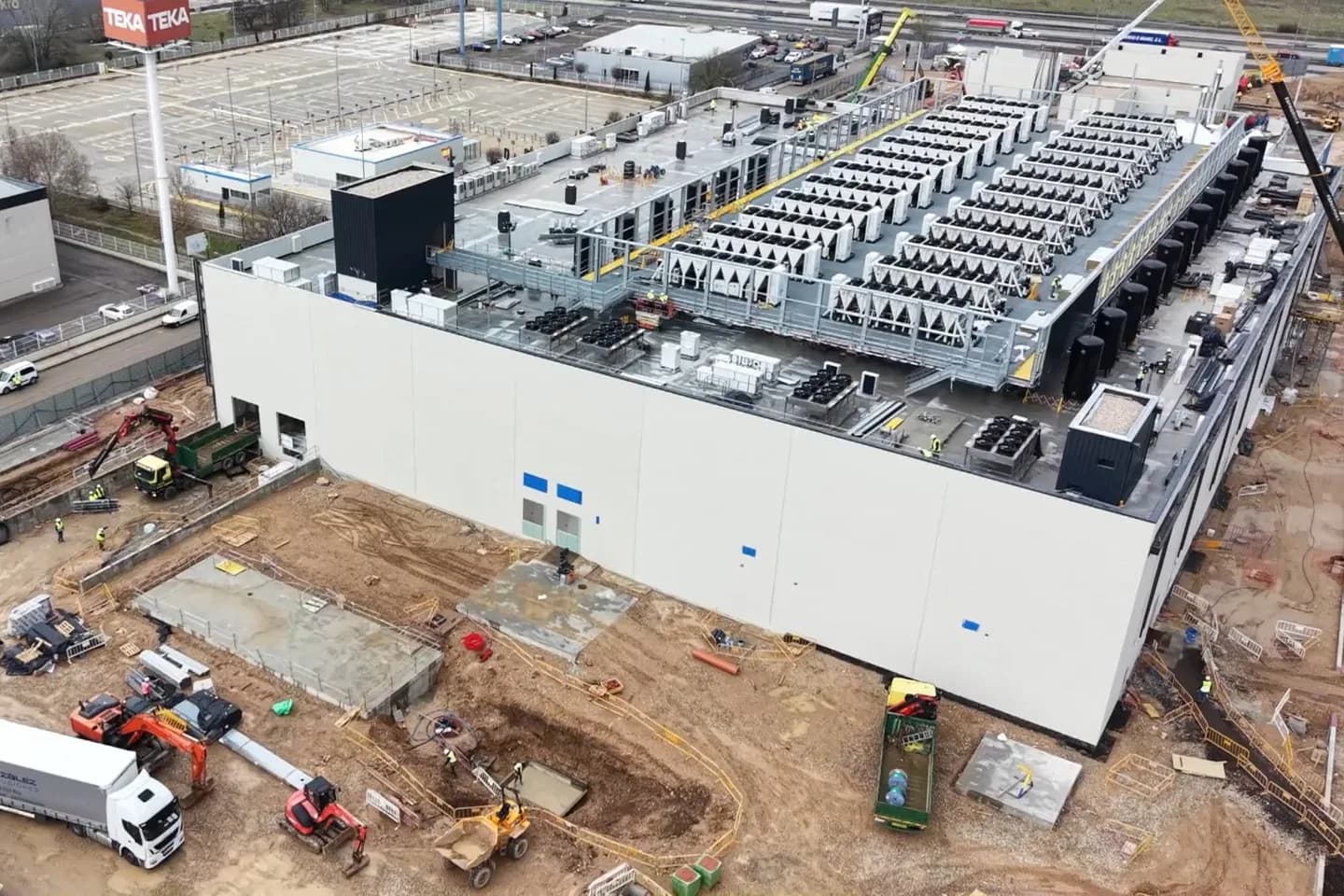
On July 15, 2026, ACS Group and Global Infrastructure Partners (GIP), part of BlackRock, launched Coravel, the operating brand for the data center development platform the two first announced in November 2025. The company says Coravel is a vertically integrated platform that brings power strategy, site origination, design, construction, capital, and operations under one accountable partner for hyperscalers and technology companies. It launches with an initial development portfolio of about 1.7 gigawatts spanning the United States, Europe, and Australia, and the partners say a broader pipeline under review exceeds 11 gigawatts. Howard Boville, a former president of DXC and a veteran of IBM, Bank of America, and BT, was named chief executive.
The launch came with a first customer. Coravel says it signed a long-term hyperscale lease covering approximately 140 megawatts of critical IT load across three purpose-built facilities at its Dallas-Fort Worth Metroplex campus in Texas, with rights to roughly 100 megawatts of additional expansion across two more facilities. It did not name the customer. The financial frame traces to the November 2025 agreement, which GIP valued at about 2.0 billion euros on a 100 percent basis, with 1.0 billion euros in cash and up to 1.0 billion euros in earn-outs tied to commercial milestones. Those are the companies’ figures, not PSV findings.
Why a CRE operator should care
The point is not the megawatts. It is who signed them. BlackRock, through GIP, is one of the largest infrastructure investors in the world, and ACS owns Turner Construction and Dragados, among the largest builders in the United States. When that combination stands up a dedicated data center developer with a hyperscaler already under lease, it confirms that the AI buildout is being underwritten as a real estate and infrastructure business, with the same long-duration, credit-tenant logic that governs any large single-tenant asset. The data center here is the shell, the power interconnect, and the multi-year contracted cash flow, not a software story.
For an operator, that raises the bar on the counterparty side of any data center thesis. Land sellers, power-adjacent landowners, and lenders now sit across the table from vertically integrated platforms that control site, design, construction, and capital in one entity, which changes negotiating leverage, delivery certainty, and who keeps the development margin. It also concentrates absorption: a single 140 megawatt lease at one Dallas campus is a large block of contracted demand that reshapes a submarket’s power and land picture. The read is to know whether you are competing with, supplying, or underwriting a platform of this scale before you price the deal.
The workflow PSV would run on a platform launch
Treat a launch like this as a trigger to build a counterparty and submarket exposure file from primary records: the ACS and GIP press releases, the November 2025 transaction terms, the campus’s local permits and utility filings as they appear, and the interconnection queue for the relevant grid. An AI assistant reads each record and returns a cited memo: what capacity is actually contracted versus announced, which facilities are permitted, the power and land already committed at the Dallas-Fort Worth campus, and what changed since the last check, with every figure traced to the document it came from.
The reviewer is the acquisitions or development lead working with a market analyst, and the approval gate is explicit: no land option, supply bid, or underwriting assumption moves on a model summary alone. The same review produces the questions a human sends: to the utility on interconnection and load at the specific site, to the county on permit and entitlement status, and to brokers on standing inventory near a campus that just added a large contracted block. The tool organizes the record. It does not decide whether to compete for the parcel.
What should remain human-owned
The operator read
Finish with the judgment call.
The reported facts are above. Enter your email for PSV's operator conclusion and a year of access to every newsroom brief.
Free. No card. Privacy policy. Unsubscribe anytime.
 by PSVLive
Build the workflow behind this analysis. Train with the operators doing it.
Real deal files, live builds, and production-ready CRE AI workflows inside the CRE AI Institute.











Clear answers
Common questions about Coravel data center platform commercial real estate
What is Coravel?
Coravel is the operating brand for a 50-50 data center development joint venture between ACS Group and Global Infrastructure Partners, part of BlackRock, launched on July 15, 2026. The company describes it as a vertically integrated platform that combines power strategy, site origination, design, construction, capital, and operations for hyperscalers, launching with an initial development portfolio of about 1.7 gigawatts across the United States, Europe, and Australia.
What is the Coravel Dallas hyperscaler deal?
Coravel says it signed a long-term hyperscale lease covering approximately 140 megawatts of critical IT load across three purpose-built facilities at its Dallas-Fort Worth Metroplex campus, with rights to roughly 100 megawatts of expansion across two additional facilities. It did not name the customer, so the credit behind the anchor lease is not public.
Why does the Coravel launch matter for commercial real estate?
It shows that the largest infrastructure capital pools, not proptech, are underwriting the AI buildout as a real estate business. A vertically integrated platform that controls site, design, construction, and capital changes negotiating leverage for land sellers, lenders, and suppliers, and a single 140 megawatt contracted block concentrates demand in a submarket. The verification work is at the parcel: permits, interconnection, and which pipeline capacity is actually signed.
Primary source record
These records support the reported facts in this brief. PSV’s CRE workflow interpretation and test plan are original analysis.
Topics
Related PSV analysis
CRE CAPITAL NEWS
Csquare Raised $1.05B. The Data Center Market Is Asking for Proof.
Brookfield-backed Csquare priced its initial public offering at $21 a share, below its marketed $23 to $27 range, raising $1.05 billion rather than the $1.35 billion implied at the top end. The result does not erase demand for digital infrastructure. It does put a sharper public-market price on leverage, delivery, and the difference between a data center story and a data center cash flow.
CRE AI NEWS
Meta’s $50B Hyperion Expansion: The CRE Read on a 5 GW Campus
Meta says its Richland Parish campus will reach about 10 million square feet and 5 gigawatts, with more than $50 billion committed. The durable CRE signal is what a commitment this size does to land, power, housing, and industrial demand around it, and which documents actually move value.
CRE CAPITAL NEWS
TSMC Lifts Arizona to $265 Billion: The CRE Read
TSMC used its record second quarter to commit another $100 billion to Arizona, lifting its total state investment to $265 billion across a planned ten fabs, two advanced packaging plants, and a research center. The expansion is driven by demand for AI chips, and for commercial real estate it concentrates one of the country’s largest advanced-manufacturing buildouts in a single Phoenix submarket.
Related guides
Cornerstone PSV guides on the workflows in this article.
AI for Real Estate Investing
How commercial real estate investors use AI across the deal lifecycle: sourcing, underwriting, due diligence, and asset management, grounded in real documents.
Read the guideBest AI Tools for Commercial Real Estate
The pillar guide to choosing CRE AI tools by workflow fit and control, not vendor hype.
Read the guideClaude MCP for CRE
MCP explained for CRE teams: connect Claude to the files and systems you already run so answers come from your data, with citations.
Read the guideby PSVLiveYou read the operator view. Now learn to run the workflow.
The AI MBA for commercial real estate: the workflows these briefs describe, taught end to end on real deal files, with live builds and a community of CRE operators.