CRE CAPITAL NEWS
Csquare Raised $1.05B. The Data Center Market Is Asking for Proof.
Brookfield-backed Csquare priced its initial public offering at $21 a share, below its marketed $23 to $27 range, raising $1.05 billion rather than the $1.35 billion implied at the top end. The result does not erase demand for digital infrastructure. It does put a sharper public-market price on leverage, delivery, and the difference between a data center story and a data center cash flow.
Direct answer
Direct answer to Csquare IPO data center commercial real estate
Csquare raised $1.05 billion in its July 16 IPO by selling 50 million shares at $21 each, below its $23 to $27 marketed range. For commercial real estate, the important signal is not that the data center thesis disappeared. It is that public investors distinguished between AI infrastructure demand and the price paid to finance it. Re-underwrite the capital stack, delivery schedule, and exit assumptions; the headline is no longer enough.
What Csquare priced
Csquare, the Dallas-based digital-infrastructure platform backed by Brookfield, priced 50 million common shares at $21 each on July 16, raising $1.05 billion in gross proceeds before underwriting discounts and expenses. Its own pricing release said the underwriters have a 30-day option to buy up to 7.5 million additional shares. The shares were expected to begin trading on the New York Stock Exchange under the ticker CSQR that day, and Csquare said it would use the proceeds to repay a portion of its outstanding indebtedness and cover offering expenses.
The price mattered because the company had marketed the offering at $23 to $27 a share. At the top of that range, the same 50 million shares would have raised $1.35 billion; the final price was therefore roughly $300 million below the top-end target. That is not a verdict on every data center developer, and it is not a substitute for reading Csquare's prospectus. It is a real public transaction, however, and that makes it a more useful capital-markets datapoint than the announced valuation on a private funding round.
Why the price is a CRE signal
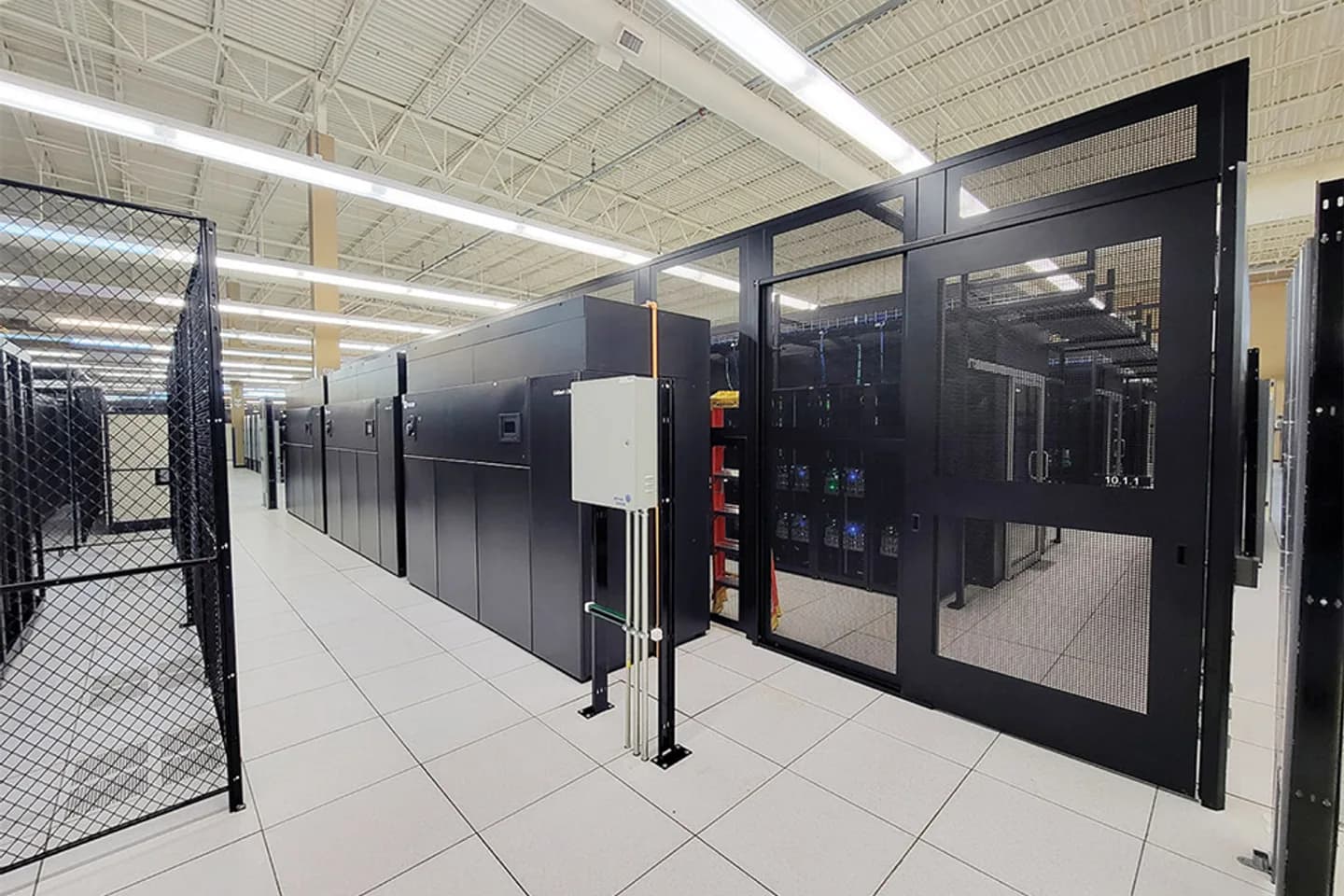
Demand for compute capacity and the demand for a particular financing structure are different questions. Csquare's business is carrier-neutral colocation and interconnection: space, power, cooling, and connectivity for enterprise, network, cloud, and technology customers. That is physical real estate and infrastructure. Yet the public buyer also has to judge the debt being refinanced, the capital still required to grow, customer concentration, lease duration, power costs, and the price at which future capacity converts from an announced project into contracted cash flow.
That distinction is the CRE read. A market can believe in AI workloads and still require a higher return for a developer whose buildout is expensive, levered, or dependent on future capital. The IPO price is one observable point where public investors made that trade. It should not be copied into a private appraisal as a universal multiple. It should make every sponsor, lender, and land investor ask which parts of their own thesis rely on broadly available equity, a frictionless refinancing, or an exit multiple that assumes the next buyer will be less selective.
The underwriting file to reopen now
Start with the capital stack rather than the demand forecast. For each data center or power-adjacent deal, list the committed equity, the remaining equity requirement, construction debt, permanent debt, interest-rate assumptions, repayment dates, and the cash or refinancing event that clears each layer. Then separate what is signed from what is marketed: executed customer commitments, utility agreements, permits, delivery milestones, and the specific amount of capacity that is available for lease today. The output should make a committee able to see which line changes if the next raise prices below plan or takes longer to close.
The public filing is also a useful source document for an AI-assisted review, not a conclusion generator. A controlled workflow can pull the offered share count, price range, use of proceeds, debt description, customer disclosures, and risk factors into a cited comparison against a project's own financing package. A finance lead and development lead then own the judgment: whether the comparable is genuinely comparable, whether the downside case needs a new equity check, and whether the schedule leaves enough time for the capital event. The tool can organize the record; it cannot decide the basis.
What to watch after the bell
The operator read
Finish with the judgment call.
The reported facts are above. Enter your email for PSV's operator conclusion and a year of access to every newsroom brief.
Free. No card. Privacy policy. Unsubscribe anytime.
 by PSVLive
Build the workflow behind this analysis. Train with the operators doing it.
Real deal files, live builds, and production-ready CRE AI workflows inside the CRE AI Institute.











Clear answers
Common questions about Csquare IPO data center commercial real estate
How much did Csquare raise in its IPO?
Csquare announced on July 16, 2026 that it priced 50 million common shares at $21 each, for expected gross proceeds of approximately $1.05 billion before underwriting discounts and expenses. The underwriters received a 30-day option to purchase up to 7.5 million additional shares.
Why did the Csquare IPO price matter for data center real estate?
The final $21 price sat below Csquare's $23 to $27 marketed range. It does not negate AI infrastructure demand, but it shows that public investors can price a data center company more selectively when leverage, capital needs, development delivery, and future cash flow are part of the underwriting.
What should a data center investor review after the Csquare IPO?
Reopen the capital stack: committed equity, remaining equity needs, construction and permanent debt, refinancing dates, and the capital event in the exit case. Then separate executed contracts, utility agreements, permits, and delivered capacity from projects that are only announced or marketed.
Primary source record
These records support the reported facts in this brief. PSV’s CRE workflow interpretation and test plan are original analysis.
Topics
Related PSV analysis
CRE CAPITAL NEWS
TSMC Lifts Arizona to $265 Billion: The CRE Read
TSMC used its record second quarter to commit another $100 billion to Arizona, lifting its total state investment to $265 billion across a planned ten fabs, two advanced packaging plants, and a research center. The expansion is driven by demand for AI chips, and for commercial real estate it concentrates one of the country’s largest advanced-manufacturing buildouts in a single Phoenix submarket.
CRE AI NEWS
Meta’s $50B Hyperion Expansion: The CRE Read on a 5 GW Campus
Meta says its Richland Parish campus will reach about 10 million square feet and 5 gigawatts, with more than $50 billion committed. The durable CRE signal is what a commitment this size does to land, power, housing, and industrial demand around it, and which documents actually move value.
CRE POLICY NEWS
New York’s Hyperscale Data Center Moratorium: The CRE Read
Governor Kathy Hochul signed Executive Order 62 on July 14, pausing state environmental permits for new hyperscale data centers of 50 megawatts or more for up to one year while New York writes a statewide environmental study and new development standards. It is the first statewide freeze in the country, and it lands on the hottest development pipeline in commercial real estate.
Related guides
Cornerstone PSV guides on the workflows in this article.
Claude MCP for CRE
MCP explained for CRE teams: connect Claude to the files and systems you already run so answers come from your data, with citations.
Read the guideAI for Real Estate Investing
How commercial real estate investors use AI across the deal lifecycle: sourcing, underwriting, due diligence, and asset management, grounded in real documents.
Read the guideWhat is CRE AI?
The definitional guide to commercial real estate AI: the core workflows, how it differs from a chatbot, and how to learn it.
Read the guideby PSVLiveYou read the operator view. Now learn to run the workflow.
The AI MBA for commercial real estate: the workflows these briefs describe, taught end to end on real deal files, with live builds and a community of CRE operators.