CRE CAPITAL NEWS
Oracle’s Force Majeure Notice on Project Jupiter
Oracle has sent a force majeure notice to Stack Infrastructure, the developer of Project Jupiter in Doña Ana County, New Mexico, that reportedly lets it defer some rent for up to three years if the campus’s power is late. Oracle’s own July release already conditioned its commitments on a pipeline and air permit that remain unresolved.
Direct answer
Direct answer to Oracle Project Jupiter force majeure
Oracle says Project Jupiter is on schedule and that the notice preserves contractual rights rather than signaling a delay. The primary records explain why it was sent: Oracle’s July 28 release said its commitments assume the air permit and pipeline are approved, and on July 14 New Mexico’s land commissioner refused, for the second time, to let the gas lateral cross state trust land. For owners and lenders, rent now depends on permits.
What was sent, and what the records already said
Bloomberg News reported this week that Oracle sent a force majeure notice to Stack Infrastructure, the developer of Project Jupiter, the AI data center campus under construction near Santa Teresa in Doña Ana County, New Mexico, where Oracle is the anchor tenant. El Paso Matters, citing Bloomberg, reported that the notice could let Oracle delay some rent payments for up to three years if the campus’s power supply is not ready on time, and that Stack is owned by Blue Owl Capital. PSV has not seen the notice, and neither Oracle nor Stack has published it, so its terms are reported here as they were reported, not as a verified document. Oracle did answer on the record. Its spokesman Michael Egbert told reporters that “force-majeure notices are commonplace in developments of this scale and are often used to preserve contractual rights among project partners,” that they do not by themselves establish a project delay or change delivery expectations, and that Project Jupiter remains on schedule. Stack did not respond to reporters’ requests for comment.
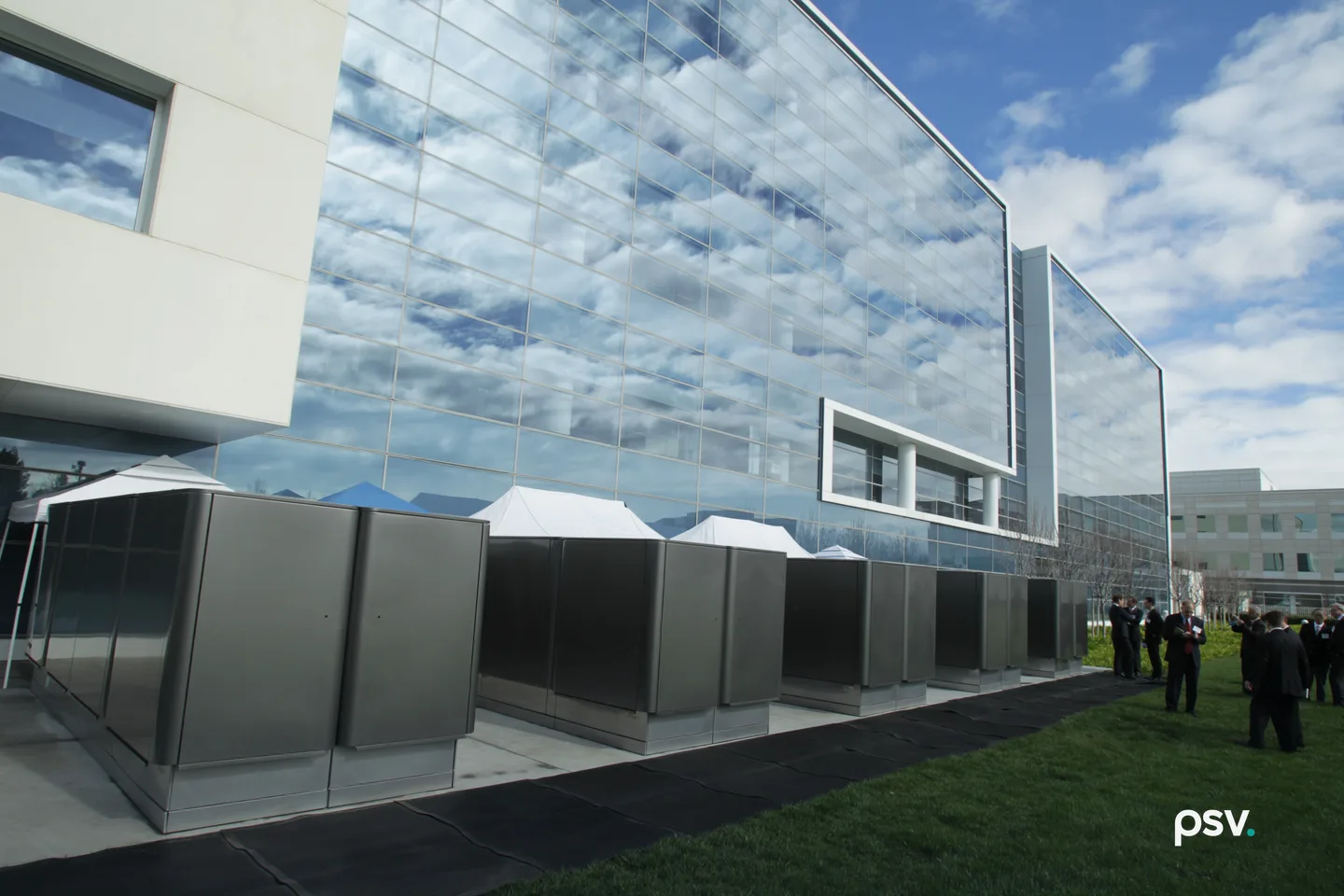
The primary records show what the notice is protecting against. Doña Ana County’s Project Jupiter page lists STACK Infrastructure and BorderPlex Digital Assets as the parties, a minimum initial investment of $50 billion and up to $165 billion over 30 years, industrial revenue bonds issued in Series 2025A, 2025B and 2025C under Ordinance No. 367-2025, and a schedule of construction from the fourth quarter of 2025, initial operations in the fourth quarter of 2026 and Phase 1 completion in the third quarter of 2028. Oracle’s July 28, 2026 release says the campus will run on Bloom Energy fuel cells through an onsite microgrid, replacing previously planned gas turbines and diesel generators, that Oracle will pay for the project’s energy infrastructure and electricity, and that the project will pay $12 million a year to the county and local schools through the industrial revenue bond. Its footnote is the sentence that matters now: Oracle’s commitments and projections for tax revenues, jobs, investment and economic impact “assume the air permit and pipeline are approved, as originally planned.” Neither is. On July 14, Commissioner of Public Lands Stephanie Garcia Richard denied Energy Transfer’s request to reconsider the State Land Office’s March 20 cancellation of two rights-of-way and a business lease for the Green Chili Lateral, a buried 24-inch gas line of about 17 miles meant to carry 400 million cubic feet a day to the site. El Paso Matters reports that the state air permit for the fuel cell plant has not been issued and that the pipeline’s expected in-service date has moved to February.
Why the notice matters to anyone who owns, lends against or builds data centers
A build-to-suit data center is financed against the day rent starts. Force majeure is the clause that decides who carries the cost when that day moves for reasons neither side controls, and a permit refused by a state agency is the kind of event tenants argue fits. If the reported three-year deferral is right, the risk of a late power supply sits with the landlord and its lenders, whose construction interest keeps accruing while rent does not. El Paso Matters, again citing Bloomberg, reported an $18 billion loan to Oracle from a consortium of almost 20 banks tied to the project; PSV could not confirm the facility in a primary record. The scale of the exposure across the market is in Oracle’s own filing. Its Form 10-Q for the quarter ended August 31, 2026 reports $288 billion of additional lease commitments, substantially all data center arrangements, that had not yet commenced, generally expected to start between the second quarter of fiscal 2027 and fiscal 2029 on terms of fifteen to nineteen years. Against $34.6 billion of operating lease liabilities on the balance sheet, that computes to about 8.3 times as much rent still waiting for buildings to be delivered.
The same filing shows why Oracle would want the option. In the quarter, capital expenditures were $28.5 billion against $23.1 billion of cash from operations, which computes to about $5.4 billion more going out than the business brought in, and the company raised $19.9 billion by selling common stock through an at-the-market program. The 10-Q also says Oracle has “flexibility in managing the timing of certain discretionary capital expenditures.” None of that says Oracle wants out of New Mexico, and the company says the opposite. It does say that a tenant with $288 billion of uncommenced leases has every reason to keep its timing rights intact, and every landlord and lender in those deals should assume their tenant is reading its force majeure clauses the same way.
The workflow PSV would run on a data center lease book
The artifact is a power dependency register, one row per hyperscale or build-to-suit lease that a firm owns, lends against, is buying or is developing. Inputs: the executed lease and its amendments, the development agreement, the loan agreement’s completion and rent commencement covenants, any incentive or bond documents such as an industrial revenue bond lease, and the public record for each permit the power plan depends on. Output, per lease: the rent commencement trigger; the delivery date and any outside date; whether the force majeure definition names governmental action, permit denial or utility and fuel supply; notice requirements and the maximum deferral; any tenant termination right after a stated delay; and, beside those, each required permit with its agency, docket or application number, current status and the date of the last action, with the page cite for every term.
The reviewer is lease counsel with the credit or asset management lead, and the gate is that no reserve, valuation or lender communication moves on the register until counsel has read the clause text behind every row. An assistant does the volume work well: extracting the same eight terms from hundreds of pages of leases, flagging clauses that differ from the firm’s form, and checking public agency pages weekly for new decisions like the State Land Office letter. It should not decide whether a given event qualifies as force majeure, estimate the odds of a permit, or tell a lender what to reserve. PSV ran no model on these documents, tested no product, and promises no outcome.
What stays with people, and what the record does not show
The operator read
Finish with the judgment call.
The reported facts are above. Enter your email for PSV's operator conclusion and a year of access to every newsroom brief.
Free. No card. Privacy policy. Unsubscribe anytime.
 by PSVLive
Build the workflow behind this analysis. Train with the operators doing it.
Real deal files, live builds, and production-ready CRE AI workflows inside the CRE AI Institute.










Clear answers
Common questions about Oracle Project Jupiter force majeure
Why did Oracle send a force majeure notice on Project Jupiter?
Oracle has not published the notice. Bloomberg News reported, and El Paso Matters relayed, that Oracle sent it to the developer, Stack Infrastructure, and that it could let Oracle defer some rent for up to three years if the campus’s power supply is late. The power plan depends on two approvals that remain unresolved: a state air permit for the Bloom Energy fuel cell plant and the Green Chili Lateral gas pipeline, which New Mexico’s Commissioner of Public Lands refused to let cross state trust land in March and again on July 14, 2026. Oracle’s own July 28 release said its commitments assume the air permit and pipeline are approved. Oracle says the notice preserves contractual rights and does not by itself establish a delay.
Is Project Jupiter delayed or canceled?
Oracle says no. Its spokesman told reporters in September 2026 that Project Jupiter remains on its planned schedule and that Oracle is fully committed to New Mexico. Doña Ana County’s project page lists initial operations in the fourth quarter of 2026 and Phase 1 completion in the third quarter of 2028. What is unresolved is the power supply: the state air permit had not been issued, and the gas lateral’s expected in-service date was reported moved to February, with its route across state trust land denied twice.
What does a force majeure notice mean for a data center landlord or lender?
It is the tenant putting the landlord on notice that it may claim relief from obligations, typically rent timing, because of events outside its control. In a build-to-suit data center, rent commencement is what services the construction debt, so a deferral moves the cost of a late power supply onto the developer and its lenders while interest keeps accruing. Whether a permit denial qualifies depends on the lease’s definition, notice rules, deferral cap and outside date, which is why owners and lenders should read those clauses against the status of every permit the power plan needs. Oracle’s 10-Q shows $288 billion of data center leases that had not yet commenced as of August 31, 2026.
Primary source record
These records support the reported facts in this brief. PSV’s CRE workflow interpretation and test plan are original analysis.
- Oracle Corporation, Form 10-Q for the quarter ended August 31, 2026, filed September 11, 2026 (source of the $288 billion of uncommenced lease commitments and their timing and terms, the $34.6 billion of operating lease liabilities, the $28.5 billion of capital expenditures, the $23.1 billion of operating cash flow, the $19.9 billion at-the-market stock proceeds and the capital expenditure timing statement)
- Oracle, “Project Jupiter Will Bring More Than $4.7 Billion to New Mexico and Hundreds of Jobs for State Residents,” July 28, 2026 (source of the Bloom Energy fuel cell microgrid, Oracle paying for energy infrastructure and electricity, the $12 million annual industrial revenue bond payment, the $4.7 billion projection and the footnote conditioning commitments on the air permit and pipeline)
- New Mexico State Land Office, Commissioner Stephanie Garcia Richard, letter to Energy Transfer denying reconsideration, July 14, 2026 (source of the Green Chili Lateral rights-of-way and business lease, the application and cancellation dates, the segment lengths, the payment figures, the 400 million cubic feet per day, the greenhouse gas citation and the 30-day contest period)
- Doña Ana County, Economic Development Projects, Project Jupiter (source of the parties, the $50 billion minimum and $165 billion potential investment, the industrial revenue bond series and ordinances, the construction, initial operations and Phase 1 schedule, and the clawback and default safeguards)
- El Paso Matters, Diego Mendoza-Moyers, “Oracle could defer Project Jupiter rent payments over power supply delays,” September 24, 2026 (source of the reported three-year deferral, Blue Owl’s ownership of Stack, the reported $18 billion bank loan, Oracle’s statements, and the air permit and pipeline in-service status)
- Jakub Mosur for Bloom Energy, Bloom Energy Servers at eBay, Wikimedia Commons, CC BY 2.0 (lead photograph source)
Topics
Related PSV analysis
CRE AI NEWS
Brookings Paper Puts the AI Build-Out at $10.3 Trillion
A Brookings Papers on Economic Activity conference draft by Columbia real estate professor Stijn Van Nieuwerburgh, posted September 23 for presentation September 25, projects $10.3 trillion of U.S. AI infrastructure investment from 2025 to 2032, about 3.63 percent of GDP a year, and warns that the financing is moving into leases, joint ventures and special-purpose vehicles that are hard to see.
CRE POLICY NEWS
Wisconsin Made Its 100 Megawatt Customers Sign for the Power
WEC Energy Group filed a Form 8-K on September 4 attaching the investor deck that finally puts numbers on Wisconsin’s Very Large Customer tariff. The Public Service Commission approved it in docket 6630-TE-113 and made it mandatory for any customer with 100 megawatts or more of annual demand. WEC now forecasts 3.9 gigawatts of new electric demand through 2030, and two data center campuses are all of it.
CRE POLICY NEWS
Data Center Watch Q2 2026: $68B of Projects Disrupted
Data Center Watch, a research project of 10a Labs that tracks local opposition to data center development, says at least 45 U.S. projects worth nearly $68 billion were blocked or delayed by local opposition from April through June 2026. That is below its Q1 count of 75 projects and about $130 billion, but the first half of 2026 now exceeds its full-year 2025 total.
Related guides
Cornerstone PSV guides on the workflows in this article.
Claude for Real Estate Developers
The ground-up developer field guide: site selection through IC memo, built on a real development deal.
Read the guideWhat is CRE AI?
The definitional guide to commercial real estate AI: the core workflows, how it differs from a chatbot, and how to learn it.
Read the guideby PSVLiveYou read the operator view. Now learn to run the workflow.
The AI MBA for commercial real estate: the workflows these briefs describe, taught end to end on real deal files, with live builds and a community of CRE operators.