CRE CAPITAL NEWS
Meta, BlackRock, and the $13B Residual Value Guarantee
Meta and BlackRock will co-develop a roughly $14 billion, 1 gigawatt data center campus in El Paso, with BlackRock funds owning 80 percent and Meta 20. Meta’s own quarterly filing adds the part the press release does not lead with: each lease runs an initial four-year term, and Meta backs the campus with residual value guarantees of approximately $13 billion.
Direct answer
Direct answer to Meta BlackRock El Paso data center venture
Meta will hold a 20 percent interest in a venture with BlackRock funds that develops and owns a roughly $14 billion, 1 gigawatt data center campus in El Paso, Texas, targeted to begin operating in 2028. Meta contributes about $2.3 billion of land and construction in progress, takes a roughly $1 billion one-time distribution, and provides residual value guarantees with maximum aggregate exposure of about $13 billion. The campus goes off Meta’s balance sheet. The residual risk does not.
What Meta announced, and what Meta filed
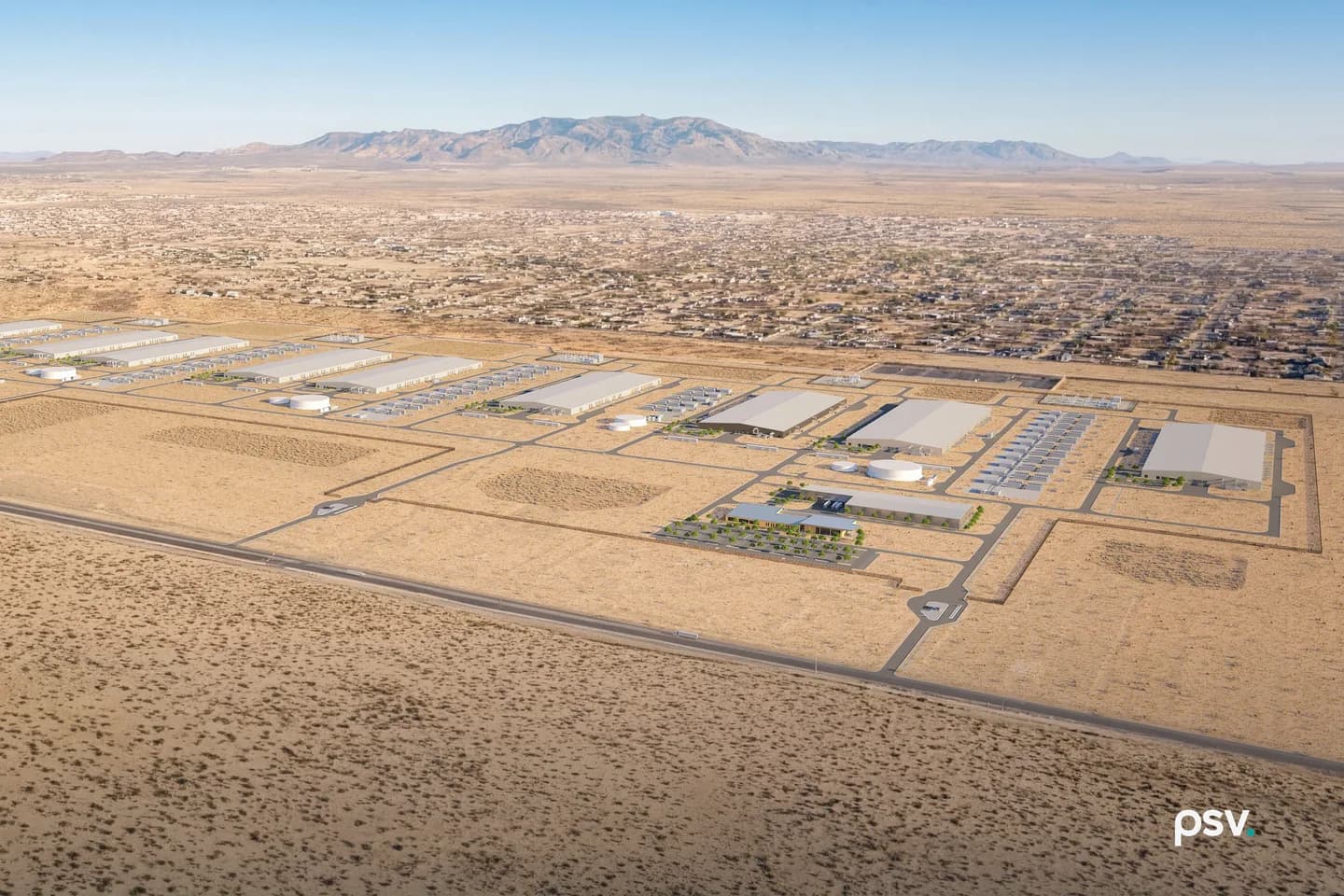
On July 28, 2026, from a Menlo Park and New York dateline, Meta and BlackRock announced a venture to develop and own a data center campus in El Paso, Texas, with 1 gigawatt of compute capacity and operations expected to begin in 2028. The release says funds managed by BlackRock will own an 80 percent interest in the venture while Meta retains the remaining 20 percent, that total development costs are approximately $14 billion, and that at financial close Meta will contribute venture land and construction-in-progress assets valued at approximately $2.3 billion while BlackRock makes a cash contribution of approximately $4.9 billion. A portion of BlackRock’s investment, the release says, will be funded with proceeds from a $12.5 billion debt financing. On the lease, the release says: “The leases have a four-year initial term with four options to extend, providing Meta with long-term flexibility over a potential 20-year term.” Mark Zuckerberg is quoted saying the partnership “allows us to move faster and at greater scale.” Larry Fink is quoted on the strength and scale of BlackRock’s combined capabilities with GIP and HPS.
Two days later Meta filed its Form 10-Q for the quarter ended June 30, 2026, and the filing states the same transaction differently. Its subsequent-event note says Meta entered an exclusivity agreement in July 2026 to co-develop the El Paso campus through a venture in which it would hold a 20 percent membership interest, subject to the execution of definitive agreements and customary closing conditions, with closing expected in the third quarter of 2026. Meta estimates it will contribute approximately $2.3 billion of held-for-sale assets net of liabilities, consisting mostly of construction in progress and land, and receive a one-time distribution of approximately $1 billion. Then the sentence the press release never uses: “We will also provide residual value guarantees with a maximum aggregate exposure of approximately $13 billion.” The filing also shows the asset was staged for this months ago. In March 2026 Meta approved a plan to dispose of data center assets with a carrying value of $1.48 billion, and as of June 30 held-for-sale assets stood at $2.03 billion net, including $1.27 billion of goodwill reclassified out of the Family of Apps segment. The two records do not conflict, but they lead with different facts. The release leads with a potential 20-year term. The filing leads with a guarantee.
Why a CRE operator should care
Strip the names off and this is a credit tenant structure with a residual value guarantee, run at gigawatt scale. Title sits with a fund. The tenant’s committed lease term is four years, and the extensions are options rather than obligations. The residual is guaranteed back to the venture by that same tenant, and $13 billion of guarantee against approximately $14 billion of total development cost computes to roughly 93 percent of the cost of the asset. What the fund is underwriting, in economic substance, is a corporate credit exposure wearing a real estate title. That matters the moment one of these trades shows up in a comp set. A hyperscale campus that changes hands at a stated price, with a stated ownership split, is not evidence of what hyperscale campuses are worth if the seller guaranteed the residual on the way out. Read the guarantee before you read the cap rate.
The same filing shows the fuller version of the structure, and its numbers are larger. Meta holds a 20 percent membership interest in a venture entered into in October 2025 to co-develop a data center campus in Louisiana, which is the state where Meta’s Hyperion campus in Richland Parish sits, though the filing itself does not name the campus. The parties committed to fund their pro rata share of approximately $27 billion in total estimated development costs. Meta’s leases there commence in 2029 with an aggregate initial lease commitment of approximately $12.31 billion, and again each leased property carries an initial four-year term with renewal options to a total of up to 20 years. The residual value guarantee threshold is approximately $28 billion and decreases over time, which computes to about 104 percent of the estimated development cost of the campus. Meta states it is not the primary beneficiary and does not consolidate the entity. Its equity investment carries at $2.92 billion while its disclosed maximum exposure to loss is $46.03 billion, roughly 15.8 times the carried equity. The most useful line for a real estate reader is the one explaining why Meta does not consolidate: the activity determined to most significantly affect the venture’s economic performance is remarketing the campus, including negotiations with future lease tenants and individual property sales. A leasing and valuation judgment is holding up the accounting conclusion.
The workflow PSV would run on a venture structure
Build a venture-structure file from primary records rather than from press releases. The inputs are specific: the 10-Q and 10-K notes on non-marketable equity investments and variable interest entities, the subsequent-event notes, the company’s own press release, county appraisal and permit records for the site, utility and public service commission filings on the load, and the venture’s debt documents when they surface. An AI assistant reads each record and returns a cited structure memo per venture with a fixed set of fields: membership percentage, total estimated development cost, lease commencement date, initial lease term, renewal options, aggregate initial lease commitment, residual value guarantee threshold and whether it decays, the consolidation conclusion and the stated rationale for it, maximum exposure to loss, and what changed against the prior quarter. Every figure carries the filing and note it came from, and any number that appears only in a press release is tagged as a company statement rather than a filed figure.
The reviewer is the capital markets lead working with counsel, and the approval gate is explicit: no hyperscale transaction enters a comp set, and no joint venture term sheet gets countered, on a model summary alone. The same pass produces the questions a human then asks. Did the reported sale carry a residual value guarantee, and at what threshold. Does that threshold decay, and on what schedule. Is the committed term the four years in the filing or the twenty years in the release. Who holds remarketing rights, and who chooses between re-tenanting the campus and selling it in pieces. Those four answers change the character of the trade more than the headline price does.
What should remain human-owned
The operator read
Finish with the judgment call.
The reported facts are above. Enter your email for PSV's operator conclusion and a year of access to every newsroom brief.
Free. No card. Privacy policy. Unsubscribe anytime.
 by PSVLive
Build the workflow behind this analysis. Train with the operators doing it.
Real deal files, live builds, and production-ready CRE AI workflows inside the CRE AI Institute.











Clear answers
Common questions about Meta BlackRock El Paso data center venture
What did Meta and BlackRock announce about the El Paso data center?
On July 28, 2026 Meta and BlackRock announced a venture to develop and own a data center campus in El Paso, Texas with 1 gigawatt of compute capacity, expected to begin operating in 2028. Funds managed by BlackRock will own 80 percent of the venture and Meta will retain 20 percent. Meta’s press release puts total development costs at approximately $14 billion, with Meta contributing land and construction-in-progress assets valued at approximately $2.3 billion at financial close and BlackRock making a cash contribution of approximately $4.9 billion, a portion of which is funded with proceeds from a $12.5 billion debt financing. Meta’s Form 10-Q for the quarter ended June 30, 2026 describes the same transaction as an exclusivity agreement subject to definitive agreements and customary closing conditions, with closing expected in the third quarter of 2026, and adds that Meta will receive a one-time distribution of approximately $1 billion.
What is the residual value guarantee in the Meta BlackRock venture?
Meta’s Form 10-Q states that on the El Paso venture it will provide residual value guarantees with a maximum aggregate exposure of approximately $13 billion. A residual value guarantee means that if Meta terminates or does not renew a lease, and certain other conditions are met, Meta pays the shortfall between the property’s fair value at that time and the guaranteed threshold. Against total development costs of approximately $14 billion, a $13 billion guarantee computes to roughly 93 percent of the cost of the asset, which is PSV’s own computation from the filed and released figures. Meta states that residual value guarantee payments are not probable and that no liability has been recorded, which is Meta’s judgment rather than a PSV finding.
How long is Meta’s lease on the El Paso data center campus?
The press release says the leases have a four-year initial term with four options to extend, which it frames as long-term flexibility over a potential 20-year term. The committed term and the potential term are different facts. Meta’s Form 10-Q describes the same structure on its Louisiana campus venture, where each leased property carries an initial four-year lease term with options to renew for a total lease period of up to 20 years, and where the aggregate initial lease commitment is approximately $12.31 billion against approximately $27 billion of total estimated development costs. Because renewals are options rather than obligations, the four-year figure is the committed term and the 20-year figure is the ceiling if every option is exercised.
Primary source record
These records support the reported facts in this brief. PSV’s CRE workflow interpretation and test plan are original analysis.
Topics
Related PSV analysis
CRE AI NEWS
Meta’s $50B Hyperion Expansion: The CRE Read on a 5 GW Campus
Meta says its Richland Parish campus will reach about 10 million square feet and 5 gigawatts, with more than $50 billion committed. The durable CRE signal is what a commitment this size does to land, power, housing, and industrial demand around it, and which documents actually move value.
CRE CAPITAL NEWS
Microsoft Says Its Data Centers Last 25 Years: The CRE Read
On its July 29 earnings call, Microsoft told investors it is extending the estimated useful lives of its datacenters and office buildings from 15 years to 25 years, effective with fiscal 2027, and that more of its future datacenter leases will therefore shift from finance leases to operating leases. The reported capital expenditure number falls to about $175 billion. The commitment behind it does not.
CRE CAPITAL NEWS
Alphabet Raises AI Spend to $205B: The CRE Read on the Capex Floor
Alphabet reported second-quarter results on July 22 and told investors it now expects to spend $195 billion to $205 billion on capital expenditures this year, up from $180 billion to $190 billion. Filed quarterly capex hit a record $44.9 billion, roughly double a year earlier, and free cash flow turned negative. Management says about 40 percent of the spend goes to data centers and networking. For real estate, that number is the demand floor under the entire data center thesis.
Related guides
Cornerstone PSV guides on the workflows in this article.
AI for Real Estate Investing
How commercial real estate investors use AI across the deal lifecycle: sourcing, underwriting, due diligence, and asset management, grounded in real documents.
Read the guideEnterprise AI for Institutional CRE
PSV trains your whole firm on Claude and ChatGPT, builds your agents live inside your own environment, and stays on as your embedded AI team. What we build for you is yours.
Read the guideWhat is CRE AI?
The definitional guide to commercial real estate AI: the core workflows, how it differs from a chatbot, and how to learn it.
Read the guideby PSVLiveYou read the operator view. Now learn to run the workflow.
The AI MBA for commercial real estate: the workflows these briefs describe, taught end to end on real deal files, with live builds and a community of CRE operators.