CRE POLICY NEWS
Virginia Proposes $2.5M Penalty on Microsoft Data Center
Virginia’s Department of Environmental Quality has proposed a consent order requiring Microsoft to pay a $2,499,000 civil charge after its Leesburg data center ran 62 emergency diesel engines for seven days during a 2025 substation failure and exceeded its permitted fuel and emissions limits. Public comment runs through October 14, 2026. All but $99,000 goes to air quality monitoring for data center areas.
Direct answer
Direct answer to Microsoft Leesburg data center fine
A week without grid power turned into a year out of compliance. DEQ’s order says one substation failure pushed Microsoft’s Leesburg campus past its annual fuel cap and its limits for nitrogen oxides, volatile organic compounds and particulate matter, and kept it there until July 2026. For owners, lenders and tenants, the lesson is that backup generation is capped by an air permit, and utility reliability is now a permit risk.
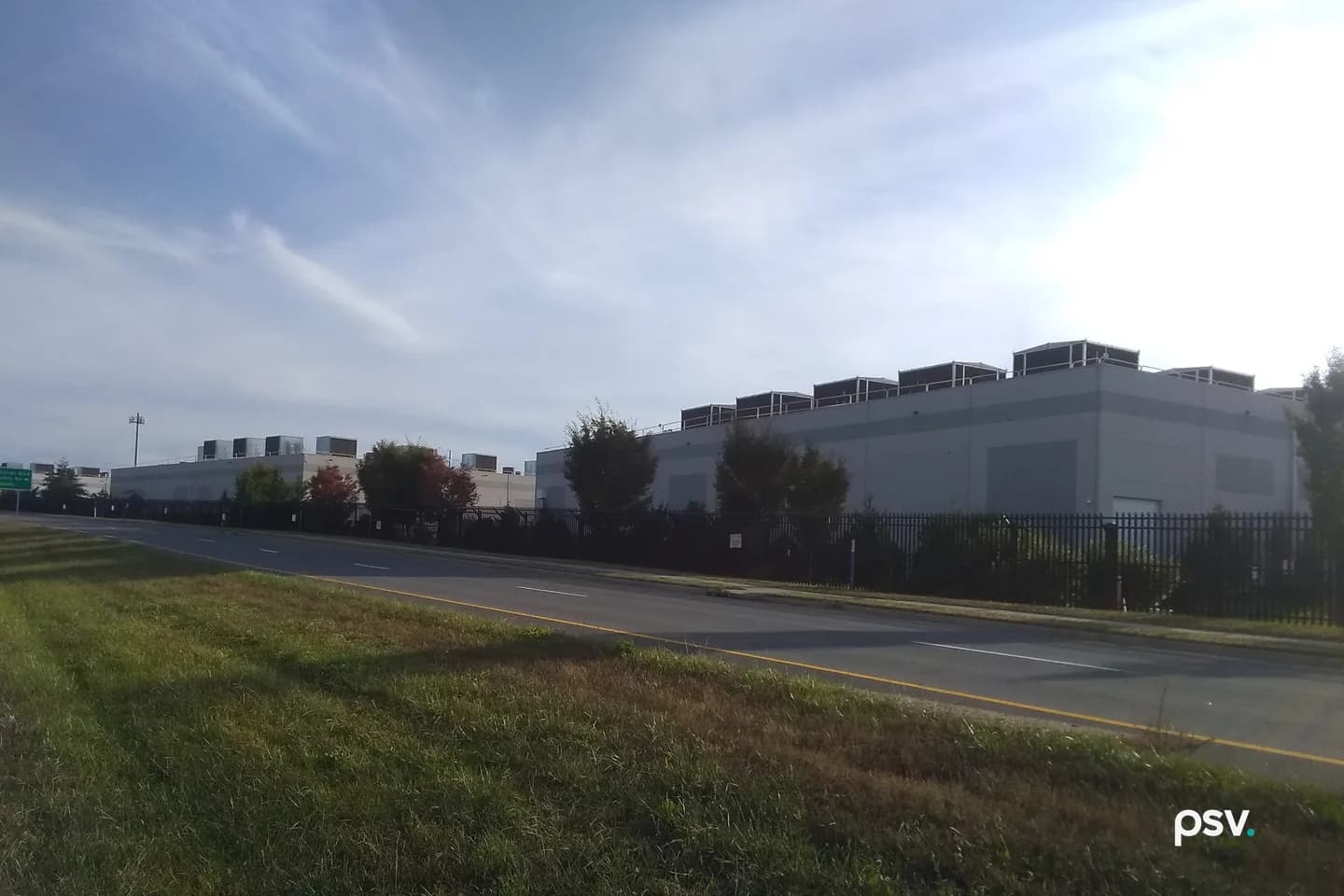
What Virginia DEQ proposed, and what the order says
On September 14, 2026, the Virginia Department of Environmental Quality opened a 30-day public comment period on a proposed enforcement action against Microsoft Corporation “for violations of the Virginia Air Pollution Control Law” at its Leesburg (IAD01-02-03-04-05) Data Center, with written comments accepted through October 14. The proposed order by consent, Registration No. 74220, sets out the facts. Microsoft owns and operates the data center at 19515 Compass Creek Parkway in Leesburg under a synthetic minor air permit issued March 7, 2025, which allows 3 diesel fire pumps and 104 diesel emergency generator sets. On June 27, 2025, Microsoft told DEQ that a catastrophic failure of the Cochran Mill Electrical Substation had cut all grid power to the site; on July 1 it reported the facility was back on grid power. The order says the facility ran 62 emergency engines for the seven-day event. Permit condition 11 caps the engines and fire pumps combined at 655,850 gallons of fuel per year, measured as a rolling 365-day total, and condition 13 caps annual emissions at 94.67 tons of nitrogen oxides, 40.62 tons of carbon monoxide, 6.86 tons of volatile organic compounds and 3.34 tons each of PM10 and PM2.5.
DEQ issued Notice of Violation ANRO003265 on August 21, 2025. The order records that Microsoft argued DEQ’s estimates used a worst-case method, ran stack tests to produce better emission factors, and submitted new data on July 9 and July 28, 2026. That data, the order says, still showed the facility exceeded its fuel limit and its limits for nitrogen oxides, VOCs, PM10 and PM2.5, with the highest rolling totals between October 4, 2024 and October 3, 2025, and returned below all limits as of July 9, 2026. Carbon monoxide, cited in the original finding, drops out of the final list. Microsoft agrees to a civil charge of $2,499,000: $99,000 in cash within 30 days, and $2,400,000 through a supplemental environmental project that funds DEQ’s purchase of a mobile air monitoring station, about $1.5 million, and 45 air quality sensors, about $900,000, for areas with high data center concentrations. Microsoft admits jurisdiction and agrees not to contest the findings but does not admit them. The order also records Microsoft’s statement that it spent about $31 million on a dual-feed power system at the site, a company claim DEQ repeats rather than verifies. The order PSV read is unsigned by DEQ; WJLA and Virginia Business report the underlying emission totals, about 102 tons of nitrogen oxides, 11.599 tons of VOCs and 5.158 tons of particulate matter, which do not appear in the order. Virginia Business puts fuel use at about 1.2 million gallons and calls the penalty the largest DEQ has assessed a data center; PSV has not seen a DEQ record for either figure.
Why a generator permit is a real estate document
The arithmetic is the story. If the reported 1.2 million gallons is right, one week of outage burned about 1.8 times the site’s entire annual fuel allowance, and because the cap is a rolling 365-day sum, the facility stayed over it for roughly a year after the grid came back. Nitrogen oxides, the pollutant the permit allows the most of, ran about 8 percent over its cap on the reported total; VOCs ran about 69 percent over and particulate matter about 54 percent over. None of that required a mechanical failure at Microsoft. The trigger, by the order’s account, was a substation outside the fence. The practical read for anyone who owns, leases or lends against a backup-powered building is that two documents govern the same generators and they point in opposite directions. The lease or the service commitment says run them as long as the grid is down. The air permit says run them only until the fuel budget is spent. Most of the time the second number is so far away that nobody tracks it. A multi-day outage is exactly when it binds.
The same public notice list shows how wide the spread of outcomes is. DEQ opened comment on August 21 on a proposed order against Iron Mountain Information Management LLC for a data center at 11680 Hayden Road in Prince William County, permitted for 140 emergency diesel gen-sets, after stack tests on two Cummins units measured 62.5 and 56.2 pounds per hour of nitrogen oxides against a 49.49 limit and two other units did not complete the required test runs. That order carries a civil charge of $13,905. Microsoft’s is about 180 times larger, by PSV’s arithmetic, because the violation was an annual cap blown by sustained runtime rather than a test result on individual engines. Where the money goes matters too. DEQ’s Data Center Air Monitoring Project, funded by an EPA grant, placed its first sensors in Loudoun County’s data center alley in February 2026 and describes a first phase of seven sensors, with a mobile station to follow only if readings warrant it. Microsoft’s project would fund 45 more sensors and that mobile station, which means the monitoring network that could inform future permitting in Northern Virginia would grow several times over on one operator’s penalty.
The workflow PSV would run on a backup-power portfolio
The useful artifact is a generator permit headroom register, one row per permitted facility a firm owns, leases or finances. Inputs: each site’s DEQ air permit, pulled from the agency’s issued permits for data centers; the permit’s fuel and emissions conditions; the operator’s daily fuel logs and runtime records; the utility service configuration, single or dual feed, and the substation behind it; the lease or service level terms that require backup operation; and any notice of violation or consent order on the public notice list. Output: for each site, the rolling 365-day fuel total against the cap, the remaining headroom expressed as days of full-load runtime at the engine count the site would actually start, the date the oldest heavy-use days roll off, and a flag wherever the headroom is shorter than the longest outage the lease obligates the owner to ride through. Every figure cites a permit condition or a log entry.
The reviewer is the asset manager with environmental counsel on the permit terms, and the approval gate is simple: no acquisition model, loan sizing or lease renewal treats a backup-powered site as fully resilient until someone has checked its permit headroom against its contractual runtime obligation. An assistant is well suited to the extraction. This brief rests on a nine-page order and a one-page notice, and the numbers that matter were a fuel cap in condition 11, an emissions table in condition 13 and a compliance date in paragraph 10. Reading every permit in a portfolio for those same fields, keeping the rolling totals current and diffing each new public notice against the holdings list is exactly the volume work to hand off. What it should not do is calculate emissions from runtime on its own authority, since this case turned on which emission factors were right, or decide whether an outage is a force majeure event. PSV ran no model on these records, tested no product, and promises no compliance or cost outcome.
What stays with a person, and what the record leaves open
The operator read
Finish with the judgment call.
The reported facts are above. Enter your email for PSV's operator conclusion and a year of access to every newsroom brief.
Free. No card. Privacy policy. Unsubscribe anytime.
 by PSVLive
Build the workflow behind this analysis. Train with the operators doing it.
Real deal files, live builds, and production-ready CRE AI workflows inside the CRE AI Institute.











Clear answers
Common questions about Microsoft Leesburg data center fine
Why is Virginia fining Microsoft over its Leesburg data center?
Because the facility exceeded its air permit. Virginia DEQ’s proposed consent order says a catastrophic failure of the Cochran Mill Electrical Substation cut grid power to Microsoft’s data center at 19515 Compass Creek Parkway from June 27 to July 1, 2025, and the site ran 62 emergency diesel engines for the seven-day event. That pushed it past its permit’s 655,850-gallon annual fuel cap and its limits for nitrogen oxides, volatile organic compounds, PM10 and PM2.5, with the highest rolling totals between October 4, 2024 and October 3, 2025. DEQ says the facility was back under all limits as of July 9, 2026. Microsoft agrees not to contest the findings but does not admit them.
How much is the Microsoft data center penalty, and where does the money go?
The proposed civil charge is $2,499,000. Microsoft pays $99,000 in cash within 30 days of the order taking effect, and satisfies $2,400,000 through a supplemental environmental project: funds for DEQ to buy a mobile air monitoring station, about $1.5 million, and 45 air quality sensors, about $900,000, for areas with high data center concentrations, as part of DEQ’s Data Center Air Monitoring Project. Anything left over goes to the Virginia Environmental Emergency Response Fund. Virginia Business calls it the largest penalty DEQ has assessed a data center; for comparison, DEQ’s proposed order against an Iron Mountain data center in Prince William County in August carried a $13,905 civil charge.
Is the Microsoft consent order final?
No. DEQ opened public comment on September 14, 2026 and accepts written comments through October 14, 2026. The order takes effect when signed by both DEQ’s Director or designee and Microsoft; the version DEQ posted is unsigned on DEQ’s side, and Virginia Business reports a Microsoft executive signed on September 3. The order resolves only the violations it lists and Notice of Violation ANRO003265, and DEQ reserves the right to act on any other or later violations.
Primary source record
These records support the reported facts in this brief. PSV’s CRE workflow interpretation and test plan are original analysis.
- Virginia Department of Environmental Quality, proposed Enforcement Action, Order by Consent issued to Microsoft Corporation for Leesburg (IAD01-02-03-04-05) Data Center, Registration No. 74220 (source of the permit terms, the June 27 to July 1, 2025 outage, the 62 engines, the fuel and emission limits, NOV ANRO003265, the July 9, 2026 return to compliance, the $2,499,000 civil charge and the supplemental environmental project)
- Virginia Department of Environmental Quality, public notice, “Microsoft Corporation; Loudoun County, VA. Comment period: September 14, 2026 – October 14, 2026”
- Virginia Department of Environmental Quality, proposed Order by Consent issued to Iron Mountain Information Management LLC, Registration No. 74112, comment period August 21 to September 20, 2026 (source of the $13,905 civil charge and stack test results)
- Virginia Department of Environmental Quality, Data Center Air Monitoring Project
- WJLA, reporting on the proposed Microsoft penalty, September 15, 2026 (source of the reported emission totals attributed to DEQ)
- Virginia Business, “Virginia DEQ fines Microsoft $2.5M over Leesburg data center,” September 16, 2026 (source of the reported fuel volume and the largest-penalty characterization)
- Vahurzpu, “AWS servers in Ashburn, group 1, 2020-10-09 1,” Wikimedia Commons, CC BY-SA 4.0 (lead photograph source)
Topics
Related PSV analysis
CRE POLICY NEWS
Loudoun Votes to Pause New Data Center Applications
Loudoun County’s Board of Supervisors voted 7-1-1 on September 15 to direct staff to draft a resolution pausing new data center applications for up to 12 months while it rewrites its data center zoning rules, over a staff recommendation to take no action. A final vote is reported for October. The Planning Commission is not expected to take up the new rules until February 2027.
CRE POLICY NEWS
EPA Would Let a Data Center Break Ground Before Its Air Permit
Two EPA proposals now sitting in the docket would change data center permitting from opposite ends: one narrows what counts as starting construction, so site work could begin before an air permit issues, and the other drops the federal floor requiring public notice on minor source permits. PSV read both rules. Neither is final, and neither says “data center” once.
CRE CAPITAL NEWS
Vertiv Agreed to Pay $1.45 Billion for the Power Blueprint
Vertiv Holdings Co filed an 8-K on Wednesday disclosing that its Vertiv Corporation subsidiary agreed on September 1 to acquire Utility Innovation Holdings, Inc., which operates as UtilityInnovation Group, for approximately $1.45 billion in cash at closing plus up to $1.15 billion more if earnout targets are met. UIG designs microgrids and behind-the-meter power architecture for data centers. Vertiv says the point is time to power. PSV read the filing and the merger agreement behind it.
Related guides
Cornerstone PSV guides on the workflows in this article.
by PSVLiveYou read the operator view. Now learn to run the workflow.
The AI MBA for commercial real estate: the workflows these briefs describe, taught end to end on real deal files, with live builds and a community of CRE operators.