CRE AI NEWS
A 400 MW Data Center Pitched for the Navy’s NAVWAR Campus
Manchester Financial Group, the Navy’s selected developer for the 70.3-acre NAVWAR Old Town Campus in San Diego, has explored a 400 megawatt data center on the site, according to public records reported on October 15. The developer says no agreements are in place. Rep. Scott Peters said on October 16 that he opposes it.
Direct answer
Direct answer to NAVWAR data center
A site long planned for thousands of homes next to downtown San Diego is now being weighed for a data center the size of a small city’s load, and it sits on federal land the city cannot permit. Nothing is decided: the Navy says it will publish a Revised Draft EIS in 2027, and the developer says it has no tenant and no agreement. Watch that EIS.
What the records show, and what was reported this week
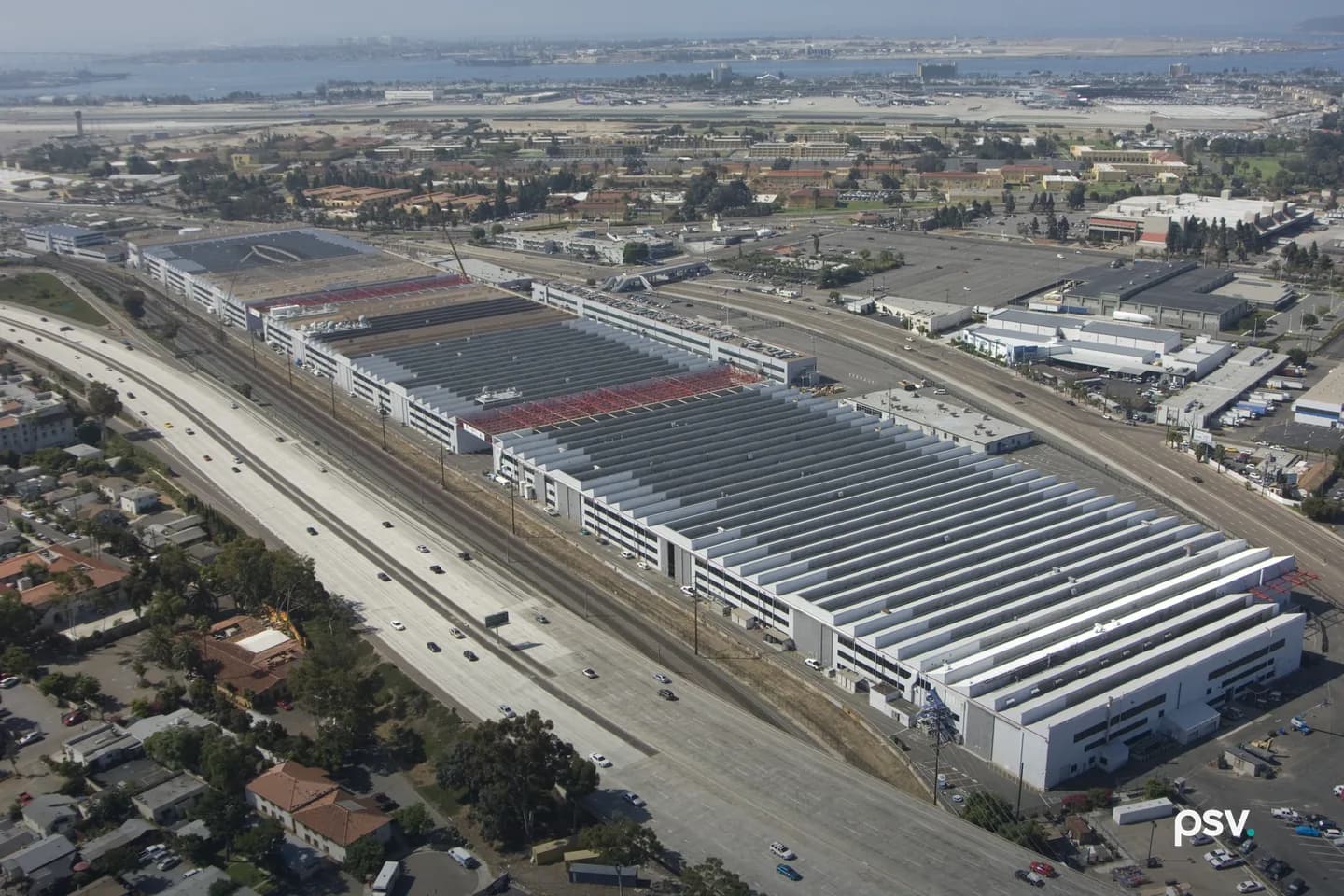
The Navy’s own project records set the frame. Naval Information Warfare Systems Command, NAVWAR, sits on the roughly 70.3-acre Old Town Campus of Naval Base Point Loma, between Pacific Highway and Interstate 5 in San Diego. On January 9, 2024 the Navy selected Manchester/Edgemoor LLC as potential master developer and entered exclusive negotiations, naming Clark Construction Group as design-builder, HKS for the government facilities, HOK as master planner for the private development and Dealy Development for entitlements. In an update dated October 8, 2026, the Navy says it is updating the 2021 Draft Environmental Impact Statement with site-specific details from Manchester/Edgemoor, expects to publish a Revised Draft EIS in 2027, and will issue a Final EIS and Record of Decision after public comment. Redevelopment, the Navy says, depends on it selecting a leasing alternative in that Record of Decision.
What changed this week is reported, not filed. On October 15, Voice of San Diego reported, citing correspondence with San Diego Community Power, that Manchester Financial Group had explored a 400 megawatt data center on the site, phased in 100 megawatt increments every six months, with no committed tenant, a power quote of up to $0.11 per kilowatt hour, and on-site backup power that could include natural gas. In an email reported by KPBS on October 16, Manchester president and CEO Ted Eldredge said a data center is one of several uses under consideration, alongside a hotel, medical center, university campus, defense industry campus and life science facility, and that “there are no negotiations underway and no agreements in place.” The same day, Rep. Scott Peters, whose district includes the campus, said he opposes a data center there. PSV has not seen the underlying correspondence, and the Navy’s public records do not mention a data center.
Why a CRE operator should care
This is a land-use contest over a 70.3-acre infill parcel beside Interstate 5, and it has unusual rules. KPBS reports that because the land is federally owned, the project would not need city of San Diego permits, and because the Navy would trade a ground lease for a new NAVWAR facility rather than seek funding, it needs no congressional appropriation. That leaves the Navy’s NEPA process and the utility as the real gates. The project summary the team gave the city in 2024, as reported, described thousands of apartments, hotels and retail, so the residential and hospitality supply that nearby owners have been underwriting for years is now uncertain in both directions.
The scale is the second signal. By PSV arithmetic, 400 megawatts at full continuous load is 9,600 megawatt hours a day, which at the top of the reported $0.11 quote computes to about $1.06 million of energy a day, consistent with the reported estimate of more than $1 million. Four 100 megawatt phases at six-month intervals would put full load about 18 months after the first phase energizes. A developer that, by Eldredge’s own reported account, has never built a data center is pricing power on a site next to a downtown, which is the pattern behind the speculative interconnection requests utilities and regulators across the country are now trying to screen out.
The workflow PSV would run on a federal land data center claim
The tool is a site-claim ledger built for federal and military land. Inputs are the agency’s project site and announcements, every Federal Register notice for the environmental review, the Draft EIS alternatives, the developer solicitation record, the utility’s public interconnection or large-load filings, and dated press statements from the developer and elected officials. Each claim, a megawatt figure, a use, a schedule, a tenant, goes in one row with its source, whether it is filed, quoted or reported, and the decision it still needs, such as a Record of Decision, a lease or a utility study.
The output is a one-page status memo for any asset within a mile of the site: what is decided, what is proposed, and the next public date that could change it, here the Revised Draft EIS comment period in 2027. The reviewer is the asset manager or acquisitions lead for the nearby holding, and the approval gate is that a reported use never moves a rent, absorption or exit assumption until it appears as an alternative in the Navy’s environmental record.
What stays with a person, and what the records leave open
The operator read
Finish with the judgment call.
The reported facts are above. Enter your email for PSV's operator conclusion and a year of access to every newsroom brief.
Free. No card. Privacy policy. Unsubscribe anytime.
 by PSVLive
Build the workflow behind this analysis. Train with the operators doing it.
Real deal files, live builds, and production-ready CRE AI workflows inside the CRE AI Institute.











Clear answers
Common questions about NAVWAR data center
Is a data center being built at the NAVWAR campus in San Diego?
Not as of October 18, 2026. Voice of San Diego reported on October 15 that Manchester Financial Group, the Navy’s selected developer, had explored a 400 megawatt data center on the 70.3-acre Old Town Campus. Manchester’s CEO said a data center is one of several uses under consideration and that there are no negotiations underway and no agreements in place. The Navy’s public records do not mention a data center.
Who decides what gets built on the NAVWAR Old Town Campus?
The Navy. The land is federally owned, so the project would not need city of San Diego permits. The Navy says it is updating its 2021 Draft Environmental Impact Statement with details from Manchester/Edgemoor, expects to publish a Revised Draft EIS in 2027, and will issue a Final EIS and Record of Decision after public comment. Redevelopment depends on the Navy selecting a leasing alternative in that Record of Decision.
How much power would a 400 MW data center use?
At full continuous load, 400 megawatts is 9,600 megawatt hours a day by PSV arithmetic. At the top of the reported San Diego Community Power quote of $0.11 per kilowatt hour, that computes to about $1.06 million of energy a day. The utility’s spokesperson said the quote excluded other charges and fees, and the reported plan phased the load in 100 megawatt steps every six months.
Primary source record
These records support the reported facts in this brief. PSV’s CRE workflow interpretation and test plan are original analysis.
- U.S. Navy, Old Town Campus Revitalization project website, home page and Announcements (October 8, 2026 update: Manchester/Edgemoor, Revised Draft EIS expected in 2027, Final EIS and Record of Decision)
- U.S. Navy, Old Town Campus Revitalization, Developer Solicitation (January 9, 2024 selection of Manchester/Edgemoor LLC and the named team)
- Department of the Navy, Notice of Virtual Public Meetings for the Draft Environmental Impact Statement for the Navy Old Town Campus Revitalization, Federal Register, May 14, 2021
- U.S. Navy, Old Town Campus Revitalization, Media image gallery (source of the lead aerial photograph)
- Voice of San Diego, “Manchester Group Pitches Massive Data Center at the NAVWAR Site,” October 15, 2026 (reporting: the 400 megawatt figure, phasing, power quote and correspondence with San Diego Community Power)
- KPBS, “San Diego lawmakers oppose data center concept at NAVWAR campus,” October 16, 2026 (reporting: the Eldredge email statement, Rep. Peters’ remarks, permits and appropriation)
Topics
Related PSV analysis
CRE POLICY NEWS
Data Center Watch Q2 2026: $68B of Projects Disrupted
Data Center Watch, a research project of 10a Labs that tracks local opposition to data center development, says at least 45 U.S. projects worth nearly $68 billion were blocked or delayed by local opposition from April through June 2026. That is below its Q1 count of 75 projects and about $130 billion, but the first half of 2026 now exceeds its full-year 2025 total.
CRE AI NEWS
Glendale Advances Project Eagle, a Data Center With Its Own Gas Plant
Glendale’s Planning Commission heard ZON26-05 on September 24: a rezoning of about 160 acres next to Luke Air Force Base for three data centers and eighteen 72-foot natural gas turbines that would power the campus until APS builds a substation, anticipated in 2030. Local press reported a 4-2 vote to recommend it. The City Council votes on October 27.
CRE POLICY NEWS
Cheyenne and Arapaho Citizens Vote a Three-Year Data Center Moratorium on Tribal Land
At their annual Tribal Council meeting in Concho, Oklahoma on October 3, citizens of the Cheyenne and Arapaho Tribes voted on Resolution 100326ATC-004, a moratorium on building new data centers on tribal land. News 9 reported it passed 261 to 83. The resolution says the tribal administration was considering a data center, and that non-disclosure agreements are not in the Tribes’ best interests.
Related guides
Cornerstone PSV guides on the workflows in this article.
Claude for Real Estate Developers
The ground-up developer field guide: site selection through IC memo, built on a real development deal.
Read the guideWhat is CRE AI?
The definitional guide to commercial real estate AI: the core workflows, how it differs from a chatbot, and how to learn it.
Read the guideby PSVLiveYou read the operator view. Now learn to run the workflow.
The AI MBA for commercial real estate: the workflows these briefs describe, taught end to end on real deal files, with live builds and a community of CRE operators.