CRE POLICY NEWS
Prince William Ends By-Right Data Center Development
Prince William County’s supervisors voted September 22 on DPA2026-00006, a zoning text amendment that closes the county’s Data Center Opportunity Zone Overlay District to any future expansion and routes new data centers outside it through the special use permit process. County staff put the revised overlay at roughly 214 parcels and 3,504 acres, down about 6,194 acres, or approximately 64 percent.
Direct answer
Direct answer to Prince William County by-right data center
By-right data center development in Prince William is finished except on a defined list of parcels that already hold approvals or filed in time. The county’s own staff report shows 212 of about 214 qualifying parcels, and 3,469 of 3,504 acres, come from just two of the five pathways: an approved final plan, or an application already accepted for quality control review. Everything else now needs a board vote.
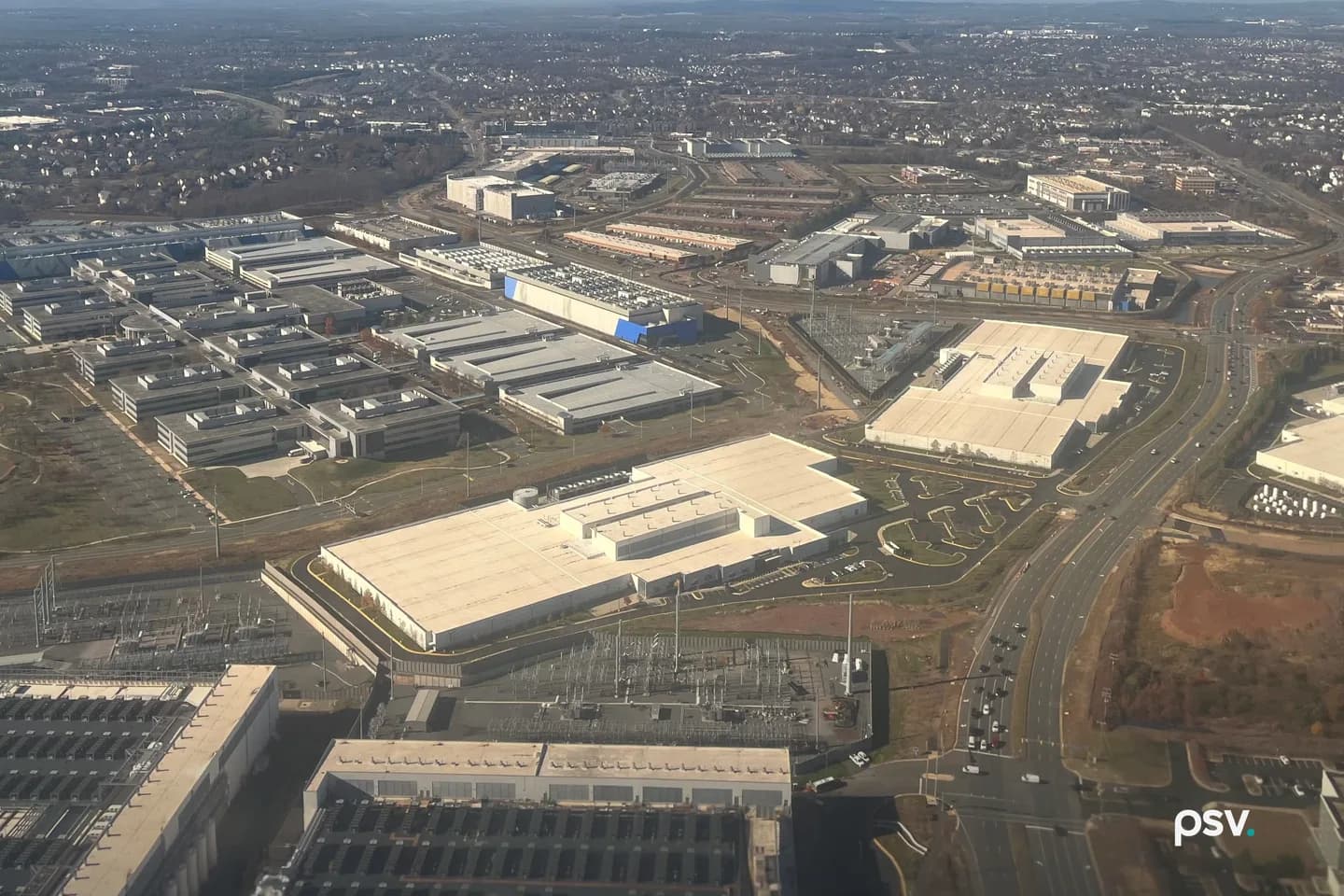
What the board took up, and what the county record establishes
The item before the Prince William Board of County Supervisors at 2:00 p.m. on September 22, 2026, at 1 County Complex Court, was DPA2026-00006, a zoning text amendment to the Data Center Opportunity Zone Overlay District, County Code Sec. 32-509.01 et seq., with corresponding map amendments. The county’s record traces a stop-start year. The board initiated a data center text amendment on March 3, 2026 by Resolution No. 26-125. On May 19 it issued Directive DIR 26-11 telling staff to pause that work and postpone the Planning Commission hearing then set for June 10, to allow time to refine the draft against community, industry and board feedback. On June 9 the board adopted Resolution No. 26-374, initiating a revised amendment and rescinding the March initiation outright. The Planning Commission held its public hearing on September 9 and voted to recommend approval, adding two changes of its own: extend the eligibility period in Sec. 32-509.02(2)(e) from 90 days to 120 days after adoption, and require a minimum 500-foot setback between data center structures and existing homes and schools for development qualifying under that section.
The amendment restructures approval rather than banning a use. Under the revised ordinance the overlay is closed to any future expansion and functions, in the Planning Office’s own description, as a limited eligibility boundary recognizing a defined set of qualifying properties. Only parcels inside it may still use the by-right data center provisions. Outside it, new data center proposals in the B-1, O(L), O(H), O(M), O(F), M-1, M-2 and M/T districts, plus designated office or industrial land bays in the PBD and PMD districts, must go through the special use permit process and come before the board. Local outlets covering the hearing report that supervisors adopted the amendment unanimously with a 90-day transition rather than the Planning Commission’s recommended 120 days, and that parcels leaving the overlay include the Jiffy Lube Live venue, a school division site for a fourteenth high school, and the roughly 2,100-acre former Prince William Digital Gateway property. As of publication the county had not posted the adopted ordinance, an action summary or minutes, and its own project page still described the Planning Commission’s 120-day and 500-foot recommendations as the pending changes. The vote tally, the 90-day figure and the fate of the setback are therefore reported facts, not yet county records, and PSV flags them as such.
Why the eligibility list, not the acreage, is the story
The headline number is the shrinkage. Staff’s analysis, measured as of June 30, 2026, puts the proposed overlay at approximately 214 qualifying parcels totaling roughly 3,504 acres, a reduction of about 6,194 acres, or approximately 64 percent, against the existing boundary. Those two figures sum to 9,698 acres, which computes to the roughly 9,700-acre overlay described in coverage of the hearing. But the composition matters more than the total. Of the 214 parcels, staff counted 1 meeting Criterion 1, approved proffers, covering 22 acres; zero meeting Criterion 2, an approved preliminary plan; 82 meeting Criterion 3, an approved final plan, covering 1,899 acres; 1 meeting Criterion 4, a final zoning determination, covering 12 acres; and 130 meeting Criterion 5, filed and accepted for quality control review, covering 1,570 acres. That is 212 of 214 parcels and 3,469 of 3,504 acres from two pathways, about 99 percent on either measure, by PSV’s arithmetic on the county’s figures.
Read that distribution and the practical rule falls out. Surviving by-right status in Prince William means one of two things: a final plan already approved, or paperwork already in the county’s queue. Criterion 5 is the larger by parcel count and it is a deadline, not a status, which is why the length of the transition period was the contested question at the hearing rather than the boundary itself. Each of the five pathways in Sec. 32-509.03(2) is written in the language of Virginia vested rights, requiring that the applicant relied in good faith on the approval and incurred extensive obligations or substantial expenses in diligent pursuit of the specific project. That construction is deliberate. The county’s Design and Construction Standards and Zoning Ordinance Advisory Committee asked staff in writing for a detailed explanation of what “extensive obligations or substantial expenses” means in thresholds and administration, and other written comments argued that anchoring eligibility to Virginia Code §§ 15.2-2307 and 15.2-2303.B, while keeping at least one district where new data centers may still be considered by special use permit, supports the ordinance’s legal defensibility by showing the county is not foreclosing the use entirely. The board amended under Virginia Code §§ 15.2-2285 and 15.2-2286.
The workflow PSV would run on a closed overlay
The artifact worth building is a parcel eligibility register, one row per Prince William parcel a firm owns, lends against, has optioned or is bidding, assembled from public records. Inputs: the DPA2026-00006 staff report with its Attachment C and Attachment D property lists and the eligibility map; the adopted ordinance and map once the county posts them; the county’s land management records for each application, with acceptance dates; and the parcel’s zoning district. Output: columns that decide something. The GPIN, and whether it appears on the adopted eligibility list at all. Which of the five criteria it claims, since Criterion 3 and Criterion 5 carry very different certainty. The acceptance date for any quality control filing, measured against the transition deadline the adopted ordinance actually sets. The zoning district, which determines whether a special use permit is even available outside the overlay. Evidence on file for the good-faith reliance and substantial-expense test, which is the column most registers would skip and the one most likely to be litigated. And a blank column for the 500-foot setback until the adopted text settles whether it survived. Every populated cell cites a page of a county record.
The reviewer is the development or acquisitions lead with land use counsel on the eligibility and vested-rights columns, and the approval gate is narrow: no valuation, bid, option exercise or loan sizing uses by-right status for a Prince William parcel until counsel has checked it against the adopted ordinance and the adopted map, not the June 30 draft. An assistant does the volume work well here. The staff report runs to seventy pages and its property attachments are long GPIN tables; extracting them, joining them to a portfolio, tracking a transition deadline and diffing the initiated text against staff’s recommended changes against the Planning Commission’s amendments is exactly the work to hand off. What it should not do is decide whether a given parcel satisfies the vested-rights test, predict how the county will administer the phrase, or treat hearing coverage as if it were the ordinance. PSV ran no model on this record, tested no product, and promises no entitlement, schedule or valuation outcome.
What stays with a person, and what the county has not published
The operator read
Finish with the judgment call.
The reported facts are above. Enter your email for PSV's operator conclusion and a year of access to every newsroom brief.
Free. No card. Privacy policy. Unsubscribe anytime.
 by PSVLive
Build the workflow behind this analysis. Train with the operators doing it.
Real deal files, live builds, and production-ready CRE AI workflows inside the CRE AI Institute.











Clear answers
Common questions about Prince William County by-right data center
Did Prince William County ban data centers?
No. The county changed the approval path. DPA2026-00006 closes the Data Center Opportunity Zone Overlay District to any future expansion, so only parcels that meet one of five eligibility criteria in Sec. 32-509.03(2) keep by-right data center rights. Outside the overlay, new data centers may still be proposed in the B-1, O(L), O(H), O(M), O(F), M-1, M-2 and M/T districts and in designated office or industrial land bays in the PBD and PMD districts, but they must go through the special use permit process and come before the Board of County Supervisors. Written comments in the county record note that keeping at least one district open to new data centers by special use permit supports the ordinance’s legal defensibility.
How much smaller is the Prince William data center overlay district?
County staff, measuring as of June 30, 2026, put the proposed overlay at approximately 214 qualifying parcels totaling roughly 3,504 acres, a reduction of about 6,194 acres, or approximately 64 percent. Those figures sum to 9,698 acres for the prior boundary, which computes to the roughly 9,700 acres described in coverage of the hearing. The staff report cautions that the maps were subject to change before the Planning Commission and Board hearings, and the county had not posted the adopted map when this brief published.
Which Prince William parcels keep by-right data center rights?
Almost all of them come from two of the five pathways. Staff counted 82 parcels meeting Criterion 3, an approved final plan, covering 1,899 acres, and 130 meeting Criterion 5, an application filed and accepted for quality control review, covering 1,570 acres. Only one parcel met Criterion 1 (approved proffers, 22 acres), none met Criterion 2 (approved preliminary plan), and one met Criterion 4 (a final zoning determination, 12 acres). That is 212 of about 214 parcels and 3,469 of 3,504 acres from two criteria, PSV’s arithmetic on the county’s counts. Each pathway also requires that the applicant relied in good faith and incurred extensive obligations or substantial expenses in diligent pursuit of the project.
Primary source record
These records support the reported facts in this brief. PSV’s CRE workflow interpretation and test plan are original analysis.
- Prince William County Planning Office, “DPA2026-00006: Data Center Opportunity Zone Overlay District (DCOZOD)” project page (source of the amendment’s purpose and framework, Resolution Nos. 26-125 and 26-374, the May 19, 2026 pause, the September 9, 2026 Planning Commission recommendation with the 120-day eligibility period and 500-foot setback, the closed-to-expansion boundary, the special use permit districts, and the September 22, 2026 Board public hearing notice)
- Prince William County Planning Commission, Staff Report and Resolution, DPA2026-00006, Zoning Text Amendment to the Data Center Opportunity Zone Overlay District, County Code Sec. 32-509.01 et seq. (source of the 214 qualifying parcels and 3,504 acres, the 6,194-acre and 64 percent reduction as of June 30, 2026, the per-criterion parcel and acreage counts, the text of the five eligibility pathways in Sec. 32-509.03(2), Directive DIR 26-11, the DORAC written comments on “extensive obligations or substantial expenses” and legal defensibility, and the Virginia Code §§ 15.2-2285 and 15.2-2286 amendment authority)
- Prince William County Zoning Administration, Overlay Districts
- Prince William Times, “BREAKING: Prince William County moves to end by-right data center development,” September 22, 2026 (source of the reported unanimous vote, the 90-day transition adopted over the Planning Commission’s 120 days, and the parcels reported removed from the overlay including Jiffy Lube Live, the school division high school site and the former Digital Gateway property)
- WTOP, “Prince William County supervisors to take landmark vote on data centers Tuesday,” September 2026 (source of the reported grace-period debate and Supervisor Tom Gordy’s statement on power limitations and application activity)
- Theodore Christopher, aerial view of data centers intermingled with other commercial buildings in Loudoun County, near Ashburn, Virginia, Wikimedia Commons, CC0 (lead photograph source)
Topics
Related PSV analysis
CRE POLICY NEWS
Loudoun Votes to Pause New Data Center Applications
Loudoun County’s Board of Supervisors voted 7-1-1 on September 15 to direct staff to draft a resolution pausing new data center applications for up to 12 months while it rewrites its data center zoning rules, over a staff recommendation to take no action. A final vote is reported for October. The Planning Commission is not expected to take up the new rules until February 2027.
CRE POLICY NEWS
A 22 Million SF Data Center Rezoning Died Over an Ad
The Court of Appeals of Virginia held on March 31, 2026 that Prince William County’s three Digital Gateway rezoning ordinances are void from the beginning, because the county advertised the December 2023 hearing defectively. The county chose not to appeal on April 14, 2026. Compass Datacenters withdrew on April 29, and QTS told the Supreme Court of Virginia on July 2 that it was terminating the project.
CRE POLICY NEWS
Data Center Watch Q2 2026: $68B of Projects Disrupted
Data Center Watch, a research project of 10a Labs that tracks local opposition to data center development, says at least 45 U.S. projects worth nearly $68 billion were blocked or delayed by local opposition from April through June 2026. That is below its Q1 count of 75 projects and about $130 billion, but the first half of 2026 now exceeds its full-year 2025 total.
Related guides
Cornerstone PSV guides on the workflows in this article.
Claude for Real Estate Developers
The ground-up developer field guide: site selection through IC memo, built on a real development deal.
Read the guideThe CRE AI Data & Security Audit
The five-pass audit a CRE firm runs on its own document estate before connecting an assistant: folder access, document provenance, and the approval bands.
Read the guideWhat is CRE AI?
The definitional guide to commercial real estate AI: the core workflows, how it differs from a chatbot, and how to learn it.
Read the guideby PSVLiveYou read the operator view. Now learn to run the workflow.
The AI MBA for commercial real estate: the workflows these briefs describe, taught end to end on real deal files, with live builds and a community of CRE operators.