CRE AI NEWS
SpaceX Plans $74B of AI Campuses in Texas and Arizona
SpaceX said on November 12 that it plans more than $74 billion of AI supercomputing campuses: up to $24 billion on land it owns near Starbase, Texas, and roughly $50 billion in Cochise County, Arizona. The Arizona project is a 747-acre, 6 gigawatt special use application filed under another company’s name, and the county hears it on December 9.
Direct answer
Direct answer to SpaceX $74 billion data centers Texas Arizona
The headline is $74 billion, but the record shows two very different sites. In Texas, SpaceX owns the land, plans to generate its own power, and has tied $220 million of Brownsville water funding to a 444-acre boundary change. In Arizona nothing is approved: a grid-served campus of up to 6 gigawatts depends on a county zoning vote on December 9 and state review of its power contract, and the first phase is 1,500 megawatts.
What SpaceX announced, and what the county file says
SpaceX published an update titled Building the Future on November 12, 2026. It describes two supercomputing projects that together represent more than $74 billion of planned investment. The first is a facility on SpaceX-owned property near the Port of Brownsville and the City of Brownsville landfill, at Starbase in the Rio Grande Valley. The post gives the Texas figure two ways, more than $24 billion in its summary and up to $24 billion in the detail; PSV uses the second. SpaceX says the facility will generate its own electricity and will not draw from the public grid, that the project has already generated more than 3,000 construction jobs, and that it expects more than 500 permanent jobs. It also says it has committed $220 million to Brownsville and Cameron County water and wastewater projects, with $40 million already paid to the Brownsville Public Utilities Board, and that Brownsville disannexed about 444 acres to the City of Starbase as part of that agreement. The post gives no megawatt figure, fuel or schedule for Texas.
The second project is a roughly $50 billion campus in Cochise County, Arizona, which SpaceX says would bring about 5,500 construction jobs and 1,000 permanent jobs. The county record is more specific. Cochise County Development Services holds Special Use Authorization application SU26-22, dated October 30, 2026 and filed by Tombstone Resources L.L.C., for a data center campus and battery storage on about 747 acres along U.S. Highway 191 at Cochise, zoned RU-4 Rural. The applicant says it is under contract to buy about 400 acres from Arizona Electric Power Cooperative and under agreement for about 348 acres owned by Southline Transmission LLC. The application is in Tombstone Resources’ name. SpaceX’s own site page describes the same campus with the same figures: up to nine computing buildings, up to 6 gigawatts and a 24 gigawatt-hour battery system. Each building is about 493,000 square feet, which computes to roughly 4.4 million square feet at full build-out.
Why a CRE operator should care
The two sites are different deals. Texas is a self-powered campus on land the company already owns beside its launch site, with a municipal boundary moved as part of the water agreement. Arizona is a grid-served campus that needs three outside approvals. The application says power would come through Sulphur Springs Valley Electric Cooperative and Arizona Electric Power Cooperative to a utility-owned substation, with the applicant funding about $3.6 billion of transmission and substation work under a three-party electric service agreement. That agreement goes to the Arizona Corporation Commission under Docket No. E-01773A-26-0123. The campus is planned in four phases. Phase 1 is about 1,500 megawatts, and the application summarizes the cooperative’s letter as saying Phase 1 is feasible with identified network upgrades while service beyond it needs further study and may need more generation and transmission. On the announced numbers, $50 billion over 6 gigawatts computes to about $8.3 million per megawatt, if both figures hold.
The entitlement calendar is short. The county’s project page sets the Planning and Zoning Commission hearing for Wednesday, December 9, 2026 at 2:00 p.m. in Bisbee, with written comments due by noon on November 27 to make the meeting packet. The commission decides by majority vote, and its decision is final unless appealed to the Board of Supervisors. The county notes that a Special Use Authorization is a land-use approval, not a building permit, and that the applicant’s figures “have not yet been independently verified or endorsed.” The applicant asks for building and equipment height up to 40 feet against a 30-foot Rural limit, site coverage of about 42 to 43 percent against a 25 percent standard, and 24-hour construction. One number does not match across SpaceX’s own documents: the November 12 post says cooperative members’ bills could fall by up to 20 percent, while the application and the site page say 10 to 40 percent, subject to commission approval of the agreement. Those are applicant claims, not PSV findings.
| Item | Starbase, Texas | Cochise County, Arizona |
|---|---|---|
| Planned investment | Up to $24 billion | Roughly $50 billion |
| Land | About 444 acres, SpaceX-owned, disannexed from Brownsville | About 747 acres: about 400 under contract, about 348 under agreement |
| Power | On-site generation, no public grid draw; capacity not stated | Grid service through two cooperatives; up to 6 gigawatts in four phases, Phase 1 about 1,500 megawatts |
| Buildings | Not stated | Up to nine at about 493,000 square feet each, about 4.4 million square feet |
| Water | $220 million toward Brownsville water and wastewater projects | Dry-cooled; about 7 to 10 acre-feet a year at full build-out; no new well |
| Jobs, per SpaceX | More than 3,000 construction so far; more than 500 permanent | About 5,500 construction at peak; about 1,000 permanent |
| Approvals outstanding | Tax agreements with the City of Starbase and Cameron County | County special use vote December 9; state commission review of the power agreement |
The workflow PSV would run
The artifact is an announced-versus-entitled sheet for every large-load campus in a market where a firm owns, lends on or is bidding on land. Inputs: the company announcement, the zoning application with its appendices, the county’s hearing page, the utility willingness-to-serve letters, the state commission docket, and any municipal ordinance that moved a boundary or funded infrastructure. Output: one page per campus that sets announced capacity beside the capacity a utility has said it can serve, records land control as owned, under contract or under agreement, lists each approval still outstanding with its date, and flags every place two documents disagree. An assistant can extract the figures and draft the comparison; a person checks each line against the page it came from.
The reviewer is the head of development or land acquisitions. The gate is use: before anyone prices a neighboring parcel, quotes the campus in a pitch or adjusts a power assumption because of it, that person signs off on which numbers are approved and which are only proposed. For Cochise County the sheet would be refreshed three times: when the agenda packet posts a week before the hearing, after the December 9 vote, and when the commission docket shows a filed agreement.
What stays human, and what the record does not settle
The operator read
Finish with the judgment call.
The reported facts are above. Enter your email for PSV's operator conclusion and a year of access to every newsroom brief.
Free. No card. Privacy policy. Unsubscribe anytime.
 by PSVLive
Build the workflow behind this analysis. Train with the operators doing it.
Real deal files, live builds, and production-ready CRE AI workflows inside the CRE AI Institute.











Clear answers
Common questions about SpaceX $74 billion data centers Texas Arizona
Where is SpaceX building its $74 billion AI data centers?
SpaceX’s November 12, 2026 update describes two campuses. One is on SpaceX-owned land near the Port of Brownsville at Starbase, Texas, with planned investment of up to $24 billion and its own on-site power generation. The other is a roughly $50 billion campus on about 747 acres along U.S. Highway 191 at Cochise, in Cochise County, Arizona, which has not been approved.
When does Cochise County vote on the SpaceX data center?
Cochise County’s project page says the Planning and Zoning Commission will hear Special Use Authorization application SU26-22, filed by Tombstone Resources L.L.C., on Wednesday, December 9, 2026 at 2:00 p.m. in Bisbee. Written comments for the meeting packet are due by noon on November 27. The commission decides by majority vote, and the decision is final unless appealed to the Board of Supervisors.
How much power will the SpaceX Cochise County campus use?
The application describes about 6 gigawatts at full build-out in four phases, delivered from the grid through Sulphur Springs Valley Electric Cooperative and Arizona Electric Power Cooperative, with a 24 gigawatt-hour battery system. Phase 1 is about 1,500 megawatts. The application says service beyond Phase 1 needs further study, and the power agreement is subject to Arizona Corporation Commission review. The county says it has not verified the applicant’s figures.
Primary source record
These records support the reported facts in this brief. PSV’s CRE workflow interpretation and test plan are original analysis.
- SpaceX, “Building the Future,” company update of November 12, 2026
- SpaceX, Cochise County, AZ site page (campus description, power, water and cooperative benefit figures)
- Tombstone Resources L.L.C., Special Use Authorization application SU26-22 to Cochise County Development Services, October 30, 2026
- Cochise County, Data Centers project page for SU26-22 (hearing date, comment deadline and decision process), updated November 12, 2026
- City of Brownsville release of August 29, 2026 on the water infrastructure MOU and 444-acre disannexation, as republished by Water Online
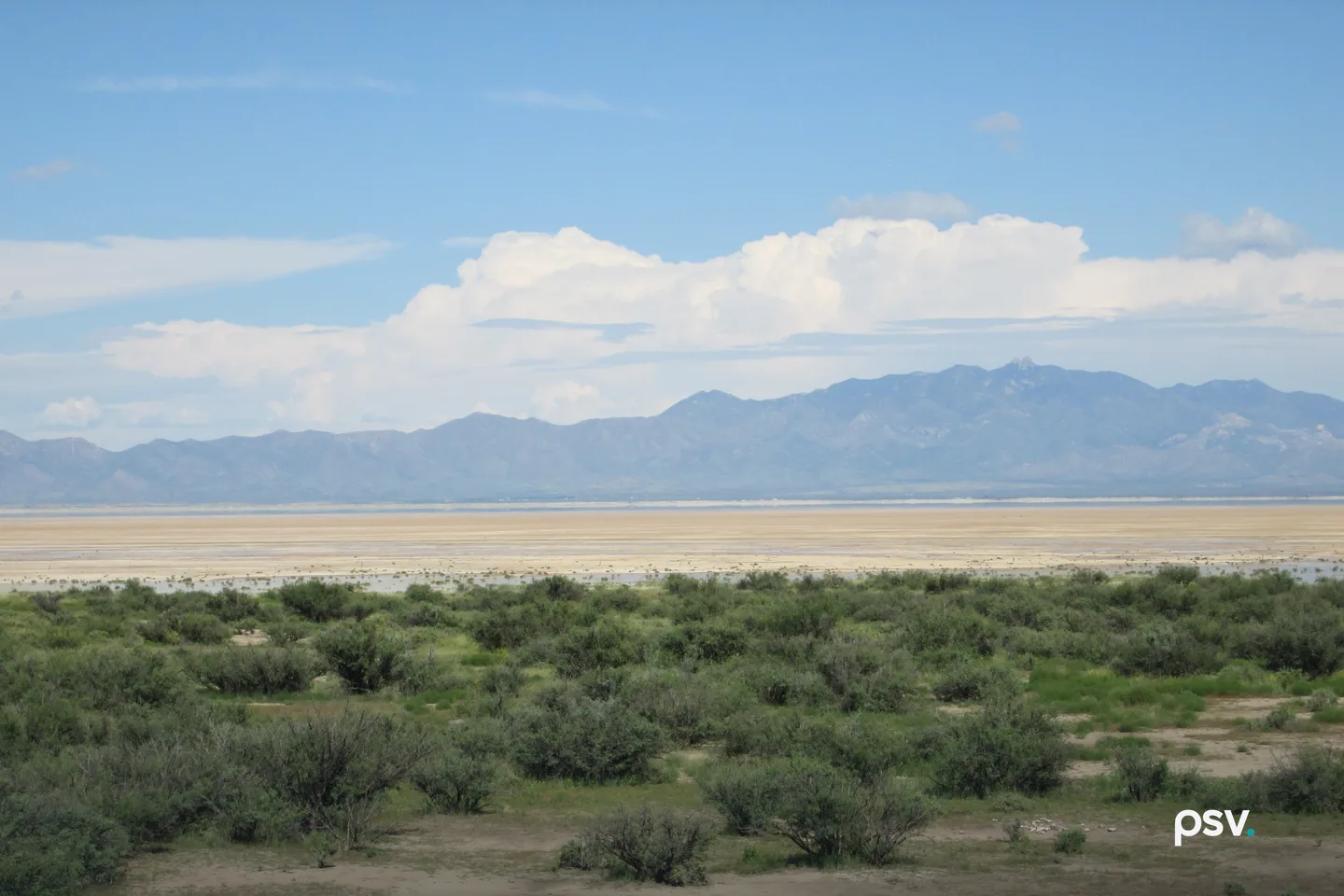
- Lead image: The Old Pueblo, “Willcox Playa From Cochise Arizona 2014,” Wikimedia Commons, CC BY-SA 4.0
Topics
Track every data center moratorium and large-load rule we have reported, with sources: US data center moratorium tracker.
Related PSV analysis
CRE POLICY NEWS
Texas Elects a Governor Who Promised a Data Center Moratorium
Democrat Gina Hinojosa won the Texas governor’s race on November 3 after a campaign that called for an immediate moratorium on new data centers until the Legislature passes protections. Governor Greg Abbott’s own audit pause runs until ERCOT reports on December 10. Hinojosa takes office in January, and the moratorium she promised has no published text.
CRE POLICY NEWS
SpaceX’s Terafab Suit Tests What a Texas Incentive File Keeps Secret
SpaceX has sued Texas Attorney General Ken Paxton and Grimes County to stop the county releasing records behind the incentives for Terafab, its planned chip plant, including its tax abatement application. Much of the deal is already public: eight state JETI filings with an estimated $1.66 billion in school tax benefit, and county agreements that set its county tax payments at $20 million a year for a decade, then cap them there through 2061.
CRE POLICY NEWS
APS Has Not Committed to Serve a New Large Load Since 2024
Closing briefs in the Arizona Public Service rate case were docketed on August 27, and they carry a fact no site selection memo in metro Phoenix can ignore. Microsoft, an intervenor, told the Arizona Corporation Commission that APS has been unable to commit to serve any new large load customer since January 1, 2024. APS’s own brief describes a large queue of uncommitted customers. PSV read the briefs.
Related guides
Cornerstone PSV guides on the workflows in this article.
Claude for Real Estate Developers
The ground-up developer field guide: site selection through IC memo, built on a real development deal.
Read the guideWhat is CRE AI?
The definitional guide to commercial real estate AI: the core workflows, how it differs from a chatbot, and how to learn it.
Read the guideby PSVLiveYou read the operator view. Now learn to run the workflow.
The AI MBA for commercial real estate: the workflows these briefs describe, taught end to end on real deal files, with live builds and a community of CRE operators.