CRE AI NEWS
An Unnamed AI Lab Commits to Lease Cipher’s Barber Lake Data Center From Year 11
Cipher Digital said on September 25, 2026 that a leading AI lab it does not name made a binding commitment to lease its Barber Lake data center in Colorado City, Texas for ten years after Fluidstack’s ten-year lease ends. Cipher puts the added contracted revenue at about $5.2 billion. The same filing moves delivery into phases and sets who pays for cost overruns.
Direct answer
Direct answer to Cipher Digital Barber Lake lease 20 years
A landlord has leased year 11 before year one’s rent has started. That speaks to the hardest question in underwriting a purpose-built AI data center, which is who pays after the first term, but only as far as the filing goes: the second tenant is unnamed, the commitment itself is not filed, and nothing says whether Google’s backstop of Fluidstack’s rent reaches the second decade. Cipher also carries the first $359.3 million of cost overruns.
What Cipher filed on September 25
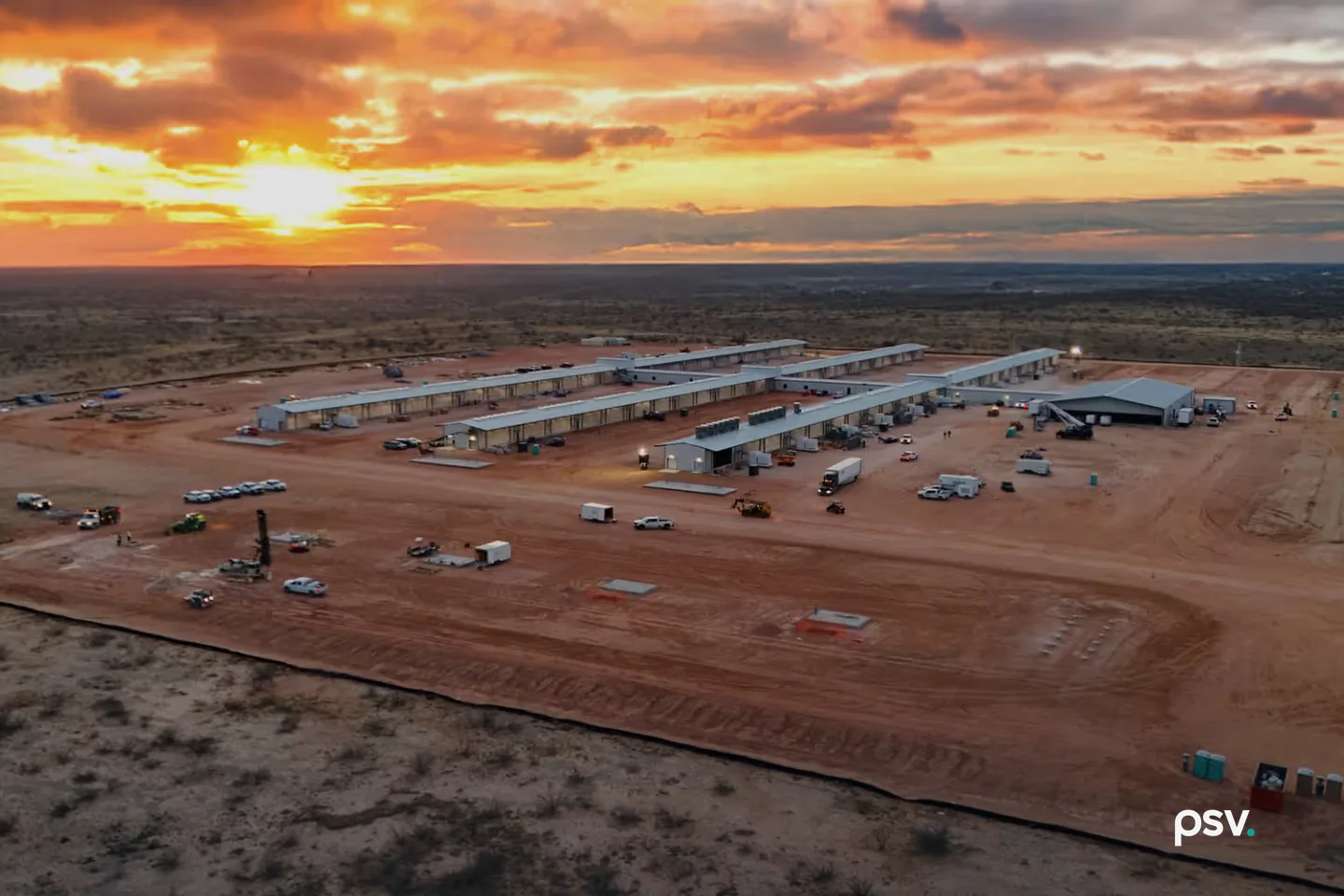
Cipher Digital Inc. (NASDAQ: CIFR) reported on a Form 8-K filed September 25, 2026 that its subsidiary Cipher Barber Lake LLC had signed, on September 24, an amendment to its lease with Fluidstack USA II Inc. for the Barber Lake data center in Colorado City, Texas. At the same time, the filing says, the company entered into a binding commitment with what it calls a leading AI lab to enter into a ten-year lease for the same facility, to begin after the Fluidstack term. Cipher says this takes the aggregate contracted term to 20 years, that the new lease will carry economic terms substantially consistent with the existing one, and that it expects about $5.2 billion of incremental contracted revenue. The press release furnished with the filing says total contracted revenue at the facility rises from $3.8 billion to more than $9 billion. PSV arithmetic: $3.8 billion plus $5.2 billion computes to $9.0 billion. These are the company’s figures and expectations, not PSV findings.
The filing carries two other terms. On delivery, it says tenant change orders modified the design of the facility and set a phased schedule: individual data halls are now expected between the fourth quarter of 2026 and the first quarter of 2027, rent starts for each hall as it is delivered, and the first rent is expected in the fourth quarter of 2026. Cipher’s quarterly report, filed August 4, had given an expected commencement date of September 2026 for the whole facility. On cost, the company, Fluidstack and the lab set a reimbursement framework. Cipher bears the first $359.3 million of costs above the initial budgeted amount under the lease. Above that, the tenant reimburses 50 percent over the 20-year term, paid as additional rent and calculated to give Cipher a contracted rate of return on the reimbursed amounts. The filing does not state the budget, the rate of return or the overrun Cipher expects. Cipher’s website lists Barber Lake at 300 MW and energized.
Why a lease signed ten years early changes the underwriting
The value of a purpose-built AI data center after its first lease rests on one assumption: that someone will pay for a building designed around a tenant’s 2026 hardware once that tenant can leave. The usual answer is renewal options, and options belong to the tenant. Cipher’s August quarterly report described Barber Lake that way, as a 10-year term with two five-year extension options. The September commitment replaces a choice with an obligation, held by a different party. For a lender or a buyer, that moves years 11 to 20 from an assumption to a contract, at least on paper. PSV arithmetic, not company figures: $5.2 billion for the second decade against $3.8 billion for the first computes to about 37 percent more, or an average of about $520 million a year against about $380 million. The filing calls the terms substantially consistent and does not explain the gap. A uniform escalator of about 3.2 percent a year would produce it, which is an illustration and not a disclosed term, and scope added by the change orders could account for some of it as well. Against the 300 MW on Cipher’s website, $9.0 billion over 20 years computes to about $1.5 million per megawatt per year, a rough figure because the release does not state the leased capacity.
The cost terms belong in the same reading. The $359.3 million Cipher absorbs computes to about 9.5 percent of the $3.8 billion first-term figure and about $1.2 million per megawatt on the listed 300 MW. Design changes the tenant asked for are paid first by the landlord, then split evenly, and the tenant’s half comes back over 20 years as rent. So some of the longer term is payment for a more expensive building, not only new demand. Delivery dates are also debt terms here. The August quarterly report says Cipher’s 2030 senior secured notes do not begin to amortize until the Barber Lake facility is complete, that borrowing under its revolving credit facility is capped at $50.0 million until the first of Barber Lake or its Black Pearl facility begins operating, and that its minimum liquidity covenant steps from $100.0 million to $150.0 million to $200.0 million as those two facilities commence. Anyone comparing data center lease announcements should read contracted revenue next to who pays for changes and when rent starts.
The workflow PSV would run: a forward-lease register
The useful artifact is a register of every contracted term segment on each data center a firm owns, lends against or is asked to price, built from public filings and the firm’s own deal files. Inputs: the 8-K and its press release, the quarterly and annual reports, later filings as they arrive, and the lease abstracts and credit documents the firm holds where it is a party. Output: one row per segment of term. The columns are the tenant, named or unnamed; the kind of document behind the segment (an executed lease, an amendment, a binding commitment, or a tenant option); whether that document is filed as an exhibit; what starts the segment; its length; the credit support and its stated limits; the revenue the landlord attributes to it; the capacity; the delivery dates as first disclosed and as they stand now; the cost-sharing thresholds; and a last column for what the record does not disclose.
An assistant handles the reading well: pulling each new filing, comparing delivery dates and lease terms against the prior quarter, showing the arithmetic behind every per-megawatt and per-year figure, and flagging the day a commitment becomes an executed lease or appears as an exhibit. The reviewer is the acquisitions lead or the credit officer on the deal. The approval gate is that a forward segment is not carried at full weight in a valuation or a loan sizing until the commitment document, the counterparty’s identity and its credit support are in the file, and that every computed figure is labeled as computed. The assistant should not guess who an unnamed tenant is, assign it a credit quality, or decide how much of a second decade to count.
What stays with a person, and what the filing does not say
The operator read
Finish with the judgment call.
The reported facts are above. Enter your email for PSV's operator conclusion and a year of access to every newsroom brief.
Free. No card. Privacy policy. Unsubscribe anytime.
 by PSVLive
Build the workflow behind this analysis. Train with the operators doing it.
Real deal files, live builds, and production-ready CRE AI workflows inside the CRE AI Institute.










Clear answers
Common questions about Cipher Digital Barber Lake lease 20 years
Who is the AI lab that committed to lease Cipher’s Barber Lake data center?
Cipher has not said. Its Form 8-K filed September 25, 2026 calls the counterparty a leading AI lab and does not name it, and the commitment is described in the filing but not attached as an exhibit. Fluidstack USA II Inc. remains the tenant under the existing lease. PSV does not infer the lab’s identity from other records.
How much is the Barber Lake lease worth after the extension?
Cipher’s press release says total contracted revenue at Barber Lake rises from $3.8 billion to more than $9 billion, with about $5.2 billion coming from the additional ten-year commitment. Those are company figures. PSV arithmetic: the second decade computes to about 37 percent more than the first, and the filing, which calls the economic terms substantially consistent, does not explain the difference.
Who pays for cost overruns at Barber Lake?
Under the framework in the 8-K, Cipher bears the first $359.3 million of costs above the initial budgeted amount under the lease. Above that, the tenant reimburses 50 percent over the 20-year term as additional rent, calculated to give Cipher a contracted rate of return on the reimbursed amounts. The filing does not state the budget, the rate of return or the expected overrun.
Primary source record
These records support the reported facts in this brief. PSV’s CRE workflow interpretation and test plan are original analysis.
- Cipher Digital Inc., Current Report on Form 8-K, filed with the SEC September 25, 2026, Items 7.01, 8.01 and 9.01 (source of the September 24 amendment with Fluidstack USA II Inc., the binding commitment with a leading AI lab for a ten-year lease, the 20-year aggregate term, the approximately $5.2 billion of incremental contracted revenue, the phased delivery schedule and rent commencement, the $359.3 million threshold and 50 percent reimbursement framework, and the forward-looking statement cautions)
- Cipher Digital Inc., “Cipher Digital Expands Barber Lake Lease Term to 20 Years, Increasing Revenue to Over $9 Billion,” press release dated September 25, 2026, Exhibit 99.1 to the Form 8-K (source of the $3.8 billion and over $9 billion contracted revenue figures and the statement that the company remains on track with the revised schedule)
- Cipher Digital Inc., Quarterly Report on Form 10-Q for the period ended June 30, 2026, filed with the SEC August 4, 2026 (source of the original 10-year term with two five-year extension options, the September 2026 expected commencement, the Google backstop, the risk factor on the limits of backstop arrangements, the amortization terms of the 2030 senior secured notes, and the revolving credit facility cap and liquidity covenant)
- Cipher Digital Inc., “Cipher Digital, Fluidstack, and Anthropic Commit $10 Million to Repair and Expand Colorado City’s Water System,” GlobeNewswire, September 14, 2026 (source of the earlier release naming Anthropic alongside Cipher and Fluidstack)
- Cipher Digital, Infrastructure page (source of Barber Lake’s listed 300 MW capacity and energized status, and the lead photograph)
Topics
Related PSV analysis
CRE AI NEWS
Cipher, Fluidstack and Anthropic Pledge $10 Million for a Data Center Town’s Water
Cipher Digital, Fluidstack and Anthropic committed a combined $10 million on September 14 to repair and expand the water system of Colorado City, Texas, home of Cipher’s 300 MW Barber Lake data center, which the company says draws no city water. PSV read the release against Cipher’s filings, whose risk factors name water and local benefit as the reasons towns stop data centers.
CRE CAPITAL NEWS
SB Energy’s IPO Filing Put OpenAI’s Data Center Leases on the Record
SB Energy, SoftBank’s AI data center and power developer, filed its S-1 on September 1 and added the leases themselves on September 4. It reports about $430 billion of data center backlog across 8.8 GW-IT of signed leases and no data center capacity in operation, with OpenAI the tenant on all but 50 MW. PSV read the prospectus and the filed leases the way a lender would.
CRE AI NEWS
Applied Digital Signs a 1,200 MW Gas Power Deal With a Company Its CEO Runs
Applied Digital’s Form 10-Q, filed October 7, discloses a 15-year power purchase agreement signed October 4 for capacity and energy from a roughly 1,200 megawatt gas-fired plant that Base Electron plans to build in Center, North Dakota, for the Polaris Forge 3 data center campus. The filing says Base Electron is owned and managed by Applied Digital officers and directors, and that Applied Digital’s chief executive is also Base Electron’s.
Related guides
Cornerstone PSV guides on the workflows in this article.
Claude for Real Estate Underwriting
The grounded underwriting workflow: real deal documents in, your rules applied, a source citation behind every number, a person signs off.
Read the guideWhat is CRE AI?
The definitional guide to commercial real estate AI: the core workflows, how it differs from a chatbot, and how to learn it.
Read the guideby PSVLiveYou read the operator view. Now learn to run the workflow.
The AI MBA for commercial real estate: the workflows these briefs describe, taught end to end on real deal files, with live builds and a community of CRE operators.