CRE POLICY NEWS
Loudoun Adopts Its Data Center Application Pause
Loudoun County’s Board of Supervisors on November 17 adopted a pause on its own hearings and votes for legislative data center and substation applications, retroactive to September 15, until it adopts the Phase 2 data center rules expected in mid 2027. The county says 33 active applications could be affected. Grid reliability substations, administrative applications and the Route 28 Tax District are outside it.
Direct answer
Direct answer to Loudoun County data center pause
The pause is now county policy, and it is narrower and longer than the headline. Applications are still accepted, reviewed and heard by the Planning Commission; only the board’s public hearing and vote wait, until the Phase 2 amendments pass, which staff expects in July 2027. Then deferred cases are heard in the order the commission acted, five per meeting, which staff estimates takes four to six months. Entitlement timing on a Loudoun data center or substation application now runs through that queue.
What Loudoun adopted on November 17
Item 14.m on the Loudoun County Board of Supervisors’ November 17, 2026 business meeting agenda was a “Resolution to Pause Board of Supervisors Consideration of Legislative Applications for Data Centers and Substations,” with Daniel Galindo of Planning and Zoning, Carlos Teran of the County Attorney’s Office and County Attorney Leo Rogers as staff contacts. Unlike in September, when staff recommended no action, staff recommended adoption. In a news release posted November 18, the county says a majority of the board voted to pause action on legislative data center and electrical substation applications for up to 12 months, the maximum allowed by Virginia law, and made the pause retroactively effective as of September 15. The release says the board’s action could affect 33 legislative applications that are currently active. It does not give the vote count; Commercial Observer reports the vote was 7-1 with one abstention, which PSV has not confirmed from a county record.
The staff report breaks those 33 down: 10 data centers, 12 non-reliability or combined substations, one solely grid reliability substation, and 10 combined data center and substation applications. It offered the board two versions. Attachment 1 paused every legislative application. Attachment 2 excluded conversion applications in the Route 28 Tax District, known as ZRTD applications, because staff said it was unclear whether the board meant to include them; one such application, with a concept plan showing data centers, had been scheduled for a board hearing on November 12. The county’s release says the action does not apply to properties in the Route 28 Tax District, which matches Attachment 2. The signed resolution was not yet posted when this brief was written, so PSV quotes the Attachment 2 text and treats it as the adopted version on the strength of the county’s description, not a certified copy.
Why the mechanics matter more than the headline
The resolution does not stop applications. Under Attachment 2, staff keeps accepting, reviewing and scheduling data center and substation applications for the Planning Commission’s public hearing and recommendation; what the board will not do, starting as of September 15, is hold its own public hearing or act until the Phase 2 Data Center Standards and Locations amendments, CPAM-2025-0001 and ZOAM-2025-0002, are approved or formally terminated. It defines legislative applications as zoning map amendments, zoning concept plan amendments, special exceptions and minor special exceptions. Since Loudoun ended by-right data center development in March 2025, that is where new data center projects go. The county release says the pause does not touch applications on administrative processes, and paragraph 10 says nothing in it prohibits action on a commission permit. Paused applications do not go inactive: the six-month inactivity clock starts only when the pause ends.
Virginia law requires action on a rezoning within a reasonable time not to exceed 12 months, and the county counts that from the Planning Commission hearing. The resolution handles the clash two ways. Staff asks every applicant, after the commission hearing, for a written letter consenting to defer action until the Phase 2 amendments are done. If seven months pass and the applicant will not consent, or the board directs it, the application goes to a board hearing in or about the tenth month. Staff expects at least nine of the non-reliability applications to hit the deadline before Phase 2 and will ask them to defer until at least September 2027. When the pause ends, deferred cases are heard in the order the commission acted, no more than five per hearing and five per business meeting unless the Chair allows more, and staff estimates the backlog takes four to six months of meetings. Put together, a project heard by the commission today is looking at a board vote late in 2027 or in 2028, on PSV’s reading of those dates. The county also says it expects applicants to fold the Phase 2 standards into their applications.
The workflow PSV would run: a Loudoun entitlement queue tracker
The artifact is a queue tracker, one row per Loudoun data center or substation application a firm owns, lends against, is buying or is competing with. Inputs are public: the county’s land management records for each application, Planning Commission agendas and recommendation dates, the November 17 staff report and resolution, any consent letter the applicant signs, and the Phase 2 drafts as they post. Each row records the application type and whether the pause reaches it at all (legislative, administrative, commission permit, Route 28 Tax District); the commission hearing date, which starts both the 12-month statutory period and the seven-month trigger; whether a consent letter exists; the computed place in the post-pause hearing order, since cases are heard in the order the commission acted; and, for substations, which of the five grid reliability tests the applicant asserts, with the Zoning Administrator’s decision once issued. Every populated cell cites a page of a county record.
The reviewer is the development lead, with land use counsel on two columns: whether a project is legislative or administrative, and whether a substation meets the grid reliability definition, which turns on an SCC certificate, transmission voltage above 230 kV or N-1 planning needs, and whether any customer would fall in Dominion Energy Virginia’s GS-5 rate class. The approval gate is that no valuation, bid, loan sizing or construction schedule assumes a Loudoun board vote date until counsel has signed off on the row. An assistant does the volume work well: reading commission agendas each month, computing the seven-month and twelve-month dates, and recomputing queue position when a case is heard or withdrawn. It should not decide whether a substation qualifies as grid reliability, predict the Phase 2 text, or advise an applicant whether to sign a consent letter. PSV ran no model on these records, tested no product, and promises no cost, schedule or entitlement outcome.
What stays human, and what is still open
The operator read
Finish with the judgment call.
The reported facts are above. Enter your email for PSV's operator conclusion and a year of access to every newsroom brief.
Free. No card. Privacy policy.
 by PSVLive
Build the workflow behind this analysis. Train with the operators doing it.
Real deal files, live builds, and production-ready CRE AI workflows inside the CRE AI Institute.











Clear answers
Common questions about Loudoun County data center pause
Did Loudoun County ban new data centers?
No. On November 17, 2026 the Board of Supervisors paused its own public hearings and votes on legislative data center and substation applications, retroactive to September 15, until it adopts the Phase 2 Data Center Standards and Locations amendments, which staff expects in July 2027. Applications are still accepted, reviewed and heard by the Planning Commission, and administrative applications are not affected.
Which Loudoun data center applications are exempt from the pause?
The county says the pause does not apply to administrative applications or to properties in the Route 28 Tax District, and the resolution text does not stop commission permits. Grid reliability substations, defined by an SCC certificate, transmission voltage or N-1 planning need, and customer rate class, go forward on the normal schedule, and the board can take up an application whose 12-month statutory period is about to expire.
When will Loudoun vote on paused data center applications?
After the Phase 2 amendments are adopted, expected in July 2027. Deferred applications are then heard in the order the Planning Commission acted, no more than five per meeting unless the Chair allows more, and staff estimates the backlog takes four to six months of meetings. An applicant that will not consent to defer gets a board hearing in about the tenth month after its commission hearing.
Primary source record
These records support the reported facts in this brief. PSV’s CRE workflow interpretation and test plan are original analysis.
- Loudoun County, “Loudoun Board Pauses Legislative Data Center & Substation Applications,” news release, November 18, 2026 (source of the board action, retroactive September 15 effective date, the 33 active applications, the Route 28 Tax District and administrative exclusions, the grid reliability and statutory deadline exceptions, and the summer 2027 project timing)
- Loudoun County Board of Supervisors, Business Meeting, November 17, 2026, Item 14.m, “Resolution to Pause Board of Supervisors Consideration of Legislative Applications for Data Centers and Substations”: staff report, Attachment 1 and Attachment 2 (source of the staff recommendation, the breakdown of the 33 applications, the nine applications expected to reach their deadline, the July 2027 expected adoption, the five-per-meeting limit and four to six month backlog, the Route 28 Tax District alternative, and the resolution text including the seven-month and tenth-month scheduling rule and the grid reliability substation definition)
- Commercial Observer, “Loudoun County, U.S. Data Center Capital, Pauses New Data Center Projects,” November 18, 2026 (source of the reported 7-1 vote with one abstention and the reported developer objections; discovery record)
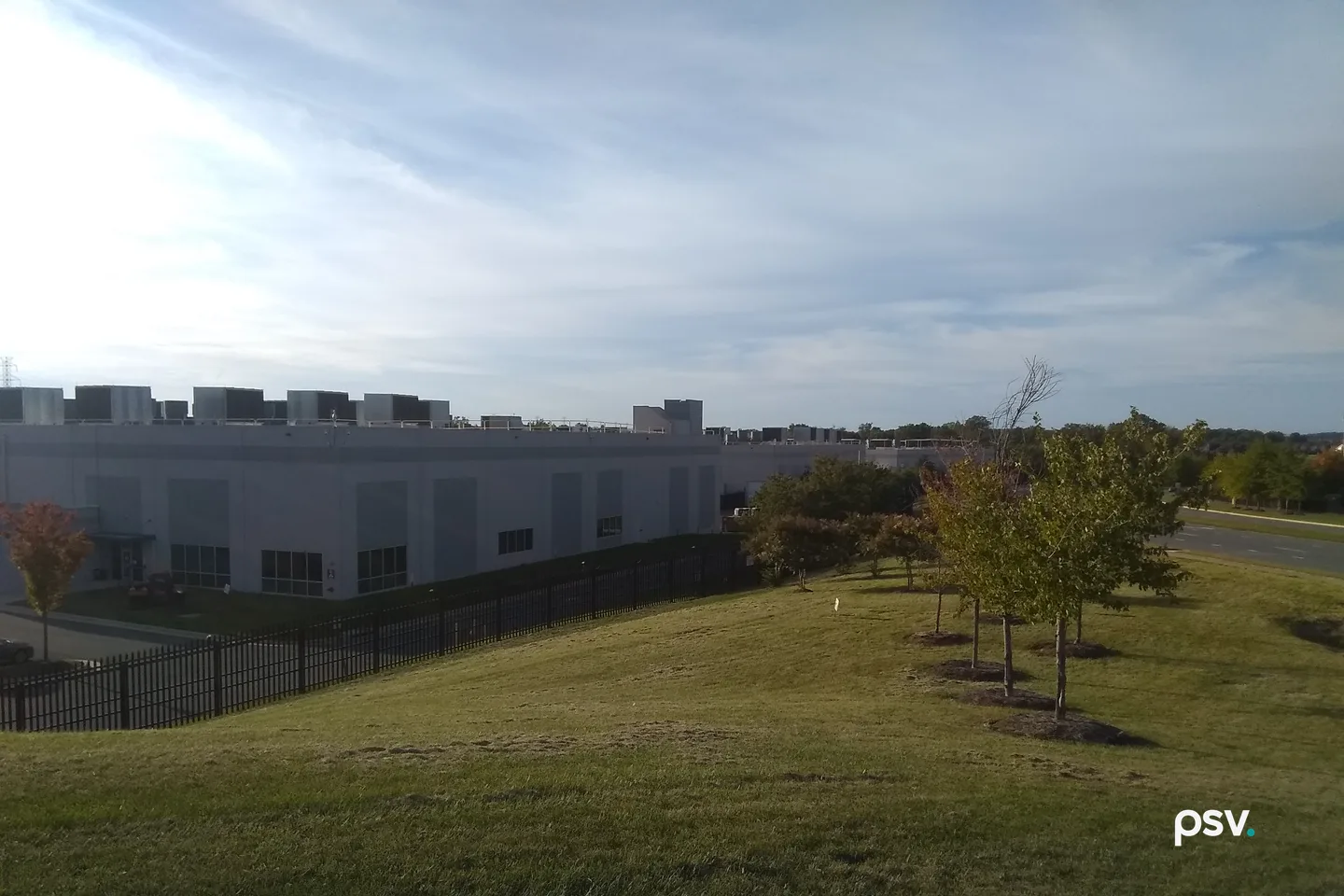
- Lead image: Vahurzpu, “AWS servers in Ashburn, group 1, 2020-10-09 5,” Wikimedia Commons, CC BY-SA 4.0
Topics
Track every data center moratorium and large-load rule we have reported, with sources: US data center moratorium tracker.
Related PSV analysis
CRE POLICY NEWS
Loudoun Votes to Pause New Data Center Applications
Loudoun County’s Board of Supervisors voted 7-1-1 on September 15 to direct staff to draft a resolution pausing new data center applications for up to 12 months while it rewrites its data center zoning rules, over a staff recommendation to take no action. The resolution still needs a final vote. WJLA reported on September 16 that the board was expected to take it up in October; the county then deferred it from its October 20 business meeting to November 17. The Planning Commission is not expected to take up the new rules until February 2027.
CRE POLICY NEWS
Loudoun Leaves 15 Grandfathered Data Center Projects Alone
Loudoun County’s Board of Supervisors on October 6 took up a proposal to end early the 2025 rule that lets 15 pending data center site plans, 30 buildings and about 10.5 million square feet, proceed without a board vote. Staff warned of $45 million to $60 million in potential liability. The board changed nothing, and local outlets report it tabled a $200,000 audit of those projects 7-2.
CRE POLICY NEWS
Prince William Ends By-Right Data Center Development
Prince William County’s supervisors voted September 22 on DPA2026-00006, a zoning text amendment that closes the county’s Data Center Opportunity Zone Overlay District to any future expansion and routes new data centers outside it through the special use permit process. County staff put the revised overlay at roughly 214 parcels and 3,504 acres, down about 6,194 acres, or approximately 64 percent.
Related guides
Cornerstone PSV guides on the workflows in this article.
by PSVLiveYou read the operator view. Now learn to run the workflow.
The AI MBA for commercial real estate: the workflows these briefs describe, taught end to end on real deal files, with live builds and a community of CRE operators.