CRE CAPITAL NEWS
Blue Owl’s Gainesville Data Center Closes $114M Below Estimate
Blue Owl Digital Infrastructure Trust closed its purchase of a 54 MW data center in Gainesville, Virginia on November 10 for about $779.5 million, funded with cash and a $512.6 million floating-rate loan from Citi and Wells Fargo. In May the trust’s filing estimated the price at $893.7 million. The building is fully leased to a hyperscaler the filings don’t name.
Direct answer
Direct answer to Blue Owl Digital Infrastructure Trust Gainesville
The price wasn’t negotiated as a fixed number. The purchase agreement sets it off the building’s stabilized forward 12-month NOI, based on the first full lease year’s base rent, and it closed about 12.8 percent below the May estimate. The filings don’t say why. For anyone pricing leased data centers, the lease schedule is the deal, and someone has to check it line by line.
What the filings show
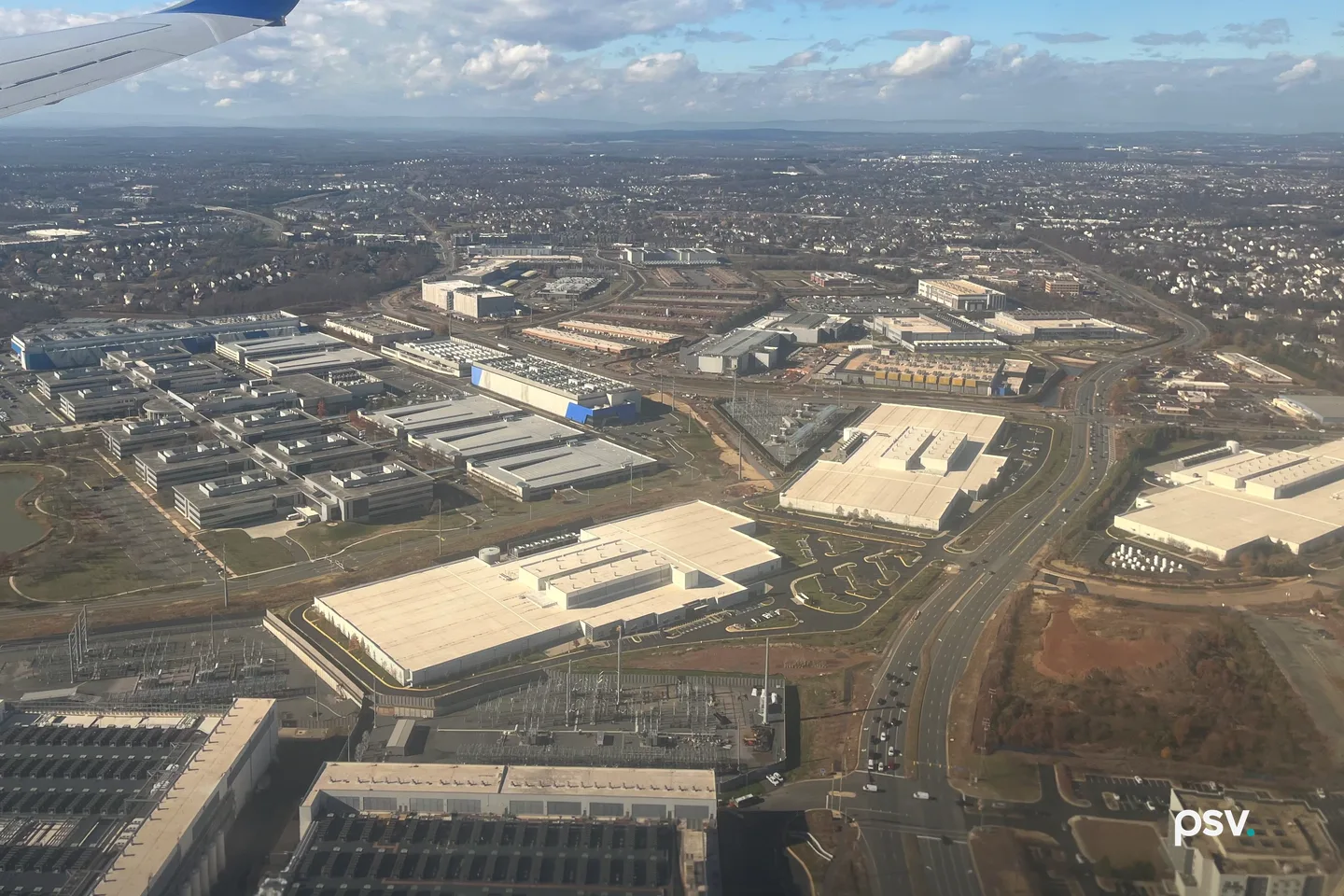
Blue Owl Digital Infrastructure Trust, a non-traded trust that raises money through a continuous private offering, said in an 8-K filed November 12 that a subsidiary closed on November 10 the purchase of 100 percent of the membership interests in the entity that owns a 54-megawatt data center in Gainesville, Virginia. The price was about $779.5 million, subject to closing adjustments. The trust says the building is 100 percent leased to a hyperscaler customer and doesn’t name it. The seller is listed as US GCDC Phase 3 Holdings LP, an unaffiliated third party. The trust paid with cash on hand, mostly from its private offering, and a new $512.6 million mortgage loan from Citibank and Wells Fargo. That loan floats at one-month Term SOFR plus 2.00 percent through November 9, 2027, then plus 2.25 percent to its December 2028 maturity, with one 12-month extension at plus 2.50 percent and a 0.25 percent exit fee on full repayment.
This was the third of three Gainesville buildings the trust agreed to buy on May 18, 2026. Its May 8-K lists them: a 72 MW building for about $860.6 million, which closed June 23 with a $559.0 million CMBS loan from JPMorgan and Goldman Sachs, some of whose bonds were bought by funds managed by the trust’s affiliates; a second 72 MW building for about $1.1 billion, expected to close in the first quarter of 2027; and this 54 MW building, estimated in May at $893.7 million. Each building is fully leased to a hyperscale customer, per the filings, and each closing stands on its own.
Why a CRE operator should care
The interesting number is the gap. The purchase agreement, filed as an exhibit to the November 8-K, sets the price equal to the property’s stabilized forward 12-month net operating income, with the pricing term redacted, and says that NOI is based on the first full lease year’s base rent. The $893.7 million was an estimate as of May. The deal closed at $779.5 million, $114.2 million or about 12.8 percent lower. Neither filing explains the change. By PSV arithmetic, if the redacted pricing term didn’t move, the NOI the formula used came in about 12.8 percent below the May estimate, but that’s an inference, not something the trust has said.
Per megawatt, the three buildings don’t line up either. By PSV arithmetic, the June closing computes to about $12.0 million per MW, this one to about $14.4 million and the pending one to about $15.3 million. Same campus, same kind of tenant, a spread of more than $3 million a megawatt. The filings give no lease terms, so PSV can’t say what drives it. The trust’s own numbers show how much rides on Gainesville. Its September 30 10-Q lists 12 wholly owned properties totaling 235 MW. Adding this 54 MW computes to 289 MW, with the two Gainesville buildings at about 44 percent. The pending 72 MW would take that to about 55 percent. The trust’s October 31 NAV report, which predates this closing, showed 94.9 percent of consolidated debt as fixed. This loan floats, so the next report should show that share lower. The loan agreement does refer to an interest rate cap agreement, but the filing doesn’t give its terms.
The workflow PSV would run
Build a formula-price tracker for any acquisition priced off a lease. Inputs are the purchase agreement’s pricing clause, the lease’s rent schedule and commencement dates, the lender’s term sheet and the seller’s estimate at signing. The output is a one-page bridge from the signing estimate to the closing number: which rent dates moved, which deliveries slipped, which credits or abatements entered the first lease year, and what each did to the price. A model can draft that bridge from the documents. The arithmetic should run in a spreadsheet the team can audit, not in a chat window.
Pair it with a loan covenant log. This loan agreement has a debt yield trigger that starts a cash sweep, and a single-tenant lease trigger that fires on a tenant monetary default above three months of base rent, a tenant bankruptcy, or the lease ending. The log lists each trigger, the test date, the inputs and who signs off. The reviewer is the deal lead for the price bridge and the asset manager for the covenant log. The approval gate is that no price is accepted at closing until the bridge ties to the lease schedule, and no covenant certificate goes to the lender until the asset manager has checked the inputs against the rent roll.
What should remain human-owned
The operator read
Finish with the judgment call.
The reported facts are above. Enter your email for PSV's operator conclusion and a year of access to every newsroom brief.
Free. No card. Privacy policy.
 by PSVLive
Build the workflow behind this analysis. Train with the operators doing it.
Real deal files, live builds, and production-ready CRE AI workflows inside the CRE AI Institute.










Clear answers
Common questions about Blue Owl Digital Infrastructure Trust Gainesville
What did Blue Owl Digital Infrastructure Trust buy in Gainesville, Virginia?
On November 10, 2026 a subsidiary of the trust bought 100 percent of the membership interests in the owner of a 54 MW data center in Gainesville, Virginia, for about $779.5 million, per its November 12 Form 8-K. The building is 100 percent leased to a hyperscaler the filing doesn’t name. It’s the second of three Gainesville buildings the trust agreed to buy in May 2026.
How was the Gainesville data center price set?
By formula. The purchase agreement filed with the 8-K sets the price equal to the property’s stabilized forward 12-month net operating income, with the pricing term redacted, based on the first full lease year’s base rent. It was estimated at $893.7 million in May and closed at about $779.5 million, roughly 12.8 percent lower. The filings don’t explain the change.
How was the Blue Owl Gainesville purchase financed?
With the trust’s cash, mostly from its continuous private offering, and a $512.6 million floating-rate mortgage loan from Citibank and Wells Fargo. It pays one-month Term SOFR plus 2.00 percent through November 9, 2027 and plus 2.25 percent after that, matures in December 2028 with one 12-month extension at plus 2.50 percent, and carries a 0.25 percent exit fee.
Primary source record
These records support the reported facts in this brief. PSV’s CRE workflow interpretation and test plan are original analysis.
- Blue Owl Digital Infrastructure Trust, Form 8-K filed November 12, 2026 (Items 1.01, 2.01, 2.03 and 9.01: the November 10 closing, the $779.5 million price, the 54 MW building, the hyperscaler lease and the $512.6 million Citibank and Wells Fargo loan terms)
- Blue Owl Digital Infrastructure Trust, Exhibit 10.1 to the November 12, 2026 Form 8-K, Membership Interest Purchase Agreement dated May 18, 2026 (source of the NOI-based pricing clause and the $893,720,571 estimate)
- Blue Owl Digital Infrastructure Trust, Exhibit 10.2 to the November 12, 2026 Form 8-K, Loan Agreement dated November 10, 2026 (source of the debt yield and single-tenant lease triggers and the interest rate cap reference)
- Blue Owl Digital Infrastructure Trust, Form 8-K filed May 22, 2026 (the three Gainesville purchase agreements, their prices, megawatts and expected closings)
- Blue Owl Digital Infrastructure Trust, Form 8-K filed June 29, 2026 (the June 23 closing of the first 72 MW building for $860.6 million and its $559.0 million CMBS loan)
- Blue Owl Digital Infrastructure Trust, Form 10-Q for the quarter ended September 30, 2026 (the 12 wholly owned properties and 235 MW)
- Blue Owl Digital Infrastructure Trust, Form 8-K filed November 19, 2026 (October 31 NAV, portfolio value, lease terms, fixed-rate debt share and loan-to-value)
- Lead image: Theodore Christopher, “Data centers in Ashburn,” Wikimedia Commons, CC0
Topics
Track every data center moratorium and large-load rule we have reported, with sources: US data center moratorium tracker.
Related PSV analysis
CRE CAPITAL NEWS
Blackstone’s Data Center REIT Buys Into 13 AWS Buildings for $5B
Blackstone Digital Infrastructure Trust, the data center REIT Blackstone listed in May, has signed its first deal: a 75.1% stake in two joint ventures with Amazon that will own 13 newly built data centers in northern Indiana and Mississippi, valued at $5.0 billion and leased back to Amazon. PSV read the two 8-Ks, the contribution agreement and the 10-Q.
CRE POLICY NEWS
A 22 Million SF Data Center Rezoning Died Over an Ad
The Court of Appeals of Virginia held on March 31, 2026 that Prince William County’s three Digital Gateway rezoning ordinances are void from the beginning, because the county advertised the December 2023 hearing defectively. The county chose not to appeal on April 14, 2026. Compass Datacenters withdrew on April 29, and QTS told the Supreme Court of Virginia on July 2 that it was terminating the project.
CRE AI NEWS
Digital Realty Q3 2026: Bookings Triple to a Record $627M
Digital Realty reported third-quarter 2026 results on October 29: revenue of $1.9 billion, up 21 percent, and record bookings of $627 million at its share, about three times the second quarter. It bought $742 million of land and raised guidance. The filings give no AI revenue figure, and the revenue raise far outran the EBITDA raise.
Related guides
Cornerstone PSV guides on the workflows in this article.
AI for Real Estate Investing
How commercial real estate investors use AI across the deal lifecycle: sourcing, underwriting, due diligence, and asset management, grounded in real documents.
Read the guideClaude Engineering Partner for CRE
What it means to run Claude with an engineering partner: the operating model, the controls, and who owns what.
Read the guideAI for Commercial Real Estate Lenders
Screening at volume, credit memos drafted from the borrower package, every figure traced to the page it came from, and the book watched after close.
Read the guideby PSVLiveYou read the operator view. Now learn to run the workflow.
The AI MBA for commercial real estate: the workflows these briefs describe, taught end to end on real deal files, with live builds and a community of CRE operators.