CRE AI NEWS
Google Pays Full Cost for West Memphis Data Center Power
Entergy Arkansas said on October 19, 2026 that Google will fund about $600 million of new infrastructure and a 440 megawatt solar purchase agreement to serve a second phase of its West Memphis data center campus, under a 20-year contract that goes to the Arkansas Public Service Commission for approval.
Direct answer
Direct answer to Entergy Arkansas Google West Memphis data center
This is the clearest live example of a hyperscaler paying the full cost of the grid built for it, in a utility’s own words. Two batteries, a solar contract, a substation expansion and two 230 kV lines are on Google’s bill, with a 2028 in-service date pending approval. For anyone underwriting a powered site, the contract terms and the regulator’s order now matter as much as the megawatts.
What Entergy Arkansas announced
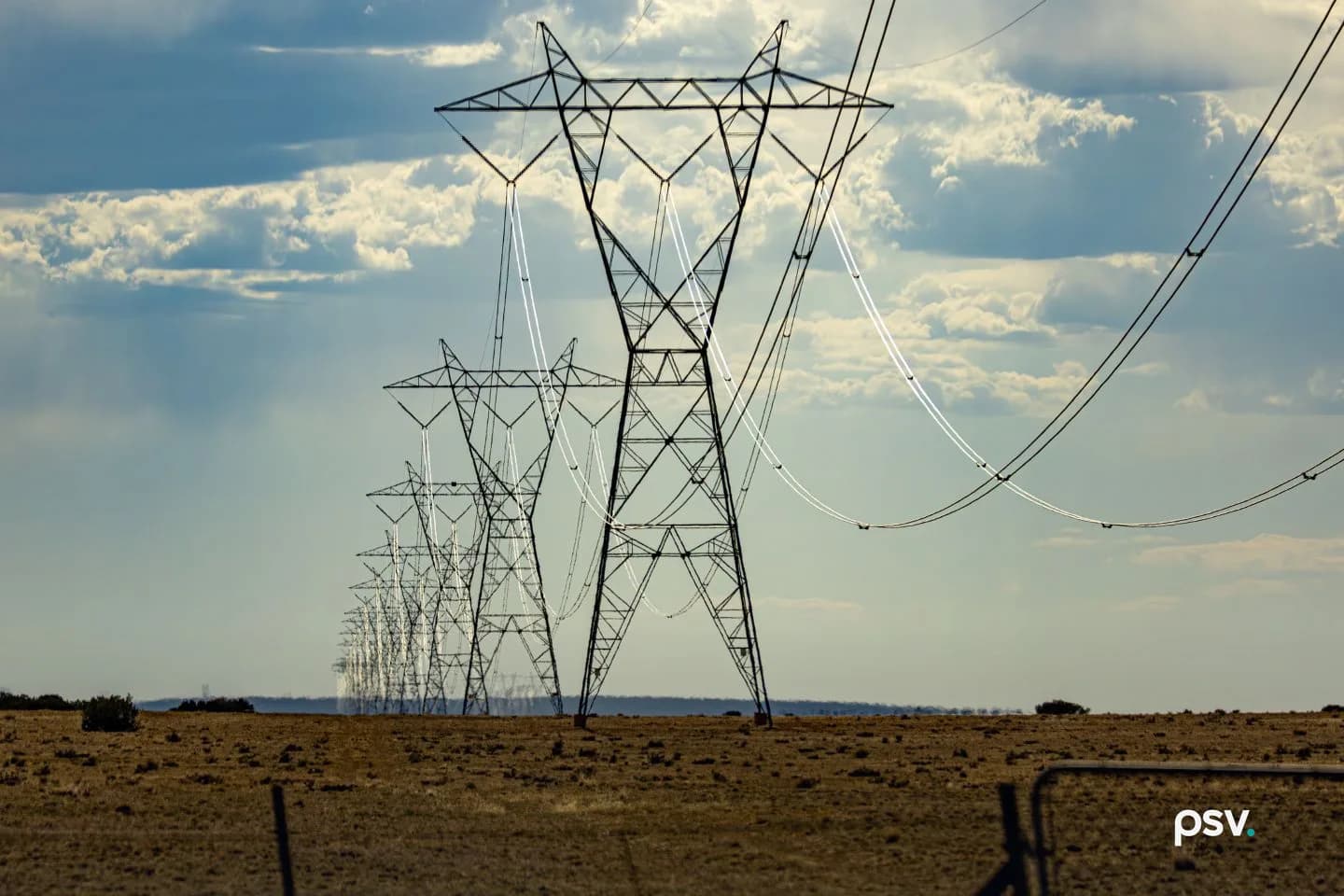
On October 19, 2026, Entergy Arkansas announced a second phase of service for Google’s data center campus in West Memphis, in Crittenden County across the Mississippi River from Memphis. The utility says the expansion will fulfill Google’s plan for data center buildings on the site and accelerate the ramp-up of the original project, and that it requires approximately $600 million in planned investment plus a power purchase agreement, both covered by Google under a new contract. The listed resources are a 1,000 megawatt hour battery at the Driver Solar site near Osceola, a 400 megawatt hour battery near Hot Springs at Jones Mill, both expected online in 2028, a 440 megawatt (ac) solar purchase agreement from the Big Island facility under construction in Mississippi County, and an expansion of the Galet substation near West Memphis with two new 230 kV transmission lines to serve the campus. Entergy says that with the Arkansas Cypress Solar and Battery facility under construction in Jefferson County, the set adds over 1,000 megawatts of solar and 2,800 megawatt hours of battery storage to its system.
The money claims are Entergy’s. It says Google will pay the full cost of the resources needed for its added service through the 20-year term of its contract, that the new resources will not be charged through the Generating Arkansas Jobs Act Rider, and that the expansion brings at least $500 million in new savings for its 738,000 customers starting in 2028 and running 20 years, on top of $1.6 billion it attributed to the first phase, for $2.1 billion in net benefits. Entergy’s Arkansas data center page, which also counts AVAIO Digital’s campus in Pulaski County, puts total projected Arkansas customer benefits at $2.2 billion over 20 years. The expansion will be submitted to the Arkansas Public Service Commission, and Entergy says the contract will be fully visible to the Commission, its Staff and the Attorney General. Pending approval, the expected in-service date is 2028.
Why a CRE operator should care
The structure is the news. In most markets the fight over a large data center is who pays for the substation, the lines and the new generation it forces. Here the utility has written the answer into a contract and a public release: the user funds the specific resources, by name and size, and the utility says other customers carry none of the cost. That is the same principle the Senate permitting bill PSV covered on October 19 would make federal law for loads of 20 megawatts or more, arriving first as a negotiated deal in a state that has been courting data centers. It lands the day before Memphis City Council, across the river, was due to take up a one-year data center moratorium it postponed on October 6, according to local reports.
For land and powered-shell investors, the consequence is that power capacity near a hyperscale campus is increasingly being built to one customer’s order and paid for by that customer. A neighboring parcel does not inherit the capacity just because a new substation and lines appear nearby. The Big Island detail also shows that regulators are reading these contracts closely: Entergy says the solar purchase was added based on Commission guidance from its initial filing, and press reports in September said the Commission had declined Entergy’s original request to buy Big Island’s output. PSV has not read that order. By PSV arithmetic, $500 million over 20 years is $25 million a year, about $34 per customer a year if spread evenly across 738,000 customers, a simple average and not an Entergy figure.
The workflow PSV would run on a full-cost utility contract
The tool is a utility-contract screen for any site near a large-load campus or carrying its own large load. Inputs are the utility’s public release and data center pages, the docket filings once the contract reaches the state commission, the named resources with their sizes and in-service dates, the contract term, any rider the costs are or are not charged through, and the site’s own interconnection request and utility correspondence. The output is a one-page record per site: which upgrades are funded by whom, which are approved and which are pending, the in-service date each depends on, and whether any of the new capacity is available to a party other than the contracting customer.
The reviewer is the development or acquisitions lead with utility counsel. The approval gate is that a screen never moves a power assumption in a pro forma on a press release alone. It changes a line only after counsel has read the filed contract or the Commission’s order, because the release states what Entergy and Google expect, not what Arkansas regulators have approved.
What stays with a person, and what the record leaves open
The operator read
Finish with the judgment call.
The reported facts are above. Enter your email for PSV's operator conclusion and a year of access to every newsroom brief.
Free. No card. Privacy policy. Unsubscribe anytime.
 by PSVLive
Build the workflow behind this analysis. Train with the operators doing it.
Real deal files, live builds, and production-ready CRE AI workflows inside the CRE AI Institute.











Clear answers
Common questions about Entergy Arkansas Google West Memphis data center
What is Google paying for at its West Memphis data center?
Entergy Arkansas said on October 19, 2026 that Google will cover approximately $600 million in planned investment plus a power purchase agreement for a second phase of service to its West Memphis campus: a 1,000 megawatt hour battery near Osceola, a 400 megawatt hour battery near Hot Springs, a 440 megawatt (ac) solar purchase from the Big Island facility in Mississippi County, and an expansion of the Galet substation with two new 230 kV transmission lines.
Is the Entergy Arkansas and Google expansion approved?
Not yet. Entergy says the expansion will be submitted to the Arkansas Public Service Commission, with the contract fully visible to the Commission, its Staff and the Attorney General. Pending approval, Entergy expects the expansion in service in 2028. PSV did not locate a Commission docket for it as of October 20, 2026.
Will Entergy Arkansas customers pay for Google’s data center?
Entergy says no. It says Google will pay the full cost of the resources for its added service through the 20-year term of its contract, that the new resources will not be charged through the Generating Arkansas Jobs Act Rider, and that the expansion brings at least $500 million in new customer savings over 20 years from 2028. Those are Entergy’s projections, not PSV findings, and they depend on Google’s load and payments.
Primary source record
These records support the reported facts in this brief. PSV’s CRE workflow interpretation and test plan are original analysis.
- Entergy Arkansas, “Entergy Arkansas announces enhanced partnership at Google West Memphis campus, delivering at least $500M in new savings for all customers,” October 19, 2026 (release and lead photograph)
- Entergy, “Data centers and Entergy: Arkansas” (Fair Share Plus pledge and projected $2.2 billion Arkansas customer benefits)
- Google, “Steel River Energy Center in Arkansas,” The Keyword, July 14, 2026
Topics
Related PSV analysis
CRE POLICY NEWS
Senate Permitting Bill Would Make 20 MW Data Centers Pay
The Bipartisan American Affordability and Jobs Act of 2026, introduced on September 30 by the chairs and ranking members of the Senate’s environment and energy committees, would make data centers and other computing loads of 20 megawatts or more bear the full incremental cost of the power, transmission and distribution built to serve them, and let states auction service.
CRE POLICY NEWS
Wisconsin Made Its 100 Megawatt Customers Sign for the Power
WEC Energy Group filed a Form 8-K on September 4 attaching the investor deck that finally puts numbers on Wisconsin’s Very Large Customer tariff. The Public Service Commission approved it in docket 6630-TE-113 and made it mandatory for any customer with 100 megawatts or more of annual demand. WEC now forecasts 3.9 gigawatts of new electric demand through 2030, and two data center campuses are all of it.
CRE AI NEWS
Meta’s $50B Hyperion Expansion: The CRE Read on a 5 GW Campus
Meta says its Richland Parish campus will reach about 10 million square feet and 5 gigawatts, with more than $50 billion committed. The durable CRE signal is what a commitment this size does to land, power, housing, and industrial demand around it, and which documents actually move value.
Related guides
Cornerstone PSV guides on the workflows in this article.
AI for Real Estate Investing
How commercial real estate investors use AI across the deal lifecycle: sourcing, underwriting, due diligence, and asset management, grounded in real documents.
Read the guideEnterprise AI for Institutional CRE
PSV trains your whole firm on Claude and ChatGPT, builds your agents live inside your own environment, and stays on as your embedded AI team. What we build for you is yours.
Read the guideWhat is CRE AI?
The definitional guide to commercial real estate AI: the core workflows, how it differs from a chatbot, and how to learn it.
Read the guideby PSVLiveYou read the operator view. Now learn to run the workflow.
The AI MBA for commercial real estate: the workflows these briefs describe, taught end to end on real deal files, with live builds and a community of CRE operators.