CRE AI NEWS
Kraft’s $16 Billion Sutton Data Center, Valued by the Town at a Third
A November 9 memo from Sutton, Massachusetts’ town manager says Unified Global Packaging Group and The Kraft Group have proposed a ten-building, roughly 900 megawatt data center campus off Boston Road and Providence Road, which the developer values at about $16.75 billion. Town staff assumed about a third of that per building, and still found it would carry over half the tax levy.
Direct answer
Direct answer to Kraft Group Sutton data center
Nothing is filed yet, and the proposal is tentative by the town’s own account. What the memo adds is the first public valuation fight of a Massachusetts data center under Executive Order 658: the developer counts about $1.675 billion per building, the assessors about $586 million, and even at the lower figure the campus would pay 52.8 percent of Sutton’s FY2035 levy. That dependence is the town’s leverage for a community benefits agreement.
What the town says was proposed
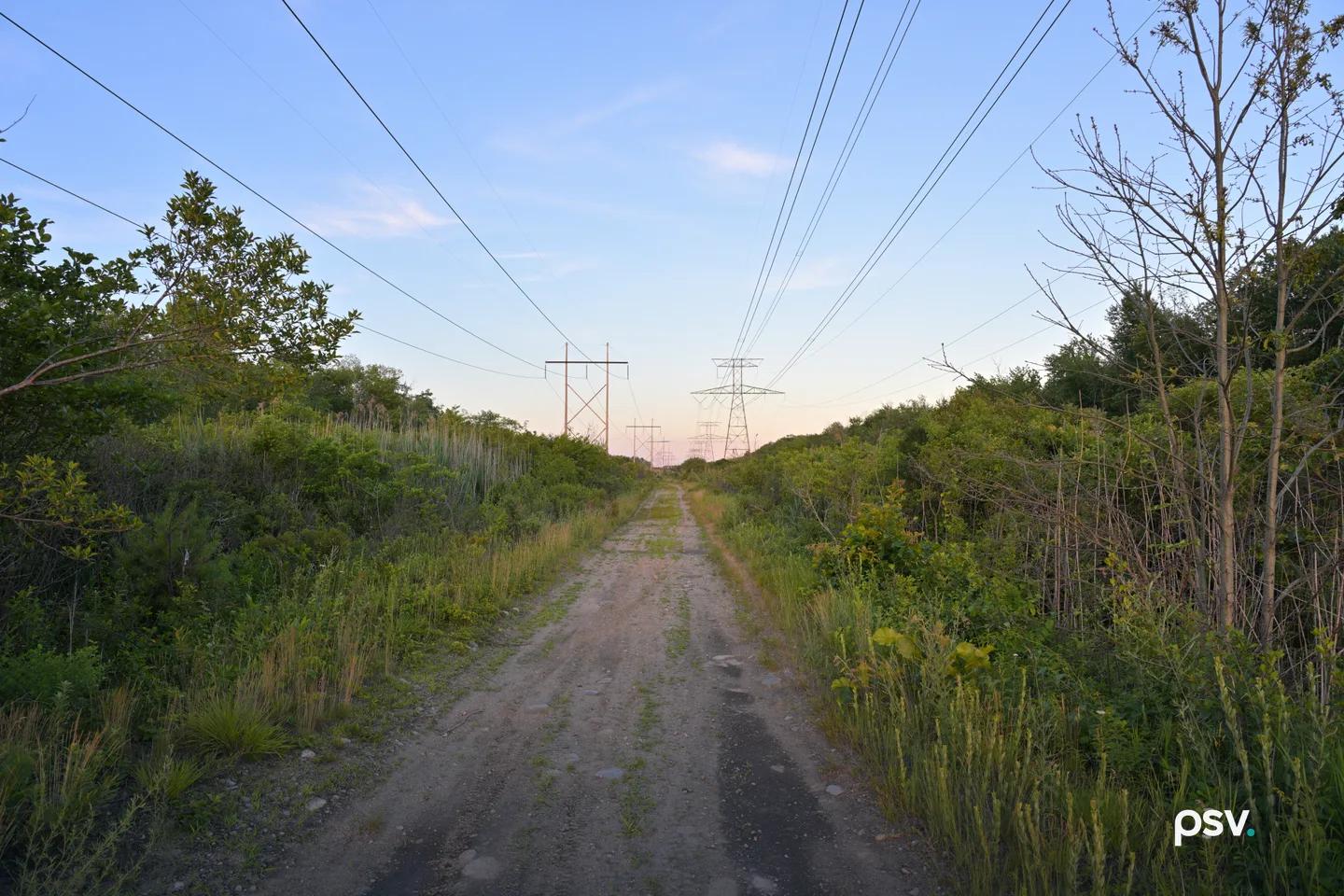
Sutton Town Manager Austin J. Cyganiewicz sent the Select Board a memorandum dated November 9, 2026, titled “Unified Parkway Data Center Project Proposal, Preliminary Fiscal and Regulatory Review.” It says Unified Global Packaging Group (UGPG) and The Kraft Group have proposed a data center campus on property off Boston Road and Providence Road, within UGPG’s Unified Parkway property. The site is crossed by a 345 kilovolt transmission line running from Millbury to West Farnum and by a 115 kilovolt line, and the developer’s preliminary plan shows two substations on Lot 1 plus an additional National Grid substation for Phase 2 on Lot 5 near Dudley Road. Phase 1 is two buildings, DC-01 and DC-02, of about 250,000 square feet and roughly 90 megawatts each, opening in 2029. The developer’s financial analysis assumes eight more buildings of the same size opening two a year from 2030 through 2033, for roughly 900 megawatts at full build-out. The memo says the layouts are conceptual and that the configuration of Phase 2 has not been determined.
The money in the memo is the developer’s estimate, and the memo says so. The developer values each building at about $675 million of real property, of which $600 million is electrical, cooling and generator systems, plus approximately $1 billion of computer equipment. That puts Phase 1 at about $3.35 billion and the full campus at roughly $16.75 billion in 2026 dollars, against about $2.85 billion of assessed value for all taxable property in Sutton today. The operator has told the town it is in discussions with ISO New England for power and is exploring reclaimed water for cooling, but the memo says water volumes, supply, wastewater and the timing of power have not been provided. Its bottom line is plain: the proposal is tentative and no application has been filed. PSV found no announcement from The Kraft Group or UGPG; the project was first reported by MassLive and then Bisnow.
Why a CRE operator should care
The memo is a rare public look at how a host town values a data center before anyone negotiates. Town staff did not adopt the developer’s numbers. They assumed about $250 million per building for the building and land, citing industry figures presented at the 2026 national assessors’ conference, and about $560 million of standard server equipment on a rapid depreciation schedule, which comes to about $586 million of taxable value per building in the first year, roughly a third of the developer’s figure. Even at that discount, the town’s model has the campus paying about $10.4 million a year from Phase 1 in FY2031 and about $27.8 million a year with all ten buildings assessed in FY2035, about $323 million over FY2030 through FY2042, plus an estimated $31 million in one-time building permit fees. In FY2035 that is 52.8 percent of the levy, and the single tax rate falls to about $5.68 per $1,000 from $12.05 without the project. The town’s entire FY2027 levy is about $32 million.
Two consequences follow for anyone who owns, lends on or sells property near a project like this. First, the town’s own model has the asset shrinking on the rolls: Phase 1 is assessed at $1.177 billion in FY2031 and about $880 million in FY2034 as equipment depreciates, and the Phase 1 tax bill falls from about $10.4 million to about $8.7 million over the same years. Second, the memo notes the Select Board’s annual classification vote could shift more of the levy onto commercial and industrial property, including the data center, which would cut residential bills further but raise them for other commercial owners. The figures below are PSV arithmetic from the memo, not town or developer figures.
| Measure | Developer estimate | Town staff assumption |
|---|---|---|
| Value per building | About $1.675 billion ($675 million real property plus about $1 billion of computer equipment) | About $586 million of taxable value in the first year |
| Per square foot of building (250,000 SF) | About $6,700 in total; about $2,700 for real property alone | About $2,344 in total; about $1,000 for building and land |
| Per megawatt (about 90 MW per building) | About $18.6 million | About $6.5 million |
| Full campus, ten buildings | Roughly $16.75 billion | About $4.89 billion assessed in FY2035 |
The workflow PSV would run
Both sides of this negotiation need the same artifact: a host-town fiscal reconciliation that puts the developer’s value build and the assessor’s value build side by side, line by line. Inputs: the developer’s per-building cost split (shell and land, electrical, cooling and generators, IT equipment), the town’s Multi-Year Financial Plan and levy history, the assessor’s depreciation schedule for personal property, the January 1 valuation date and the phasing calendar, and the classification options the board can vote. Output: for each fiscal year, the assessed value under each assumption, the tax paid, the data center’s share of the levy, and the residential and commercial rates, with each cell tied to a page in the memo or the plan. The memo already contains most of this; Sutton published both the developer’s financial analysis pages and its own model.
The reviewer is the assessor on the town side and the developer’s tax counsel on the other, and the approval gate is that no guaranteed minimum assessed value or payment schedule goes into a community benefits agreement until both have signed off on the same reconciliation. An assistant is well suited to the mechanical part: extracting the tables, recomputing per-square-foot and per-megawatt values, flagging where the developer’s and town’s numbers diverge, and tracking the depreciation curve forward. It should not pick a capitalization rate, set an equipment life, or decide what a fair minimum assessment is. PSV ran no model on Sutton’s figures beyond the arithmetic shown here, tested no product, and promises no tax, cost or permitting outcome.
What stays human, and what the record does not settle
The operator read
Finish with the judgment call.
The reported facts are above. Enter your email for PSV's operator conclusion and a year of access to every newsroom brief.
Free. No card. Privacy policy. Unsubscribe anytime.
 by PSVLive
Build the workflow behind this analysis. Train with the operators doing it.
Real deal files, live builds, and production-ready CRE AI workflows inside the CRE AI Institute.











Clear answers
Common questions about Kraft Group Sutton data center
What is the Kraft Group data center proposal in Sutton, Massachusetts?
A November 9, 2026 memo from Sutton’s town manager to the Select Board says Unified Global Packaging Group and The Kraft Group have proposed a data center campus on UGPG’s Unified Parkway property off Boston Road and Providence Road. Phase 1 is two buildings of about 250,000 square feet and 90 megawatts each opening in 2029, and the developer’s analysis assumes ten buildings and roughly 900 megawatts by 2033. The memo says the proposal is tentative and no application has been filed.
How much is the Sutton data center worth?
The developer values each building at about $675 million of real property plus about $1 billion of computer equipment, roughly $16.75 billion for the full campus in 2026 dollars. Town staff assumed far less, about $586 million of taxable value per building in the first year, and still estimate about $27.8 million a year in property tax once all ten buildings are assessed in FY2035, 52.8 percent of the town’s levy in the model.
Does a Massachusetts data center need a community benefits agreement?
Under Executive Order 658, signed September 8, 2026, state permitting agencies may not issue permits for a data center above 25 megawatts of peak demand until it files a community benefits agreement reviewed by the Office of Environmental Justice and Equity and shows conformance with the Governor’s June 25 framework. Local zoning still applies separately. In Sutton, the town says it would also need a new zoning bylaw passed by a two-thirds Town Meeting vote.
Primary source record
These records support the reported facts in this brief. PSV’s CRE workflow interpretation and test plan are original analysis.
- Town of Sutton, Office of the Town Manager, memorandum to the Select Board, “Unified Parkway Data Center Project Proposal, Preliminary Fiscal and Regulatory Review” (November 9, 2026), including the documents provided by UGPG and the town’s fiscal impact model
- Commonwealth of Massachusetts, Executive Order No. 658, “Establishing Requirements for Responsible Data Center Development and Operations in Massachusetts to Protect and Support Ratepayers, Communities, and the Environment” (September 8, 2026)
- Lead image: 4300streetcar, “Power lines through Hockomock Swamp June 2026,” Wikimedia Commons, CC BY 4.0
Topics
Track every data center moratorium and large-load rule we have reported, with sources: US data center moratorium tracker.
Related PSV analysis
CRE POLICY NEWS
Massachusetts’ Data Center Order Puts a Contract Before the Permit
Governor Maura Healey signed Executive Order No. 658 on September 8, barring MassDEP, the Energy Facilities Siting Board, the MEPA Office and other permitting agencies from issuing any permit to a data center above 25 megawatts of peak demand until it conforms with her June 25 framework and files a community benefits agreement reviewed by the state’s environmental justice office. It also orders a clean energy mandate with a payment alternative.
CRE AI NEWS
Google Bought Crusoe’s Wyoming Site. The Entitlements Came With It.
Crusoe said on November 6 that Google has acquired its data center site in southeast Wyoming, a day after Google announced a $17 billion first Wyoming data center near Cheyenne. Neither disclosed a price. A Laramie County memo shows how the approvals carried over: the county said in July it would process Google’s revised plan, cut from five buildings to four, administratively.
CRE AI NEWS
An Unnamed AI Lab Commits to Lease Cipher’s Barber Lake Data Center From Year 11
Cipher Digital said on September 25, 2026 that a leading AI lab it does not name made a binding commitment to lease its Barber Lake data center in Colorado City, Texas for ten years after Fluidstack’s ten-year lease ends. Cipher puts the added contracted revenue at about $5.2 billion. The same filing moves delivery into phases and sets who pays for cost overruns.
Related guides
Cornerstone PSV guides on the workflows in this article.
Claude Engineering Partner for CRE
What it means to run Claude with an engineering partner: the operating model, the controls, and who owns what.
Read the guideClaude for Real Estate Developers
The ground-up developer field guide: site selection through IC memo, built on a real development deal.
Read the guideAI Engineering for CRE
PSV builds custom AI employees for commercial real estate. Every number cites its source document, and the citation holds from deal to IC memo.
Read the guideby PSVLiveYou read the operator view. Now learn to run the workflow.
The AI MBA for commercial real estate: the workflows these briefs describe, taught end to end on real deal files, with live builds and a community of CRE operators.