CRE AI NEWS
Meta Expands Its Eagle Mountain Data Center in Utah
On September 14, 2026 Meta said the Eagle Mountain Data Center is growing, bringing its total investment in Utah to more than $3 billion. Eagle Mountain City published its own record the same day. Together they itemize what a hyperscale campus expansion costs a town and what the town gets, in named dollar figures, but neither states the expansion’s megawatts, square footage or delivery date.
Direct answer
Direct answer to Meta Eagle Mountain data center expansion
Meta announced an expansion of its Eagle Mountain campus and $2.55 million in new one time community commitments, on top of $3 billion in total Utah investment and eight years of local spending. Meta says the new buildings use closed loop dry cooling with no operational water use in the cooling system. The operating numbers a developer would underwrite, critical load, building area and delivery date, are absent from both primary records.
What Meta and Eagle Mountain City each put on the record
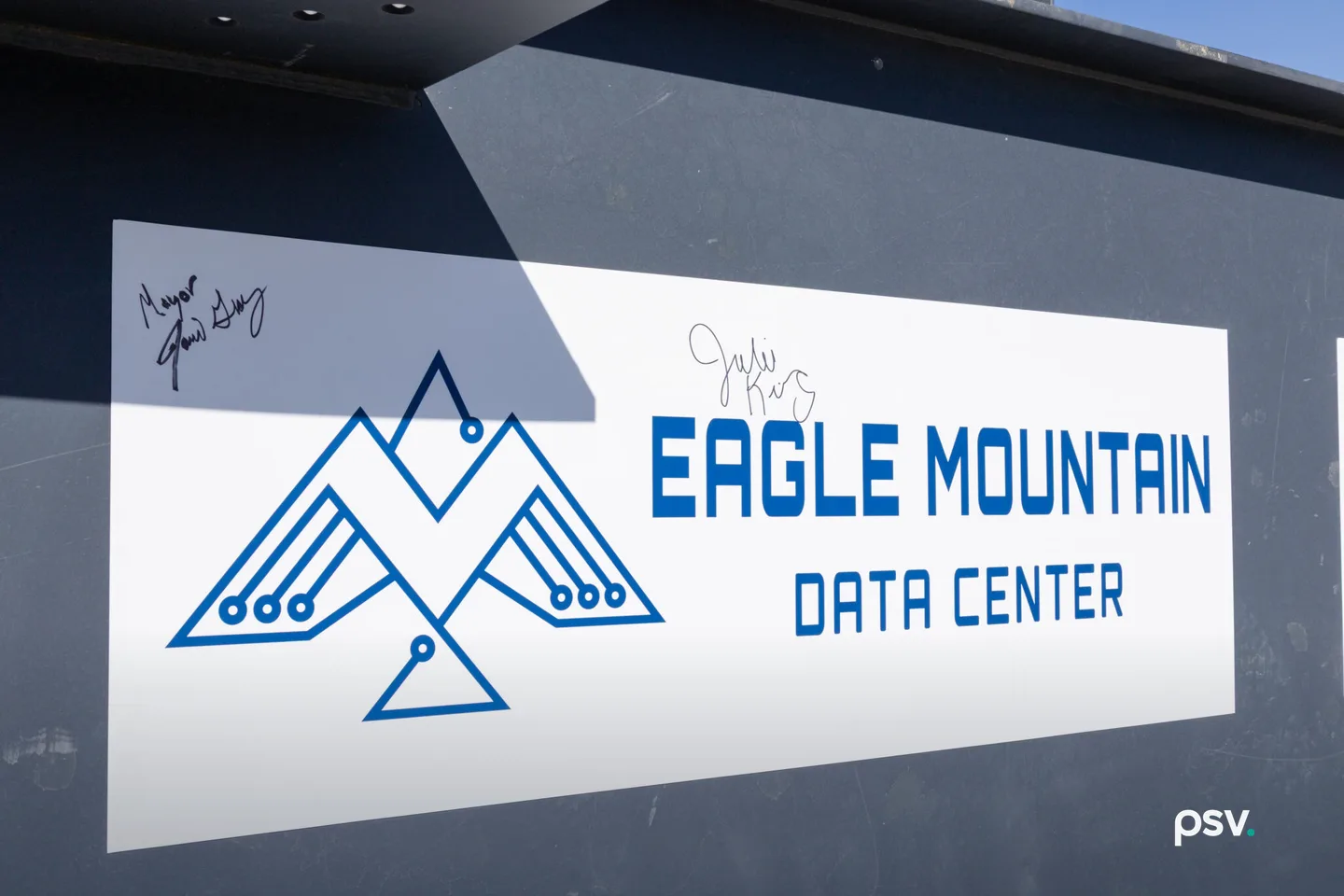
On September 14, 2026 Meta published a post on its data center newsroom announcing that the Eagle Mountain Data Center is growing. The company says the expansion increases its investment in Utah to more than $3 billion, will support more than 1,200 construction workers at the peak of construction, and will support more than 300 jobs at the data center once completed. Alongside the expansion Meta announced new community commitments: a $450,000 grant to the City of Eagle Mountain for construction of the Walden Park Astronomy Park, bringing its total contribution to that project to $700,000; $600,000 to acquire three acres for a future elementary school in partnership with Lake Mountain School District; $1.5 million to the Lake Mountain Education Foundation; and an ongoing annual contribution of $50,000 for student learning initiatives including early childhood literacy. Meta attributes these to its Future Is for Everyone Fund, which it describes as a $1 billion commitment to U.S. communities where it owns and operates data centers. The three one time commitments announced that day total $2.55 million, which is PSV arithmetic on the figures Meta lists; the $50,000 contribution is recurring and sits outside that total.
Eagle Mountain City published its own release the same day, and the two records agree on every dollar figure. The city adds detail Meta’s post does not carry: it says the $600,000 land donation makes Meta the first private business to fund the permanent foundation of a district campus, and it quotes Mayor Jared Gray saying the company “showed up here eight years ago and has kept its commitments to us since.” The city also states that the data center “is anticipated to be among the City’s largest property taxpayers,” that the majority of the roles will be filled from Utah County and surrounding communities, and it quotes Steve Knighton, vice president and general manager of data center solutions at Mortenson, the contractor, on eight years of work at the site. Both records recount the history since Meta broke ground in 2018: more than $50 million in local infrastructure including roads and water, more than $6.2 million to local schools and organizations, and $4.85 million to the city’s Affordable Housing Fund, which the city says supported mortgage assistance for 66 local families.
The cooling and power record, and where the two sources diverge
On water, Meta says the new Eagle Mountain buildings will use a water efficient closed loop liquid cooling system with dry cooling, meaning there will be no operational water use in the cooling system, with onsite water limited to domestic uses, fire protection and equipment maintenance. It projects continued annual operational water use at less than one typical golf course in the region. That comparison is Meta’s framing and PSV did not verify what a typical regional golf course consumes. The company also cites water restoration work, the Hobble Creek and Provo River flow restoration projects, which it says have collectively restored more than 726 million gallons per year, and a partnership with the city to repurpose a portion of water from its server cooling systems to irrigate Cory Wride Memorial Park. Every one of these is a company claim on a company page, not a PSV finding and not a regulator’s measurement.
On power, the two primary records do not say the same thing, and the difference is worth naming. Meta’s post says the data center’s electricity use is matched with 100 percent clean and renewable energy and that, working with retail partners, it has added more than 1.7 GW of clean and renewable energy and 600 MWh of battery storage to Utah across 13 sites. Eagle Mountain City’s release describes the same effort as Meta “adding new power to the grid including wind, solar, battery storage and natural gas.” Natural gas appears in the city’s account of the generation added and does not appear in Meta’s. Matching annual consumption with clean energy certificates and adding firm generation to a grid are different claims, and a reader should not collapse them. Both records agree on the newest asset: the Faraday Energy Storage project, a 150 megawatt battery facility owned and operated by Lydian Energy that will support the Eagle Mountain Data Center, which the city says comes online later this year. Meta also says it pays the full costs of its data centers’ energy use so other consumers are not negatively impacted, and that it has fully funded new generation and grid infrastructure in Eagle Mountain.
The workflow PSV would run: a site commitment comparables register
The artifact is one row per hyperscale campus in the jurisdictions a firm develops in or owns near. Inputs: the company’s own announcement; the municipal or county release and any council packet; the development agreement; any incentive, tax increment or payment in lieu agreement; the utility tariff or special contract and any large load rider; water rights filings and the stated cooling architecture; and the building permit set where one has been issued. Output, per campus: jurisdiction, announced capital and what it actually covers, jobs at peak and at stabilization, cooling architecture with stated operational water use, contracted generation and storage with owner and online date, each named community payment with its recipient and amount, and a column that separates binding instruments from press release commitments. That last column is the point of the register. A development agreement obligation and a newsroom paragraph are both public, and only one of them is enforceable.
The reviewer is the development lead with land use counsel on the agreement and instrument classification, and the utility or energy adviser on the tariff and generation rows. The approval gate: no land offer, term sheet or public commitment in a jurisdiction courting hyperscale development goes out until its register row separates what the comparable developer is legally bound to from what it announced. An assistant is well suited to the extraction work, pulling parties, amounts, recipients, megawatts and dates out of releases, agreements and permit sets, and flagging where two sources on the same campus disagree, as Meta’s and the city’s do here on natural gas. It should not score whether a package is politically sufficient, predict whether a council approves an application, or treat an announced figure as a binding one.
What stays with a person, and what the record leaves open
The operator read
Finish with the judgment call.
The reported facts are above. Enter your email for PSV's operator conclusion and a year of access to every newsroom brief.
Free. No card. Privacy policy. Unsubscribe anytime.
 by PSVLive
Build the workflow behind this analysis. Train with the operators doing it.
Real deal files, live builds, and production-ready CRE AI workflows inside the CRE AI Institute.










Clear answers
Common questions about Meta Eagle Mountain data center expansion
What did Meta announce for its Eagle Mountain, Utah data center?
On September 14, 2026 Meta said the Eagle Mountain Data Center is expanding, bringing its total investment in Utah to more than $3 billion. The company says the work will support more than 1,200 construction workers at peak and more than 300 jobs at the data center once complete. It announced $2.55 million in new one time community commitments the same day, plus $50,000 a year on an ongoing basis: $600,000 to help Lake Mountain School District acquire three acres for a future elementary school, $450,000 toward the Walden Park Astronomy Park, and $1.5 million to the Lake Mountain Education Foundation. Neither Meta nor Eagle Mountain City stated the expansion’s megawatts, square footage or delivery date.
How much water will Meta’s Eagle Mountain data center use?
Meta says the new buildings will use a water efficient closed loop liquid cooling system with dry cooling, so there will be no operational water use in the cooling system, and onsite water will be limited to domestic uses, fire protection and equipment maintenance. It projects continued annual operational water use at less than one typical golf course in the region, which is the company’s own comparison. Meta also cites the Hobble Creek and Provo River flow restoration projects, which it says have restored more than 726 million gallons per year, and a partnership with the city to reuse a portion of server cooling water to irrigate Cory Wride Memorial Park. These are company claims, not regulator measurements.
Where does the power for Meta’s Eagle Mountain data center come from?
The two primary records differ. Meta says its electricity use is matched with 100 percent clean and renewable energy and that it has added more than 1.7 GW of clean and renewable energy and 600 MWh of battery storage across 13 sites in Utah. Eagle Mountain City describes the same effort as Meta adding power to the grid including wind, solar, battery storage and natural gas; natural gas does not appear in Meta’s account. Both agree on the Faraday Energy Storage project, a 150 megawatt battery owned and operated by Lydian Energy that supports the campus and comes online later this year. Meta says it pays the full cost of its energy use and funded new generation and grid infrastructure.
Primary source record
These records support the reported facts in this brief. PSV’s CRE workflow interpretation and test plan are original analysis.
- Meta, “Deepening Our Investment in Eagle Mountain, Utah,” Meta Data Centers newsroom, September 14, 2026 (source of the more than $3 billion Utah investment, the 1,200 construction and 300 operational job figures, the $450,000, $600,000, $1.5 million and $50,000 commitments, the Future Is for Everyone Fund, the closed loop dry cooling and no operational cooling water statements, the golf course comparison, the 726 million gallon restoration figure, and the 1.7 GW and 600 MWh clean energy and storage claims)
- Eagle Mountain City, “Eagle Mountain Welcomes Meta’s Deepened Community Investment,” September 14, 2026 (source of Mayor Jared Gray’s and Julie King’s quotes, the first private business to fund a district campus characterization, the largest property taxpayer statement, the Utah County hiring statement, the Mortenson quote, the Faraday online date, the natural gas reference in the generation mix, and the lead photograph)
Topics
Related PSV analysis
CRE CAPITAL NEWS
Meta, BlackRock, and the $13B Residual Value Guarantee
Meta and BlackRock will co-develop a roughly $14 billion, 1 gigawatt data center campus in El Paso, with BlackRock funds owning 80 percent and Meta 20. Meta’s own quarterly filing adds the part the press release does not lead with: each lease runs an initial four-year term, and Meta backs the campus with residual value guarantees of approximately $13 billion.
CRE CAPITAL NEWS
Google Signed for 396 Megawatts Before It Named a Building
Fervo Energy filed an 8-K on Tuesday morning disclosing that a wholly owned subsidiary signed a 15-year power purchase agreement with Google Energy for 396 megawatts of enhanced geothermal capacity at Cape Station in Beaver County, Utah, plus an option that would take the total to roughly 950 megawatts. Fervo calls the power a building block for a potential Utah data center. No building has been announced. PSV read the filing and the statute behind it.
CRE AI NEWS
Cipher, Fluidstack and Anthropic Pledge $10 Million for a Data Center Town’s Water
Cipher Digital, Fluidstack and Anthropic committed a combined $10 million on September 14 to repair and expand the water system of Colorado City, Texas, home of Cipher’s 300 MW Barber Lake data center, which the company says draws no city water. PSV read the release against Cipher’s filings, whose risk factors name water and local benefit as the reasons towns stop data centers.
Related guides
Cornerstone PSV guides on the workflows in this article.
by PSVLiveYou read the operator view. Now learn to run the workflow.
The AI MBA for commercial real estate: the workflows these briefs describe, taught end to end on real deal files, with live builds and a community of CRE operators.