CRE POLICY NEWS
Senate Passes Data Center Grid Cost Bill, Drops 20 MW Floor
The Senate passed the Bipartisan American Affordability and Jobs Act 62 to 33 on November 19, as a substitute for House bill H.R. 2347. Its data center section changed after the September draft: the 20 megawatt threshold is gone, FERC’s deadlines are shorter, existing transmission customers are in scope, and a new Energy Department program advises towns weighing data centers.
Direct answer
Direct answer to Senate passes permitting bill data centers
The federal data center cost rule is one House vote closer and broader than the draft this desk covered in October. As passed, no part of a utility’s incremental cost to serve a computing site may fall on other customers, with no megawatt floor in that section; FERC must propose transmission rules within 90 days of enactment; and states may revise service deals approved before enactment. It is not law until the House agrees.
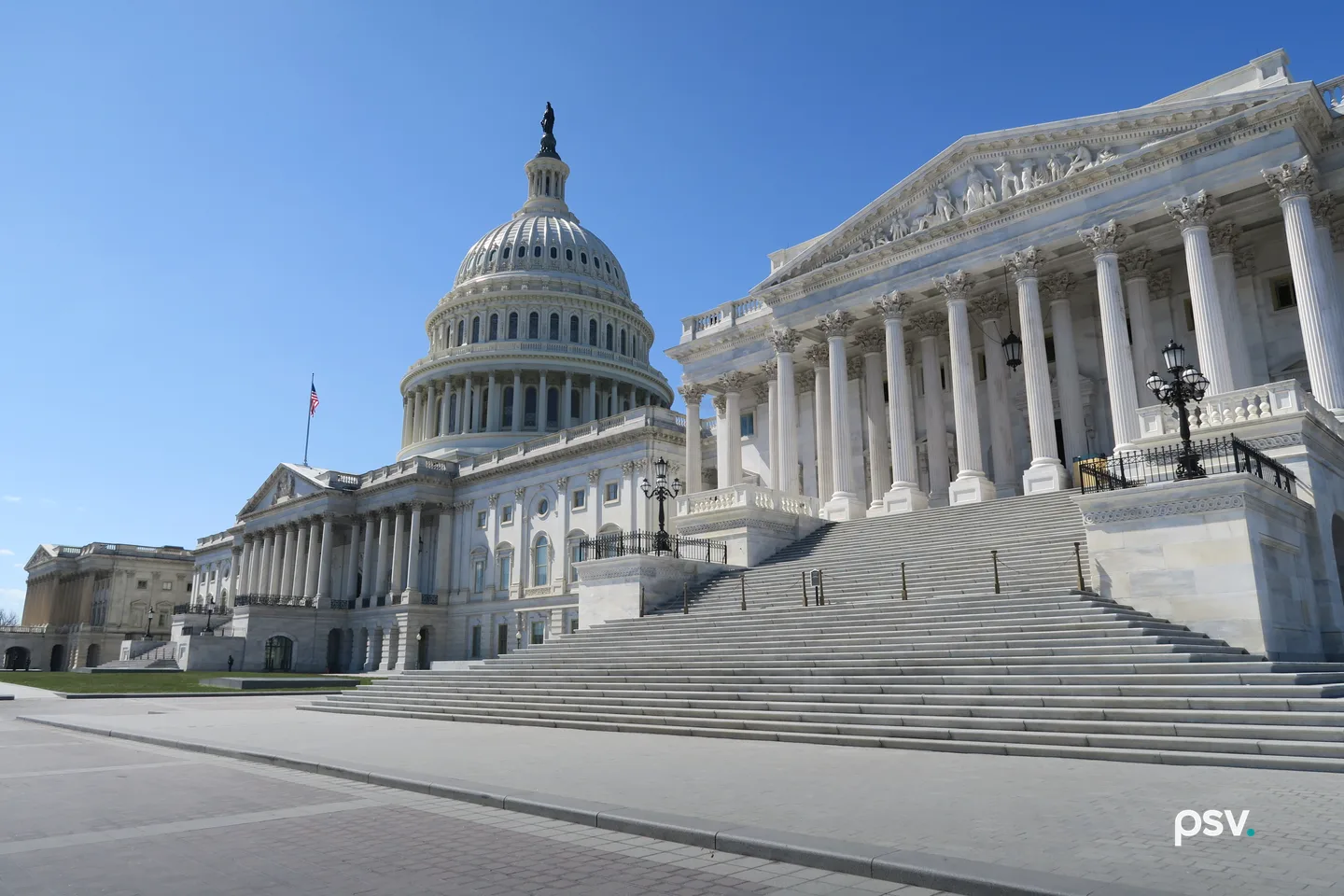
What the Senate passed
On November 19, 2026, the Senate passed H.R. 2347, as amended, by 62 to 33, record vote 270. The Senate’s vote record shows 47 Republicans, 14 Democrats and one independent voting yes, and 30 Democrats, two Republicans and one independent voting no, with five not voting. The House bill was only the vehicle: on November 18 the Senate adopted Senator Capito’s amendment in the nature of a substitute, SA 6883, by 69 to 27, which replaces its text with the Bipartisan American Affordability and Jobs Act of 2026. Congress.gov lists no other amendment as agreed to; the rest were tabled or fell. Because the Senate amended a House bill, the House must now act on the Senate’s version before anything goes to the President.
The data center language is still Section 2107, “Ratepayer protection,” and by PSV’s comparison with the 417-page text the sponsors posted on September 30 it changed in five ways. The retail cost floor moves to a new Section 229 of the Federal Power Act and now applies to any computational load site, buildings at one location that primarily house IT for software, artificial intelligence, cryptocurrency mining or other data center computing; the September draft’s 20 megawatt covered load, with commonly owned sites and phased buildouts counted together, is not in the passed text. FERC must revise its 1994 transmission pricing policy and propose a rule within 90 days of enactment, instead of 270 days for each, with a final rule a year after the proposal. The proposed rule must also set rates for existing transmission customers, effective after the final rule. FERC may treat these customers as a class and assign costs to the class. And a service arrangement a state approved before enactment still stands, but the state may now revise it to conform, where state law allows. A new Section 2117 directs the Energy Department to stand up a Data Center Community Assistance Program within 180 days.
Why a CRE operator should care
The core of the floor did not move. No portion of a utility’s retail incremental cost to serve a computing site may be recovered from any other customer; recovery continues if the owner or operator terminates its contract or stops buying power before the cost is recovered; and before building or upgrading generation, transmission or distribution for the site, the utility must collect financial assurances or contributions sufficient to cover the expected cost. States may still charge more than cost and credit the excess to other customers, award service through an open season to whichever applicant returns the greatest net present value to other ratepayers regardless of queue order, require the site to bring new generation, require limited or non-firm transmission, and treat data centers as a separate, less favored class than other large industrial loads. The passed text’s findings state the policy directly: computing load should bear the full cost of the service it requires, “regardless of whether they take the electric service that they request.”
What changed widens the exposure. Dropping the megawatt threshold means the retail floor is no longer reserved for large campuses; whether a given colocation or enterprise site is a computational load site turns on what the building primarily contains, with only computing that is ancillary to another primary use excluded. The transmission side now reaches existing customers, not only new interconnections, and by PSV arithmetic the FERC timetable shrinks from at least about two and a half years after enactment (270 plus 270 days plus a year) to about 15 months (90 days plus a year). The retail floor itself still applies only to sites that interconnect on or after enactment, but the new state revision power means a pre-enactment deal is protected only as long as its state chooses not to reopen it.
The workflow PSV would run on the passed text
The tool is the same covered-load screen this desk described in October, rerun against the passed text. Inputs per site: what the building primarily houses and whether any computing is ancillary to another use, the interconnection date or expected date against an enactment date that does not yet exist, the executed utility agreement and which state body approved it and when, whether that state has a pending large-load tariff or docket that could become a revision, the transmission service the site takes and from which FERC-jurisdictional utility, any quoted upgrade cost, and posted collateral. The output is one row per site: in or out of the retail floor, exposed or not to a state revision of its existing deal, exposed or not to the FERC existing-customer rate case, and the financial assurance a utility could demand for the next phase.
The reviewer is the development or acquisitions lead with utility and regulatory counsel, and the approval gate is unchanged: the screen moves no power cost line in a pro forma until the bill is law in this form and a filed FERC rule, state order or tariff implements it. The model only classifies and sorts filed facts; the judgment about what a state commission will do with its new revision power is counsel’s.
What stays with a person, and what is still open
The operator read
Finish with the judgment call.
The reported facts are above. Enter your email for PSV's operator conclusion and a year of access to every newsroom brief.
Free. No card. Privacy policy.
 by PSVLive
Build the workflow behind this analysis. Train with the operators doing it.
Real deal files, live builds, and production-ready CRE AI workflows inside the CRE AI Institute.











Clear answers
Common questions about Senate passes permitting bill data centers
Did the Senate pass the data center ratepayer protection bill?
Yes. On November 19, 2026, the Senate passed H.R. 2347, as amended, by 62 to 33 (record vote 270). The amendment, SA 6883, adopted 69 to 27 on November 18, replaces the House bill’s text with the Bipartisan American Affordability and Jobs Act of 2026, including its data center cost rules in Section 2107. Because the Senate amended a House bill, the House must act on the Senate version before it can become law.
Does the Senate-passed bill still have a 20 megawatt threshold for data centers?
No. The September 30 draft applied its retail cost floor to covered loads of 20 megawatts or more. The passed text applies the floor, as a new Section 229 of the Federal Power Act, to any computational load site: buildings at one location that primarily house IT for software, artificial intelligence, cryptocurrency mining or other data center computing, excluding computing that is ancillary to another primary use. It applies to sites that interconnect on or after enactment.
Does the bill affect existing data centers?
Partly. The retail cost floor covers sites that interconnect after enactment, and service arrangements a state approved before then remain in effect, but the passed text lets a state revise those arrangements to conform where state law allows. On the transmission side, FERC must propose, within 90 days of enactment, rates that include existing computing customers, effective after its final rule.
Primary source record
These records support the reported facts in this brief. PSV’s CRE workflow interpretation and test plan are original analysis.
- U.S. Senate, Roll Call Vote 119th Congress, 2nd Session, Vote Number 270: On Passage of the Bill H.R. 2347, as Amended, November 19, 2026
- Congress.gov, H.R. 2347, Bipartisan American Affordability and Jobs Act of 2026: All Actions
- Congress.gov, S.Amdt. 6883 to H.R. 2347 (Capito amendment in the nature of a substitute), text as printed in the Congressional Record, pages S5471 to S5520 (Sections 2107, 2114 and 2117)
- Bipartisan American Affordability and Jobs Act of 2026, introduced text as posted by the Senate Environment and Public Works Committee, September 30, 2026 (for comparison)
- Beethoven, “2018-03-26, United States Capitol East Front, viewed from the northeast,” Wikimedia Commons, CC BY-SA 4.0 (lead photograph source)
Topics
Track every data center moratorium and large-load rule we have reported, with sources: US data center moratorium tracker.
Related PSV analysis
CRE POLICY NEWS
Senate Permitting Bill Would Make 20 MW Data Centers Pay
The Bipartisan American Affordability and Jobs Act of 2026, introduced on September 30 by the chairs and ranking members of the Senate’s environment and energy committees, would make data centers and other computing loads of 20 megawatts or more bear the full incremental cost of the power, transmission and distribution built to serve them, and let states auction service.
CRE POLICY NEWS
Ratepayer Protection Act Stalls in Senate
The House passed H.R. 9340, the Ratepayer Protection Act, by 417 to 3 on September 16, 2026. It would add a federal standard to the Public Utility Regulatory Policies Act making data center campuses of 100 megawatts or more pay the full incremental cost of the grid upgrades built for them. On September 17 Senator Martin Heinrich blocked fast passage in the Senate.
CRE POLICY NEWS
Federal Land Is Becoming a Data Center Land Market
The Department of Energy has now picked developers for AI data center campuses on three former nuclear sites, and the Bureau of Land Management approved its first data center on public land in June. A November 15 Bisnow tally counts at least 17 parcels and 19,200 acres under federal consideration. The agency records show how much of that is actually approved.
Related guides
Cornerstone PSV guides on the workflows in this article.
by PSVLiveYou read the operator view. Now learn to run the workflow.
The AI MBA for commercial real estate: the workflows these briefs describe, taught end to end on real deal files, with live builds and a community of CRE operators.